The Short Answer on California's Electric Car Mandate
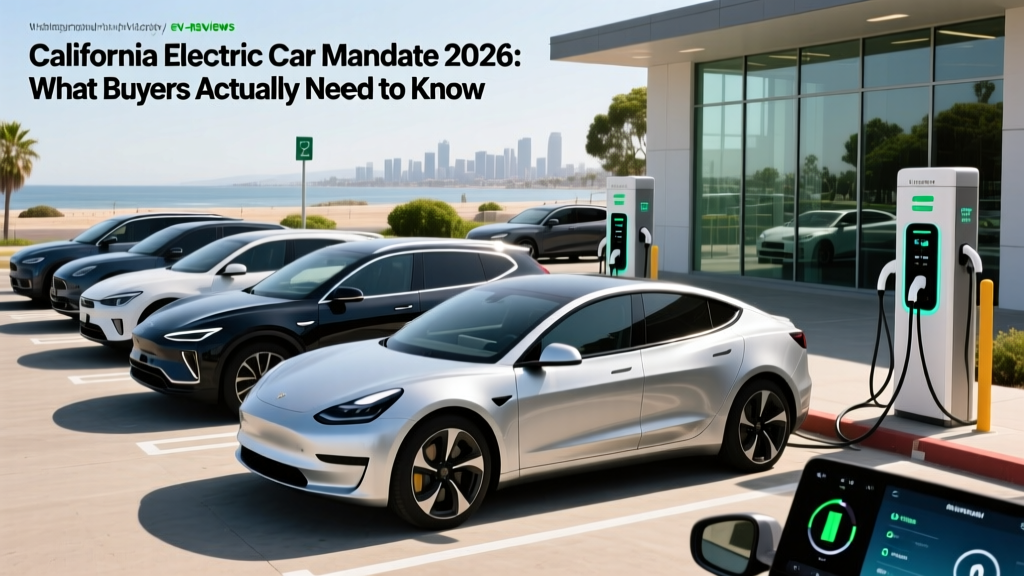
California's electric car mandate does not ban you from owning or driving a gas car. It requires automakers to sell an increasing percentage of zero-emission vehicles (ZEVs) in the state. For 2026, manufacturers must deliver approximately 35% ZEV sales in California under the Advanced Clean Cars II (ACC II) regulation. By 2035, that reaches 100% — meaning only new ZEVs (battery-electric, hydrogen fuel cell, or limited plug-in hybrids meeting strict criteria) can be sold as new vehicles. You can still buy used gas cars, keep your current ICE vehicle, and register out-of-state purchases that meet emissions rules. The mandate shapes what's on dealer lots, not what's in your driveway.
How ACC II Actually Works: The ZEV Credit Math
California's Air Resources Board (CARB ACC II program) uses a credit system. Each ZEV sold earns credits based on its range and technology. Automakers must accumulate enough credits to meet the escalating annual percentage. Here's the schedule through 2035:
| Model Year | ZEV Sales Requirement | PHEV Allowance (max) |
|---|---|---|
| 2026 | 35% | ~20% of ZEV target with 70+ mi EV range |
| 2028 | 51% | ~15% of ZEV target |
| 2030 | 68% | ~10% of ZEV target |
| 2032 | 82% | ~5% of ZEV target |
| 2035+ | 100% | Minimal; must meet strict EV-range thresholds |
The practical effect for buyers: dealer inventories are shifting rapidly. By 2026, over a third of new vehicles on California lots are battery-electric or qualifying PHEVs. Automakers are prioritizing EV allocation to California and the 17+ states that have adopted or are adopting similar ZEV standards (including New York, Washington, Oregon, Colorado, and Virginia).
What This Means for Your Wallet: EV vs Gas in California
The mandate is pushing more EVs onto lots, which means more competition, more incentives, and — critically — more affordable options. But does buying electric actually save money in California right now? Let's run the numbers on a realistic comparison: a 2026 Tesla Model 3 RWD versus a 2026 Toyota Camry LE (gas).
| Cost Factor | 2026 Tesla Model 3 RWD | 2026 Toyota Camry LE (Gas) |
|---|---|---|
| Base MSRP | $38,990 | $29,495 |
| Federal §30D Tax Credit (if eligible) | −$7,500 (point-of-sale) | $0 |
| CA Clean Fuel Rebate / utility incentives | −$1,000 to −$2,000 | $0 |
| Effective Purchase Price | ~$30,490–$31,490 | $29,495 |
| Fuel/Energy (15,000 mi/yr, CA avg) | $675/yr (home L2, $0.28/kWh avg) | $1,950/yr (32 MPG, $4.16/gal) |
| Annual Maintenance | ~$300 (tire rotation, cabin filter) | ~$750 (oil, filters, brakes) |
| Insurance (CA avg) | ~$2,400/yr | ~$1,800/yr |
| 5-Year Total Fuel + Maintenance | $4,875 | $13,500 |
| 5-Year Total Cost of Ownership* | ~$47,740 | ~$49,495 |
*Includes purchase price (after incentives), 5 years fuel/energy, maintenance, and insurance. Excludes depreciation, registration, and financing.
The EV wins on operating costs by roughly $8,625 over five years, but higher insurance premiums ($600/yr more on average for EVs in California) and the higher initial MSRP narrow the gap. If you don't qualify for the full §30D credit — due to income caps ($150K single / $300K joint AGI), MSRP caps ($55K sedans / $80K SUVs/trucks), or battery-sourcing requirements — the math shifts. Always verify credit eligibility at IRS.gov before committing.
Real-World EV Ownership in California: What Nobody Tells You
California has the most robust EV infrastructure in the country, but that doesn't mean ownership is frictionless. Here are the realities that spec sheets don't show:
Home Charging Access Is Not Universal
Roughly 30–40% of Californians live in multi-unit dwellings or rent without dedicated parking. If you can't install a Level 2 home charger (240V, 30–48A), EV ownership becomes significantly harder. Public DC fast charging in California averages $0.40–$0.60/kWh on networks like Electrify America and EVgo — nearly doubling your per-mile energy cost versus home charging. Before buying, confirm you have:
- A dedicated 240V circuit (NEMA 14-50 or hardwired wall connector)
- Electrical panel capacity (many older CA homes need a 200A panel upgrade — budget $1,500–$3,500)
- HOA or landlord approval (California's Civil Code §714.1 limits HOA restrictions on EV chargers, but installation logistics remain)
Range Reality: EPA vs California Highways and Heat
California's I-5 corridor, summer heat in the Central Valley, and mountain passes to Tahoe all stress EV range. A 2026 Hyundai Ioniq 6 SE (EPA 361 miles, 77.4 kWh battery) will realistically deliver:
- ~310–330 miles at 65 mph on flat coastal highways
- ~260–280 miles at 75+ mph on I-5 with A/C running in 95°F+ heat
- ~230–250 miles climbing from Sacramento to Tahoe (elevation gain recoups partially on descent via regen)
California's mild winters mean less cold-weather range loss than Midwest owners face, but battery thermal management still matters. Vehicles with heat pumps (standard on most 2026 Hyundai, Kia, Tesla, and BMW EVs) maintain efficiency better in the 40–55°F range common in Northern California winters.
Charging Speed: Peak kW Is Not Sustained kW
When a manufacturer claims "up to 250 kW DC fast charging," that's the peak rate at a low state of charge. The actual charge curve tapers significantly above 80%. For a 2026 Tesla Model Y Long Range (75 kWh usable, NMC battery):
- 10–80%: ~25–28 minutes at a V3 Supercharger (250 kW peak)
- 80–100%: additional 25–35 minutes (tapers to under 30 kW)
Plan road trips around the 10–80% window. Charging past 80% at a DC fast charger is rarely worth the time unless you absolutely need the range to reach your destination.
Common Misconceptions About the California Mandate
| Myth | Fact |
|---|---|
| "Gas cars will be illegal to drive in 2035" | Only new vehicle sales are restricted. Existing gas cars can be driven, sold used, and registered indefinitely. |
| "All PHEVs count toward the mandate" | Only PHEVs with 70+ miles of EV range (by 2029+) earn partial ZEV credits. Most current PHEVs (25–45 mi EV range) do not qualify. |
| "I can't buy a gas car from another state" | You can purchase out-of-state, but the vehicle must meet California emissions standards (50-state emissions certification) to be registered in CA. |
| "The grid can't handle all these EVs" | CA ISO data shows most EV charging occurs overnight during off-peak hours when renewable surplus (wind, geothermal) is available. Managed charging programs (like PG&E's EV Rate) incentivize off-peak charging at ~$0.12–$0.18/kWh. |
| "EV batteries won't last and cost $20K to replace" | Federal law mandates 8-year/100,000-mile battery warranties (10yr/150K in CARB states including CA). Real-world degradation for 2024–2026 NMC and LFP packs averages 8–12% over 100K miles. Full replacements are rare and declining in cost. |
EV vs Hybrid vs Gas: Which Fits Your California Life?
| Factor | Battery EV (BEV) | Plug-in Hybrid (PHEV) | Gas (ICE) |
|---|---|---|---|
| Best For | Home chargers, daily commutes under 80 mi, road-trip planners | No reliable home charging, frequent long trips, one-car households | Low mileage drivers, tight budgets, rural areas with poor charging |
| CA Availability (2026) | Widest and growing selection | Shrinking — mandate favors long-range PHEVs only | |
| Fuel Cost (15K mi/yr) | $540–$900 | $600–$1,400 (depends on EV% of driving) | |
| Maintenance | Lowest | Moderate (two powertrains) | |
| §30D Tax Credit | Up to $7,500 | Up to $7,500 (if 70+ mi EV range and sourcing rules met) | |
| CA HOV Lane Sticker | Yes (white sticker, expires per DMV schedule) | Yes, if meets ZEV criteria |
Your Decision Framework: Should You Go Electric in California Now?
Choose a BEV if:
- You can install a Level 2 home charger (or already have access to one)
- Your daily round-trip commute is under 80% of the vehicle's real-world range
- You qualify for the §30D credit (check income caps, MSRP limits, and battery-sourcing rules at fueleconomy.gov)
- You want the lowest per-mile operating cost and minimal maintenance
Choose a PHEV if:
- You lack reliable home charging but want some electric-only driving
- You regularly drive 300+ miles in a single day and can't plan charging stops
- You want HOV lane access and lower emissions without full EV commitment
Stick with gas (for now) if:
- You live in a rental or condo with no charging access and no plans to move
- Your budget is under $25,000 and you buy used (the used EV market is growing but limited in CA)
- You drive under 6,000 miles/year — the fuel savings of an EV won't offset the premium
Frequently Asked Questions
Does the California electric car mandate apply to used cars?
No. The ACC II mandate only governs new vehicle sales by manufacturers. The used car market — including gas vehicles — is unaffected. You can buy, sell, and register used ICE vehicles in California indefinitely.
Which states follow California's EV mandate?
As of 2026, 17+ states have adopted or are in the process of adopting ACC II ZEV standards, including Colorado, Connecticut, Maine, Maryland, Massachusetts, New Jersey, New Mexico, New York, Oregon, Rhode Island, Vermont, Virginia, and Washington. These states collectively represent roughly 40% of the US new-car market.
Will EV prices drop because of the mandate?
Increased production volume and competition are pushing prices down. The average transaction price for a new EV in California dropped from ~$56,000 in 2023 to approximately $44,000–$47,000 in 2026 (before incentives). Models like the Chevrolet Equinox EV ($33,000 base), Hyundai Kona Electric ($32,975), and Tesla Model 3 ($38,990) are now price-competitive with gas equivalents after the §30D credit.
What happens if I move to California with an out-of-state gas car?
You can register a gas car purchased out of state only if it was originally certified to California (50-state) emissions standards. Check the under-hood emissions label for "50-state" or "CARB" certification. Federal-emissions-only vehicles from non-CARB states cannot be registered in California, even as a personal import.
Do I need to worry about battery replacement costs?
In California (a CARB state), EV battery warranties are 10 years/150,000 miles by law. Real-world data from 2020–2025 model-year EVs shows average degradation of 8–12% at 100K miles — meaning your 300-mile EV might deliver ~265–275 miles after a decade. Catastrophic battery failures are rare and covered under warranty. Out-of-warranty pack replacements in 2026 range from $8,000–$14,000 depending on the model, and are declining as LFP chemistry and modular pack designs become standard.