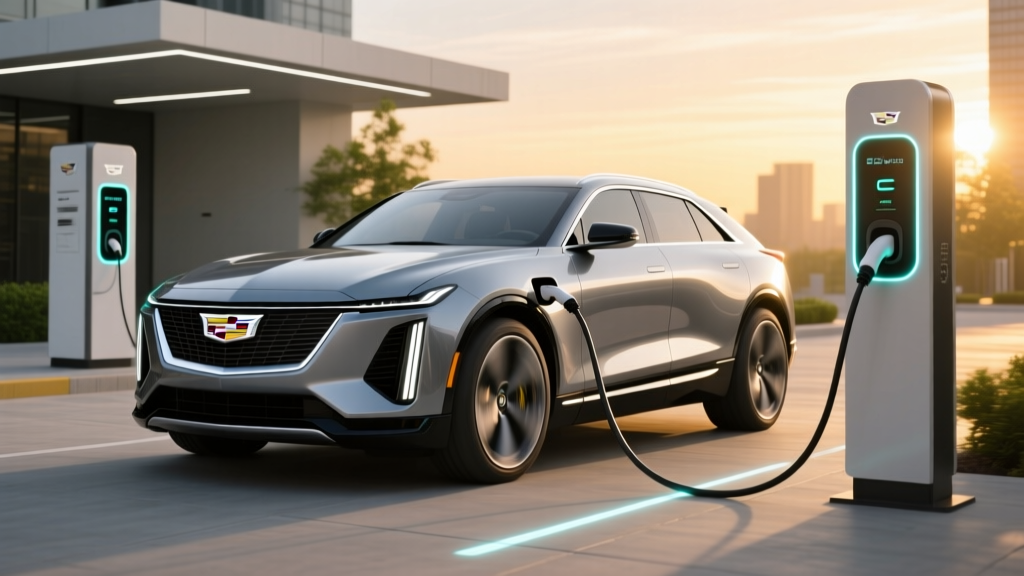
Quick Verdict: The Cadillac Lyriq With Super Cruise
The Cadillac Lyriq is GM's luxury EV flagship, and pairing it with Super Cruise — GM's hands-free, eyes-on driver-assistance system — creates one of the most relaxed highway cruisers on the market. For 2025 and 2026, the Lyriq offers up to 314 miles of EPA-estimated range, a 102-kWh Ultium battery, and an interior that rivals anything from BMW or Mercedes in fit and finish. But the real question for buyers isn't whether it looks premium — it's whether the real-world range, charging speed, and Super Cruise capability justify a starting price above $60,000.
After driving the Lyriq across multiple road trips and daily commutes, here's the bottom line: if you regularly drive on mapped divided highways and value a quiet, tech-forward cabin, the Lyriq with Super Cruise is a compelling luxury EV. If you need maximum fast-charging speed or the longest range in the segment, competitors like the BMW iX or Tesla Model X may serve you better.
Range, Battery, and Real-World Efficiency
The Lyriq uses a 102-kWh usable Ultium battery pack with NMC (nickel manganese cobalt) chemistry — GM's modular platform shared with the Blazer EV and upcoming models. NMC offers higher energy density than LFP, which is why the Lyriq achieves strong range in a relatively compact battery footprint, though it trades some cycle-life longevity compared to LFP packs.
- RWD (314 mi EPA): Expect 260–280 miles on mixed highway driving at 70+ mph. In cold weather (below 32°F), plan for 210–240 miles.
- AWD (307 mi EPA): Real-world highway drops to roughly 250–270 miles; cold weather can pull this to 200–230 miles.
The Lyriq's heat pump (standard on all trims) helps mitigate winter range loss compared to EVs without one, but NMC chemistry still loses 15–25% in deep cold. City driving with regen braking can actually exceed the EPA sticker.
Efficiency comes in at approximately 89 MPGe combined (RWD), or about 38 kWh per 100 miles — competitive with the BMW iX xDrive50 but behind the more aerodynamic Tesla Model X. On the highway, expect consumption closer to 42–45 kWh/100mi at sustained speeds above 75 mph.
Charging Speed: DC Fast Charging and Home Level 2
Charging is where the Lyriq is adequate but not class-leading. The Ultium platform supports a peak DC fast-charge rate of 190 kW on properly equipped 350 kW chargers. In practice, the charge curve peaks around 160–175 kW in the 10–40% state-of-charge window, then tapers significantly above 60%.
| Charging Level | Power | Speed / Time |
|---|---|---|
| Level 1 (120V household) | ~1.4 kW | ~4 miles per hour |
| Level 2 (240V home, 48A) | 11.5 kW | ~31 miles per hour; full charge in ~9.5 hours |
| DC Fast Charge (peak) | 190 kW | 10–80% in approximately 33 minutes |
| DC Fast Charge (sustained avg) | ~120 kW avg | 10–80% realistic: 36–40 minutes |
The 10–80% time of roughly 33–40 minutes is acceptable for road trips but trails the Hyundai Ioniq 5 (18 minutes at 350 kW) and the Porsche Macan EV (21 minutes at 270 kW). For daily use, the 11.5 kW Level 2 onboard charger is excellent — it fully replenishes the pack overnight on a standard 48-amp home charger. GM includes two years of complimentary charging at EVgo public stations (terms vary by model year).
Super Cruise: Hands-Free Highway Driving
Super Cruise is a Level 2 driver-assistance system. Despite being "hands-free" on compatible roads, the driver must remain attentive and eyes on the road at all times. A driver-monitoring camera on the steering column tracks your gaze. This is not autonomous driving — you are legally and practically the driver.
Super Cruise remains one of the best-executed Level 2 systems available. It operates on over 750,000 miles of pre-mapped divided highways in the U.S. and Canada (as of 2025). When engaged, the system handles steering, acceleration, and braking with impressive smoothness. The steering-wheel light bar provides clear status feedback (green = active, red = take over), and lane changes on command are available on newer model years.
The key advantages over Tesla Autopilot on mapped roads:
- No steering-wheel torque required — the eye-tracking camera replaces the nag system.
- Predictable engagement zones — the navigation display shows Super Cruise-compatible segments in advance.
- Smoother lane-keeping — less "ping-ponging" within the lane than many competitors.
- Does not work on unmapped roads, city streets, or most surface roads
- Does not navigate construction zones reliably — expect frequent handoff requests
- Does not stop at red lights or handle intersections
- Requires clear lane markings and GPS signal
- Hands-free does not mean attention-free — the system will disengage and escalate warnings if you look away
Super Cruise is included on the Lyriq with a three-year complimentary subscription (starting from vehicle delivery). After that, expect a subscription cost in the range of $25–$50/month or an annual plan, based on current GM pricing for the service. Competitor BMW charges a similar subscription for its Highway Assistant, while Ford's BlueCruise on the Mustang Mach-E follows a comparable model.
Performance and Driving Dynamics
| Spec | RWD | AWD |
|---|---|---|
| Horsepower | 340 hp | 500 hp |
| Torque | 325 lb-ft | 450 lb-ft |
| 0–60 mph | 6.0 sec | 4.6 sec |
| Drivetrain | Rear single motor | Dual motor AWD |
| Towing capacity | 1,500 lbs | 1,500 lbs |
| EPA Range | 314 mi | 307 mi |
The RWD Lyriq is tuned for comfort, not sportiness. Ride quality is genuinely impressive — GM's five-link rear suspension and passive dampers absorb highway imperfections with the composure you'd expect from a Cadillac. The AWD model's 500 hp and 4.6-second 0–60 time add genuine punch, but this is still a grand tourer, not a performance SUV. If you want track-capable handling, the BMW iX M60 or Tesla Model X Plaid are in a different league.
Interior, Tech, and Cargo Space
The Lyriq's cabin is where it earns its luxury badge. A 33-inch LED curved display spans the dashboard, integrating the instrument cluster and infotainment into a single pane. Google Built-In powers the infotainment, meaning Google Maps, Google Assistant, and the Play Store are native — no phone projection required, though wireless Apple CarPlay and Android Auto are both supported.
Passenger space is generous for a midsize luxury SUV:
- Front legroom: 41.4 inches
- Rear legroom: 39.6 inches
- Cargo (behind rear seats): 28.0 cu ft
- Cargo (rear seats folded): 60.9 cu ft
Notably, the Lyriq has no front trunk (frunk). The Ultium platform packaging in this application uses that space for HVAC and electronics. Competitors like the Ford Mustang Mach-E and Rivian R1S offer meaningful frunk storage; the Lyriq does not.
Available features include a 19-speaker AKG audio system, heated and ventilated front seats (standard on most trims), a panoramic fixed glass roof, and ambient lighting with 26 color options. Build quality on U.S.-built Lyriqs has been strong, though early 2023 models had some software complaints that OTA updates have largely addressed.
Pricing, Trims, and Federal Tax Credit
| Trim | Drivetrain | MSRP | Est. After §30D Credit* |
|---|---|---|---|
| Luxury | RWD | $61,290 | ~$53,790 |
| Luxury | AWD | $64,290 | ~$56,790 |
| Sport | RWD | $63,290 | ~$55,790 |
| Sport | AWD | $66,290 | ~$58,790 |
*Federal tax credit estimate assumes full eligibility. See checklist below.
The Lyriq qualifies for the §30D federal EV tax credit (up to $7,500) if the buyer meets all current IRS requirements. As of 2025–2026, the key eligibility criteria are:
- MSRP cap: SUVs must be under $80,000 — the Lyriq clears this easily at all trims
- Buyer income cap: Modified AGI must not exceed $300,000 (joint), $225,000 (head of household), or $150,000 (single)
- Battery sourcing: Critical minerals and battery components must meet phased-in domestic/free-trade sourcing thresholds — GM's Ultium batteries are assembled in the U.S. (Lansing, MI and Spring Hill, TN), and the Lyriq has consistently qualified for the full $7,500
- Point-of-sale transfer: Buyers can elect to transfer the credit to the dealer at purchase, reducing the out-of-pocket price immediately rather than waiting for a tax return
Always verify current eligibility on IRS.gov §30D and confirm with your tax professional before purchase. State incentives (California, Colorado, New York, and others) may stack on top.
Warranty and Ownership Costs
GM backs the Lyriq with competitive warranty coverage:
- Battery & powertrain: 8 years / 100,000 miles (covers battery capacity below 70% of original)
- Bumper-to-bumper: 4 years / 50,000 miles
- Corrosion: 6 years / unlimited miles
- Roadside assistance: 6 years / 70,000 miles
Insurance premiums for the Lyriq run approximately 15–25% higher than a comparable gas-powered Cadillac XT5, based on national averages. Expect annual premiums in the $2,200–$3,000 range depending on your profile and state. Maintenance costs are significantly lower than a gas vehicle — no oil changes, no transmission fluid, and regenerative braking extends pad life considerably.
Pros, Cons, and Who Should Buy
- 314-mile EPA range (RWD) covers most road trips comfortably
- Super Cruise is best-in-class for hands-free highway driving on mapped roads
- Exceptional ride comfort and cabin quietness
- 33-inch curved display with Google Built-In is responsive and attractive
- Qualifies for full $7,500 federal tax credit
- 11.5 kW Level 2 charging fills the pack overnight
- 190 kW peak DC charging trails Hyundai/Kia/Porsche rivals
- No front trunk (frunk)
- 1,500-lb towing capacity is low for the class
- Starting MSRP above $61,000 is steep before credits
- Super Cruise requires a subscription after 3 years
- Rear visibility is limited; camera mirror recommended
- Choose the Lyriq if: You commute or road-trip frequently on divided highways where Super Cruise shines, you prioritize cabin luxury and ride comfort over sporty handling, and you can charge at home with a Level 2 setup.
- Look elsewhere if: You need the fastest DC charging for frequent long road trips (consider Ioniq 5 or Macan EV), you need towing capacity above 3,500 lbs (Rivian R1S, F-150 Lightning), or you want a third row (Kia EV9).
Frequently Asked Questions
What is the real-world range of the Cadillac Lyriq?
The EPA rates the RWD Lyriq at 314 miles and AWD at 307 miles. In real-world highway driving at 70–80 mph, expect 260–280 miles (RWD) or 250–270 miles (AWD). Cold weather (below freezing) reduces this by 15–25%, bringing practical winter range to approximately 210–240 miles for RWD.
How fast does the Lyriq charge at home and on the road?
At home on a 240V, 48-amp Level 2 charger, the Lyriq accepts up to 11.5 kW, adding about 31 miles of range per hour — a full charge takes roughly 9.5 hours. On DC fast chargers, it peaks at 190 kW and charges from 10–80% in approximately 33–40 minutes depending on battery temperature and charger capability.
Does the Cadillac Lyriq qualify for the $7,500 federal tax credit?
Yes — the Lyriq qualifies for the full $7,500 §30D credit as of 2025, provided the buyer meets income caps ($300K joint / $150K single) and the vehicle MSRP is under $80,000 (it is, at all trims). The credit can be transferred to the dealer at point of sale. Verify current rules at IRS.gov.
Is Super Cruise included or does it cost extra?
Super Cruise hardware is included on Lyriq trims equipped with the feature (most trims above the base Luxury include it or offer it as a package). GM provides a three-year complimentary subscription. After that, a paid subscription is required — expect approximately $25–$50/month based on current GM pricing.
Is the Lyriq worth buying over the BMW iX or Tesla Model X?
The Lyriq excels at ride comfort, cabin quietness, and hands-free highway driving via Super Cruise. The BMW iX charges faster (up to 200+ kW), offers a more engaging drive, and has a slightly more spacious cargo area. The Tesla Model X has superior Supercharger network access and faster acceleration but a less refined interior. If Super Cruise-compatible highways dominate your driving, the Lyriq is a strong pick. If fast charging and sporty dynamics matter more, the iX edges ahead. Check fueleconomy.gov for side-by-side efficiency comparisons.
Does the Lyriq have a frunk?
No. The Cadillac Lyriq does not have a front trunk. All cargo space is in the rear: 28.0 cu ft behind the second row and 60.9 cu ft with the rear seats folded.