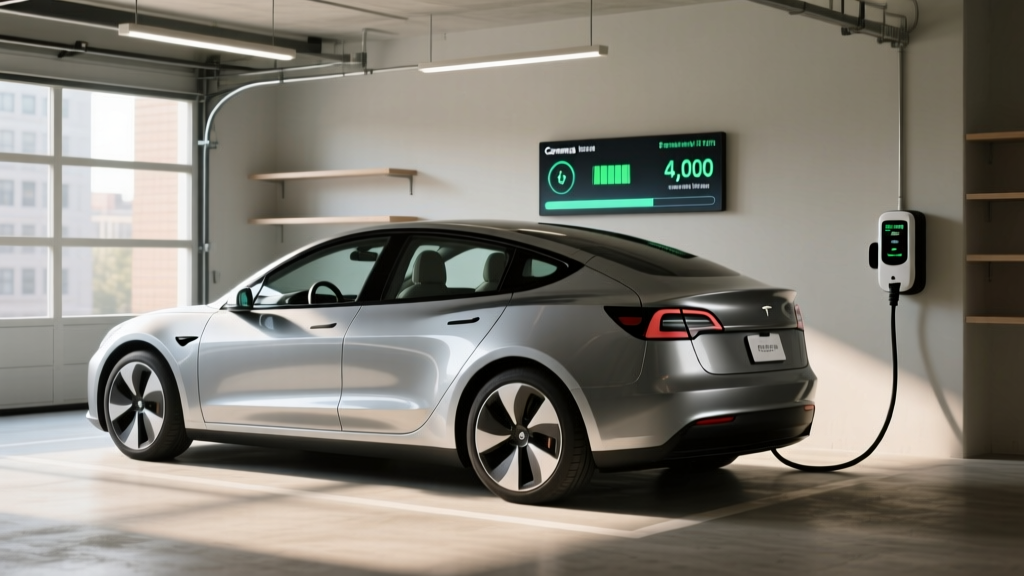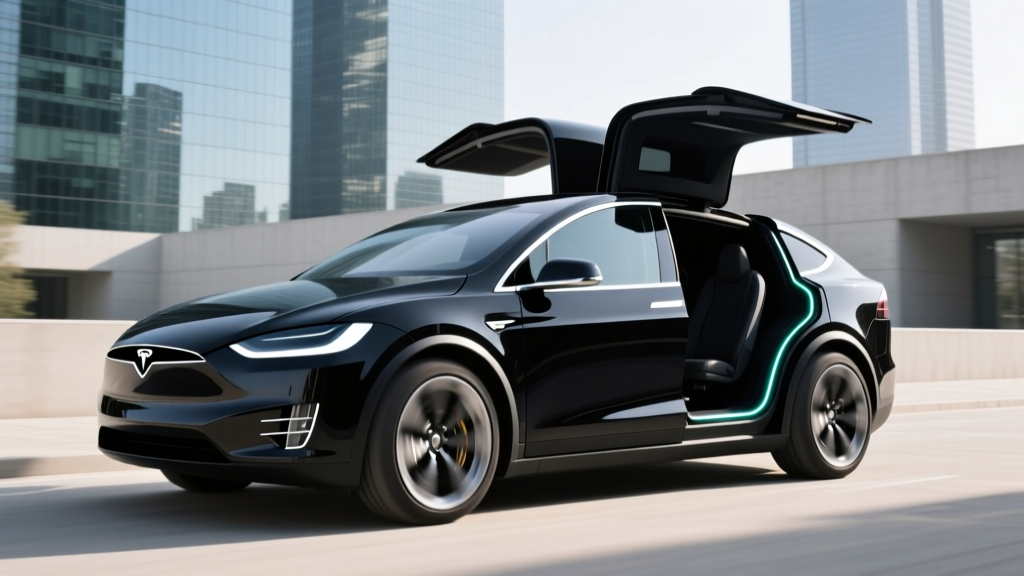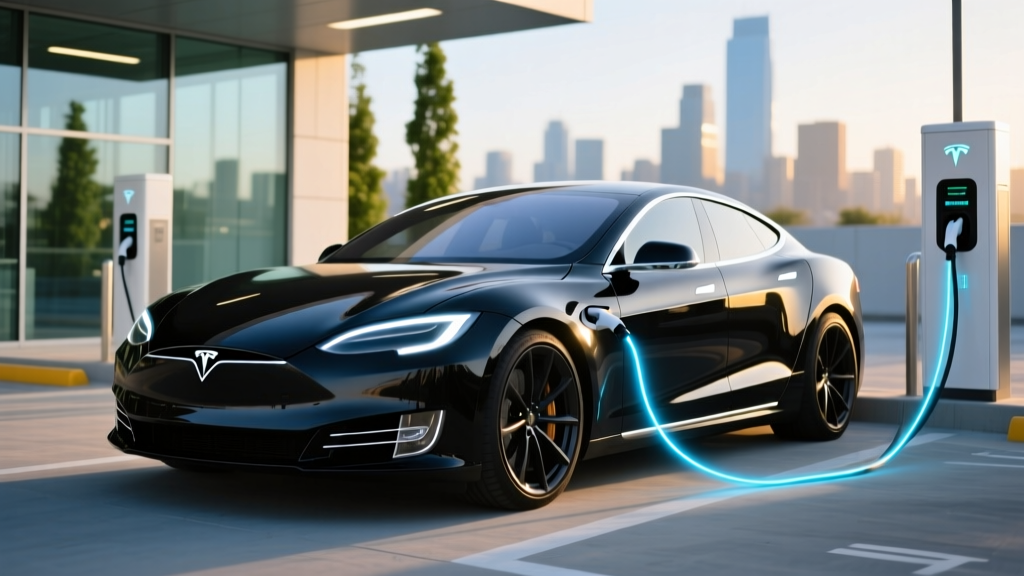
If you're researching a Tesla purchase, one question dominates your search history: what is the actual cost to fully charge a Tesla? The answer isn't a single number. It depends on your model's battery size, your local electricity rate, and whether you're charging at home, at a Supercharger, or on a third-party DC network. Below, we calculate the real cost across the 2026 Tesla lineup — Model 3, Model Y, Model S, and Model X — using current utility averages, Supercharger pricing tiers, and each vehicle's usable battery capacity.
2026 Tesla Lineup: Quick Specs at a Glance
| Model / Trim | Usable Battery (kWh) | Chemistry | EPA Range (mi) | Efficiency (kWh/100mi) | 0-60 mph (s) | HP | Base MSRP |
|---|---|---|---|---|---|---|---|
| Model 3 RWD | 60 | LFP | 272 | 25 | 5.8 | 283 | $38,990 |
| Model 3 Long Range AWD | 79 | NMC | 341 | 25 | 4.2 | 346 | $45,490 |
| Model 3 Performance | 79 | NMC | 315 | 27 | 2.9 | 510 | $52,990 |
| Model Y RWD | 60 | LFP | 260 | 27 | 6.6 | 295 | $44,990 |
| Model Y Long Range AWD | 79 | NMC | 320 | 27 | 4.8 | 384 | $49,990 |
| Model S LR / Plaid | 100 | NMC | 402 / 396 | 28 | 3.1 / 1.99 | 670 / 1,020 | $79,990 / $89,990 |
| Model X LR / Plaid | 100 | NMC | 335 / 326 | 32 | 3.8 / 2.5 | 670 / 1,020 | $79,990 / $94,990 |
Sources: fueleconomy.gov, Tesla.com order pages. Usable capacity is net of buffer; total pack capacity is slightly higher.
The Real Cost to Fully Charge a Tesla: Home vs. Supercharger vs. Public
The cost to fully charge a Tesla from 0% to 100% is calculated simply: usable battery kWh × price per kWh. But electricity prices vary dramatically depending on where and how you charge. Here's the math for every current Tesla model across three common scenarios:
- Home Level 2 (national average residential rate: $0.17/kWh)
- Tesla Supercharger (average U.S. rate: $0.30/kWh; peak urban locations up to $0.48/kWh)
- Third-party DC fast (Electrify America, EVgo average: $0.35/kWh)
| Model | Battery (kWh) | Home ($0.17/kWh) | Supercharger ($0.30/kWh) | Third-Party DC ($0.35/kWh) |
|---|---|---|---|---|
| Model 3 RWD | 60 | $10.20 | $18.00 | $21.00 |
| Model 3 Long Range | 79 | $13.43 | $23.70 | $27.65 |
| Model 3 Performance | 79 | $13.43 | $23.70 | $27.65 |
| Model Y RWD | 60 | $10.20 | $18.00 | $21.00 |
| Model Y Long Range | 79 | $13.43 | $23.70 | $27.65 |
| Model S / X (100 kWh) | 100 | $17.00 | $30.00 | $35.00 |
Key insight: Most Tesla owners rarely charge from 0% to 100% in a single session. Daily driving uses 30–50 kWh, meaning a typical home top-up costs $5–$8.50. Road-trip Supercharger stops typically add 30–50 kWh (10–80%), costing $9–$15.
Cost Per Mile: Tesla vs. Gasoline Baseline
To put these numbers in perspective, let's compare the cost-per-mile of driving a Tesla against a comparable gasoline vehicle averaging 28 MPG combined at $3.40/gallon (2026 national average).
- Tesla Model 3 LR (home charging): 25 kWh/100mi × $0.17 = $0.043/mile
- Tesla Model 3 LR (Supercharger): 25 kWh/100mi × $0.30 = $0.075/mile
- Tesla Model Y LR (home charging): 27 kWh/100mi × $0.17 = $0.046/mile
- Gasoline sedan (28 MPG, $3.40/gal): $0.121/mile
Even at Supercharger rates, a Tesla costs roughly 38% less per mile than the average gasoline sedan. Home charging widens that gap to 62–64% savings. Over 15,000 annual miles, home-charging a Model 3 saves approximately $1,170/year versus gasoline.
How Fast Does a Tesla Charge? DC Fast, Level 2, and Level 1
Charging speed is measured in kilowatts (kW) — the rate of energy delivery — while battery capacity is measured in kilowatt-hours (kWh), the total energy stored. Confusing these two is the most common mistake new EV buyers make. A 250 kW charge rate does not mean you add 250 kWh; it means at peak speed, you're adding 250 kWh worth of energy per hour of charging.
| Method | Max Power (kW) | Miles Added/Hour | 10–80% Time | Best For |
|---|---|---|---|---|
| Level 1 (120V outlet) | ~1.4 kW | 3–5 mi/hr | 40–70+ hours | Emergency / overnight trickle |
| Level 2 (240V home, 48A) | 11.5 kW | 30–44 mi/hr | 5–7 hours | Daily home charging |
| Tesla Supercharger V3 | 250 kW | ~1,000 mi/hr (peak) | ~25–30 min | Road trips |
| Tesla Supercharger V4 | Up to 350 kW* | ~1,200 mi/hr (peak) | ~18–25 min | Road trips (newer stalls) |
| Third-party CCS (w/ adapter) | Up to 350 kW | Varies | 20–35 min | Non-Tesla networks |
*V4 availability is limited as of early 2026; most Superchargers remain V3 (250 kW). Model S/X on V4 can sustain higher peak rates than Model 3/Y.
Real-World Range vs. EPA Sticker: What You'll Actually Get
EPA range estimates are generated under controlled laboratory conditions. In real-world driving, range varies based on speed, temperature, elevation, and climate-control use. Here's what Tesla owners actually report:
- Model 3 RWD (EPA 272 mi): Expect 230–250 mi highway (70–75 mph); 200–220 mi in freezing weather with heat on.
- Model 3 Long Range (EPA 341 mi): Expect 280–310 mi highway; 240–270 mi in cold weather.
- Model Y Long Range (EPA 320 mi): Expect 260–290 mi highway; 220–250 mi in cold weather.
- Model S Long Range (EPA 402 mi): Expect 340–370 mi highway; 290–330 mi in cold weather.
- Model X Long Range (EPA 335 mi): Expect 280–310 mi highway; 240–270 mi in cold weather.
Cold-weather losses of 15–30% are typical for all EVs due to battery chemistry resistance and cabin heating demands. Teslas with heat pumps (standard on all 2026 models) mitigate this compared to older resistance-heater models.
Federal Tax Credit Eligibility: What Actually Qualifies in 2026
The IRS §30D Clean Vehicle Credit offers up to $7,500, but eligibility depends on multiple requirements that change yearly. Here's how the 2026 Tesla lineup fares:
| Model | Base MSRP | MSRP Cap Met? | Battery Sourcing | Est. Credit | Effective Price (if eligible) |
|---|---|---|---|---|---|
| Model 3 RWD | $38,990 | Yes (under $55K) | Partial (LFP CATL cells) | $3,750 | $35,240 |
| Model 3 Long Range | $45,490 | Yes (under $55K) | Partial | $3,750 | $41,740 |
| Model 3 Performance | $52,990 | Yes (under $55K) | Partial | $3,750 | $49,240 |
| Model Y RWD | $44,990 | Yes (under $80K SUV) | Partial | $3,750 | $41,240 |
| Model Y Long Range | $49,990 | Yes (under $80K SUV) | Partial | $3,750 | $46,240 |
| Model S / X | $79,990+ | Yes (under $80K SUV — X only; S exceeds sedan cap) | Partial | $0–$3,750 | Varies |
Important caveats: The §30D credit has buyer income caps ($150K single / $300K joint for new vehicles), battery-component and critical-mineral sourcing thresholds (which may reduce the credit to $3,750 or $0 depending on the specific build), and the point-of-sale transfer option that lets dealers apply the credit at purchase. The Model S, classified as a sedan, must be under $55,000 MSRP — meaning it does not qualify. The Model X, classified as an SUV, clears the $80,000 cap. Always verify current rules at IRS.gov Clean Vehicle Credits and consult a tax professional before relying on credit eligibility.
Tesla Ownership: Warranty, Tech, Cargo, and the Full Picture
Battery & Powertrain Warranty
All 2026 Teslas carry an 8-year / 100,000-mile battery and drive-unit warranty (Model S/X: 8yr/150,000mi). Tesla warrants that the battery will retain at least 70% of its original capacity during the warranty period. Real-world data from high-mileage owners suggests NMC packs typically retain 85–90% capacity at 100,000 miles, while LFP packs (Model 3 RWD, Model Y RWD) show even slower degradation due to the chemistry's longer cycle life.
Standout Tech Features
- 15.4" touchscreen (Model 3/Y) or 17" (Model S/X): Central interface for all vehicle controls, navigation, media, and gaming.
- Autopilot (standard): SAE Level 2 driver-assist with adaptive cruise and lane-centering. Requires active driver supervision — this is not self-driving.
- FSD Supervised ($8,000 option): Enhanced Level 2 with automatic lane changes, intersection handling, and parking assist. Still requires hands-on-wheel readiness.
- Over-the-air updates: Continuous feature additions, efficiency improvements, and UI refinements without dealer visits.
- Sentry Mode / Dashcam: Always-on security recording using the vehicle's external cameras.
- NACS native connector: Tesla's North American Charging Standard is now the industry standard, meaning Teslas charge natively at Superchargers and increasingly at third-party networks without adapters.
Cargo & Passenger Space
- Model 3: 23 cu ft trunk + rear seats folded; 42.3" front / 35.3" rear legroom.
- Model Y: 30 cu ft behind rear seats (76 cu ft folded); 41.8" front / 37.0" rear legroom. Optional third row (very tight, best for small children).
- Model S: 28 cu ft trunk + 25 cu ft frunk; 42.4" front / 35.4" rear legroom.
- Model X: 88 cu ft max cargo (seats folded); falcon-wing doors ease third-row access.
Notable Drawbacks
- Minimalist interior lacks physical buttons — even glovebox and mirror adjustments are screen-only.
- No Apple CarPlay or Android Auto; Tesla's proprietary infotainment is the only option.
- Panel gaps and paint quality remain inconsistent across Fremont and Austin build plants.
- Insurance premiums run 20–40% higher than comparable gas sedans/SUVs due to repair costs.
- FSD Supervised remains a Level 2 system despite the "Full Self-Driving" name — manage expectations accordingly.
Pros and Cons: The Honest Summary
Pros
- Lowest cost-per-mile in the EV segment when home charging ($0.04–0.05/mi)
- Supercharger network remains the most reliable and widespread DC fast-charging network in North America
- Class-leading efficiency (kWh/100mi) translates to more miles per kWh than competitors
- OTA updates continuously add features post-purchase
- Strong resale value relative to non-Tesla EVs
- NACS connector now adopted industry-wide — future-proof charging
Cons
- FSD Supervised is expensive ($8K) and still requires full driver attention
- No CarPlay/Android Auto support
- Higher insurance costs than ICE equivalents
- LFP models (RWD trims) lose more range in cold weather than NMC variants
- Service center wait times can stretch weeks in underserved metro areas
- Model S/X pricing pushes well into luxury territory without matching Mercedes/BMW interior refinement
Is a Tesla Worth It vs. the Competition?
- Choose Tesla Model 3 if: You want the most efficient, lowest-cost-to-charge electric sedan with the best charging network access. Home charging access makes the economics unbeatable.
- Choose Tesla Model Y if: You need crossover cargo space, family seating, and road-trip capability without leaving the Supercharger ecosystem. It's the best-selling EV in America for a reason.
- Choose Hyundai Ioniq 6 / Kia EV6 instead if: You prefer physical buttons, CarPlay, 800V ultra-fast charging (10–80% in 18 min), and more aggressive styling.
- Choose Ford Mustang Mach-E if: You want a more traditional driving feel, BlueCruise hands-off highway driving (still Level 2), and a Ford dealer network for service.
- Choose Rivian R1S if: You need genuine off-road capability, three usable rows, and don't mind paying a premium and relying on third-party charging.
Frequently Asked Questions
What is the cheapest way to charge a Tesla?
Home Level 2 charging on a standard residential electricity plan is the cheapest method, averaging $0.17/kWh nationally. Some utilities offer time-of-use (TOU) plans with overnight rates as low as $0.06–$0.10/kWh, which can cut a Model 3 Long Range full charge to under $8. Installing a dedicated 240V/48A circuit costs $500–$2,000 depending on your electrical panel and run distance — hire a licensed electrician for final specs.
Does Tesla Supercharger pricing vary by location?
Yes, significantly. Supercharger rates range from $0.22/kWh in low-cost rural areas to $0.48/kWh in premium urban locations (downtown San Francisco, Manhattan). Some stations offer time-of-use pricing with cheaper overnight rates. Tesla also offers a membership plan ($12.99/month) that reduces per-kWh rates by roughly 10–15% for non-Tesla EVs using NACS adapters, though Tesla vehicles already receive the lowest tier pricing.
How much does it cost to charge a Tesla Model Y Long Range from 10% to 80% on a road trip?
A Model Y Long Range has a 79 kWh usable battery. Charging from 10% to 80% adds about 55 kWh. At an average Supercharger rate of $0.30/kWh, that session costs approximately $16.50 and adds roughly 200 miles of range. The session takes about 25–28 minutes accounting for the charge-curve taper above 60% SoC.
Is it cheaper to charge a Tesla than to buy gas?
In almost every scenario, yes. At the 2026 national average gas price of $3.40/gallon and a 28 MPG combined sedan, fuel costs $0.121/mile. A Tesla Model 3 charged at home costs $0.043/mile — a 64% savings. Even exclusively Supercharging at $0.30/kWh, the Tesla costs $0.075/mile — still 38% cheaper. The only scenario where gas wins is if you have free fuel (fleet card, employer reimbursement) or live in an area with exceptionally high electricity rates and low gas prices.
Does the Tesla Model 3 RWD qualify for the full $7,500 federal tax credit?
As of 2026, the Model 3 RWD typically qualifies for $3,750 (half credit) because its LFP battery cells (sourced from CATL) may not meet the full critical-minerals and battery-component sourcing thresholds required for the complete $7,500. Eligibility depends on your income (under $150K single / $300K joint), the specific vehicle's battery sourcing at time of manufacture, and current IRS rules. Always verify at fueleconomy.gov before purchasing.
How long does a Tesla battery last before needing replacement?
Tesla's battery warranty guarantees 70% capacity retention for 8 years or 100,000 miles (150,000 for S/X). Real-world data from fleet operators and high-mileage owners shows NMC batteries retaining 85–92% at 100K miles. LFP batteries often show even less degradation. Full battery replacement outside warranty costs approximately $12,000–$16,000 for Model 3/Y and $18,000–$22,000 for Model S/X, but the need for replacement before 200,000+ miles is uncommon based on current degradation curves.
Can I charge a Tesla at non-Tesla charging stations?
Yes. All current Teslas use the NACS (North American Charging Standard) connector natively. As of 2026, most major charging networks — Electrify America, EVgo, ChargePoint — are deploying NACS cables alongside CCS. For older CCS-only stations, Tesla sells a CCS-to-NACS adapter (~$175) that enables charging at up to 350 kW where the station supports it.