BYD's Flagship Sedan Targets the Luxury EV Elite
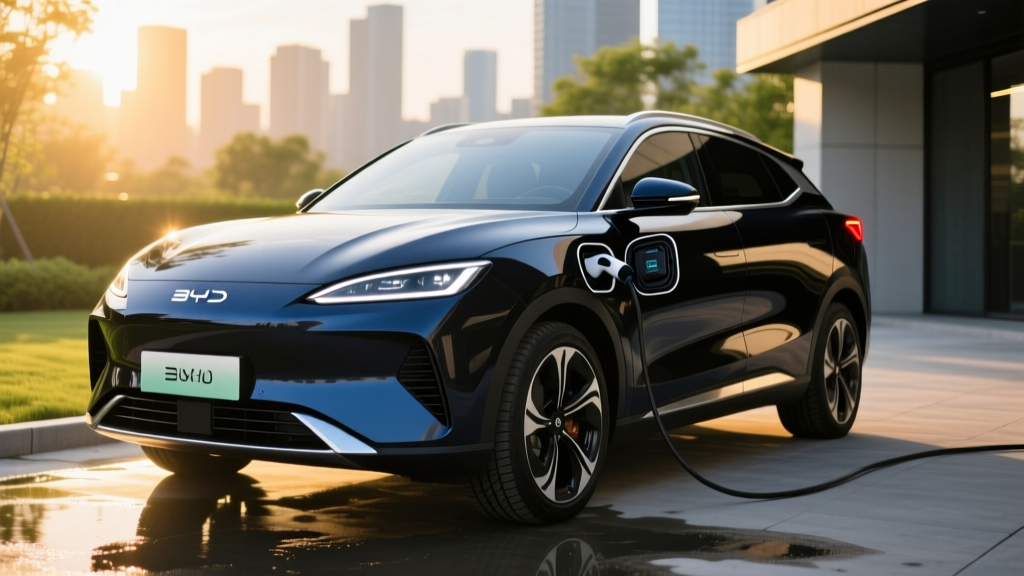
The BYD Yangwang U7 is the Chinese automaker's most ambitious sedan to date—a full-size luxury electric vehicle that leverages BYD's vertically integrated battery and powertrain technology to challenge established players like the Porsche Taycan, Mercedes EQS, and Tesla Model S. Announced for the Chinese market with deliveries beginning in late 2024 and expanding into select international markets through 2025-2026, the U7 showcases BYD's e4 platform with four independent motors and the company's latest Blade Battery technology.
This review covers confirmed specifications from BYD's official Chinese-market launch, with notes on global availability and how the U7 might translate to US buyers if BYD ever enters the American market—a move the company has repeatedly deferred due to tariff barriers and geopolitical considerations.
Range Reality Check: CLTC vs. Real-World Expectations
Official rating: 800+ km (497 miles) on China's CLTC cycle for the long-range variant.
Real-world estimate: Expect 350-400 miles in mixed driving. CLTC is notoriously optimistic—typically 20-25% higher than EPA estimates. Highway driving at 70+ mph will yield closer to 320-350 miles. Cold weather (below 40°F) could reduce range by 25-30%, bringing realistic winter range to approximately 250-280 miles.
Why it matters: The U7's massive 135.5 kWh battery provides genuine long-distance capability, but buyers should plan charging stops around 250-300 miles for comfort, especially in adverse conditions.
Core Specifications: Battery, Motors, and Performance
| Specification | Yangwang U7 (Long Range AWD) |
|---|---|
| Battery Capacity | 135.5 kWh (usable) |
| Battery Chemistry | LFP (Lithium Iron Phosphate) – BYD Blade Battery |
| Range (CLTC) | 800+ km / 497 miles |
| Estimated EPA-equivalent Range | 350-400 miles (projected) |
| Powertrain | Quad-motor AWD (e4 platform) |
| Horsepower | 1,300 hp (combined) |
| Torque | 1,254 lb-ft (combined) |
| 0-60 mph | ~2.9 seconds (claimed) |
| Top Speed | 155 mph (electronically limited) |
| Length / Width / Height | 207.1" / 77.6" / 57.5" |
| Wheelbase | 122.0" |
| Curb Weight | ~5,950 lbs (estimated) |
The e4 Quad-Motor Platform Explained
BYD's e4 architecture assigns one motor to each wheel, enabling torque vectoring at a granularity impossible with traditional dual-motor setups. Each motor can independently adjust power delivery hundreds of times per second, providing:
- Tank turns: The U7 can rotate 360 degrees in place by spinning wheels in opposite directions (primarily a demonstration feature, not practical for daily use)
- Stability control: Instantaneous torque adjustments improve traction in rain, snow, and emergency maneuvers
- Efficiency optimization: Individual motors can shut down during light-load cruising to reduce energy consumption
The trade-off is weight and complexity. At nearly 6,000 pounds, the U7 is heavier than most competitors, which impacts tire wear, braking distances, and ultimately efficiency.
Charging Speed and Infrastructure Compatibility
| Charging Method | Power / Rate | Time / Range Added |
|---|---|---|
| DC Fast Charging (Peak) | Up to 240 kW (800V architecture) | 10-80% in ~25-30 minutes (estimated) |
| DC Fast Charging (Sustained) | ~180-200 kW average to 80% | 200+ miles in 20 minutes |
| Level 2 Home Charging | 11 kW (48A, 240V) | ~30-35 miles per hour / Full charge in 12-14 hours |
| Level 1 (120V) | 1.4 kW | ~3-4 miles per hour (emergency use only) |
Charging Curve Reality
BYD claims the U7's 800-volt architecture enables peak charging rates of 240 kW, but real-world charging curves tell a more nuanced story:
- 10-30% SoC: Peak 240 kW sustained
- 30-60% SoC: Tapers to 200-220 kW
- 60-80% SoC: Further taper to 150-180 kW
- 80-100% SoC: Dramatic slowdown to protect battery (60-80 kW)
The 10-80% charge time of 25-30 minutes is competitive with the Porsche Taycan (22-25 minutes at 270 kW peak) but slower than the Hyundai Ioniq 5 or Kia EV6, which can achieve 10-80% in 18 minutes thanks to smaller batteries and aggressive charging curves.
Practical implication: Plan road-trip stops around 20-25 minutes. Charging past 80% is inefficient—only do it when you absolutely need the extra range to reach your destination.
Interior, Technology, and Driver Assistance
Cabin Space and Comfort
The U7's 122-inch wheelbase translates to generous interior volume, positioning it as a true full-size luxury sedan:
- Front legroom: 41.3 inches
- Rear legroom: 39.4 inches (comparable to Mercedes S-Class)
- Cargo volume: 18.5 cubic feet (trunk) + 3.5 cubic feet (frunk)
- Seating: 5-passenger capacity, available 4-seat executive configuration with rear console
Infotainment and Displays
The U7 features BYD's latest DiLink system with:
- 12.8-inch rotating center touchscreen (portrait/landscape modes)
- 12.3-inch digital instrument cluster
- Head-up display with augmented reality navigation
- Rear-seat entertainment screens (optional)
- Wireless Apple CarPlay and Android Auto
- 5G connectivity and OTA updates
Driver Assistance (SAE Level 2)
BYD's DiPilot system provides Level 2 driver assistance, meaning the driver must remain fully engaged and responsible for vehicle operation at all times. Features include:
- Adaptive cruise control with stop-and-go
- Lane centering and automatic lane changes
- Traffic sign recognition
- Automatic emergency braking with pedestrian detection
- Blind-spot monitoring with rear cross-traffic alert
- 360-degree camera system with transparent chassis view
Important: DiPilot is a Level 2 driver-assist system, not autonomous driving. You must keep your hands on the wheel and eyes on the road. It does not navigate complex urban environments, construction zones, or unmapped areas independently.
Pricing, Trim Levels, and Tax Credit Eligibility
| Trim Level | China MSRP (CNY) | Estimated USD Equivalent | US Federal Tax Credit |
|---|---|---|---|
| Standard Range AWD | ¥688,000 | $95,000 | Not available in US |
| Long Range AWD | ¥788,000 | $109,000 | Not available in US |
| Executive Edition | ¥888,000 | $123,000 | Not available in US |
US Market Availability: The Tariff Barrier
As of 2026, BYD has not announced plans to sell vehicles in the United States. The primary obstacles:
- 27.5% import tariff: US tariffs on Chinese-made vehicles make BYD's pricing uncompetitive
- Section 301 tariffs: Additional 25% tariffs on Chinese EVs and batteries (implemented 2024)
- Political headwinds: Bipartisan concern over Chinese EV market entry
- Dealer network: BYD would need to build a US service and parts infrastructure from scratch
If BYD were to enter the US market (perhaps through a Mexican or European manufacturing foothold), the U7 would likely price between $100,000-$130,000 after tariffs and logistics costs.
Federal Tax Credit Eligibility (Hypothetical)
Even if the U7 were sold in the US, it would face significant hurdles for the IRS §30D federal tax credit:
- MSRP cap: Sedans must be under $55,000 (U7 exceeds this by 2x)
- Battery sourcing: Critical minerals and battery components must meet US-sourcing requirements that Chinese supply chains cannot currently satisfy
- Foreign entity of concern (FEOC): BYD's state-backed ownership structure could trigger FEOC restrictions
Bottom line: The U7 is not eligible for the $7,500 federal tax credit, and US buyers should not expect this to change.
Competitive Comparison: U7 vs. Established Rivals
| Vehicle | Range (EPA) | 0-60 mph | Peak Charge kW | Base MSRP |
|---|---|---|---|---|
| BYD Yangwang U7 | 350-400 mi (est.) | 2.9 sec | 240 kW | $95,000 (est. USD) |
| Porsche Taycan 4S | 246 mi | 3.8 sec | 270 kW | $105,000 |
| Mercedes EQS 450+ | 350 mi | 5.9 sec | 200 kW | $104,400 |
| Tesla Model S Plaid | 396 mi | 1.99 sec | 250 kW | $89,990 |
| BMW i7 xDrive60 | 318 mi | 4.5 sec | 195 kW | $119,300 |
Where the U7 Wins
- Range: The 135.5 kWh battery provides genuine 350+ mile capability, beating most European competitors
- Quad-motor torque vectoring: Superior traction and handling precision vs. dual-motor rivals
- Rear-seat space: Full-size sedan dimensions outclass the Taycan and match the S-Class
- Price (in China): Undercuts German competitors by $10,000-$20,000 in its home market
Where the U7 Falls Short
- Brand prestige: BYD lacks the cachet of Porsche, Mercedes, or BMW in Western markets
- Service network: No US presence means no authorized service centers
- Resale value: Unproven long-term depreciation curves for Chinese luxury EVs
- Charging speed: 240 kW peak is good but not class-leading (Taycan: 270 kW, Model S: 250 kW)
Pros
- Massive 135.5 kWh battery delivers 350+ real-world miles
- Quad-motor AWD with advanced torque vectoring
- Spacious full-size sedan interior with executive rear seating
- Competitive pricing in Chinese market
- BYD's proven Blade Battery safety record
Cons
- Not available in US market due to tariffs
- Heavy curb weight impacts efficiency and tire wear
- BYD brand lacks luxury recognition outside China
- No US service infrastructure or parts availability
- Charging speed good but not best-in-class
Warranty and Long-Term Ownership
China Market Warranty Coverage
- Basic vehicle: 6 years / 150,000 km (93,000 miles)
- Battery pack: 8 years / 160,000 km (99,000 miles) with 70% capacity retention guarantee
- Drive motors: 8 years / 160,000 km
BYD's LFP Blade Battery chemistry offers advantages for longevity:
- Thermal stability: LFP is less prone to thermal runaway than NMC chemistries
- Cycle life: 3,000+ full charge cycles before significant degradation (vs. 1,500-2,000 for NMC)
- Real-world data: BYD taxis in China have logged 300,000+ miles with 85%+ battery health
However, the U7's massive battery and quad-motor complexity mean potential repair costs could be substantial. A single motor replacement could cost $3,000-$5,000, and battery replacement (if needed out of warranty) would likely exceed $25,000.
Who Should Consider the Yangwang U7?
Ideal Use Cases
- Chinese luxury EV buyers: Domestic market gets the best pricing and full warranty support
- Range-priority drivers: 350+ real-world miles reduces charging anxiety on long trips
- Tech enthusiasts: Quad-motor torque vectoring and tank-turn capability showcase cutting-edge EV tech
- Executive transport: Spacious rear cabin with available 4-seat configuration
Who Should Look Elsewhere
- US buyers: Not available, and tariffs make importation impractical
- Brand-conscious luxury shoppers: BYD lacks prestige in Western markets
- Performance purists: Despite 1,300 hp, the U7's 6,000-lb weight limits track capability
- Budget buyers: Even at $95,000 estimated USD, this is a six-figure luxury vehicle
Frequently Asked Questions
What is the real-world range of the BYD Yangwang U7?
While BYD claims 800+ km (497 miles) on the CLTC cycle, real-world range is approximately 350-400 miles in mixed driving. Highway driving at 70+ mph yields 320-350 miles, and cold weather (below 40°F) can reduce range by 25-30% to around 250-280 miles.
How fast does the U7 charge?
The U7 supports up to 240 kW DC fast charging via its 800V architecture, achieving 10-80% in approximately 25-30 minutes. Home Level 2 charging at 11 kW adds about 30-35 miles per hour, requiring 12-14 hours for a full charge.
Can I buy the BYD Yangwang U7 in the United States?
No. As of 2026, BYD does not sell vehicles in the US market due to 27.5% import tariffs, additional Section 301 tariffs on Chinese EVs, and lack of a US dealer/service network. There are no announced plans for US market entry.
Does the U7 qualify for the federal EV tax credit?
No. Even if sold in the US, the U7 would not qualify for the IRS §30D tax credit due to its MSRP exceeding the $55,000 sedan cap, Chinese battery sourcing that fails critical-mineral requirements, and potential FEOC (Foreign Entity of Concern) restrictions.
How does the U7 compare to the Porsche Taycan?
The U7 offers significantly more range (350-400 miles vs. 246 miles for the Taycan 4S), more power (1,300 hp vs. 562 hp), and more rear-seat space. However, the Taycan charges faster (270 kW vs. 240 kW), has superior brand prestige, and is available in the US with a full dealer network. The Taycan also handles better on track due to its lighter weight.
Is the BYD Blade Battery safe?
Yes. BYD's LFP Blade Battery has demonstrated excellent safety performance, passing nail penetration tests without thermal runaway. LFP chemistry is inherently more stable than NMC, and BYD has deployed millions of Blade Battery packs in taxis and consumer vehicles with strong safety records.
What's the warranty coverage?
In China, the U7 comes with 6 years/93,000 miles basic warranty and 8 years/99,000 miles on the battery and drive motors, with a 70% capacity retention guarantee. US warranty terms are not applicable since the vehicle is not sold here.
The Bottom Line
The BYD Yangwang U7 is a technically impressive flagship sedan that demonstrates BYD's engineering capabilities. Its 135.5 kWh LFP battery, quad-motor powertrain, and full-size luxury interior make it a legitimate competitor to the Porsche Taycan, Mercedes EQS, and BMW i7 in the Chinese market.
For US buyers, however, the U7 remains a fascinating "what if." Tariff barriers, lack of service infrastructure, and federal tax credit ineligibility make it impractical for American consumers. Those seeking a luxury EV with 350+ mile range should consider the Tesla Model S, Mercedes EQS, or upcoming Lucid Air variants instead.
If BYD ever establishes a US presence—perhaps through Mexican manufacturing or a joint venture—the U7's technology and value proposition could disrupt the luxury EV segment. Until then, it remains China's answer to German luxury, available only to those who can access it.