The BYD U9 at a Glance: China's Electric Supercar Arrives
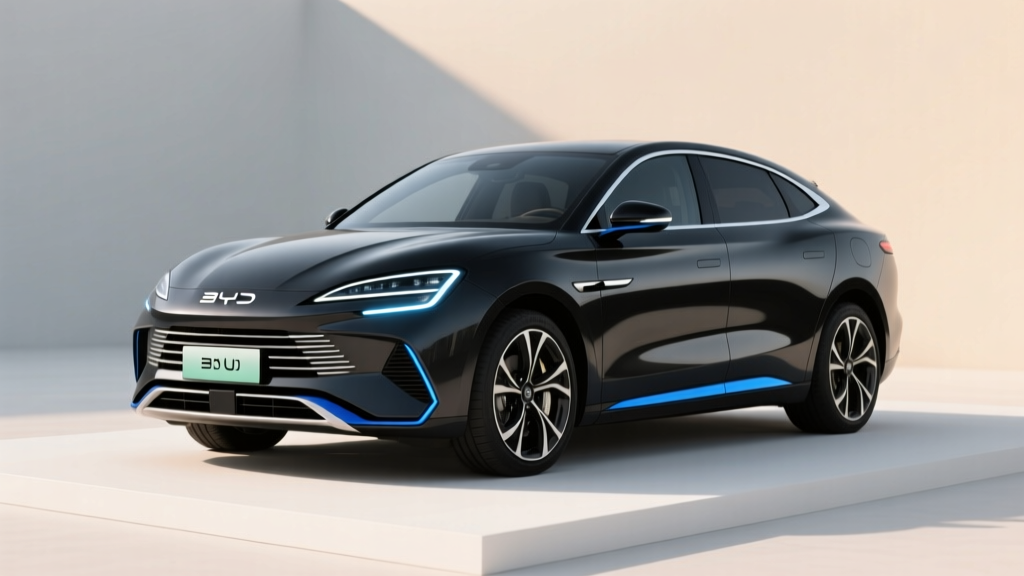
The BYD Yangwang U9 is not your typical electric vehicle. It's a 1,287-horsepower, active-suspension supercar that costs roughly as much as a Lamborghini Huracán — and it's BYD's bid to prove that a Chinese automaker can compete at the pinnacle of automotive performance. For buyers researching the BYD U9 cost of ownership, this review breaks down everything from real-world range to charging infrastructure compatibility, federal tax credit eligibility, and whether this EV supercar makes financial sense against established rivals.
As of early 2026, the Yangwang U9 is available in China and select international markets. U.S. availability remains limited — BYD has not established a passenger-vehicle dealer network stateside, meaning any U9 on American roads would arrive through independent importers or future direct-sales channels. We'll cover what that means for pricing, service, and incentives below.
| Spec | Value |
|---|---|
| Base MSRP (China) | ¥1,680,000 (~$231,000 USD) |
| Estimated U.S. Import Price | $275,000–$320,000+ |
| Battery Capacity | 80 kWh (usable), Blade LFP |
| CLTC Range | 450 km (~280 miles) |
| Estimated EPA Range | ~230–250 miles (unofficial) |
| Powertrain | Quad-motor AWD (e4 platform) |
| Total Output | 1,287 hp / 1,255 lb-ft torque |
| 0–60 mph | 2.36 seconds |
| Top Speed | 190 mph (306 km/h) |
| Max DC Fast Charge | ~500 kW (800V architecture) |
| 10–80% DC Charge Time | ~15 minutes (peak conditions) |
| Level 2 Home Charge | ~11 kW AC (~30–35 mi/hr) |
| Curb Weight | ~5,400 lbs (2,450 kg) |
| Drivetrain | e4 Individual Wheel Drive |
| Suspension | DiSus-X active hydraulic |
| Battery/Powertrain Warranty | 8 yr / 150,000 km (China); U.S. TBD |
Real-World Range: What to Actually Expect
The BYD U9 uses an 80 kWh usable-capacity battery built on BYD's proprietary Blade architecture — a lithium iron phosphate (LFP) cell design known for thermal stability and long cycle life, though with lower energy density than NMC chemistries. BYD rates the U9 at 450 km under China's CLTC testing cycle, which is notoriously optimistic compared to U.S. standards.
For context, that puts the U9 roughly on par with the Porsche Taycan Turbo S (EPA 222 miles) but well behind the Tesla Model S Plaid (EPA 396 miles). Supercar buyers rarely prioritize range, but anyone planning road trips should factor in 2–3 fast-charge stops on a 500-mile journey.
LFP chemistry offers one significant advantage here: BYD recommends regular charging to 100% for LFP cells, unlike NMC batteries that degrade faster at full charge. This means U9 owners can use the full 80 kWh daily without long-term health concerns — a practical benefit that partially offsets the smaller battery size.
Charging Speed: 800V Architecture and Real Charge Times
The U9 rides on BYD's 800-volt e4 platform, enabling DC fast-charge rates up to approximately 500 kW at compatible stations. However, as with every EV on the market, peak charge rate is not sustained throughout the session.
| Charging Level | Power | Speed / Time | Notes |
|---|---|---|---|
| Level 1 (120V) | ~1.4 kW | ~4 mi/hr | Emergency/trickle only |
| Level 2 (240V) | ~11 kW AC | ~30–35 mi/hr | Full charge in ~8–9 hours |
| DC Fast (peak) | ~500 kW | 10–80% in ~15 min | Requires 800V-capable station |
| DC Fast (350 kW station) | ~350 kW | 10–80% in ~18–20 min | More common infrastructure |
| DC Fast (150 kW station) | ~150 kW | 10–80% in ~35–40 min | Typical older CCS station |
The 10–80% charge time of approximately 15 minutes assumes ideal conditions: a 500 kW charger, battery preconditioned to optimal temperature, and a low starting state of charge. In practice, most U.S. DC fast-charging infrastructure tops out at 350 kW (Electrify America, EVgo), yielding 18–20 minute sessions. The charge curve tapers significantly above 80% SoC — expect the final 20% to add another 15–20 minutes, which is typical for LFP cells.
One important connector consideration: BYD vehicles sold in China use the GB/T charging standard. Any U.S.-bound U9 would require CCS1 or NACS adapter compatibility, which BYD has confirmed for international-market vehicles but which adds complexity for early importers.
Performance: The e4 Quad-Motor Platform
This is where the BYD U9 cost starts to make sense for its target buyer. The e4 ("e Four") platform delivers independent torque vectoring to each wheel through four separate motors, producing a combined 1,287 horsepower and 1,255 lb-ft of torque. The 0–60 mph sprint takes just 2.36 seconds, placing the U9 in the upper echelon of production-car acceleration alongside the Rimac Nevera and Tesla Roadster (announced).
The DiSus-X active hydraulic suspension is the U9's party trick. It can raise the car 75 mm for speed bumps, perform controlled "tank turns" (360-degree pivots on the spot), and even drive on three wheels if one tire loses pressure. BYD demonstrated the U9 jumping slightly off the ground using suspension force alone — a stunt that underscores the system's bandwidth, even if it has limited daily utility.
On track, the independent wheel torque control enables cornering dynamics that traditional mechanical differentials can't match. Each wheel can be independently braked or accelerated thousands of times per second, creating yaw moments that make the 5,400-lb supercar handle like a much lighter vehicle.
BYD U9 Cost: Pricing, Trims, and Tax Credit Reality
The headline price for the Yangwang U9 in China is ¥1,680,000, which converts to approximately $231,000 USD at early-2026 exchange rates. However, U.S. buyers face a fundamentally different cost structure.
| Cost Component | Estimated Amount |
|---|---|
| Vehicle Base Price (China MSRP) | ~$231,000 |
| Import Duties (27.5% tariff on Chinese EVs) | ~$63,500 |
| Shipping & Compliance Homologation | $10,000–$15,000 |
| Importer/Dealer Markup | $15,000–$30,000 |
| Estimated U.S. Drive-Away Cost | $275,000–$320,000+ |
| Federal EV Tax Credit (§30D) | Not eligible (see below) |
Federal Tax Credit Eligibility
The BYD U9 does not qualify for the IRS §30D federal EV tax credit. There are multiple disqualifying factors:
- MSRP cap exceeded: The §30D credit caps eligibility at $80,000 MSRP for sedans/sports cars. The U9's price is 3–4x this limit.
- Battery sourcing requirements: The credit requires critical minerals and battery components to be sourced from the U.S. or FTA partners. BYD's vertically integrated supply chain is predominantly China-based.
- Foreign entity of concern (FEOC): Vehicles with battery components from a FEOC (including many Chinese manufacturers) are explicitly excluded from the credit under current IRS rules.
- No U.S. dealer network: The credit requires purchase from a licensed dealer, which BYD does not currently operate in the U.S. for passenger vehicles.
For the latest eligibility rules, consult the IRS clean vehicle credit page or a qualified tax professional.
Interior, Tech, and Daily Usability
The U9 cabin seats two and features a minimalist, screen-forward layout with a large central infotainment display, digital instrument cluster, and passenger-side entertainment screen. Materials quality is high — expect Nappa leather, Alcantara, and exposed carbon fiber throughout. Cargo space is minimal: a small front trunk (frunk) offers roughly 3–4 cubic feet, enough for a soft weekend bag but not much more.
Driver-assistance features include adaptive cruise control, lane-keeping assist, and automated parking. These function as SAE Level 2 driver-assist systems — the driver must remain fully engaged at all times. This is not autonomous driving.
The U9's standout technology is the DiSus-X suspension's integration with the infotainment system. Drivers can select pre-programmed suspension modes, including a "dancing" mode that bounces the car rhythmically (a viral feature in Chinese social media) and the aforementioned tank-turn capability for tight parking situations.
Pros
- 1,287 hp quad-motor AWD with sub-2.4s 0–60
- DiSus-X active suspension with tank turns and 3-wheel driving
- LFP Blade battery — safe chemistry, full 100% daily charging
- 800V architecture supports up to 500 kW DC charging
- Striking supercar design with genuine head-turning presence
- BYD's vertical integration keeps long-term parts supply secure
Cons
- No U.S. dealer network — service and warranty support uncertain
- Zero federal or state EV tax credit eligibility
- 27.5% import tariff inflates U.S. price to $275K–$320K+
- Real-world range of 180–210 highway miles limits road-trip practicality
- 5,400-lb curb weight works against handling and efficiency
- Unproven long-term reliability in Western markets
- GB/T connector in China — CCS/NACS adapter required in U.S.
Competitor Comparison: U9 vs. the Supercar Establishment
At an effective U.S. cost of $275,000–$320,000, the BYD U9 competes against some formidable nameplates. Here's how it stacks up on paper:
| Spec | BYD U9 | Porsche Taycan Turbo S | Tesla Model S Plaid | Lotus Evija (announced) |
|---|---|---|---|---|
| Price (U.S.) | ~$275K–$320K | ~$197,000 | ~$108,000 | ~$2,300,000 |
| Horsepower | 1,287 | 750 | 1,020 | 1,972 |
| 0–60 mph | 2.36s | 2.4s | 1.99s | <2.0s |
| EPA Range (est.) | 230–250 mi | 222 mi | 396 mi | ~250 mi (claimed) |
| Max DC Charge | ~500 kW | 320 kW | 250 kW | 350 kW |
| Battery | 80 kWh LFP | 93.4 kWh NMC | 100 kWh NMC | 70 kWh NMC |
| U.S. Service Network | None | Extensive | Extensive | Limited |
| Federal Tax Credit | No | Eligible (if income qualifies) | Eligible (if income qualifies) | No |
The Tesla Model S Plaid offers more power, more range, U.S. service infrastructure, and tax credit eligibility at roughly one-third the U9's import-adjusted cost. The Porsche Taycan Turbo S provides established brand cachet, superior build quality, and a real dealer network. The U9's advantage lies in its unique DiSus-X suspension technology and the novelty of BYD's quad-motor platform — but for rational buyers, the value proposition is challenging.
Who Should Buy the BYD U9?
The BYD U9 is best suited for:
- EV collectors and enthusiasts who want a rare, technologically unique supercar that no one else at the cars-and-coffee has
- China-based buyers who can purchase at the native ¥1.68M price with full warranty and service support
- Early adopters willing to accept import risk, no dealer support, and potential parts delays in exchange for cutting-edge drivetrain technology
The U9 is not ideal for:
- Buyers seeking a rational supercar investment with strong resale value and service infrastructure
- Anyone who needs more than 200 miles of real-world range
- Daily drivers in areas without 350 kW+ DC fast-charging access
- Buyers who expect federal or state EV incentives to offset the purchase price
Frequently Asked Questions
What is the real-world range of the BYD U9?
Expect approximately 180–210 miles in real-world highway driving and 230–250 miles in mixed city/highway use. Cold weather (below 32°F) can reduce range by 20–30%, bringing effective range down to 160–185 miles. The 80 kWh LFP Blade battery prioritizes safety and cycle life over energy density.
How fast does the BYD U9 charge?
On a 500 kW 800V-capable DC fast charger, the U9 can go from 10–80% in approximately 15 minutes under ideal conditions. At a more common 350 kW station, expect 18–20 minutes. Home Level 2 charging at 11 kW adds roughly 30–35 miles of range per hour, with a full charge taking 8–9 hours.
How much does the BYD U9 cost in the United States?
While the China MSRP is approximately $231,000 USD, U.S. buyers face a 27.5% import tariff on Chinese EVs plus shipping, compliance, and importer markup. The realistic U.S. drive-away cost is $275,000–$320,000 or more, depending on the import channel.
Does the BYD U9 qualify for the federal EV tax credit?
No. The U9 exceeds the §30D MSRP cap ($80,000 for cars), uses China-sourced battery components that trigger FEOC exclusions, and BYD does not operate a U.S. dealer network. Consult IRS.gov for current rules.
Is the BYD U9 worth buying over a Tesla Model S Plaid or Porsche Taycan?
For most U.S. buyers, no. The Model S Plaid offers superior range, faster acceleration, full U.S. service infrastructure, and tax credit eligibility at roughly $108,000. The Taycan Turbo S provides brand prestige and dealer support at ~$197,000. The U9 makes sense primarily as a collector piece or for buyers in markets where BYD has direct sales and service presence.
What is the BYD U9 battery warranty?
In China, BYD provides an 8-year / 150,000 km (~93,000 mile) warranty on the battery and powertrain. U.S. warranty terms have not been officially established, as BYD does not currently sell passenger vehicles through American dealers.
Can the BYD U9 do tank turns?
Yes. The e4 quad-motor platform enables independent wheel control, allowing the U9 to perform 360-degree tank turns by spinning opposing wheels in opposite directions. This is useful for tight parking maneuvers and is a signature feature of the platform.
Final Verdict: A Technological Showcase at a Steep Import Premium
The BYD Yangwang U9 is a genuinely impressive engineering achievement — a 1,287-hp quad-motor supercar with active hydraulic suspension, LFP Blade battery safety, and 800V fast-charging capability. At its China-market price of ~$231,000, it undercuts European rivals on raw technology per dollar.
But for U.S. buyers, the BYD U9 cost equation is brutal. Import tariffs, no dealer network, zero tax credit eligibility, and uncertain long-term service support push the effective price to $275,000–$320,000+ for a vehicle you can't easily get repaired. Until BYD establishes a U.S. passenger-vehicle presence, the U9 remains a fascinating what-if for American EV enthusiasts — and a compelling buy for those in markets where BYD's full ecosystem is available.