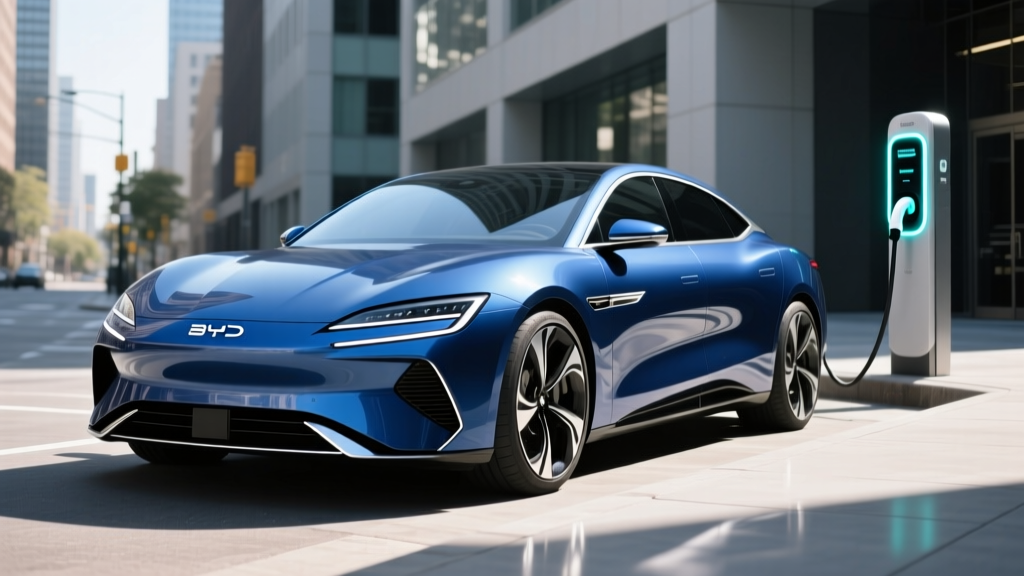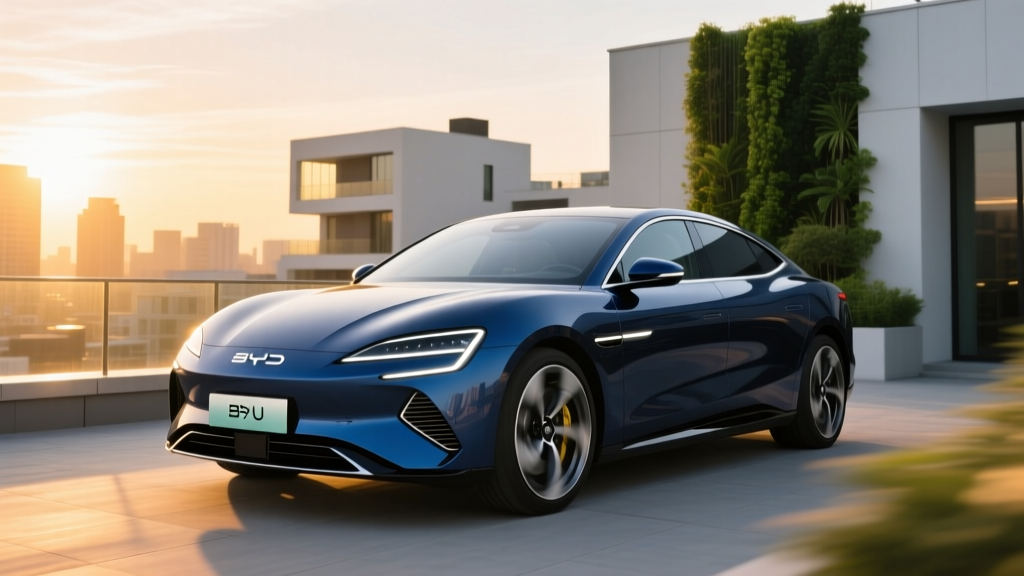
The question surfaces in every EV forum and comment thread: is a Chinese EV better than Tesla? With BYD surpassing Tesla in global quarterly EV deliveries through 2024–2025, the company's expanding lineup has drawn intense scrutiny from American shoppers. In this review, we examine the 2026 BYD Seal U — a compact electric crossover positioned squarely against the Tesla Model Y — to determine whether the specs, pricing, and real-world usability actually support the hype, or whether tariff and charging-infrastructure realities keep it off US soil for now.
Important context for US readers: As of early 2026, BYD does not sell passenger vehicles in the United States. The 2026 Seal U is available in Europe, Southeast Asia, Australia, and Latin America. This review uses verified global-market specs to answer the comparison question and inform buyers in markets where the Seal U is sold, while addressing what US availability would mean under current tariff and §30D tax-credit rules.
2026 BYD Seal U: Core Specifications at a Glance
| Specification | BYD Seal U (Design AWD) | Tesla Model Y Long Range AWD (2026) |
|---|---|---|
| EPA-equivalent Range (WLTP) | 311 mi (WLTP) / ~265 mi EPA est. | 320 mi (EPA) |
| Battery Capacity | 87 kWh (usable), LFP Blade | ~78 kWh (usable), NMC |
| Battery Chemistry | LFP (Lithium Iron Phosphate) | NMC (Nickel Manganese Cobalt) |
| Max DC Fast Charge | 140 kW peak | 250 kW peak |
| 10–80% DC Charge Time | ~28 minutes | ~15 minutes |
| Level 2 AC Charge Rate | 11 kW (~35 mi/hr) | 11.5 kW (~37 mi/hr) |
| 0–60 mph | 5.7 seconds | 4.8 seconds |
| Horsepower | 309 hp (dual motor) | 384 hp (dual motor) |
| Drivetrain | AWD (dual motor) | AWD (dual motor) |
| MPGe (est.) | ~105 MPGe combined | 111 MPGe combined |
| Cargo Volume | 19.4 cu ft (rear seats up) / 55.2 cu ft (folded) | 26.6 cu ft / 72.0 cu ft |
| Rear Legroom | ~37.8 in | ~41.6 in |
| Base MSRP (Europe) | €48,990 (~$53,500 USD) | $48,990 (US) |
| Battery Warranty | 8 yr / 100,000 mi (70% SoH) | 8 yr / 120,000 mi (70% SoH) |
Real-World Range: What the Sticker Doesn't Tell You
Real-World Expectation: ~230–250 miles on mixed highway driving; ~200–220 miles in freezing temperatures (below 32°F / 0°C) with cabin heating.
The BYD Seal U's 87 kWh LFP Blade battery provides a generous energy buffer, but LFP chemistry carries a slight energy-density penalty compared to NMC. In European EV Database real-world testing, the Seal U Design AWD achieved approximately 3.3–3.5 mi/kWh in moderate temperatures, translating to roughly 287–305 km (178–189 miles) at sustained Autobahn speeds of 120 km/h. City and suburban driving pushes that to 4.0+ mi/kWh thanks to regenerative braking.
The critical real-world caveat: LFP batteries suffer steeper range loss in cold weather than NMC cells — often 25–35% below rated range at freezing temperatures versus 15–25% for NMC. The Seal U includes a heat pump as standard equipment, which mitigates this somewhat, but buyers in northern climates should plan for ~200 miles of usable winter range on a full charge.
Charging Speed: Where the Seal U Falls Behind Tesla
| Charging Level | BYD Seal U | Tesla Model Y | Miles Added per Hour |
|---|---|---|---|
| Level 1 (120V / 12A) | 1.4 kW | 1.4 kW | ~4–5 mi/hr (both) |
| Level 2 (240V / 48A) | 11 kW | 11.5 kW | ~35 mi/hr (BYD) / ~37 mi/hr (Tesla) |
| DC Fast Charge (peak) | 140 kW | 250 kW | N/A — see 10–80% below |
| 10–80% DC Time | ~28 minutes | ~15 minutes | — |
Charging is where the "is a Chinese EV better than Tesla" question gets a clear, data-driven answer: not yet on DC fast charging. The Seal U's 140 kW peak charge rate is modest by 2026 standards. The Tesla Model Y, leveraging its 4680 cell architecture, sustains high charge rates longer and reaches 80% in roughly 15 minutes at a V3 or V4 Supercharger.
The Seal U's charge curve is relatively flat — it pulls close to 140 kW from 10–40% SoC, then tapers to ~100 kW through 60%, and drops sharply above 80%. For road-trippers who charge from 10–80% at each stop, the ~28-minute wait is acceptable but noticeably slower than the Tesla ecosystem. On the upside, the Seal U uses the CCS2 connector in Europe (GB/T in China), and in markets where it's sold, third-party DC networks like Ionity and Shell Recharge are widely compatible.
For home Level 2 charging, both vehicles are virtually identical — an overnight charge on a 48A wallbox restores a full battery in roughly 8 hours for either vehicle.
Performance and Driving Dynamics
The Seal U Design AWD produces 309 horsepower from its dual-motor setup, delivering a 0–60 mph time of 5.7 seconds. That's competent but trails the Model Y Long Range AWD's 4.8-second sprint by nearly a full second. The gap widens further against the Model Y Performance (3.5 seconds).
Where the Seal U earns points is ride comfort. BYD has tuned the suspension for compliance over sportiness — it absorbs rough pavement and expansion joints more gracefully than the firm-riding Model Y. Steering is light and accurate, though it lacks the communicative feel Tesla's rack provides. The Seal U is a cruiser, not a corner-carver, and that's a deliberate choice for its target market of families and commuters.
One notable technical feature: BYD's e-Platform 3.0 integrates an 8-in-1 electric powertrain that combines the motor, inverter, reducer, onboard charger, DC-DC converter, PDU, BMS, and VCU into a single module. This reduces weight and improves packaging efficiency — an engineering approach that's genuinely impressive even if it doesn't show up on a spec sheet.
Pricing, Tax Credits, and the US Availability Problem
| Factor | BYD Seal U (if US-available) | Tesla Model Y LR AWD |
|---|---|---|
| Base MSRP | ~$53,500 (est. US pricing) | $48,990 |
| Federal §30D Tax Credit | $0 — fails battery-sourcing and FEOC rules | Up to $7,500 (eligibility varies by VIN sourcing) |
| Effective Price After Credit | ~$53,500 | ~$41,490 (if full credit applies) |
| US Import Tariff (2026) | 100% on Chinese-built EVs | N/A (US-built) |
This is where the comparison becomes decisive for American buyers. Under current IRS §30D rules, the BYD Seal U would fail multiple eligibility criteria even if it were sold in the US:
- Battery sourcing: BYD's Blade cells are manufactured in China, failing the critical-minerals and battery-component requirements that phase out credits for foreign-entity-of-concern (FEOC) content.
- MSRP cap: The Seal U's estimated $53,500 price sits within the $80,000 SUV/truck cap, so this is not a barrier.
- Income cap: Buyer AGI limits ($150K single / $300K joint) apply regardless of vehicle.
- Assembly: Final assembly must occur in North America — the Seal U is built in China and Thailand.
Additionally, the US imposed 100% tariffs on Chinese-built electric vehicles effective August 2024, which remain in force through 2026. This effectively doubles the Seal U's import price, making US market entry economically unviable for BYD under current trade policy. BYD has publicly stated it is evaluating a Mexican or Brazilian production hub for eventual North American supply, but no timeline has been confirmed.
Interior, Technology, and Driver Assistance
The Seal U's cabin features a 15.6-inch rotating center touchscreen — a BYD signature that toggles between portrait and landscape orientation. The infotainment system runs BYD's DiLink software with wireless Apple CarPlay and Android Auto. Material quality is strong: soft-touch surfaces, quilted vegan leather seats, and a panoramic glass roof come standard on the Design trim.
Driver assistance falls under BYD's DiPilot suite, which includes adaptive cruise control, lane-centering assist, automatic emergency braking, blind-spot monitoring, and rear cross-traffic alert. This qualifies as SAE Level 2 driver assistance — identical in classification to Tesla Autopilot. The driver must remain engaged with hands on the wheel at all times. BYD does not offer a Level 4 autonomous or hands-free driving system comparable to GM's Super Cruise on limited-access highways.
Compared to Tesla's FSD (Supervised) — also Level 2 but with broader operational capability in city and highway environments — the DiPilot system is more conservative. Lane-centering is steady but less assertive in merging scenarios, and the adaptive cruise lacks the predictive slow-for-curves behavior that Tesla's system offers. For buyers who prioritize straightforward, non-aggressive driver assist, this is actually a feature, not a flaw.
Pros and Cons: The Honest Assessment
Pros
- LFP Blade battery: exceptional thermal safety, longer cycle life (3,000+ cycles to 80% SoH), no cobalt
- Ride comfort superior to Model Y's firm setup
- Competitive cargo space for the compact crossover segment
- Heat pump standard — better cold-weather efficiency than many rivals
- Strong build quality and material finish at its price point
- 8-year / 100,000-mile battery warranty with 70% State of Health guarantee
Cons
- DC fast charging limited to 140 kW — 28 min 10–80% is slow for 2026
- Not available in the US; 100% import tariff blocks entry
- No federal tax credit eligibility under §30D (battery sourcing + assembly)
- Less rear-seat legroom than the Model Y (37.8" vs 41.6")
- Driver-assist system less capable than Tesla Autopilot/FSD in complex scenarios
- LFP cold-weather range loss steeper than NMC competitors
Who Should Buy the BYD Seal U?
- You live in Europe, Australia, or Southeast Asia where it's sold and supported
- You prioritize ride comfort and cabin quietness over sporty acceleration
- You value LFP battery longevity and thermal safety over maximum range
- Your daily commute is under 150 miles and you charge primarily at home overnight
- You want a well-equipped EV without paying Tesla's brand premium
- You're a US buyer — the Seal U simply isn't available and won't be under current tariffs
- You take frequent road trips and need 250 kW fast charging + Supercharger network access
- You want the most advanced Level 2 driver-assist system on the market
- Maximum cargo and rear-seat space are priorities for your family
- You want to leverage the §30D federal tax credit (up to $7,500) to reduce effective cost
Frequently Asked Questions
What is the real-world range of the BYD Seal U?
The WLTP-rated range is 311 miles for the Design AWD trim, which converts to roughly 265 miles EPA-equivalent. In real-world mixed driving at moderate temperatures, expect 230–250 miles. Highway-only driving at 75+ mph reduces this to ~210–225 miles, and freezing temperatures can push range down to 200 miles or below despite the standard heat pump.
How fast does the BYD Seal U charge at home and on the road?
At home on a Level 2 (240V, 48A) wallbox, the Seal U charges at 11 kW, adding roughly 35 miles of range per hour — a full charge takes about 8 hours overnight. On DC fast chargers, it peaks at 140 kW and charges from 10–80% in approximately 28 minutes. This is notably slower than the Tesla Model Y's 250 kW peak and ~15-minute 10–80% time.
Does the BYD Seal U qualify for the US federal EV tax credit?
No. Even if it were sold in the US, the Seal U would not qualify for the §30D federal tax credit. Its battery cells and critical minerals are sourced from China (a designated FEOC), and final assembly occurs outside North America. Additionally, 100% US tariffs on Chinese-built EVs make import economically unviable as of 2026.
Is the BYD Seal U better than the Tesla Model Y overall?
It depends on the metric. The Seal U wins on ride comfort, LFP battery longevity and safety, and value in markets where it's sold without punitive tariffs. The Model Y wins decisively on charging speed (250 kW vs 140 kW), real-world range efficiency (111 MPGe vs ~105 MPGe), driver-assist capability, cargo space, and — for US buyers — price after the federal tax credit. For American shoppers, the availability and tariff question makes the comparison largely academic.
What is the BYD Blade battery and why does it matter?
The Blade battery is BYD's proprietary LFP (lithium iron phosphate) cell design, arranged in long, thin blade-like modules that serve as structural elements within the pack. LFP chemistry offers superior thermal stability (far less prone to thermal runaway than NMC), longer cycle life (3,000+ charge cycles before 80% capacity retention), and zero cobalt content. The trade-off is lower energy density, which means a heavier and physically larger pack for the same kWh capacity.
Will BYD ever sell cars in the United States?
BYD has not announced a US launch timeline. The company has indicated it is exploring production facilities in Mexico and Brazil that could theoretically supply the North American market, but any vehicle would need to meet US safety standards (NHTSA FMVSS), navigate the 100% tariff structure, and satisfy §30D battery-sourcing requirements to be price-competitive. As of 2026, BYD passenger vehicles remain unavailable in the US market.