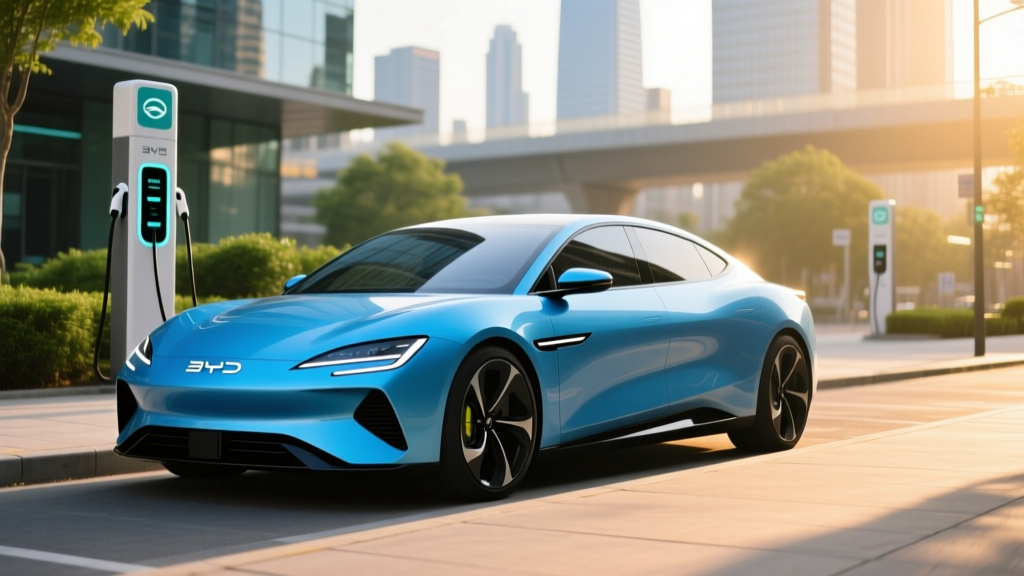
The BYD Seagull has become one of the most searched EVs on the internet — and for good reason. Priced from roughly $10,000 in China, this compact electric hatchback promises affordable urban mobility with real-world usable range. But for US-based shoppers, the picture is far more complicated. This review breaks down every spec, addresses the availability question head-on, and explains what you'd actually be getting if BYD brings the Seagull to American roads.
2026 BYD Seagull: Quick Verdict
The BYD Seagull is a subcompact, front-wheel-drive electric hatchback built on BYD's e-Platform 3.0. It's designed as an urban commuter first — short overhangs, tight turning radius, and a battery sized for daily driving rather than cross-country road trips. In markets where it's sold (China, Latin America, parts of Europe), it undercuts nearly every competitor on price. For US buyers in 2026, however, the Seagull remains unavailable through official channels due to a 100% tariff on Chinese-made EVs and BYD's stated decision to delay US market entry. This review covers the vehicle's specifications as sold globally, with context on what a hypothetical US launch would look like.
Range, Battery, and Efficiency
The 2026 BYD Seagull is offered with two battery options, both using BYD's proprietary Blade battery architecture — a lithium iron phosphate (LFP) cell design known for thermal stability and long cycle life.
| Spec | Standard Range | Extended Range |
|---|---|---|
| Battery Capacity (usable) | 30.08 kWh | 44.9 kWh |
| Chemistry | LFP (Blade) | LFP (Blade) |
| CLTC Range | 305 km (190 mi) | 405 km (252 mi) |
| Estimated EPA Range | ~155 mi | ~205 mi |
| Efficiency (est.) | ~120 MPGe / 28 kWh/100mi | ~118 MPGe / 29 kWh/100mi |
The LFP chemistry is a deliberate trade-off. Compared to nickel-manganese-cobalt (NMC) cells, LFP offers lower energy density (meaning a heavier pack for the same kWh) but delivers superior longevity — typically 3,000+ charge cycles before significant degradation — and far lower risk of thermal runaway. For a commuter car that charges daily, LFP is arguably the better choice. BYD recommends periodic charging to 100% for LFP packs, unlike NMC where 80% daily limits are preferred.
Charging Speed: DC Fast Charge and Home Level 2
Charging is where the Seagull's budget positioning shows most clearly. The DC fast-charging rates are modest by 2026 standards, where competitors like the Hyundai Ioniq 5 and Chevrolet Equinox EV pull 150+ kW.
| Charging Level | Standard Range | Extended Range |
|---|---|---|
| Level 1 (120V, 1.4 kW) | ~3 mi/hr | ~4 mi/hr |
| Level 2 (240V, 6.6 kW) | ~20 mi/hr | ~28 mi/hr |
| Level 2 Full Charge (0–100%) | ~5 hours | ~7 hours |
| DC Fast Charge (peak) | 30 kW | 40 kW (some markets: 60 kW) |
| DC Fast 30–80% | ~35 min | ~40 min |
| Connector (China/EU) | GB/T (China) / CCS2 (Europe) | |
The Extended Range model's DC fast-charging peaks at approximately 40 kW (with some export-market variants reportedly supporting up to 60 kW). That means a 30–80% session takes roughly 35–40 minutes — acceptable for urban errands but a significant limitation on road trips. The charge curve also tapers sharply above 80% State of Charge, as is typical for LFP cells, which have a flatter voltage curve that makes high-SoC charging slower.
For home charging, the onboard 6.6 kW AC charger is adequate. Plugging into a Level 2 wallbox overnight will replenish either battery variant fully by morning. A standard NEMA 14-50 outlet on a 40-amp circuit delivers the full 6.6 kW; a 120V household outlet (Level 1) adds only 3–4 miles per hour of charging — fine for topping off, inadequate for daily replenishment if you drive more than 30 miles.
Performance and Drivetrain
The Seagull is not a performance vehicle, and it doesn't pretend to be. A single front-mounted permanent magnet synchronous motor handles propulsion.
| Spec | Value |
|---|---|
| Motor Output | 75 hp (55 kW) / 135 N·m torque |
| Drivetrain | Front-wheel drive (FWD), single-speed |
| 0–60 mph (est.) | ~11.0 seconds |
| Top Speed | ~81 mph (130 km/h, electronically limited) |
| Turning Radius | ~16.4 ft (5.0 m) |
| Curb Weight (est.) | ~2,535 lbs (Extended Range) |
With 75 horsepower and an 11-second 0–60 time, the Seagull is adequate for city merging and stoplight-to-stoplight driving. The instant torque delivery of the electric motor makes it feel peppier than the numbers suggest at low speeds — a characteristic common to small EVs. Highway passing, however, requires planning. The electronically limited 81 mph top speed reflects its urban-first design philosophy.
Interior, Cargo, and Technology
Inside, the Seagull punches above its price class. The cabin features a 10.1-inch rotating touchscreen (a BYD signature) running the DiLink infotainment system, a 7.0-inch digital instrument cluster, and a minimalist center console with wireless phone charging on higher trims.
| Dimension | Measurement |
|---|---|
| Length / Width / Height | 147.2 / 67.7 / 60.8 in |
| Wheelbase | 97.6 in |
| Front Legroom | ~40.2 in |
| Rear Legroom | ~33.5 in |
| Cargo (rear seats up) | ~8.5 cu ft |
| Cargo (rear seats folded) | ~26.0 cu ft |
| Seating | 5 (4 comfortable) |
Passenger space is reasonable for four adults on short trips, though the rear seat gets tight for anyone over 5'10" on longer journeys. Cargo volume is modest — 8.5 cubic feet behind the rear seats is enough for a week's groceries but not much more. Fold the 60/40 split rear seat and you unlock 26 cubic feet, enough for a couple of carry-on suitcases or a bicycle with the front wheel removed.
Standout tech features: The rotating center screen (landscape for navigation, portrait for music) is a conversation starter. Standard features include Apple CarPlay/Android Auto (wired), a 360-degree camera on higher trims, NFC key card entry, and over-the-air software updates. Available driver-assist features include adaptive cruise control, lane-keeping assist, and automatic emergency braking — all SAE Level 1–2 systems requiring full driver engagement.
Notable drawbacks: No front trunk (frunk) — the motor compartment is fully enclosed. Rear visibility is compromised by thick C-pillars. The infotainment system, while feature-rich, has received mixed reviews for responsiveness in export markets. No DC fast-charging port door illumination for nighttime charging.
Pricing and US Availability
This is where the conversation gets complicated for American shoppers.
| Market / Trim | Price (Local) | Price (USD Equivalent) |
|---|---|---|
| China — Vitality (Standard Range) | ¥69,800 | ~$9,600 |
| China — Freedom (Extended Range) | ¥85,800 | ~$11,800 |
| China — Flying (Extended Range, top) | ¥95,800 | ~$13,200 |
| Europe (estimated, CCS2 variant) | €19,990–€23,990 | ~$21,500–$25,800 |
| US (hypothetical, if launched) | — | ~$22,000–$28,000 est. |
In China, the Seagull starts under $10,000 — a price made possible by BYD's vertical integration (they manufacture their own batteries, semiconductors, and most components) and aggressive domestic pricing. European pricing is roughly double due to shipping, homologation, and VAT.
US availability status (2026): The BYD Seagull is not available for purchase in the United States. BYD has not announced a US launch timeline for the Seagull, and the current 100% tariff on Chinese-manufactured vehicles makes importing the China-built model economically unviable. BYD has stated it is exploring a potential manufacturing facility in Mexico, but as of 2026, no production timeline has been confirmed, and any Mexican-built Seagull would still face significant tariff scrutiny under USMCA rules.
Federal tax credit eligibility: Even if the Seagull were sold in the US, its eligibility for the IRS §30D Clean Vehicle Credit (up to $7,500) is highly uncertain. The credit requires battery components and critical minerals to meet North American sourcing thresholds that a BYD-supplied supply chain would struggle to satisfy. Additionally, the §30D MSRP cap of $55,000 for sedans/hatchbacks and the buyer income limits ($150,000 single / $300,000 joint) would apply. Given BYD's vertically integrated Chinese supply chain, the Seagull would likely fail the critical-minerals and battery-component requirements, rendering it ineligible regardless of price.
Warranty and Ownership Costs
In markets where it's sold, the BYD Seagull carries a warranty package that reflects the company's confidence in its Blade battery technology:
- Battery: 8 years / 150,000 km (~93,000 mi), with capacity retention guaranteed above 70% State of Health
- Powertrain: 8 years / 150,000 km
- Vehicle (bumper-to-bumper): 6 years / 150,000 km
These figures are competitive with global norms (the US standard for EV batteries is 8 years/100,000 miles per federal mandate). LFP chemistry's slower degradation curve means most owners will never approach the 70% SoH threshold within typical ownership periods. BYD's Blade battery has demonstrated less than 10% degradation over 3,000 full charge cycles in internal testing — equivalent to roughly 600,000 miles of driving in the Extended Range variant.
How It Compares: The US Alternatives
Since the Seagull isn't available stateside, here's how it stacks up against the closest US-market alternatives in the affordable compact EV space:
| Spec | BYD Seagull (Extended) | Chevy Equinox EV | Nissan Leaf (if avail.) | Hyundai Kona Electric |
|---|---|---|---|---|
| EPA Range | ~205 mi (est.) | 319 mi | ~212 mi | 261 mi |
| Battery | 44.9 kWh LFP | 85 kWh NMC | 60 kWh NMC | 65.4 kWh NMC |
| DC Fast Charge | ~40 kW | 150 kW | 100 kW | 100+ kW |
| 0–60 mph | ~11.0 sec | ~8.0 sec | ~7.4 sec | ~7.8 sec |
| US MSRP | Not available | ~$33,000 | Discontinued | ~$32,975 |
| Tax Credit | Likely ineligible | Up to $7,500 | N/A | Up to $7,500 |
The Seagull's price advantage evaporates in the US context once tariffs, shipping, and homologation costs are factored in. At a hypothetical $22,000–$28,000 US price, it would undercut competitors on MSRP but offer substantially less range, slower charging, and lower power. The Hyundai Kona Electric at ~$33,000 (potentially ~$25,500 after the §30D credit) delivers 261 miles of EPA range and 100+ kW DC charging — a meaningfully more capable vehicle for the adjusted price gap.
Pros
- Extremely low price in available markets ($10K–$13K in China)
- LFP Blade battery — excellent longevity and thermal safety
- Tight turning radius, ideal for dense urban environments
- Rotating 10.1-inch screen, NFC key, OTA updates at this price point
- Low operating cost: ~$0.04–0.06/mi on home electricity
Cons
- Not available in the US — no announced timeline
- Modest DC fast-charging (40 kW peak) limits road-trip utility
- 75 hp motor struggles at highway speeds
- CLTC range figures are inflated vs. EPA; real-world highway range ~150 mi
- Likely ineligible for §30D tax credit even if US-launched
- Limited cargo space (8.5 cu ft) and no frunk
Who Is the BYD Seagull For?
The Seagull is purpose-built for a specific buyer: urban commuters in markets where it's sold who need an affordable second car for daily errands and short commutes. If your daily driving is under 40 miles, you have reliable home charging access, and you live in a market where the Seagull is available at its China or Europe pricing, it's a compelling proposition.
For US-based shoppers, the Seagull is best understood as a benchmark — proof that affordable EVs with real range are technically feasible — rather than a purchase option. If the Seagull's concept appeals to you, the Hyundai Kona Electric, Chevrolet Equinox EV, or a certified pre-owned Nissan Leaf represent the closest US-available equivalents, with the added benefit of established dealer networks, EPA-certified range figures, and potential §30D tax credit eligibility.
Look at US alternatives if: You need highway-capable range above 200 miles, want DC fast charging for road trips, require tax-credit eligibility, or need a vehicle with established US service infrastructure.
Frequently Asked Questions
What is the real-world range of the BYD Seagull?
The Extended Range variant (44.9 kWh LFP) delivers approximately 185–205 miles under EPA-equivalent testing. In real-world highway driving at 70 mph, expect 150–170 miles. In cold weather below freezing, plan on 120–140 miles due to LFP chemistry's temperature sensitivity. The Standard Range model (30.08 kWh) drops these figures by roughly 25%.
How fast does the BYD Seagull charge?
On DC fast charging, the Extended Range model peaks at approximately 40 kW, achieving a 30–80% charge in about 40 minutes. On a Level 2 home charger (240V, 6.6 kW), a full charge takes roughly 7 hours for the Extended Range battery. Level 1 (120V) charging adds about 4 miles per hour.
How much does the BYD Seagull cost after tax credits?
The Seagull is not sold in the US, so tax credits do not apply. In China, it starts at approximately $9,600 (¥69,800). In Europe, pricing is estimated at €19,990–€23,990. If hypothetically launched in the US at $22,000–$28,000, it would likely be ineligible for the $7,500 §30D federal credit due to Chinese battery-component and critical-mineral sourcing.
Is the BYD Seagull worth buying vs. key competitors?
In markets where it's available, yes — for urban commuters on a tight budget, it offers genuine EV capability at an unmatched price. In the US, it's not an option. The closest alternatives (Hyundai Kona Electric, Chevy Equinox EV) cost more but deliver substantially more range, faster charging, and tax-credit eligibility that narrows the effective price gap.
Does the BYD Seagull qualify for the federal EV tax credit?
No — primarily because it is not sold in the United States. Even if it were, BYD's vertically integrated Chinese supply chain would likely disqualify it from the IRS §30D credit, which requires increasing percentages of battery components and critical minerals to be sourced from North America or free-trade-agreement partners.
Will BYD sell cars in the US?
As of 2026, BYD has not announced a US passenger-vehicle launch. The company sells electric buses and commercial vehicles in the US but has cited the 100% tariff on Chinese-made passenger EVs as a significant barrier. A potential manufacturing facility in Mexico has been discussed but carries its own tariff and regulatory uncertainties under current trade policy.