The Bottom Line on Electric Sportbikes
An electric sportbike delivers instant torque, near-silent acceleration, and minimal maintenance — but real-world highway range typically falls between 60 and 130 miles depending on the model and how aggressively you ride. Current options like the LiveWire S2 Del Mar (110-mile city range, ~$15,499) and the Energica Ego+ (up to 130 miles combined, ~$23,490) trade the 200+ mile fuel range of a gas sportbike for 0-60 times under 3.5 seconds and fueling costs measured in pennies per mile. If your rides are mostly under 80 miles round-trip with access to a standard 120V outlet at home, an electric sportbike is a compelling daily machine. If you regularly chase 200-mile canyon runs or ride in sustained cold weather, a gas or hybrid sportbike still wins on practicality.
What Exactly Is an Electric Sportbike — and Who Makes Them?
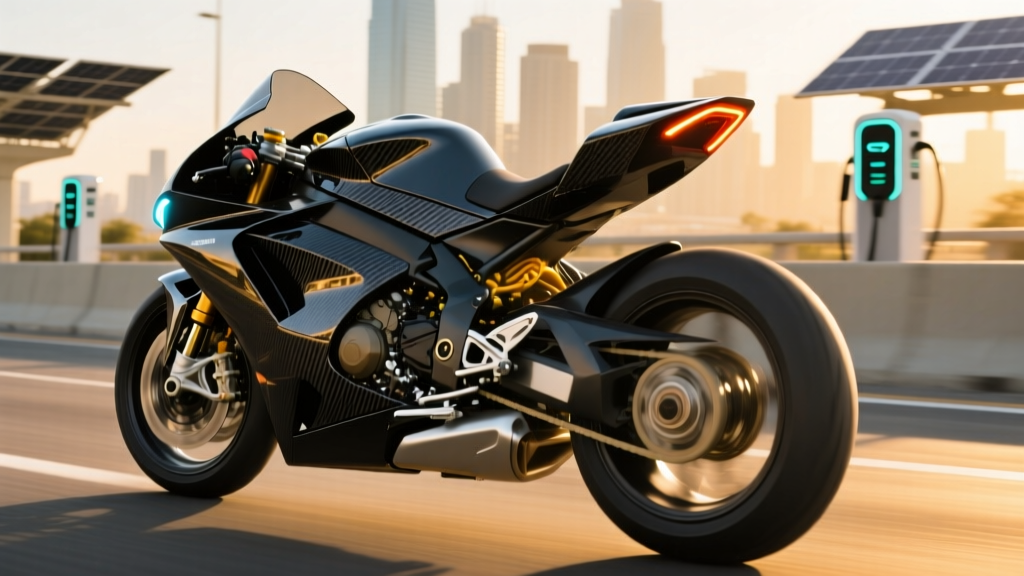
The term "electric sportbike" covers a narrow but growing segment of high-performance, two-wheeled EVs built for aggressive street riding. Unlike electric scooters or commuter e-bikes, these machines produce 80+ horsepower, carry large battery packs, and target riders who want sport-naked or supersport ergonomics with zero tailpipe emissions.
As of the 2026 model year, the primary players available in the U.S. include:
- LiveWire S2 Del Mar — Harley-Davidson's electric spin-off brand, sport-naked styling, 73 kWh-equivalent output, ~84 hp, 110-mile city EPA range.
- Energica Ego+ RS — Italian-built supersport, 21.6 kWh battery (largest in class), up to 130 miles combined, ~145 hp, DC fast-charge capable.
- Damon HyperSport — Canadian startup with radar-based CoPilot safety, 20 kWh battery, claimed 120-mile combined range, ~200 hp (announced, limited deliveries).
- Zero SR/S — Technically a sport-tourer but often cross-shopped, 17.3 kWh Z-Force battery, ~109-mile combined range, 110 hp.
This is not a segment with 15 competitors. Selection is limited, pricing is premium, and specs vary significantly between models — which makes comparison shopping essential.
Electric Sportbike vs. Gas Sportbike: The Numbers
The most common question from prospective buyers is whether an electric sportbike can match a gas bike like the Yamaha YZF-R7, Kawasaki Ninja 650, or Aprilia RS 660. Here's a data-driven comparison using the LiveWire S2 Del Mar and Zero SR/S against a representative gas middleweight sportbike:
| Specification | LiveWire S2 Del Mar (EV) | Zero SR/S (EV) | Yamaha YZF-R7 (Gas) |
|---|---|---|---|
| Base MSRP | $15,499 | $19,995 | $9,199 |
| Horsepower | 84 hp | 110 hp | 72 hp |
| Torque | 194 lb-ft (instant) | 140 lb-ft (instant) | 49 lb-ft @ 6,500 rpm |
| 0-60 mph | ~3.5 sec | ~3.3 sec | ~4.0 sec |
| Range (city / combined / highway) | 110 / 86 / 70 mi | 109 / 82 / 67 mi | ~200 mi (3.6 gal tank, ~55 mpg) |
| Fuel / energy cost per mile | ~$0.02–0.04 | ~$0.02–0.04 | ~$0.06–0.08 |
| Weight | 431 lbs | 485 lbs | 414 lbs |
| Maintenance (annual avg) | ~$50–100 | ~$50–100 | ~$300–600 |
Key takeaway: Electric sportbikes dominate on torque delivery and acceleration, cost significantly less per mile to operate, and require almost no routine maintenance (no oil changes, no valve adjustments, no chain lubrication on belt/shaft models). The trade-offs are a 50–60% shorter real-world range, 50–100% higher purchase price, and substantially longer "refueling" times.
Range Reality: What the Sticker Doesn't Tell You
Electric sportbike range figures are where marketing and reality diverge most sharply. The LiveWire S2 Del Mar's 110-mile city figure assumes stop-and-go riding at moderate speeds where regenerative braking recovers energy. On the highway at a sustained 70 mph, that same bike delivers closer to 65–75 miles before you need to find a plug.
Real-World Range Expectations
LiveWire S2 Del Mar: EPA city 110 mi → expect 80–90 mi mixed riding, 65–75 mi sustained highway, 55–65 mi in cold weather (below 40°F).
Energica Ego+ RS: Combined ~130 mi → expect 100–115 mi mixed, 85–95 mi highway, 75–85 mi cold.
Zero SR/S (with Power Tank accessory): Combined ~109 mi → expect 85–95 mi mixed, 65–75 mi highway, 55–65 mi cold.
Cold weather is the silent range killer. Lithium-ion batteries lose efficiency below 50°F, and cabin-free sportbikes offer no way to redirect waste heat to warm the rider. Expect 20–35% range loss when riding in winter conditions compared to the EPA combined figure. This matters far more on a bike with an 80-mile highway range than on a 350-mile-range EV car.
Charging: Speeds, Connectors, and Home Setup
Unlike electric cars, which have largely standardized around NACS or CCS connectors, the electric sportbike world uses a mix of standards:
- LiveWire S2 Del Mar: J1772 (Level 2), no DC fast charging. Level 2 charges 0–100% in ~7.8 hours. Standard 120V (Level 1) takes ~31 hours.
- Energica Ego+ RS: CCS Combo (Level 2 + DC fast charge). DC fast charging at ~24 kW gets 0–80% in ~40 minutes. Level 2 in ~3.5 hours.
- Zero SR/S: Proprietary J1772 adapter (Level 2). Optional Charge Tank accessory enables faster Level 2 at ~6 kW. No DC fast charging.
| Charging Method | Power (kW) | Time (0–80%) | Miles Added per Hour |
|---|---|---|---|
| Level 1 (120V household) | ~1.3 kW | 25–31 hrs | ~4–5 mi/hr |
| Level 2 (240V, 32A) | ~6.6–7.2 kW | 2–4 hrs | ~25–40 mi/hr |
| DC Fast (Energica only) | ~24 kW | ~40 min | ~120 mi/hr |
The critical ownership insight: Level 1 charging (a standard wall outlet) is essentially useless for daily riding unless you ride fewer than 20 miles per day and leave the bike plugged in overnight for 10+ hours. A Level 2 home charger is practically mandatory for electric sportbike ownership. Installing a 240V / 32A outlet in your garage typically costs $500–$1,500 for the electrician work (assuming your panel has capacity) plus $300–$600 for a quality EVSE unit like the ChargePoint Home Flex or Emporia Vue. If your home's electrical panel is maxed out, a panel upgrade can add $1,500–$3,000.
Total Cost of Ownership: 5-Year Breakdown
The higher purchase price of an electric sportbike stings — but operating costs tilt the ledger back over time. Here's a 5-year / 30,000-mile comparison assuming 6,000 miles annually:
| Cost Category | LiveWire S2 Del Mar (EV) | Yamaha YZF-R7 (Gas) |
|---|---|---|
| Purchase price | $15,499 | $9,199 |
| Federal tax credit (§30D) | Not eligible (motorcycles excluded) | N/A |
| State/local incentives | Varies ($0–$2,500) | N/A |
| Fuel/energy (5 yrs, 30k mi) | ~$600–$1,200 | ~$1,800–$2,400 |
| Maintenance (5 yrs) | ~$250–$500 | ~$1,500–$3,000 |
| Insurance (5 yrs avg) | ~$4,500–$7,500 | ~$3,000–$5,000 |
| 5-year total (est.) | $20,849–$24,699 | $15,499–$19,599 |
Important tax credit note: The federal §30D clean vehicle credit applies to four-wheeled vehicles. Electric motorcycles do not qualify for the $7,500 federal tax credit. Some states and local utility districts offer rebates for electric motorcycles (California's CVRP has historically offered up to $2,500; check your state's current programs), but these vary by jurisdiction and funding availability. Always verify current incentive status through your state energy office or utility provider before counting on a rebate.
Insurance is the hidden cost that catches many first-time electric sportbike buyers off guard. The combination of high replacement cost, instant torque (which insurers associate with higher accident risk), and limited repair-network familiarity pushes premiums 30–50% higher than an equivalent gas sportbike. Get quotes before you buy.
Common Misconceptions — Fact vs. Fiction
| Myth | Fact |
|---|---|
| "Electric sportbikes are slow on the highway." | The Zero SR/S does 0-60 in ~3.3 seconds and has a top speed of 124 mph. Energica's Ego+ RS tops 150 mph. These bikes are genuinely fast. |
| "The battery will need replacement in 3 years." | Modern lithium-ion sportbike packs are warrantied for 5 years/unlimited miles (LiveWire) or 2 years/30,000+ miles (Energica). Real-world degradation data from Zero Motorcycles owners shows ~10–15% capacity loss at 50,000+ miles. Replacement costs $3,000–$6,000 if needed out of warranty. |
| "You can charge at any public EV station." | Most public DC fast chargers are designed for cars — the cable height, parking layout, and connector orientation don't accommodate motorcycles safely. Level 2 J1772 stations work, but you may need to lay the cable across a parking space. Plan routes around motorcycle-accessible charging. |
| "Electric bikes are maintenance-free." | There are no oil changes, valve checks, or spark plugs — but tires, brake pads, brake fluid, suspension service, belt/chain, and coolant (on liquid-cooled models like the Energica) still require attention. Budget $50–100/year, not $0. |
| "They're silent, so they're safer." | Near-silent operation at low speed is actually a hazard — pedestrians and drivers don't hear you approaching. Most electric sportbikes include optional artificial sound generators for this reason. At highway speed, wind and tire noise make them as audible as any bike. |
Battery Longevity and What Replacement Costs
The battery pack is the single most expensive component on an electric sportbike, and its health directly determines your usable range. Current models use NMC (nickel manganese cobalt) lithium-ion chemistry, which offers high energy density — critical in a motorcycle where pack size and weight are severely constrained — but degrades faster than LFP chemistry if routinely charged to 100% or deeply discharged.
For maximum battery life:
- Charge to 80–90% for daily riding; reserve 100% for long rides.
- Avoid leaving the bike at 0% or 100% state of charge for extended periods.
- Store in moderate temperatures when possible — a garage beats a sun-baked driveway or a freezing carport.
- Use the manufacturer's scheduled firmware updates, which often refine thermal management and charging profiles.
According to Zero Motorcycles' ownership documentation, their Z-Force batteries are designed to retain 80% capacity at 273,000+ city miles — though real-world sport riding will accelerate wear compared to commuter use. Energica warrants their pack for 2 years with no mileage limit, and LiveWire provides a 5-year/unlimited-mile battery warranty on the S2 Del Mar.
Decision Framework: Should You Buy an Electric Sportbike?
Choose an Electric Sportbike If:
- Your typical ride is under 70 miles round-trip.
- You have a garage or covered space where you can install a 240V Level 2 charger.
- You value instant torque, silent neighborhood riding, and near-zero maintenance.
- You ride primarily in moderate climates (above 45°F most of the year).
- You're comfortable with a premium purchase price ($15,000–$24,000) and higher insurance costs.
- You want to reduce your per-mile operating cost to under $0.04.
Stick With a Gas Sportbike If:
- You regularly ride 150+ miles in a single day.
- You live in an apartment or lack access to reliable overnight charging.
- You ride year-round in cold climates (below 35°F) where range drops 25–35%.
- Your budget is under $12,000 total purchase.
- You want the widest selection of models, dealers, and aftermarket parts.
- Public DC fast-charging infrastructure for motorcycles is sparse in your area.
Frequently Asked Questions
Can I take an electric sportbike on a road trip?
Technically yes, but it requires careful planning. The Energica Ego+ RS with DC fast charging is the most road-trip-capable option — you can add ~80 miles of range in 30 minutes at a CCS station. For LiveWire and Zero models without DC fast charging, you're limited to Level 2 stops that add ~30 miles per hour of charging. A 200-mile day ride becomes a 6–8 hour commitment with charging stops. Most owners treat electric sportbikes as day-ride machines and keep a gas bike or car for touring.
Do electric sportbikes qualify for any tax credits?
The federal §30D clean vehicle credit does not cover two-wheeled vehicles — it applies only to four-wheeled plug-in vehicles meeting battery-sourcing and MSRP requirements. However, some states (notably California, Colorado, and Oregon) have offered separate rebates or tax incentives for electric motorcycles. Check your state energy office and local utility for current programs, as these change annually and are subject to funding availability.
How long does an electric sportbike battery last?
With proper care (avoiding extreme states of charge, storing in moderate temperatures), modern NMC sportbike batteries typically retain 80–85% of original capacity after 5–7 years or 40,000–60,000 miles of sport riding. Full replacement, if needed out of warranty, costs $3,000–$6,000 depending on the model. Most riders will sell or trade the bike before a replacement is necessary.
Is an electric sportbike good for a new rider?
Generally no — for beginners. The instant, linear torque delivery (full torque from 0 RPM with no clutch or gears to modulate) can be unforgiving for inexperienced riders. The LiveWire S2 Del Mar's 194 lb-ft of torque is available the moment you twist the throttle, with no engine rev buildup to provide warning. New riders are better served by a 300–500cc gas sportbike to learn throttle control, clutch feel, and braking technique before stepping up to an electric machine. If you're set on electric as a beginner, look for models with multiple ride modes that limit power output (most current models offer this).
What's the cheapest electric sportbike available in 2026?
The LiveWire S2 Del Mar at $15,499 is the most accessible current model from a major manufacturer with a nationwide dealer and service network. The Zero SR at ~$17,995 is close behind. Below these price points, you're looking at electric commuters and neo-retros (like the CSC RX1E or Super73-style bikes) that don't deliver sportbike performance. Used electric sportbikes from the 2022–2024 model years can sometimes be found for $10,000–$13,000, but verify battery health (state of health percentage) before purchasing.
Sources: Manufacturer specifications from LiveWire, Energica Motor Company, and Zero Motorcycles. Federal tax credit rules referenced from IRS §30D guidelines.