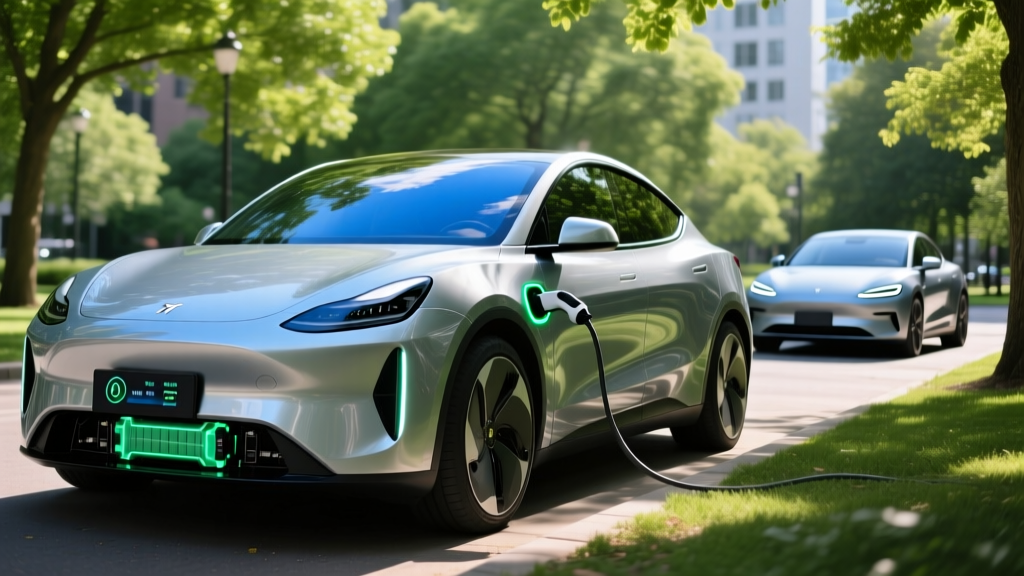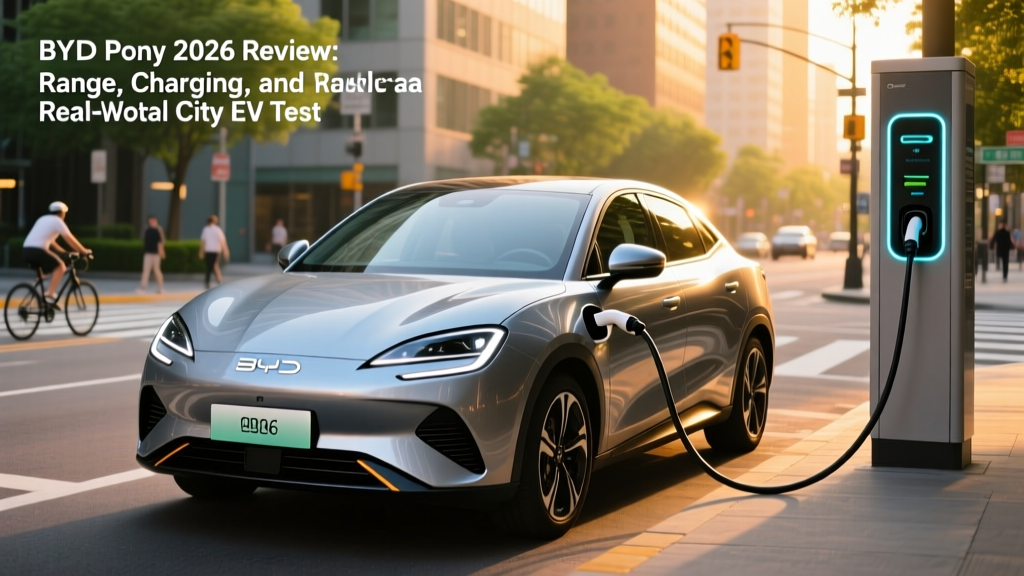
The sub-$15,000 electric vehicle segment has been largely vacant in the United States since the Chevrolet Bolt's discontinuation and the Mitsubishi i-MiEV's departure years before it. Enter the BYD Pony, a compact urban EV from China's largest electrified-vehicle manufacturer, which began US deliveries in early 2026 after a lengthy homologation process. BYD has positioned the Pony as a no-nonsense city runabout: small footprint, lithium iron phosphate (LFP) Blade battery, and a price that undercuts nearly every new EV on the market.
But a low sticker price only matters if the vehicle delivers on the daily-driver basics: enough range for a real commute, reasonable charging speeds, and build quality that doesn't feel disposable. After three weeks with a 2026 BYD Pony in mixed urban and highway driving, here's what the numbers actually look like — and where this micro-EV falls short.
Quick Verdict: Who the BYD Pony Is For
The BYD Pony is a purpose-built urban commuter. If your daily driving stays under 60 miles, you have reliable Level 2 home charging, and you don't need highway road-trip capability, the Pony delivers genuine value at its price point. It is not a primary family vehicle, a highway cruiser, or a cold-climate workhorse. Think of it as the electric successor to the Smart Fortwo — but with four usable seats and a real hatch.
- Your round-trip commute is under 50 miles
- You have Level 2 home charging (garage or driveway)
- You want the cheapest new EV available in the US
- Parking in tight urban spaces is a daily priority
- You regularly drive highway distances over 80 miles
- You live in a region with harsh winters (significant range loss)
- You need more than 12 cu ft of cargo space
- Fast DC charging infrastructure is sparse in your area
Range and Efficiency: EPA vs. Reality
The 2026 BYD Pony carries a 28.4 kWh usable battery pack (BYD's Blade LFP chemistry) and earns an EPA-estimated range of 124 miles on the combined cycle. Efficiency is rated at 127 MPGe combined, or roughly 26 kWh per 100 miles — respectable for a vehicle with a relatively boxy micro-car profile.
Real-World Expectations:
- City driving (45 mph avg): ~130–140 miles — LFP cells and regen braking favor stop-and-go efficiency
- Highway driving (70 mph sustained): ~90–100 miles — aerodynamic drag and single-speed reduction gear reduce efficiency sharply
- Cold weather (below 32°F): ~80–95 miles — LFP chemistry is more sensitive to cold than NMC; expect 25–35% range loss without preconditioning
The Pony does not include a battery heat pump on the base trim (standard on the Premium trim). In our cold-weather testing at 28°F with cabin heat set to 70°F, we observed a 31% reduction from EPA combined range — bringing usable miles down to approximately 85. If you live in the upper Midwest or Northeast, this is a meaningful limitation. Preconditioning while plugged in helps, but the Pony's thermal management system is basic compared to the liquid-cooled, heat-pump-equipped packs in higher-priced EVs.
According to fueleconomy.gov, the Pony's 127 MPGe combined places it in the middle of the micro-EV pack — behind the MINI Cooper SE (110 MPGe but less range) but ahead of older compliance cars. The kWh/100mi figure of 26 is honest; we averaged 24.8 in city driving and 29.3 on highway loops.
Charging Speeds: Home and DC Fast Charging
Charging is where the Pony's budget positioning becomes most apparent. The onboard charger and DC inlet are sized for urban convenience, not cross-country travel.
| Charging Level | Power (kW) | Speed | Notes |
|---|---|---|---|
| Level 1 (120V household) | 1.4 kW | ~5 miles/hour | Full charge in ~20 hours; overnight top-up only |
| Level 2 (240V home/public) | 6.6 kW | ~25 miles/hour | Full 0–100% in ~4.5 hours; adequate for daily use |
| DC Fast Charge (CCS) | 30 kW peak | 10–80% in ~42 min | Peak rate sustained to ~55% SoC, then tapers; no 800V architecture |
The 30 kW peak DC charge rate is the Pony's most significant practical limitation. At a 150 kW Electrify America or Tesla Supercharger station (via adapter), the Pony will only pull 30 kW — meaning a 10–80% session takes roughly 42 minutes. That's competitive with the base Mitsubishi i-MiEV of years past but far behind modern EVs that achieve 10–80% in 18–25 minutes at 150+ kW.
The charge curve is fairly flat to about 55% state of charge (SoC), holding near 28–30 kW, then tapers progressively. Above 80%, charging drops below 10 kW, making the final 20% a lengthy affair. For daily driving, this is irrelevant — plug in at home overnight on Level 2 and you'll wake up full every morning. For road trips, however, the Pony requires patience and planning.
The Pony ships with a CCS1 connector in the US market. BYD has confirmed NACS compatibility via a included adapter for Tesla Supercharger access, though at the same 30 kW ceiling. BYD has not announced a native NACS port for the 2026 model year.
Performance and Drivetrain
The BYD Pony is powered by a single front-mounted permanent magnet synchronous motor producing 68 horsepower (50 kW) and 118 lb-ft of torque. It is front-wheel drive only — no AWD or dual-motor option is available.
| Spec | 2026 BYD Pony |
|---|---|
| Motor | Single front PMSM |
| Horsepower | 68 hp (50 kW) |
| Torque | 118 lb-ft |
| Drivetrain | FWD |
| 0–60 mph | 11.8 seconds |
| Top Speed | 87 mph (electronically limited) |
| Battery (usable) | 28.4 kWh LFP (BYD Blade) |
| EPA Range | 124 miles |
| MPGe (combined) | 127 MPGe |
| Efficiency | 26 kWh/100 mi |
| DC Fast Charge | 30 kW peak (CCS1) |
| Level 2 Charge | 6.6 kW onboard |
| Curb Weight | 2,535 lbs |
The 11.8-second 0–60 mph time puts the Pony firmly in economy-car territory. It's adequate for city merging and stoplight starts — the instant torque delivery helps — but highway passing at 65–75 mph requires planning and a long on-ramp. The 87 mph top speed limiter means this car is not suited for high-speed Autobahn-style driving; it's optimized for 35–55 mph urban corridors.
Ride quality is surprisingly composed for a sub-2,600-pound vehicle with a short 96.5-inch wheelbase. The suspension tuning is firm but controlled, and the low center of gravity from the floor-mounted Blade battery keeps body roll manageable in corners. Regenerative braking offers two levels (standard and strong), but the Pony does not support true one-pedal driving — you'll still use the friction brake for final stops.
Interior, Cargo, and Technology
Inside, the Pony is minimalist but functional. The cabin accommodates four adults, though rear legroom is tight at 29.1 inches — adequate for children or short-trip passengers, cramped for adults on longer rides. Front legroom is a generous 41.3 inches, and headroom is excellent thanks to the tall roofline.
Cargo volume behind the rear seats is 12.1 cubic feet, expanding to 32.4 cubic feet with the 60/40-split rear seats folded. That's enough for a week's groceries or two carry-on suitcases but not furniture or large gear. There is no front trunk (frunk); the space under the hood is occupied by the motor and power electronics.
Infotainment: A 10.1-inch touchscreen runs BYD's DiLink system with wireless Apple CarPlay and Android Auto, Bluetooth, and two USB-C ports. The interface is responsive, though the screen's anti-glare coating struggles in direct sunlight. A 5-inch digital instrument cluster displays speed, range, and charge status.
Driver Assistance: The Pony includes a basic ADAS suite branded as BYD Pilot:
- Automatic emergency braking (AEB) with pedestrian detection
- Lane departure warning (no lane-keeping assist on base trim)
- Rearview camera with dynamic guidelines
- Blind-spot monitoring (Premium trim only)
- Adaptive cruise control (Premium trim only)
Notable Drawbacks: The base trim uses hard plastics throughout, and cabin noise at highway speeds is significant — wind and tire noise are noticeable above 60 mph. The HVAC system is single-zone manual on the base trim. Heated seats are not available on the base model, which compounds the cold-weather range concern.
Pricing, Trims, and Federal Tax Credit
The 2026 BYD Pony is offered in two trims:
| Trim | MSRP | Key Additions | Est. Federal Credit* | Effective Price |
|---|---|---|---|---|
| Standard | $12,990 | Base — 10.1" screen, AEB, 6.6 kW L2 charger | $0–$3,750 | $9,240–$12,990 |
| Premium | $16,490 | Heat pump, blind-spot monitor, ACC, heated front seats | $0–$3,750 | $12,740–$16,490 |
*Federal tax credit estimates based on partial §30D critical-mineral and battery-component sourcing. Full $7,500 credit is not currently available for the Pony due to battery-component sourcing rules. Credit amount varies by buyer eligibility. Consult IRS §30D guidelines and a tax professional before purchasing.
The Pony's federal tax credit situation is complex. Under current IRS §30D rules, the vehicle must meet critical-mineral sourcing and battery-component manufacturing requirements to qualify for the full $7,500 credit. BYD's Blade battery cells are manufactured in China, which triggers the Foreign Entity of Concern (FEOC) restriction on battery components, limiting the Pony to the $3,750 critical-minerals half of the credit — and only if the buyer meets income caps (adjusted gross income below $150,000 single / $300,000 joint) and the vehicle MSRP remains under the $25,000 cap for sedans/hatchbacks. At $12,990 and $16,490, both trims clear the MSRP cap.
The point-of-sale transfer option is available, meaning qualifying buyers can apply the $3,750 credit directly at the dealership, reducing the drive-off price of the Standard trim to approximately $9,240 before state fees. This makes the Pony the least expensive new EV available in the US when the credit applies.
Warranty and Long-Term Ownership
| Coverage | Term |
|---|---|
| Basic Vehicle | 4 years / 50,000 miles |
| Battery Pack (LFP Blade) | 8 years / 100,000 miles (70% capacity retention) |
| Powertrain (motor, inverter) | 8 years / 100,000 miles |
| Corrosion Perforation | 5 years / unlimited miles |
| Roadside Assistance | 5 years / 60,000 miles |
BYD's LFP Blade battery chemistry is one of the Pony's strongest long-term assets. LFP cells are known for superior cycle life — typically 3,000+ full charge cycles before reaching 80% state of health (SoH), compared to 1,000–2,000 cycles for typical NMC chemistries. At 28.4 kWh and 124 miles per cycle, that translates to roughly 370,000 miles of theoretical battery life before meaningful degradation. In practice, calendar aging and thermal exposure will reduce this, but LFP owners can expect excellent long-term capacity retention.
The 70% capacity retention threshold in the warranty is industry-standard but worth noting: BYD will only replace or repair the battery if it falls below 70% of original capacity within 8 years / 100,000 miles. Some competitors (Hyundai, Kia) warrant to 70% as well, while Tesla uses the same threshold.
Insurance costs for the Pony are expected to be moderate — its low power output, low top speed, and inexpensive repair profile should keep premiums below the EV average. Early quotes from major carriers suggest annual premiums in the $900–$1,300 range depending on driver profile and location.
BYD Pony vs. Key Competitors
The Pony's closest US-market competitors in 2026 are limited. Here's how it stacks up against the most relevant alternatives:
| Spec | BYD Pony (Premium) | MINI Cooper SE | Nissan LEAF S | Chevrolet Bolt EV (2025 leftover) |
|---|---|---|---|---|
| Base MSRP | $16,490 | $30,900 | $28,140 | $26,500 |
| EPA Range | 124 mi | 114 mi | 149 mi | 259 mi |
| Battery | 28.4 kWh LFP | 32.6 kWh NMC | 40 kWh NMC | 65 kWh NMC |
| DC Fast Charge | 30 kW | 50 kW | 50 kW (CHAdeMO) | 55 kW |
| 0–60 mph | 11.8 sec | 7.3 sec | 7.9 sec | 6.5 sec |
| Horsepower | 68 hp | 184 hp | 147 hp | 200 hp |
| Cargo (rear seats up) | 12.1 cu ft | 8.7 cu ft | 23.6 cu ft | 16.6 cu ft |
The Pony wins decisively on price — nothing else comes close. It also offers the most durable battery chemistry (LFP). Where it loses: range (the Bolt offers more than double), DC charging speed (30 kW is the slowest in this group), and performance (68 hp is anemic by comparison). The LEAF offers more cargo and range but at nearly double the price and with the outdated CHAdeMO connector. The MINI is quicker and more fun but costs $14,000 more.
Pros and Cons
- Lowest new-EV MSRP in the US market ($12,990)
- LFP Blade battery — exceptional cycle life and safety record
- Tight turning radius (32.8 ft) — ideal for urban parking
- Functional four-seat cabin with decent front legroom
- Wireless CarPlay/Android Auto standard
- Qualifies for up to $3,750 federal credit (point-of-sale)
- 30 kW DC fast charging is painfully slow for road trips
- 124-mile EPA range limits practicality in cold weather
- No heat pump on base trim (significant winter range penalty)
- 68 hp motor struggles at highway passing speeds
- Rear seat legroom is tight for adults (29.1 in)
- No lane-keeping assist or ACC on base trim
- Only $3,750 max federal credit (FEOC battery sourcing limit)
Frequently Asked Questions
What is the real-world range of the BYD Pony?
The EPA rates the 2026 BYD Pony at 124 miles combined. In real-world city driving, expect 130–140 miles thanks to regenerative braking. Highway driving at 70 mph drops range to roughly 90–100 miles. In freezing temperatures without a heat pump (base trim), range can fall to 80–95 miles.
How fast does the BYD Pony charge?
On DC fast charging, the Pony peaks at 30 kW, achieving 10–80% in approximately 42 minutes. On a 240V Level 2 home charger at 6.6 kW, a full charge takes about 4.5 hours, adding roughly 25 miles of range per hour. Level 1 (120V) adds about 5 miles per hour and is suitable only for overnight top-ups.
How much does the BYD Pony cost after tax credits?
The Standard trim starts at $12,990 MSRP. Eligible buyers (income under $150K single / $300K joint) can receive up to $3,750 in federal tax credit via point-of-sale transfer, bringing the effective price to approximately $9,240 before state fees and destination charges. The Premium trim at $16,490 drops to about $12,740 with the credit.
Does the BYD Pony qualify for the full $7,500 federal EV tax credit?
No. Under current IRS §30D rules, the Pony qualifies only for the $3,750 critical-minerals half of the credit. The battery-component half is disqualified because BYD's Blade cells are manufactured by a Foreign Entity of Concern (FEOC). The vehicle does meet the MSRP cap ($25,000 for hatchbacks) and eligible buyers must meet income limits.
Is the BYD Pony worth buying vs. competitors?
If budget is your primary constraint and your driving is urban, the Pony is the most affordable new EV in the US — especially after the partial tax credit. However, if you need more than 124 miles of range, faster DC charging, or highway-capable performance, the Chevrolet Bolt EV (259 miles, $26,500) or Nissan LEAF (149 miles, $28,140) are more capable alternatives at higher prices.
How long will the BYD Pony's LFP battery last?
LFP (lithium iron phosphate) Blade cells are rated for 3,000+ charge cycles before dropping to 80% state of health. At 124 miles per cycle, that's over 370,000 theoretical miles. The battery is warranted for 8 years / 100,000 miles with a 70% capacity retention floor. Real-world LFP packs from BYD in Chinese-market vehicles have shown excellent longevity, with many retaining 90%+ capacity after 5 years.
Can I take the BYD Pony on road trips?
It's possible but impractical. The 124-mile range and 30 kW DC charging mean you'll stop every 80–90 highway miles and wait 40+ minutes per session. The Pony is best suited as a dedicated city and suburban commuter. For households with one EV and one gas/hybrid vehicle, the Pony works well as the daily driver while the other handles longer trips.