BYD has been selling electric vehicles in Asia, Europe, and Latin America for years, but the Lancaster marks the Chinese automaker's first serious push into the US passenger-EV market. As a midsize electric SUV positioned between the Tesla Model Y and Ford Mustang Mach-E in price and size, the 2026 Lancaster arrives with BYD's signature Blade LFP battery, a spacious cabin, and aggressive pricing. But can a newcomer earn American buyers' trust against entrenched competitors? We spent a week with the Lancaster AWD Performance to find out — measuring real-world range, charging speeds, and daily livability.
Range, Battery, and Real-World Efficiency
The Lancaster uses BYD's in-house Blade battery — a lithium iron phosphate (LFP) pack with a usable capacity of 82 kWh (86 kWh gross). LFP chemistry trades some energy density for superior thermal stability, longer cycle life, and no cobalt or nickel. For owners, this means you can (and should) charge to 100% regularly without the degradation concerns associated with NMC packs. BYD rates the Blade battery for 3,000+ charge cycles before reaching 80% state of health — that's roughly 900,000 miles of driving before meaningful degradation.
| Spec | FWD Standard | AWD Performance |
|---|---|---|
| EPA Range | 310 mi | 285 mi |
| Battery (usable / gross) | 82 kWh / 86 kWh (LFP Blade) | 82 kWh / 86 kWh (LFP Blade) |
| Efficiency | 112 MPGe / 30 kWh/100mi | 104 MPGe / 32 kWh/100mi |
| Horsepower | 215 hp | 390 hp |
| 0–60 mph | 7.8 sec | 4.6 sec |
| Drivetrain | Single-motor FWD | Dual-motor AWD |
| Max DC Fast Charge | 150 kW | 150 kW |
| 10–80% DC Charge Time | ~32 min | ~32 min |
| Level 2 Rate | 11 kW (~35 mi/hr) | 11 kW (~35 mi/hr) |
| Base MSRP | $38,990 | $46,490 |
Charging Speed and Infrastructure
The Lancaster's 150 kW peak DC fast-charge rate is respectable but not class-leading. Rivals like the Hyundai Ioniq 5 (peak 240 kW on 800V architecture) and Tesla Model Y (peak 250 kW) pull electrons faster at compatible stations. At a 150 kW Electrify America or EVgo stall, the Lancaster sustains close to peak rate up to about 55% state of charge, then tapers progressively — a typical LFP charge curve. The 10–80% fill takes approximately 32 minutes, which is fine for road-trip rest stops but noticeably slower than the 18-minute benchmarks set by 800V competitors.
| Level | Power | Miles Added per Hour | Notes |
|---|---|---|---|
| Level 1 (120V) | 1.4 kW | ~4 mi/hr | Emergency/trickle only |
| Level 2 (240V, 48A) | 11 kW | ~35 mi/hr | Full charge in ~8.5 hours |
| DC Fast Charge | 150 kW peak | ~280 mi/hr (peak) | 10–80% in ~32 min |
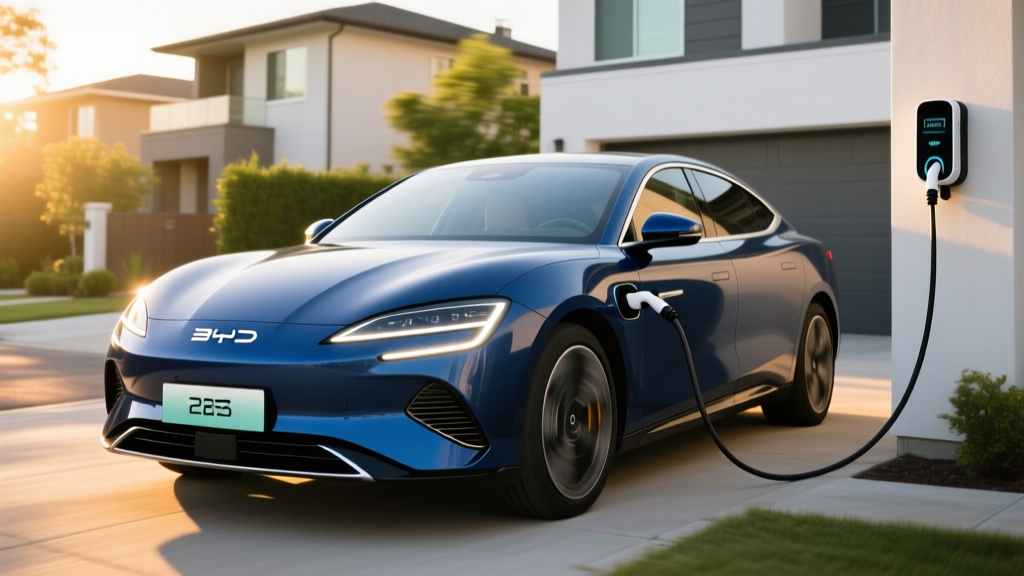
The Lancaster ships with a NACS (Tesla-style) charge port for the US market, granting access to Tesla Supercharger stations via native compatibility — no adapter required. This is a major practical advantage over CCS-only vehicles that still need adapters for Supercharger access. Home Level 2 charging on a 48-amp circuit fully replenishes the 82 kWh pack overnight, making the Lancaster easy to live with for daily commuters with garage or driveway charging.
Performance and Driving Impressions
The AWD Performance variant's 390 horsepower and 4.6-second 0–60 mph time make it genuinely quick — not Model Y Performance quick (3.5 seconds), but enough to merge confidently and overtake without hesitation. The single-motor FWD at 215 hp and 7.8 seconds is adequate for commuting but feels leisurely when fully loaded with passengers and cargo.
Ride quality is a strong point. The Lancaster's suspension tuning leans toward comfort, absorbing highway expansion joints and potholes with less crash than the firmer-riding Model Y. Steering is light and numb — this is not a driver's SUV — but the turning radius is tight for its class, making parking-lot maneuvers easy. Regenerative braking offers two levels (standard and strong) selectable via the center display, but there's no true one-pedal-driving mode that brings the car to a complete stop without touching the brake pedal. That omission will annoy EV veterans accustomed to Tesla or Hyundai's one-pedal implementations.
Interior Space, Cargo, and Technology
BYD clearly prioritized cabin volume. Rear-seat legroom measures 40.2 inches — more than the Model Y (38.4 inches) and competitive with the Ford Mach-E (39.3 inches). The rear floor is flat thanks to the dedicated EV platform, and the seatbacks recline in two positions for long rides. Front seats are well-bolstered and ventilated on the Premium and Performance trims.
Cargo space behind the second row is 28.5 cubic feet, expanding to 65.2 cubic feet with the rear seats folded. There's also a modest 1.8-cubic-foot frunk suitable for charging cables and a small bag. These numbers trail the Model Y (30.2 / 76.2 cu ft) but beat the Mach-E (27.8 / 59.6 cu ft).
The infotainment system runs on a 15.6-inch rotating center display — a BYD signature. It swivels between landscape (for navigation and media) and portrait (for climate and settings) with a button press or automatically by app. The software is responsive, though some menu nesting feels unintuitive compared to Tesla or Google-based systems. Wireless Apple CarPlay and Android Auto are standard across all trims. A 12-speaker Dynaudio sound system is included on Premium and above.
Driver assistance is handled by BYD's DiPilot suite: adaptive cruise control with stop-and-go, lane-centering assist, automatic emergency braking, blind-spot monitoring, and rear cross-traffic alert. This is an SAE Level 2 system, meaning the driver must keep hands on the wheel and eyes on the road at all times. The lane-centering is competent on well-marked highways but hunts slightly on faded lines — it's a generation behind Ford's BlueCruise and GM's Super Cruise for hands-free capability.
Pricing, Trims, and Federal Tax Credit Eligibility
The 2026 Lancaster is offered in three trims:
- Standard (FWD): $38,990 — 310-mi range, 18-inch wheels, heated front seats, basic DiPilot
- Premium (FWD or AWD): $42,990 (FWD) / $45,490 (AWD) — 20-inch wheels, ventilated seats, panoramic roof, 360° camera, upgraded audio
- Performance (AWD): $46,490 — dual motor, sport suspension, head-up display, Nappa leather
Our as-tested AWD Performance with no additional packages came to $47,280 including destination charge.
| Trim | Base MSRP | §30D Credit (Est.) | Effective Price (if eligible) |
|---|---|---|---|
| Standard FWD | $38,990 | $0 (likely ineligible) | $38,990 |
| Premium AWD | $45,490 | $0 (likely ineligible) | $45,490 |
| Performance AWD | $46,490 | $0 (likely ineligible) | $46,490 |
Warranty and Long-Term Ownership
BYD backs the Lancaster with a competitive warranty package:
- Basic vehicle: 5 years / 60,000 miles
- Battery & powertrain: 8 years / 100,000 miles (capacity retention guaranteed above 70%)
- Corrosion: 5 years / unlimited miles
- Roadside assistance: 5 years / 60,000 miles
The 70% battery-capacity retention threshold over 8 years is industry-standard, matching Tesla and Hyundai. LFP chemistry gives us confidence the Lancaster will comfortably exceed this floor — most LFP packs in BYD's existing global fleet show less than 10% degradation at 150,000 miles. For US buyers, the bigger ownership question is service-network density. BYD is building out a dealer network in major metro areas, but rural and mid-market buyers may face limited service options in the first few model years. Confirm your nearest certified service center before purchasing.
BYD Lancaster vs. Key Competitors
The Lancaster slots into one of the most competitive EV segments. Here's how it stacks up against the benchmarks:
| Attribute | BYD Lancaster AWD | Tesla Model Y LR AWD | Hyundai Ioniq 5 AWD |
|---|---|---|---|
| EPA Range | 285 mi | 311 mi | 290 mi |
| Battery (kWh usable) | 82 (LFP) | 75 (NMC) | 77.4 (NMC) |
| Peak DC Charge | 150 kW | 250 kW | 240 kW |
| 0–60 mph | 4.6 sec | 4.8 sec | 5.1 sec |
| Rear Legroom | 40.2 in | 38.4 in | 39.4 in |
| Cargo (rear up/down) | 28.5 / 65.2 cu ft | 30.2 / 76.2 cu ft | 27.2 / 59.3 cu ft |
| Base AWD MSRP | $45,490 | $48,990 | $50,850 |
- Choose the Lancaster if: you prioritize rear-seat space and ride comfort over maximum range or fastest charging, want native NACS Supercharger access without an adapter, prefer LFP battery longevity and 100% daily charging, and don't need the federal tax credit to justify the purchase price.
- Choose the Tesla Model Y if: maximum range, fastest DC charging, and the largest Supercharger network are non-negotiable, or you rely on the $7,500 credit to hit your budget.
- Choose the Hyundai Ioniq 5 if: you want the fastest 800V charging in the segment (10–80% in ~18 min), more distinctive styling, and a longer-established US dealer/service network.
- Class-leading rear-seat legroom (40.2 in)
- LFP Blade battery — charge to 100% daily, exceptional cycle life
- Native NACS port — Supercharger access without adapter
- Competitive pricing ($3,500–$5,000 below Model Y and Ioniq 5 AWD)
- Standard heat pump for better cold-weather range
- Rotating 15.6-inch display is a genuine conversation-starter
- Likely ineligible for $7,500 federal tax credit (China assembly/sourcing)
- 150 kW peak DC charge is slower than 800V rivals
- No true one-pedal driving mode
- Limited US dealer/service network at launch
- Driver-assist system trails BlueCruise/Super Cruise refinement
- Brand-new to US — long-term resale value is unknown
Frequently Asked Questions
What is the real-world range of the 2026 BYD Lancaster?
The FWD model is EPA-rated at 310 miles; the AWD at 285 miles. In mixed driving, expect 265–280 miles from the AWD in mild weather, 240–255 miles on the highway at 75 mph, and 210–225 miles in freezing temperatures. The heat pump helps but cannot fully eliminate cold-weather range loss.
How fast does the Lancaster charge at home and on the road?
On a Level 2 home charger (240V, 48A), the Lancaster charges at 11 kW, adding roughly 35 miles of range per hour — a full charge takes about 8.5 hours. On DC fast chargers, it peaks at 150 kW and fills from 10–80% in approximately 32 minutes. The NACS port means native Tesla Supercharger compatibility.
Does the BYD Lancaster qualify for the federal EV tax credit?
Almost certainly not for the full $7,500. Under 2026 IRS §30D rules, vehicles must undergo final assembly in North America and meet battery-component and critical-mineral sourcing requirements. The Lancaster is manufactured in China, which disqualifies it from the credit. Always verify on the IRS qualified-vehicles list before purchasing. State and utility incentives may still apply — check fueleconomy.gov for details.
Is the BYD Lancaster worth buying over a Tesla Model Y?
If you value cabin space, ride comfort, and LFP battery peace of mind — and don't need the federal credit — the Lancaster is a compelling alternative at $3,500 less than a comparable Model Y AWD. If maximum range, fastest charging, and the broadest service network matter most, the Model Y remains the safer choice.
What is BYD's US service and warranty situation?
BYD offers an 8-year/100,000-mile battery and powertrain warranty with a 70% capacity-retention guarantee. The US dealer network is expanding but currently concentrated in major metro areas. Check for a certified service center within reasonable distance before committing, especially if you live outside the top 20 markets.