Quick Verdict: The Tesla Power Wheel in Context
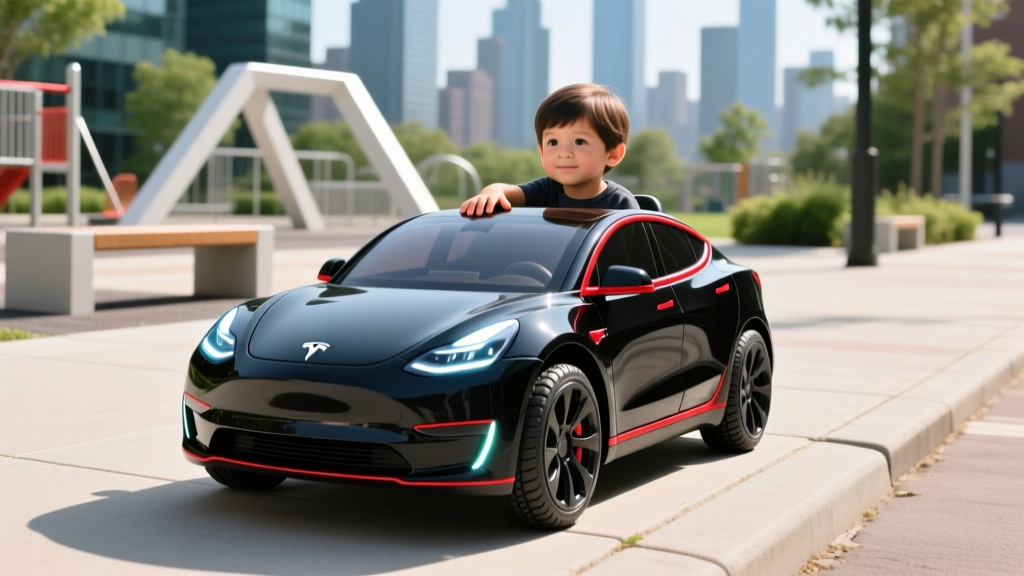
If you've searched for Tesla Power Wheel ride-ons, you've likely noticed something confusing: Tesla doesn't actually manufacture a branded kids' ride-on vehicle, and Mattel's Fisher-Price Power Wheels lineup has never included an officially licensed Tesla model. What you will find are third-party battery-powered kids' ride-on cars styled to resemble the Model S, Model 3, or Cybertruck — sold under brands like Best Choice Products, Costzon, and Tobbi — as well as a premium collector-grade 1:1 scale Model S for Kids that Tesla sold through its own shop from 2016 to roughly 2020. This review breaks down the real specs, battery chemistry, charge times, and runtime you can expect from the ride-on category that buyers associate with the "Tesla Power Wheel" search, and helps you decide which option (if any) is worth your money.
Real-World Runtime: What "Range" Means on a Kids' Ride-On
Kids' ride-on cars don't carry EPA range stickers, but the physics of battery capacity and motor draw work exactly the same as in a full-size EV. Most Tesla-styled ride-ons use a 12-volt, 7 Ah to 12 Ah sealed lead-acid (SLA) battery paired with two 25W–55W motors. That translates to roughly 84 Wh to 144 Wh of usable energy — about the same amount of energy stored in two laptop batteries.
For comparison, the original Tesla-branded "Model S for Kids" (produced by Radio Flyer) used a 12V SLA battery in its base configuration and offered an optional lithium-ion upgrade that roughly doubled runtime to about 90 minutes. That model is discontinued and only available on the secondary market, typically for $400–$700.
Battery and Charging Specs: 12V SLA vs. Lithium
Understanding the battery in a kids' ride-on matters for both safety and convenience. Here's how the two chemistries compare in this category:
| Spec | 12V SLA (Most Common) | 12V Lithium-Ion (Premium/Upgrade) |
|---|---|---|
| Typical Capacity | 7–12 Ah (84–144 Wh) | 10–20 Ah (120–240 Wh) |
| Weight | 5–9 lbs | 2–4 lbs |
| Cycle Life | 200–300 cycles | 800–1,500 cycles |
| Charge Time (0–100%) | 8–14 hours | |
| Replacement Cost | $20–$40 | $60–$120 |
| Self-Discharge | ~5% per month | ~2% per month |
A critical note for parents: SLA batteries degrade rapidly if stored in a discharged state. If your child's ride-on sits unused over winter without a maintenance charge every 4–6 weeks, the battery may sulfate and lose 40–60% of its capacity permanently. This is the single most common reason ride-ons "stop working" after a season of storage.
Charging Speed Breakdown
| Charge Method | Power (W) | 0–100% Time | Notes |
|---|---|---|---|
| Included wall adapter (12V SLA) | ~10–15W | 8–14 hours | Standard for nearly all models |
| Included wall adapter (12V Li-ion) | ~20–30W | 4–6 hours | Premium models only |
| Aftermarket smart charger (SLA) | ~15–25W | 6–10 hours | Better battery longevity |
Unlike full-size EVs where DC fast charging is measured in kilowatts (kW), kids' ride-ons charge at a trickle — typically 10 to 30 watts. There is no fast-charge option. Plan on overnight charging after every play session.
Performance, Speed, and Safety Limits
Parents often want to know exactly how fast these cars go. Here are the numbers:
| Spec | Typical 12V Tesla-Styled Ride-On | 24V Performance Models (e.g., Best Choice 24V) |
|---|---|---|
| Top Speed (Low Gear) | 2.0–2.5 mph | 3.0–3.5 mph |
| Top Speed (High Gear) | 4.0–5.0 mph | 6.0–8.0 mph |
| Motor Power | 2 × 25W–55W (50–110W total) | 2 × 100W–200W (200–400W total) |
| Max Rider Weight | 55–65 lbs | 80–130 lbs |
| Age Range | 3–6 years | 3–8+ years |
| Parental Remote | 2.4 GHz Bluetooth (most models) | Yes, with speed lockout |
| Speed Limiter / Parental Lock | Low-gear lock + remote override | Adjustable via remote |
Most Tesla-styled ride-ons include a 2.4 GHz parental remote control that lets you steer, accelerate, and brake the vehicle from up to 50–80 feet away. This is the single most important safety feature for toddlers who haven't developed the judgment to navigate driveways or sidewalks. Look for models with an emergency stop button on the remote.
Pricing: What You'll Actually Spend
The "Tesla Power Wheel" category spans a wide price range depending on build quality, battery type, and licensing:
| Category | Price Range | Examples |
|---|---|---|
| Budget 12V (Tesla-styled, unlicensed) | $130–$220 | Costzon, Tobbi, generic Amazon brands |
| Mid-Range 12V (better build, parental remote) | $220–$350 | Best Choice Products, Aosom |
| Premium 24V (higher speed, EVA tires, suspension) | $350–$550 | Best Choice 24V, licensed luxury-brand ride-ons |
| Original Tesla Model S for Kids (discontinued) | $400–$700 (secondary market) | Radio Flyer × Tesla collaboration |
Federal tax credit note: Kids' ride-on toys do not qualify for the IRS §30D Clean Vehicle Credit. That credit applies only to new plug-in electric vehicles meeting battery-sourcing, MSRP, and buyer-income requirements — and ride-on toys are classified as toys, not motor vehicles. Don't let any listing suggest otherwise.
Who Should Buy a Tesla-Styled Kids' Ride-On?
These ride-ons are best for families with a flat, paved surface (driveway, garage, smooth sidewalk) and children ages 3–6 who are fascinated by cars. The Tesla styling — typically a Model S silhouette with a front trunk (frunk) and minimalist "dashboard" — appeals to kids whose parents drive EVs and want a matching aesthetic.
They are not ideal for:
- Rough terrain or grass (12V models struggle; 24V handles it better)
- Children over 65 lbs (most 12V models hit their torque limit)
- Families without overnight indoor storage (SLA batteries die in extreme cold or heat if left uncharged)
- Buyers expecting a "real Tesla" experience — these are toys, not miniature vehicles with proportional steering or suspension tuning
Biggest Pros and Cons
Pros
- Tesla-inspired styling stands out vs. generic ride-ons
- Parental 2.4 GHz remote provides real safety control
- SLA batteries are cheap to replace ($20–$40)
- Working LED headlights and horn add to the experience
- MP3/Bluetooth audio on mid-range and up models
Cons
- 8–14 hour charge time means one session per day, max
- SLA batteries degrade fast if stored discharged
- No official Tesla-licensed Power Wheel from Fisher-Price exists
- Plastic wheels on budget models are loud and slippery on smooth surfaces
- Weight limit (55–65 lbs) means most kids outgrow it by age 5–6
How It Compares to Key Competitors
If you're cross-shopping, here are the main alternatives in the premium kids' ride-on space:
- Fisher-Price Power Wheels Dune Racer — 12V, ~$250, no Tesla styling but excellent durability and widely available replacement parts.
- Peg Perego Polaris RZR 900 — 12V, ~$350, made in Italy, better build quality, 2-speed with lockout.
- Best Choice Products 24V Ride-On — ~$400, significantly faster (up to 8 mph), EVA foam tires, handles grass.
- Licensed Mercedes/BMW/Audi ride-ons — $250–$500, comparable Tesla-styled alternatives with real brand licensing.
The Tesla-styled options win on aesthetics for EV-enthusiast families. The Fisher-Price and Peg Perego options win on parts availability and long-term durability. The 24V Best Choice models win on performance and terrain capability.
Frequently Asked Questions
Does Tesla make an official Power Wheel or kids' ride-on car?
No. Tesla partnered with Radio Flyer from 2016 to approximately 2020 to sell the "Model S for Kids," a 12V ride-on, but it is discontinued. Fisher-Price's Power Wheels brand has never produced a licensed Tesla model. Current Tesla-styled ride-ons are third-party products.
What is the real-world runtime of a Tesla-styled kids' ride-on?
Expect 45–90 minutes on pavement with a single child under the weight limit. Runtime drops to 30–45 minutes on grass or with a heavier rider. Cold weather (below 40°F) reduces SLA battery runtime by 20–35%.
How fast do these ride-ons go?
Most 12V Tesla-styled models top out at 4–5 mph in high gear and 2–2.5 mph in low gear. 24V performance models reach 6–8 mph. All include a parental remote with speed override.
How long does it take to charge?
Between 8 and 14 hours for a full charge on the included adapter (12V SLA battery). Lithium-equipped models charge in 4–6 hours. There is no fast-charge option in this category.
Can I get replacement batteries easily?
Yes. Standard 12V 7Ah and 12V 12Ah SLA batteries are widely available at auto parts stores, Amazon, and battery specialty retailers for $20–$40. Ensure the replacement matches the original's terminal type (F1 or F2) and physical dimensions.
Is the parental remote control reliable?
Most 2.4 GHz Bluetooth remotes work reliably within 50–80 feet outdoors. Interference is rare but can occur near dense Wi-Fi environments. Always test the remote's emergency stop before first use.
Does a Tesla kids' ride-on qualify for any EV tax credit?
No. The IRS §30D federal tax credit applies only to qualifying plug-in electric motor vehicles. Kids' ride-on toys are classified as toys and are ineligible regardless of battery type.