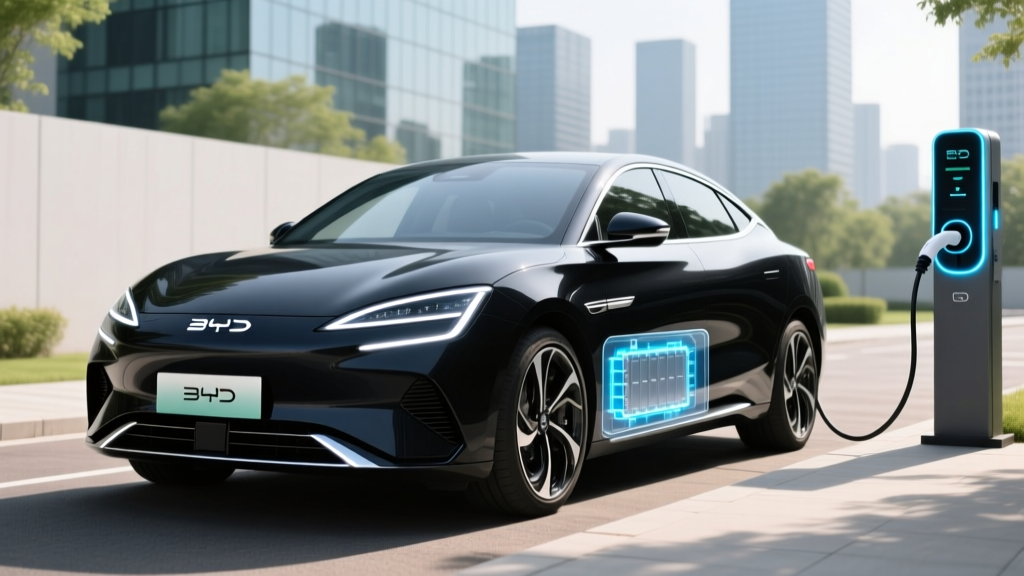
The BYD Denza Z is a flagship electric sedan from BYD's premium sub-brand, positioned to compete with the Tesla Model S, Porsche Taycan, and Mercedes EQS in global markets. With an 800-volt architecture, up to 370 miles of CLTC range, and dual-motor performance variants producing over 700 horsepower, the Denza Z is technically impressive. But for US-based EV shoppers, there's an immediate reality check: BYD vehicles are not sold in the United States, and a 100% tariff on Chinese-built EVs effectively locks this sedan out of the American market.
That doesn't mean the Denza Z isn't worth studying. It reveals where global EV competition is heading, what American buyers might see from legacy brands responding to BYD's pricing, and whether the next Model S refresh will need to match these specs. Here's a deep dive into what the Denza Z offers — and what it would take for it to reach US driveways.
BYD Denza Z at a Glance: Key Specifications
| Spec | RWD Standard | AWD Performance |
|---|---|---|
| Battery Capacity | 84.9 kWh (LFP Blade) | 100.5 kWh (LFP Blade) |
| Range (CLTC) | ~370 mi (600 km) | ~390 mi (630 km) |
| EPA Range (Est.) | ~295 mi | ~310 mi |
| Drivetrain | Rear-Wheel Drive | Dual-Motor AWD |
| Horsepower | ~335 hp | ~710 hp |
| 0–60 mph (Est.) | ~6.2 sec | ~3.3 sec |
| Architecture | 800V e-Platform 3.0 Evo | |
| Max DC Charge Rate | ~240 kW (peak) | |
| 10–80% DC Charge | ~20 min | |
| Length / Width / Height | 197.6 in / 76.8 in / 58.3 in | |
| Wheelbase | 116.5 in | |
| Cargo Volume (Est.) | ~17.0 cu ft trunk + frunk | |
Note: BYD has not submitted the Denza Z for EPA testing as of early 2026. The CLTC (China Light-Duty Vehicle Test Cycle) figures above are the official global numbers. EPA estimates are projected based on typical CLTC-to-EPA conversion ratios of roughly 0.75–0.80× for sedans in this class. Actual EPA numbers would be confirmed only if BYD pursued US homologation.
Real-World Range: What to Actually Expect
Real-World Highway (70 mph, mild weather): ~250–270 miles
Real-World City/Mixed Driving: ~270–295 miles
Cold Weather (below 30°F, highway): ~200–230 miles (20–30% reduction typical for LFP packs without aggressive heat-pump preconditioning)
The Denza Z uses BYD's proprietary Blade Battery, a lithium iron phosphate (LFP) cell arranged in a structural pack. LFP chemistry offers excellent thermal stability and long cycle life — often exceeding 3,000 charge cycles before significant degradation — but trades some energy density versus NMC (nickel manganese cobalt) packs. That means the Denza Z needs a physically larger, heavier pack to achieve comparable range to an NMC-equipped rival like the Porsche Taycan.
In practice, the 84.9 kWh usable capacity in the RWD variant should deliver roughly 3.0–3.3 kWh per mile in mixed driving, translating to around 270 real-world miles. Highway driving at 75+ mph pushes consumption higher, and LFP packs are notably affected by cold temperatures because the chemistry has lower internal resistance heating characteristics. BYD includes a heat pump for cabin climate, but without knowing the exact thermal management aggressiveness during DC fast charging in cold weather, US winter buyers should plan conservatively.
For comparison, the Tesla Model S Long Range achieves an EPA-rated 402 miles from a ~100 kWh NMC pack — significantly more range from a similar footprint, though at a higher price point.
Charging Speed: 800V Architecture in Practice
| Charging Level | Power / Rate | Time / Miles Added |
|---|---|---|
| Level 1 (120V household) | ~1.4 kW | ~4–5 mi/hr |
| Level 2 (240V / 48A home) | ~11.5 kW | ~35–40 mi/hr; full charge in ~8 hrs |
| DC Fast Charge (peak) | ~240 kW | 10–80% in ~20 min |
| DC Sustained (80–100%) | ~60–80 kW (taper) | 80–100% adds ~12–15 min |
The Denza Z rides on BYD's e-Platform 3.0 Evo with an 800-volt electrical architecture — the same voltage class used by the Hyundai Ioniq 5, Kia EV6, and Porsche Taycan. This enables peak charge rates around 240 kW at compatible DC fast chargers.
However, peak kW is not sustained kW. LFP batteries typically exhibit a more aggressive charge-curve taper above 80% state of charge compared to NMC packs. Expect the Denza Z to hold near-peak rates from roughly 10% to 55% SoC, then progressively step down. The 10–80% time of approximately 20 minutes is competitive but not class-leading — the Hyundai Ioniq 5 with its 350-kW peak capability can achieve 10–80% in around 18 minutes under ideal conditions.
For US context: if the Denza Z were sold stateside, it would use either the NACS (Tesla) connector or CCS1. BYD has been equipping newer global models with NACS-compatible ports in select markets, but no US-specific connector confirmation exists because the car isn't sold here.
Performance and Driving Dynamics
The AWD Performance variant of the Denza Z pairs front and rear electric motors for a combined output estimated at 710 horsepower. BYD claims a 0–100 km/h (0–62 mph) time in the low 3-second range, which translates to roughly a 3.3-second 0–60 mph sprint — placing it squarely in Porsche Taycan 4S and Tesla Model S Plaid territory on acceleration alone.
The RWD variant, at approximately 335 hp and a 6.2-second 0–60 time, is the efficiency-focused choice and will be the volume seller in markets where it's available.
BYD has equipped the Denza Z with its DiSus-C intelligent damping suspension system, which uses real-time road-scanning to adjust damper rates. Early reviews from Chinese automotive media note composed ride quality and confident high-speed stability, though steering feel is described as lighter and less communicative than a Porsche or BMW benchmark. This is a luxury GT tuning philosophy, not a track-focused setup.
Interior, Tech, and Standout Features
The Denza Z cabin centers around a 15.6-inch rotating touchscreen (a BYD signature), a 10.25-inch digital instrument cluster, and an available AR-HUD (augmented reality head-up display). The infotainment runs BYD's DiLink system, which in Chinese-market vehicles integrates deeply with local apps and services. A global export version would require significant software localization for Western markets.
Notable tech features include:
- DiPilot ADAS suite: Adaptive cruise, lane-keeping, automated parking, and highway assist — classified as SAE Level 2 (driver must remain engaged at all times)
- Rotating center display: Switches between portrait and landscape for navigation vs. media
- NFC phone-as-key: Unlock and start via smartphone tap
- V2L (Vehicle-to-Load): Power external devices from the traction battery via an adapter
- BYD Blade Battery structural pack: Contributes to chassis rigidity and crash safety
Notable drawbacks: The DiLink software ecosystem is heavily China-centric, and export-market localization remains unproven. Rear headroom is slightly compromised by the fastback roofline. And without US-market availability, there's no NHTSA or IIHS crash-test data to evaluate.
Pricing, Tax Credits, and the US Import Barrier
| Market / Scenario | Estimated Price |
|---|---|
| China MSRP (RWD base) | ~¥229,800 (~$31,700 USD) |
| China MSRP (AWD Performance) | ~¥289,800 (~$40,000 USD) |
| Europe (if exported, est.) | €45,000–€58,000 |
| US (hypothetical, pre-tariff) | ~$42,000–$55,000 |
| US (with 100% tariff applied) | ~$84,000–$110,000 (non-competitive) |
In China, the Denza Z is priced aggressively — undercutting the Tesla Model S by a wide margin and competing more directly with the Xiaomi SU7 and Zeekr 007. The value proposition is undeniable in its home market.
For US buyers, however, the math breaks entirely. Under current IRS §30D clean vehicle credit rules, a vehicle must meet final assembly in North America, battery component sourcing thresholds, and critical mineral requirements to qualify for up to $7,500 in federal tax credits. A China-built BYD fails every one of these criteria. On top of that, the 100% tariff imposed on Chinese-manufactured EVs in 2024 (under Section 301 trade actions and upheld through 2026) doubles the effective import price, rendering the Denza Z completely non-competitive against US-built alternatives.
- Federal §30D tax credit eligible? No. The Denza Z is not assembled in North America and does not meet battery-sourcing or critical-mineral requirements.
- State incentives? Varies by jurisdiction, but most state rebates (e.g., California's CVRP) also require the vehicle to be on an approved list, which the Denza Z is not.
- Point-of-sale transfer? Not applicable — the vehicle is not sold by any US-registered dealer.
Warranty and Long-Term Ownership
In China, BYD provides a comprehensive warranty on the Denza Z lineup:
- Vehicle warranty: 6 years / 150,000 km (~93,000 miles)
- Battery warranty: 8 years / 160,000 km (~99,400 miles) with a minimum 70% capacity retention threshold
- First-owner battery guarantee: BYD has offered a lifetime battery warranty for first registered owners in China on select models, though terms vary by model year and region
The LFP Blade Battery chemistry is one of the most durable in the industry. Independent testing and BYD's own data suggest these cells can endure 3,000+ full charge cycles before reaching 80% state of health. At 300 miles per cycle, that's roughly 900,000 miles before significant degradation — far beyond the useful life of the vehicle itself. For comparison, NMC packs typically achieve 1,500–2,000 cycles to the same threshold.
Should a full battery replacement ever be needed, BYD's structural Blade pack design makes swap costs harder to estimate than modular packs. Based on comparable BYD models, a full pack replacement would likely range from $8,000 to $14,000 — but this is speculative without US service infrastructure.
Who the Denza Z Is For (and Who Should Look Elsewhere)
- Buyers in China, Southeast Asia, or select European markets where the Denza Z is officially sold
- Luxury sedan shoppers wanting 800V fast charging and LFP battery longevity at a mid-tier price
- Tech-forward commuters who value infotainment integration and V2L capability
- Tesla Model S — 402 mi EPA range, Supercharger network, US-built, §30D eligible (income/MSRP permitting)
- Hyundai Ioniq 6 — 361 mi EPA range, 800V charging, built in Georgia, up to $7,500 credit
- BMW i5 — 295 mi EPA range, premium build quality, assembled in Germany (credit eligibility varies by sourcing)
- Lucid Air Pure — 419 mi EPA range, class-leading efficiency at 4.5 mi/kWh
Pros and Cons
- Aggressive pricing in markets where sold
- LFP Blade Battery offers exceptional cycle life and thermal safety
- 800V architecture enables competitive 240 kW DC charging
- AWD Performance variant delivers supercar-class acceleration
- V2L capability for camping, worksite, or emergency power
- Structural battery pack enhances crash rigidity
- Not available in the United States — no dealer network, no service
- 100% tariff makes US import economically impossible
- No EPA, NHTSA, or IIHS testing data
- DiLink infotainment ecosystem unproven outside China
- LFP pack is heavier than NMC equivalents, impacting efficiency
- Charge-curve taper above 80% is more aggressive than NMC rivals
- No confirmed NACS connector for North American charging networks
Frequently Asked Questions
What is the real-world range of the BYD Denza Z?
The CLTC-rated range is approximately 370 miles for the RWD variant. For US driving conditions (if it were EPA-rated), expect roughly 295 miles on the sticker and about 250–270 miles in real-world highway driving at 70+ mph. Cold weather below 30°F could reduce that to 200–230 miles due to LFP chemistry characteristics and cabin heating demands.
How fast does the Denza Z charge?
On a DC fast charger, the Denza Z peaks at approximately 240 kW thanks to its 800V architecture, achieving a 10–80% charge in about 20 minutes. On a Level 2 home charger at 48 amps (11.5 kW), expect roughly 35–40 miles of range added per hour, or a full overnight charge in about 8 hours. Level 1 trickle charging adds only 4–5 miles per hour.
Does the BYD Denza Z qualify for the US federal EV tax credit?
No. Under current IRS §30D rules, the vehicle must undergo final assembly in North America, meet battery-component sourcing thresholds, and satisfy critical-mineral requirements. The China-built Denza Z meets none of these criteria, and the 100% tariff on Chinese EVs makes importing it cost-prohibitive regardless.
Is the BYD Denza Z worth buying over a Tesla Model S or Hyundai Ioniq 6?
In China and select export markets, the Denza Z offers exceptional value — similar performance to a Model S at roughly half the price, with LFP battery longevity as a bonus. For US buyers, it simply isn't an option. The Hyundai Ioniq 6 (361 mi EPA, 800V charging, up to $7,500 federal credit) or Tesla Model S (402 mi EPA, Supercharger access) are the practical alternatives with full US warranty, service, and charging infrastructure.
Will BYD ever sell the Denza Z in the United States?
As of 2026, BYD has not announced any plans to enter the US passenger vehicle market. The company has focused on Europe, Southeast Asia, Latin America, and Australia for its export strategy. Given the 100% tariff environment and the IRA's domestic manufacturing requirements, a US launch would require BYD to build a North American factory — a massive capital commitment with no announced timeline. Industry analysts consider a US entry unlikely before 2028 at the earliest.
What battery chemistry does the Denza Z use, and how long will it last?
The Denza Z uses BYD's LFP (lithium iron phosphate) Blade Battery. LFP chemistry is known for outstanding longevity — typically 3,000+ full charge cycles to 80% state of health, compared to roughly 1,500–2,000 cycles for NMC. In real-world terms, that's potentially 900,000+ miles before the battery degrades to 80% capacity. BYD's battery warranty covers 8 years / ~99,000 miles with a 70% minimum retention threshold.