Why Are People Searching "Cybertruck Banned in the US"?
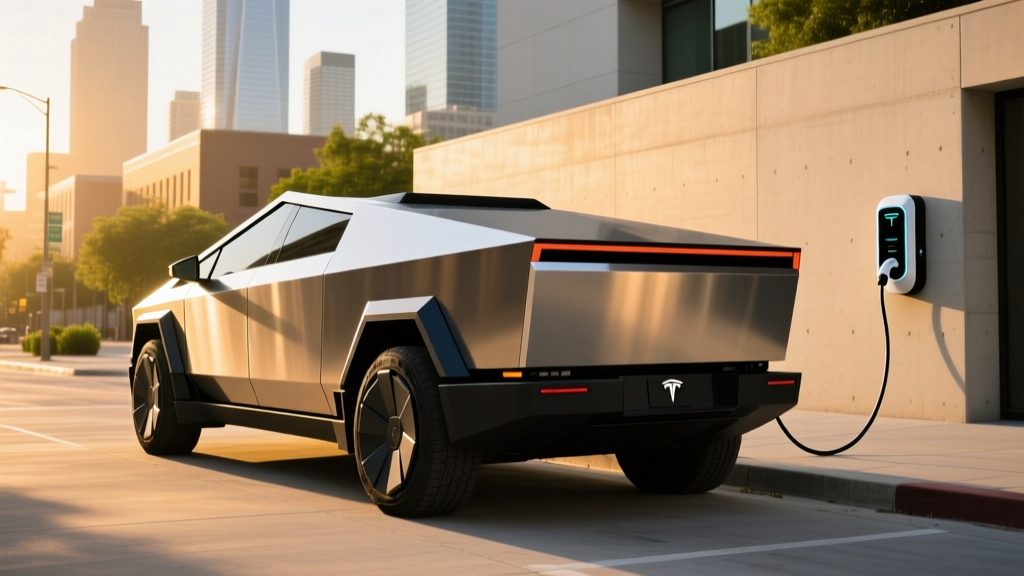
If you've typed "cybertruck banned in us" into a search bar, you aren't alone — and the short answer is no, the Tesla Cybertruck is not banned in the United States. It is fully street-legal in all 50 states, federally certified by the National Highway Traffic Safety Administration (NHTSA), and has been in customer deliveries since late 2023. Production continues at Giga Texas through the 2026 model year with three main trims: Long Range AWD, Dual Motor All-Wheel Drive, and the tri-motor Cyberbeast.
The "ban" rumors typically stem from three real but narrower issues: (1) the Cybertruck's angular stainless-steel exoskeleton and protruding wiper blade raised pedestrian-safety debates that have kept it from being homologated in the EU and UK, (2) aftermarket "Cybertruck wraps" and accessories sold by Tesla have been subject to product-safety recalls, and (3) a handful of US municipalities and private parking garages have posted their own restrictions due to the truck's width and sharp bodywork. None of these amount to a federal or state-level ban on sale, registration, or operation.
Spec Table: 2026 Tesla Cybertruck at a Glance
| Spec | Long Range AWD | Dual Motor AWD | Cyberbeast |
|---|---|---|---|
| EPA Range | 340 mi | 320 mi | 300 mi |
| Battery (usable, est.) | ~123 kWh, NMC | ~123 kWh, NMC | ~123 kWh, NMC |
| Drivetrain | Dual-motor AWD | Dual-motor AWD | Tri-motor AWD |
| Horsepower | ~600 hp | ~600 hp | 845 hp |
| 0-60 mph | 4.1 sec | 3.9 sec | 2.6 sec |
| Peak DC Fast Charge | 250+ kW (800V) | 250+ kW (800V) | 250+ kW (800V) |
| 10-80% DC Time | ~20 min | ~20 min | ~20 min |
| Level 2 Home Charge | 11.5 kW (~44 mi/hr) | 11.5 kW (~44 mi/hr) | 11.5 kW (~44 mi/hr) |
| MPGe (combined) | 66 MPGe | 64 MPGe | 62 MPGe |
| Efficiency | ~51 kWh/100 mi | ~53 kWh/100 mi | ~55 kWh/100 mi |
| Tow Rating | 11,000 lb | 11,000 lb | 11,000 lb |
| Base MSRP | $79,990 | $99,990 | $114,990 |
Sources: fueleconomy.gov, Tesla Cybertruck specs.
Battery, Charging, and the 800V Architecture
The Cybertruck uses an 800-volt electrical architecture (a first for Tesla's consumer lineup) paired with a structural battery pack using 4680-format NMC cells. Usable capacity is approximately 123 kWh. Tesla does not publish a gross figure, and the chemistry is nickel-manganese-cobalt rather than LFP — chosen here for energy density to support the truck's mass and 11,000-lb tow rating.
Charging Speeds Breakdown
| Level | Power | Miles of Range Added |
|---|---|---|
| Level 1 (120V / 12A) | ~1.4 kW | ~3-4 mi/hr |
| Level 2 (240V / 48A Wall Connector) | 11.5 kW | ~44 mi/hr |
| DC Fast (Tesla V4 Supercharger) | Peak 250+ kW | ~200 mi in 15 min |
| DC Fast (CCS adapter, non-Tesla) | Up to 250 kW (site-dependent) | Varies by station |
The 800V pack sustains high charge rates longer than Tesla's older 400V packs, but the charge curve still tapers significantly above 80% SoC. The quoted ~20-minute 10-80% time assumes a preconditioned battery and a V4 Supercharger delivering its full rated power; at older V3 stalls (250 kW peak, shared cables), plan on 25-30 minutes. For home charging, a 48-amp Wall Connector on a 60-amp circuit is the practical baseline — budget $800-$1,500 for professional installation depending on panel proximity, and confirm with a licensed electrician whether your service panel needs an upgrade.
Where Is the Cybertruck Actually Restricted?
The confusion around a "ban" comes from legitimate, but limited, restrictions:
- European Union / United Kingdom: The Cybertruck has not received type-approval in the EU or UK. European pedestrian-impact regulations (UN Reg. 127 / EU 78/2009) and protrusion rules make the stainless-steel body and exposed wiper difficult to certify. Tesla has not announced a European-spec version, so the truck effectively cannot be newly registered there — but that is a homologation gap, not a US ban.
- Aftermarket accessory recalls: Tesla has issued recalls for certain Cybertruck accessories (bed mats, tonneau covers, and certain trim pieces) that could detach at speed. These are product-safety actions, not vehicle bans — the truck itself remains legal.
- Private property and local rules: A small number of parking garages, HOAs, and private lots have posted width or "sharp-edge" warnings targeting the Cybertruck's 80.2-inch width (excluding mirrors) and angular body. These are property-level policies, not law.
- State registration: All 50 states and DC currently register the Cybertruck without restriction. Tesla has sold and delivered units in every state where it holds direct-sales licenses.
For US buyers, the practical takeaway is that no federal, state, or NHTSA action prohibits you from buying, registering, insuring, or driving a Cybertruck today.
Pricing, Trims, and the Federal EV Tax Credit
The 2026 Cybertruck lineup has crept upward since launch. Current MSRPs (before destination or options) are:
| Trim | Base MSRP | §30D Credit Eligibility | Effective Price (est.) |
|---|---|---|---|
| Long Range AWD | $79,990 | Not eligible (MSRP cap) | $79,990 |
| Dual Motor AWD | $99,990 | Not eligible (MSRP cap) | $99,990 |
| Cyberbeast | $114,990 | Not eligible (MSRP cap) | $114,990 |
Under IRS §30D rules, new clean-vehicle credits cap eligible trucks at an $80,000 MSRP. Because the Long Range AWD starts at $79,990, buyers adding any factory option, destination charge, or paint that pushes the sticker above $80,000 lose eligibility — and the Dual Motor and Cyberbeast trims are well over the cap regardless. Buyer income limits ($300k joint / $150k single MAGI) and critical-mineral/battery-sourcing rules further narrow the pool. Most Cybertruck buyers will not qualify for the $7,500 federal credit. Always verify your specific situation with a tax professional and the latest IRS guidance; point-of-sale transfer is available when eligibility is confirmed.
Who Is This Truck For?
The Cybertruck fits a narrow but real buyer profile:
- Towing and work users who need 11,000-lb capacity and a 6-foot bed with powered tonneau.
- Tech-forward early adopters who value the 800V architecture, steer-by-wire, and 48-volt electrical system.
- Garage-owning households with Level 2 charging access — public-only charging is painful for a 123 kWh pack.
It is not ideal for urban apartment dwellers (width + height challenge in tight garages), families prioritizing crash-test transparency (NHTSA ratings have been limited/slow to publish), or buyers on a budget who need the federal credit to make the math work.
Pros, Cons, and Competitor Context
Pros
- 800V architecture sustains high DC charge rates
- Class-leading 0-60 (2.6 sec Cyberbeast) and 11,000-lb tow rating
- Stainless exoskeleton resists dents; no paint to chip
- Steer-by-wire and rear-wheel steering give a compact turning circle (~35 ft)
- 6-ft bed with integrated ramp and 120/240V outlets (V2L-capable)
Cons
- MSRP above §30D truck cap eliminates the $7,500 credit for most buyers
- Real-world highway range falls ~15-20% below EPA; towing cuts it further
- Pedestrian-safety controversy limits resale/travel abroad
- Steer-by-wire learning curve; no physical stalks
- Limited NHTSA/IIHS published crash-test data as of 2026
- Insurance premiums run 20-40% higher than comparable F-150 Lightning
Cybertruck vs. Key Rivals
Against the Ford F-150 Lightning, the Cybertruck wins on acceleration, charge speed (800V vs. Lightning's ~400V architecture), and tech novelty, but loses on interior space, conventional controls, tax-credit eligibility (Lightning Lariat/XLT often qualifies), and established service networks. The Rivian R1T (Dual/Quad-Motor) offers a more refined interior, stronger off-road hardware, and better IIHS visibility, at similar pricing. The Chevrolet Silverado EV undercuts on price at lower trims and offers a larger bed, though with slower DC charging curves.
Warranty, Ownership Costs, and Resale Reality
Tesla covers the Cybertruck with a 4-year/50,000-mile basic warranty and an 8-year/120,000-mile battery and drive-unit warranty (retaining at least 70% of capacity over that term). The stainless body means no paint repairs, but panel replacement after a collision is costly and shop availability remains limited outside major metros — a factor driving higher insurance quotes.
Efficiency at ~51-55 kWh/100 mi means home charging at the US average of $0.16/kWh costs roughly $8.20-$8.80 per 100 miles, compared to $15-$18 per 100 miles for a gas F-150 at 18 mpg combined. Over five years at 12,000 miles/year, that's a fuel savings of roughly $4,500-$5,500 — meaningful, but not enough to offset the higher purchase price without a tax credit.
Frequently Asked Questions
Is the Cybertruck banned in the US in 2026?
No. The Tesla Cybertruck is fully street-legal and registered in all 50 US states. It is federally certified by NHTSA and delivered continuously since late 2023. The "ban" rumors come from its inability to meet EU/UK pedestrian-safety rules, not from any US restriction.
What is the real-world range of the Cybertruck?
EPA ratings are 340 mi (Long Range), 320 mi (Dual Motor), and 300 mi (Cyberbeast). Real-world highway driving at 70+ mph typically yields 260-290 mi for the Long Range, and cold weather (below freezing) can reduce that by another 15-25%. Towing a trailer cuts range roughly in half.
How fast does the Cybertruck charge?
On a Tesla V4 Supercharger, the 800V pack peaks above 250 kW and charges 10-80% in roughly 20 minutes with preconditioning. On a Level 2 home Wall Connector at 11.5 kW, expect ~44 miles of range per hour — a full overnight charge from 20% to 100% takes about 10-11 hours.
Does the Cybertruck qualify for the $7,500 federal EV tax credit?
Generally, no. IRS §30D caps eligible trucks at $80,000 MSRP. The Long Range AWD starts at $79,990 but any options push it over the cap, and the Dual Motor ($99,990) and Cyberbeast ($114,990) are ineligible regardless. Income limits and battery-sourcing rules further restrict eligibility. Consult a tax professional and the latest IRS guidance.
Is the Cybertruck worth buying over an F-150 Lightning or Rivian R1T?
It's worth it if you prioritize acceleration, 800V charge speed, the stainless body, and Tesla's Supercharger network, and you don't need the federal credit. Choose the Lightning if you want a conventional truck layout, broader service footprint, and likely credit eligibility. Choose the R1T for a more refined interior, stronger off-road chops, and IIHS-tested safety credentials.
Why can't you buy the Cybertruck in Europe?
The EU and UK have stricter pedestrian-impact and external-protrusion regulations than the US. The Cybertruck's flat stainless-steel front end and exposed wiper blade do not currently meet UN/ECE pedestrian-safety standards, and Tesla has not released a modified Euro-spec version. This is a homologation issue, not a US-side ban.