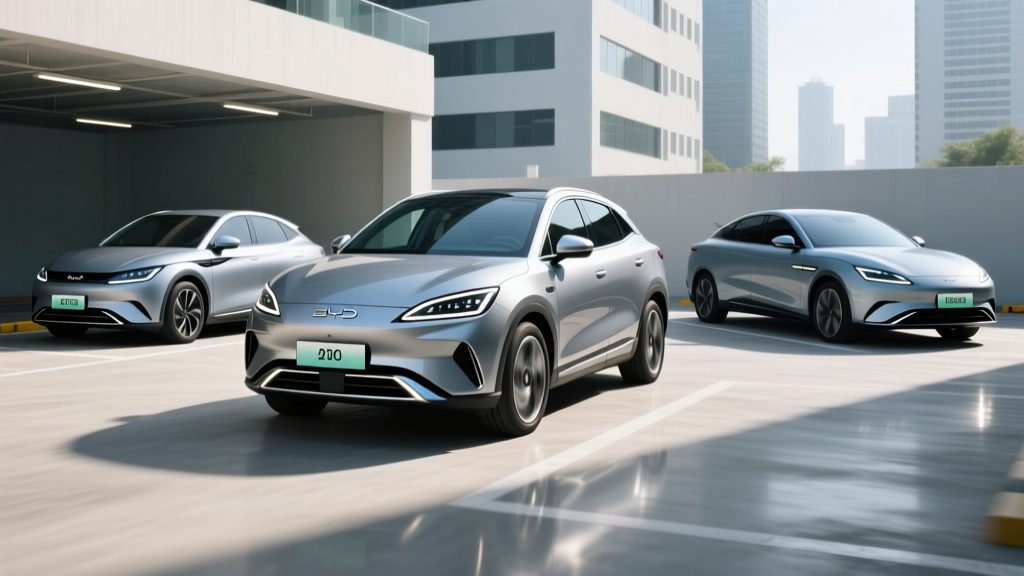
If you've been tracking the rapid electrification of Southeast Asian markets, you already know that BYD cars Philippines has become one of the most-searched automotive topics in the region. Since officially entering the Philippine market through Ayala Corporation's AC Mobility, BYD has aggressively rolled out a lineup that undercuts legacy Japanese automakers on price while delivering competitive electric range and modern tech. But for research-heavy buyers — whether you're in Metro Manila, Cebu, or considering an import to another market — the real questions are about the numbers: What's the actual range in tropical heat and stop-and-go traffic? How fast do these cars charge on the Philippines' growing but still-limited DC fast-charging network? And how do they stack up against rivals like the Hyundai Ioniq 5, MG4, or Tesla Model 3?
This guide covers the three core BYD models available in the Philippines as of early 2026 — the Atto 3 (compact SUV), Dolphin (hatchback), and Seal (sport sedan) — with exact specs, real-world range expectations, charging data, and ownership economics. While the Philippines doesn't offer a direct equivalent to the U.S. federal §30D tax credit, we'll also note how these models are priced for U.S. buyers considering imports or comparing against BYD's global pricing strategy.
BYD Philippines 2026 Lineup at a Glance
BYD's Philippine portfolio targets three distinct buyer segments. The Atto 3 serves the family-crossover crowd, the Dolphin appeals to urban commuters seeking an affordable entry point, and the Seal goes after the premium sport-sedan market dominated by Tesla and BMW. All three ride on BYD's e-Platform 3.0 and use the company's proprietary Blade Battery — a lithium iron phosphate (LFP) cell in a cell-to-pack (CTP) configuration that prioritizes safety, longevity, and cost over the energy density of nickel-manganese-cobalt (NMC) chemistries.
| Spec | Atto 3 (Advanced) | Dolphin (Premium) | Seal (Premium AWD) |
|---|---|---|---|
| Battery (usable) | 58.56 kWh (LFP Blade) | 60.48 kWh (LFP Blade) | 82.56 kWh (LFP Blade) |
| WLTP Range | 420 km (261 mi) | 427 km (265 mi) | 570 km (354 mi) |
| Estimated EPA-equivalent Range | ~235 mi | ~240 mi | ~310 mi |
| Motor / Drivetrain | Single motor / FWD | Single motor / FWD | Dual motor / AWD |
| Horsepower / Torque | 201 hp / 310 Nm | 201 hp / 310 Nm | 523 hp / 670 Nm |
| 0-100 km/h (0-62 mph) | 7.3 sec | 7.0 sec | 3.8 sec |
| Max DC Fast Charge | 88 kW | 88 kW | 150 kW |
| 10-80% DC Time | ~35 min | ~34 min | ~26 min |
| Level 2 AC Charge Rate | 7 kW | 7 kW | 11 kW |
| Philippine Price (MSRP) | ₱1,598,000 (~$28,200) | ₱1,688,000 (~$29,800) | ₱2,498,000 (~$44,100) |
| Battery Warranty | 8 yr / 160,000 km | 8 yr / 160,000 km | 8 yr / 160,000 km |
Note: BYD does not currently sell vehicles in the United States, so EPA ratings are not published on fueleconomy.gov. The EPA-equivalent ranges above are estimated by applying a ~10% reduction from WLTP figures, consistent with typical EPA-to-WLTP conversion ratios. Philippine pricing converted at approximately ₱56.5 = $1 USD as of early 2026.
Real-World Range: What the Sticker Doesn't Tell You
- Atto 3: WLTP 420 km → Expect ~340-370 km (211-230 mi) in mixed Metro Manila traffic with A/C; ~300 km (186 mi) sustained highway at 100+ km/h
- Dolphin: WLTP 427 km → Expect ~350-380 km (217-236 mi) city; ~310 km (193 mi) highway
- Seal AWD: WLTP 570 km → Expect ~460-500 km (286-311 mi) mixed; ~400 km (249 mi) aggressive highway driving
The Philippines' tropical climate (30-35°C ambient) means less cold-weather range loss than northern markets, but heavy A/C use in stop-and-go traffic typically reduces range 10-15% below WLTP. Highway driving at sustained speeds above 100 km/h is the biggest efficiency killer — expect 20-25% reduction from the WLTP sticker.
One advantage of LFP chemistry in tropical climates: the Blade Battery's thermal stability is excellent. Unlike NMC cells that degrade faster in sustained heat, LFP cells tolerate high state-of-charge (SoC) and elevated temperatures better, meaning Philippine owners may see slower long-term degradation than owners in hot Middle Eastern markets with NMC packs. BYD claims the Blade Battery retains 80% capacity after 3,000+ full charge cycles — translating to well over 1 million kilometers of theoretical use.
Charging Speed and Infrastructure Reality
The Philippines' public DC fast-charging network is expanding — operators like ChargeGO, AC Mobility's own chargers, and Shell Recharge have deployed units across major corridors — but coverage outside Metro Manila, Cebu, and Davao remains sparse. Here's what each BYD model can actually pull from available infrastructure:
| Charging Level | Atto 3 | Dolphin | Seal |
|---|---|---|---|
| Level 1 (120V / ~1.4 kW) | ~5 km/hr (3 mi/hr) | ~5 km/hr (3 mi/hr) | ~7 km/hr (4 mi/hr) |
| Level 2 AC (240V / 7 kW) | ~40 km/hr (25 mi/hr) | ~40 km/hr (25 mi/hr) | — |
| Level 2 AC (240V / 11 kW) | — | — | ~65 km/hr (40 mi/hr) |
| DC Fast (peak kW) | 88 kW | 88 kW | 150 kW |
| 10-80% DC Time | ~35 min | ~34 min | ~26 min |
| Connector (PH market) | CCS2 / GB/T | CCS2 / GB/T | CCS2 / GB/T |
A critical note on charging curves: the Atto 3 and Dolphin's 88 kW peak is only sustained between roughly 10-50% SoC. Above 60%, the charge rate tapers significantly — often dropping to 40-50 kW. This means the advertised 35-minute 10-80% time assumes optimal battery temperature and a charger capable of delivering sustained power. On a 60 kW public charger (still common in the Philippines), expect 10-80% to take closer to 50-60 minutes for the Atto 3 and Dolphin.
The Seal's 150 kW peak is more competitive with rivals like the Hyundai Ioniq 5 (which peaks at 240 kW on 800V architecture but costs considerably more). For home charging, most Philippine BYD owners install a 7 kW single-phase wallbox, which fully replenishes the Atto 3 overnight in about 8.5 hours. The Seal benefits from 11 kW three-phase AC charging, but three-phase power availability in Philippine residences is limited — verify with a licensed electrician before committing to a three-phase home charger installation.
Performance and Driving Dynamics
The Atto 3 and Dolphin share BYD's 201-hp permanent-magnet synchronous front motor. In practice, this delivers brisk city acceleration — the instant torque makes merging onto EDSA or navigating tight Manila streets effortless. The 7.0-7.3 second 0-100 km/h times won't thrill enthusiasts, but they're adequate for daily driving and comparable to a Honda HR-V or Toyota Corolla Cross in the ICE world.
The Seal AWD is a different animal entirely. With 523 hp and 670 Nm from its dual-motor setup, it hits 100 km/h in 3.8 seconds — firmly in BMW M3 territory. The low center of gravity from the under-floor Blade Battery pack gives it composed handling, and the AWD system provides confident traction in the Philippines' frequent heavy rain. However, the Seal's ~2,185 kg curb weight is noticeable during direction changes; this is a grand-touring sport sedan, not a track car.
Regenerative braking across all three models offers two levels (standard and high) selectable via the infotainment screen. Unlike some competitors, BYD does not offer true one-pedal driving with a complete stop — you'll still need the friction brake for the final few km/h. The brake feel is generally well-blended, though some owners report a slightly grabby initial bite when regen is set to high.
Interior, Tech, and Cargo Space
All three models feature BYD's signature rotating 12.8-inch center touchscreen (15.6-inch on the Seal), which can toggle between landscape and portrait orientation. The infotainment system runs a customized Android-based OS with wireless Apple CarPlay and Android Auto. Response times are acceptable but not class-leading — the UI occasionally stutters when loading map data.
Driver assistance includes adaptive cruise control, lane-keeping assist, automatic emergency braking, and a 360-degree camera system. These features are competitive but remain firmly at SAE Level 2 — the driver must keep hands on the wheel and eyes on the road at all times. There is no hands-free driving capability comparable to GM's Super Cruise or Ford's BlueCruise.
| Dimension | Atto 3 | Dolphin | Seal |
|---|---|---|---|
| Rear Legroom | ~870 mm (34.3 in) | ~840 mm (33.1 in) | ~890 mm (35.0 in) |
| Cargo (rear seats up) | 440 L (15.5 cu ft) | 345 L (12.2 cu ft) | 400 L (14.1 cu ft) |
| Cargo (rear seats folded) | 1,340 L (47.3 cu ft) | 1,210 L (42.7 cu ft) | N/A (sedan trunk) |
| Frunk (front trunk) | None | None | 53 L (1.9 cu ft) |
The Atto 3's 440-liter cargo area is practical for a compact SUV and accommodates a week's groceries or two large suitcases. The Dolphin's hatchback design provides decent versatility but less absolute volume. The Seal's trunk is deep but narrow, typical of a sport sedan, with the added bonus of a small frunk for charging cables.
Pricing, Value, and Tax Credit Context
BYD's Philippine pricing is the headline story. The Atto 3 at ₱1,598,000 (~$28,200) undercuts the Hyundai Ioniq 5 and Kia EV5 by a significant margin, while the Dolphin at ₱1,688,000 (~$29,800) competes directly with the MG4 EV and offers considerably more battery capacity. The Seal at ₱2,498,000 (~$44,100) is positioned against the Tesla Model 3 (which starts around ₱2,800,000 in the Philippines for the RWD variant).
BYD does not currently sell vehicles in the United States. The prices shown are Philippine-market MSRPs and do not qualify for the U.S. federal EV tax credit under IRS §30D, which requires vehicles to be assembled in North America and meet battery-sourcing and critical-minerals requirements. If you're a U.S. buyer researching BYD for comparison purposes, note that the §30D credit of up to $7,500 applies only to new EVs meeting all eligibility criteria — including MSRP caps ($55,000 for sedans, $80,000 for SUVs/trucks), buyer income limits ($150K single / $300K joint), and North American final assembly. Always verify current rules at irs.gov and consult a tax professional.
For Philippine buyers, the value proposition is compelling. The Atto 3 and Dolphin include features as standard that are optional or unavailable on similarly priced competitors: a panoramic sunroof, power-adjustable front seats, a 360-degree camera, and vehicle-to-load (V2L) capability that lets you power external devices (up to 2.2 kW) from the traction battery — useful during the Philippines' occasional power outages.
Pros and Cons
Pros
- Aggressive pricing — undercuts most rivals by 15-25%
- LFP Blade Battery: excellent safety, thermal stability, and cycle life
- Generous standard equipment (panoramic roof, V2L, 360° camera)
- Strong warranty: 8 years / 160,000 km on battery and powertrain
- Seal AWD offers genuine sports-sedan acceleration at a mainstream price
- AC Mobility (Ayala) dealer and service network growing rapidly in PH
Cons
- DC fast-charge speeds (88 kW) lag behind Hyundai/Kia and Tesla
- No frunk on Atto 3 or Dolphin — charge cables eat into cargo space
- Infotainment UI can be sluggish; software updates are inconsistent
- ADAS features are basic Level 2 — no hands-free highway assist
- Philippine public charging infrastructure still limited outside major cities
- Long-term parts availability and resale value still unproven in PH market
- No Apple CarPlay/Android Auto on some early-build units (fixed in 2025+ builds)
Who Should Buy a BYD in the Philippines?
Choose the Dolphin if: You want the most affordable entry into EV ownership with enough range for daily city driving and occasional provincial trips. Best for solo commuters or couples without large cargo needs.
Choose the Seal if: You want Tesla-rivaling performance and premium-sedan comfort at a lower price point, and you regularly drive longer routes (Manila to Baguio, Cebu to Dumaguete) where the 570 km WLTP range provides genuine peace of mind.
Look elsewhere if: You need fast DC charging for frequent long-distance road trips (consider the Hyundai Ioniq 5), require hands-free highway driving assist, or need a vehicle with established long-term resale data in the Philippine market.
Frequently Asked Questions
What is the real-world range of BYD cars in the Philippines?
In mixed Metro Manila driving with A/C, expect the Atto 3 to deliver ~340-370 km, the Dolphin ~350-380 km, and the Seal ~460-500 km. Sustained highway driving at 100+ km/h reduces these figures by 20-25%. Tropical heat actually helps LFP batteries perform closer to rated capacity compared to cold-climate markets, but A/C compressor load partially offsets this advantage.
How fast do BYD cars charge on Philippine public chargers?
Most public DC chargers in the Philippines are 60-120 kW units. The Atto 3 and Dolphin peak at 88 kW and will charge 10-80% in roughly 35-45 minutes depending on charger output and battery temperature. The Seal peaks at 150 kW and reaches 10-80% in ~26 minutes on a sufficiently powerful charger. On a 60 kW unit, add 15-20 minutes to these estimates.
Do BYD cars qualify for any Philippine government EV incentives?
Yes. Under the Philippines' Electric Vehicle Industry Development Act (EVIDA), EVs are exempt from the number-coding scheme in Metro Manila and enjoy reduced registration fees. There is also an excise tax exemption on EV imports. However, there is no direct purchase subsidy comparable to the U.S. §30D credit. Check the latest implementing rules from the Department of Energy for updates.
Is BYD's Blade Battery safe compared to NMC batteries?
LFP chemistry, which the Blade Battery uses, is inherently more thermally stable than NMC. BYD's nail-penetration test — where a steel nail is driven through the cell — demonstrates that the Blade Battery does not catch fire or explode under conditions that would trigger thermal runaway in an NMC cell. For Philippine buyers in a tropical climate, LFP's heat tolerance is a meaningful advantage for long-term battery health.
How does BYD compare to Tesla and Hyundai in the Philippines?
BYD wins on price and standard equipment. The Atto 3 costs roughly ₱500,000 less than a base Hyundai Ioniq 5 and offers comparable interior space, though the Ioniq 5 charges significantly faster (240 kW peak on 800V architecture). The Seal undercuts the Tesla Model 3 by ~₱300,000 while offering AWD and more range, but Tesla's Supercharger network and over-the-air software ecosystem remain advantages. For IIHS safety ratings and crash-test data, check specific model results as BYD's global safety testing coverage is still expanding.
What is the battery warranty on BYD cars in the Philippines?
BYD provides an 8-year / 160,000 km warranty on the Blade Battery and electric powertrain across all three models. The warranty covers capacity retention — BYD guarantees the battery will retain at least 70% of its original capacity during the warranty period. Given LFP's proven cycle life (3,000+ cycles to 80% SoH in lab testing), most owners are unlikely to hit this threshold under normal use.