What Does the 2025 Chevy Silverado EV Actually Cost to Own?
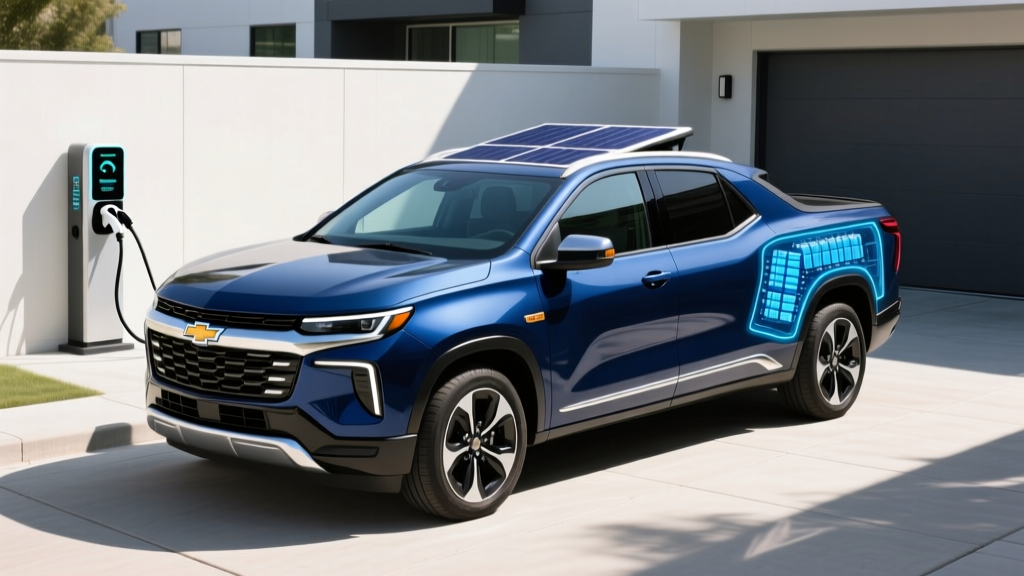
The 2025 Chevrolet Silverado EV enters the full-size electric truck segment with a starting MSRP of $57,900 for the Work Truck (WT) trim and climbs to $104,900 for the range-topping RST First Edition. But the sticker price only tells part of the story. For buyers researching the 2025 Chevy Silverado EV price, the real question is what you'll spend — and save — over five years of ownership, factoring in federal tax credits, electricity costs, insurance premiums, and depreciation curves that differ sharply from gas trucks.
This analysis uses EPA efficiency data, current IRS §30D tax credit rules, and real-world ownership patterns to project the Silverado EV's total cost of ownership against the gas-powered Silverado 1500. Numbers reflect the 2025 model year with the Ultium platform's 200+ kWh battery pack and up to 440 miles of EPA-estimated range.
| Trim | Base MSRP | Battery (usable) | EPA Range | Peak DC Charge | 0-60 mph | Horsepower |
|---|---|---|---|---|---|---|
| Work Truck (WT) 2WT | $57,900 | ~200 kWh (NMC) | ~370 mi | 350 kW | ~6.0 sec | 510 hp |
| LT (Fleet/Retail) | $69,900 | ~200 kWh (NMC) | ~400 mi | 350 kW | ~5.5 sec | 645 hp |
| RST First Edition | $104,900 | ~200 kWh (NMC) | 440 mi | 350 kW | ~4.5 sec | 754 hp |
Sources: Chevrolet Silverado EV official specs, fueleconomy.gov. Real-world highway range expect ~310-360 mi depending on payload, speed, and temperature.
5-Year Total Cost of Ownership Breakdown
The table below projects five-year costs for a Silverado EV 2WT (base MSRP $57,900) compared against a comparably equipped gas Silverado 1500 LT (MSRP ~$52,000). Assumptions: 15,000 miles/year, home Level 2 charging at $0.14/kWh average, and gas at $3.60/gallon. The Silverado EV's efficiency averages roughly 48 kWh/100 mi (combined), per EPA testing.
| Category | Silverado EV 2WT | Gas Silverado 1500 LT | Difference |
|---|---|---|---|
| Purchase Price (MSRP) | $57,900 | $52,000 | +$5,900 (EV) |
| Federal Tax Credit (§30D) | −$7,500* | $0 | −$7,500 (EV) |
| Effective Purchase Price | $50,400 | $52,000 | −$1,600 (EV) |
| Fuel/Energy (5 yrs, 75k mi) | $5,250 | $12,150 | −$6,900 (EV) |
| Maintenance (5 yrs) | $1,800 | $4,500 | −$2,700 (EV) |
| Insurance (5 yrs) | $12,500 | $9,250 | +$3,250 (EV) |
| Depreciation (est. 5-yr) | $27,700 | $22,100 | +$5,600 (EV) |
| Total 5-Year Cost | $97,650 | $99,900 | −$2,250 (EV savings) |
*Tax credit eligibility depends on income, MSRP caps, and battery-sourcing requirements. See eligibility section below. Depreciation estimates based on current EV resale trends; actual values vary by market conditions. Insurance based on national averages for full-size trucks.
The Silverado EV breaks roughly even with its gas counterpart over five years when the full federal tax credit applies. The savings skew heavily toward operational categories — fuel and maintenance — while the EV gives back ground on insurance and depreciation. Buyers who hold the truck beyond five years or who drive significantly more than 15,000 miles/year will see the EV's economics improve further, since fuel savings compound linearly with mileage while insurance and depreciation flatten out.
Federal Tax Credit: Do You Qualify for the Full $7,500?
The IRS §30D Clean Vehicle Credit offers up to $7,500 for qualifying new EVs, but eligibility for the 2025 Silverado EV depends on a matrix of rules that changed substantially under the Inflation Reduction Act. As of the current tax year, here's what determines whether you can claim the credit:
- Buyer Income Caps: Modified adjusted gross income (MAGI) must not exceed $300,000 (married filing jointly), $225,000 (head of household), or $150,000 (single filers). The IRS looks at the lesser of your current or prior year's MAGI.
- MSRP Cap: The vehicle's manufacturer-suggested retail price must not exceed $80,000 for trucks, vans, and SUVs. The Silverado EV WT ($57,900) and LT ($69,900) qualify, but the RST First Edition at $104,900 does not.
- Battery Component Sourcing: A percentage of battery components must be manufactured or assembled in North America (phasing up annually). The Silverado EV's Ultium cells are produced at GM's Ultium Cells plants in Ohio and Tennessee, which currently satisfies this requirement.
- Critical Minerals Requirement: A percentage of critical minerals in the battery must be sourced from the U.S. or free-trade-agreement countries. This threshold tightens each year and may affect partial vs. full credit amounts ($3,750 vs. $7,500).
- Point-of-Sale Transfer: As of 2024, buyers can elect to transfer the credit to the dealer at purchase, reducing the sale price by $7,500 upfront rather than waiting to claim it on their tax return. This requires dealer participation and IRS pre-registration via the IRS Energy Credits Online portal.
- One Credit Per Taxpayer Per Year: You can only claim one new clean vehicle credit per tax year, and the vehicle must be for personal use, primarily in the United States.
Critical caveat: The Silverado EV RST First Edition's $104,900 MSRP exceeds the $80,000 truck cap, meaning buyers of the top trim will not qualify for the federal credit regardless of income. This is a deal-breaker for some and irrelevant for fleet buyers purchasing the WT trim. Always verify current-year eligibility on IRS.gov before committing, as battery-sourcing rules tighten annually and can shift a vehicle from full to half credit (or zero) between model years.
Fuel Costs: Charging vs. Gas Per Mile
The Silverado EV's energy consumption averages roughly 48 kWh per 100 miles (combined EPA), making it one of the more efficient full-size electric trucks — though still significantly thirstier than a sedan like the Tesla Model 3 at 25 kWh/100 mi. Here's how that translates into real dollars:
| Metric | Silverado EV | Gas Silverado 1500 (4WD) |
|---|---|---|
| Efficiency | 48 kWh/100 mi | 18 MPG combined |
| Energy/Fuel Cost | $0.14/kWh (home avg) | $3.60/gallon |
| Cost Per Mile | $0.067 | $0.20 |
| Annual Cost (15k mi) | $1,005 | $3,000 |
| 5-Year Cost (75k mi) | $5,025 | $15,000 |
Home charging is where the savings live. At the national residential average of ~$0.14/kWh, you're paying roughly 6.7 cents per mile in the Silverado EV. That's a 66% reduction compared to the gas truck's 20 cents per mile. Over 75,000 miles, that's nearly $10,000 in fuel savings.
However, DC fast charging on road trips changes the equation. Networks like Electrify America and EVgo typically charge $0.35–$0.55/kWh. At $0.48/kWh, your road-trip cost jumps to ~$0.23/mile — actually more than the gas truck. If more than 40% of your charging happens at public DC fast chargers, the fuel-cost advantage erodes substantially. This is a key consideration for buyers without reliable home or workplace Level 2 charging access.
The Silverado EV's 350 kW peak DC charging capability means a 10-80% session takes roughly 20 minutes at a capable charger, though sustained charge rates taper above 80% State of Charge (SoC). Plan road-trip stops around that curve: charging from 80-100% can add another 25-30 minutes with diminishing range returns.
Maintenance Savings: What You Skip and What You Still Pay For
Electric trucks eliminate several maintenance categories entirely while introducing new ones. The Silverado EV's Ultium platform has far fewer moving parts than the gas 1500's turbocharged V8 or Duramax diesel — no oil, no spark plugs, no transmission fluid, no exhaust system, and no emissions equipment.
| Service Category | Silverado EV | Gas Silverado 1500 |
|---|---|---|
| Oil Changes | $0 (none required) | $600–$900 |
| Transmission Fluid | $0 (single-speed reducer) | $150–$300 |
| Brake Pads/Rotors | $200–$400 (regen extends life) | $800–$1,500 |
| Coolant/Engine Flush | $0–$100 (battery thermal loop) | $200–$400 |
| Air/Cabin Filters | $100–$200 | $200–$400 |
| Tires | $1,200–$1,800 (heavier truck, high torque) | $1,000–$1,500 |
| Software/OTA Updates | $0 (included) | N/A |
| Total Est. (5 yrs) | $1,500–$2,500 | $2,950–$5,000 |
Regenerative braking is the unsung maintenance hero. By using the electric motors to decelerate — especially in one-pedal driving mode — the Silverado EV dramatically reduces friction brake wear. Many EV owners report original brake pads lasting 100,000+ miles. However, tire costs trend higher: the Silverado EV weighs over 8,500 pounds (RST), and instant electric torque accelerates tread wear, particularly on the driven axles. Budget for a tire rotation every 5,000-7,500 miles and plan for replacement rubber sooner than you would on the gas truck.
Insurance Reality: Why the Silverado EV Costs More to Insure
EV insurance premiums run 15-30% higher than equivalent gas vehicles, and the Silverado EV is no exception. National averages put full-size EV truck insurance at roughly $2,400–$2,800/year compared to $1,800–$2,100 for the gas Silverado 1500. The reasons are structural, not incidental:
- Higher repair costs: Battery pack damage from collisions can total a vehicle that would be repairable in gas form. Even minor structural damage near the Ultium battery enclosure triggers expensive diagnostics and potential pack replacement.
- Specialized labor: EV-certified body shops and high-voltage-trained technicians charge more, and there are fewer of them, extending rental-car claims.
- Parts cost: Replacement battery modules, power electronics, and EV-specific components carry premium pricing vs. commodity gas-truck parts.
- Vehicle value: Higher MSRP means higher comprehensive and collision payouts.
Shop quotes from multiple insurers — some, like Progressive and State Farm, have begun offering EV-specific policies with battery coverage riders. Bundling with homeowners insurance and maintaining a clean driving record can narrow the premium gap to under 10%. But budget realistically: insurance will cost you $3,000–$4,000 more over five years compared to the gas truck, and that partially offsets your fuel and maintenance savings.
Depreciation and Resale Value: The EV Wildcard
EV depreciation has been volatile. In 2023-2024, aggressive price cuts from Tesla and rapid battery-tech improvements hammered used EV values — some models lost 40-50% of their value in the first two years. The full-size electric truck segment is newer, making long-term projections harder, but several factors shape the Silverado EV's resale outlook:
- Battery health anxiety: Used buyers discount EVs based on State of Health (SoH) uncertainty. GM's battery warranty — 8 years / 100,000 miles with a capacity retention threshold (typically 70% or above) — provides a floor, but out-of-warranty battery replacement costs $20,000-$35,000+ for a pack this size.
- Technology obsolescence: As newer EVs offer faster charging and longer range at lower prices, older models depreciate faster than gas trucks whose tech has plateaued.
- Commercial demand: Fleet buyers purchasing used Silverado EV WT models for last-mile delivery and job-site use could stabilize resale values for lower trims.
- Tax credit effect: The point-of-sale credit effectively lowers your cost basis, meaning you depreciate from a lower starting point — this actually helps your effective depreciation dollar amount.
Current estimates project the Silverado EV retaining approximately 48-55% of its value after five years, compared to 55-62% for a gas Silverado 1500. On a $57,900 WT with the $7,500 credit applied (effective cost $50,400), a 52% retention rate means a resale value of ~$29,000 and depreciation of ~$21,400 — competitive with the gas truck on absolute dollars despite a lower retention percentage.
State, Local, and Utility Incentives
Beyond the federal §30D credit, many states and utilities offer additional EV incentives that can meaningfully reduce your effective purchase price. Examples include:
- Colorado: State EV tax credit of up to $5,000 for trucks (income-dependent)
- California: Various utility rebates and the CVRP program (income-qualified)
- Utility rebates: Many electric utilities offer $500–$1,500 rebates for EV purchases plus discounted time-of-use charging rates and Level 2 charger rebates ($300–$700)
- HOV lane access: Several states grant single-occupant carpool lane access to EVs — a significant commute-time benefit
These programs change frequently and vary by jurisdiction. Check your state's energy office website and your local utility's EV programs page for current offerings. Consult a tax professional for how state credits interact with federal credits on your return.
Silverado EV Battery Warranty and Long-Term Considerations
GM covers the Silverado EV's Ultium battery with an 8-year / 100,000-mile limited warranty, which guarantees the pack will retain a minimum percentage of its original capacity (typically 70% or greater, though exact threshold should be confirmed in your purchase agreement). The NMC (nickel manganese cobalt) chemistry in the Ultium platform offers high energy density — necessary for a 440-mile range target — but historically shows slightly faster degradation than LFP (lithium iron phosphate) chemistries used in some competitors' standard-range models.
Real-world degradation data for the Ultium platform is still accumulating given the Silverado EV's recent launch. Based on GM's other Ultium vehicles (Cadillac Lyriq, GMC Hummer EV) and industry-wide NMC data, expect approximately 8-12% capacity loss over 5 years / 75,000 miles under normal use patterns. Factors that accelerate degradation include:
- Frequent DC fast charging above 150 kW (the 350 kW capability is best used sparingly)
- Regularly charging to 100% SoC and letting the truck sit at full charge
- Extreme heat exposure without preconditioning
- Consistently draining below 10% SoC
For daily driving, set your charge limit to 80-90% and use the truck's scheduled departure preconditioning feature to warm or cool the battery before driving. This preserves long-term SoH while ensuring peak regenerative braking performance from the first mile.
Frequently Asked Questions
How much does the 2025 Chevy Silverado EV cost after the tax credit?
If you qualify for the full $7,500 federal tax credit under §30D, the Silverado EV WT effectively drops from $57,900 to $50,400, and the LT from $69,900 to $62,400. The RST First Edition at $104,900 does not qualify due to the $80,000 MSRP cap for trucks. Using the point-of-sale transfer option, the credit reduces your purchase price at the dealership rather than as a tax return deduction.
What's the real-world range of the Silverado EV?
The EPA rates the RST at 440 miles and lower trims at 370-400 miles. In real-world highway driving at 70+ mph, expect approximately 310-360 miles depending on trim, payload, and ambient temperature. Cold weather (below 30°F) can reduce range by 20-30%, bringing the RST down to ~310-350 miles and the WT to ~260-300 miles. Towing at capacity will cut range roughly in half regardless of conditions.
How fast does the Silverado EV charge at home?
On a Level 2 home charger (typically 11.5 kW / 48-amp circuit), the Silverado EV adds roughly 25-30 miles of range per hour. A full 0-100% charge on the ~200 kWh battery takes approximately 17-19 hours — which is why most owners charge opportunistically overnight, topping from 20% to 80% in about 10-12 hours. A 200-amp electrical panel is usually required; some homes need a panel upgrade ($1,500-$3,000) to support a dedicated 60-amp EV circuit.
Are EVs really cheaper to own than gas trucks?
It depends on your driving volume, charging access, and whether you qualify for the tax credit. The Silverado EV breaks even or saves modestly over five years for a typical driver (15,000 mi/yr) when the full $7,500 credit applies and most charging happens at home. High-mileage drivers (25,000+ mi/yr) see substantially larger savings, while buyers without home charging access who rely on expensive DC fast charging may not save at all on fuel.
How well will the Silverado EV hold its value?
EV depreciation remains higher and less predictable than gas trucks. Expect roughly 48-55% value retention after five years. The 8-year/100,000-mile battery warranty provides some floor, and fleet demand for used WT models may stabilize lower-trim values. However, rapid advances in charging speed and battery chemistry mean today's EVs may face steeper depreciation than gas trucks whose technology has largely plateaued.
Is the Silverado EV good for towing?
The Silverado EV offers up to 10,000 pounds of max towing capacity (RST; WT rated up to 10,000 lbs as well). The instant torque makes for confident trailer launches. However, towing at or near capacity will cut your range approximately in half — a 440-mile RST becomes a ~220-mile truck under heavy tow. For frequent long-distance towing, plan charging stops carefully and understand that DC fast charging with a trailer attached adds logistical complexity.