The BYD Atang (Yuan Plus) Reality Check: Where Orders Actually Stand
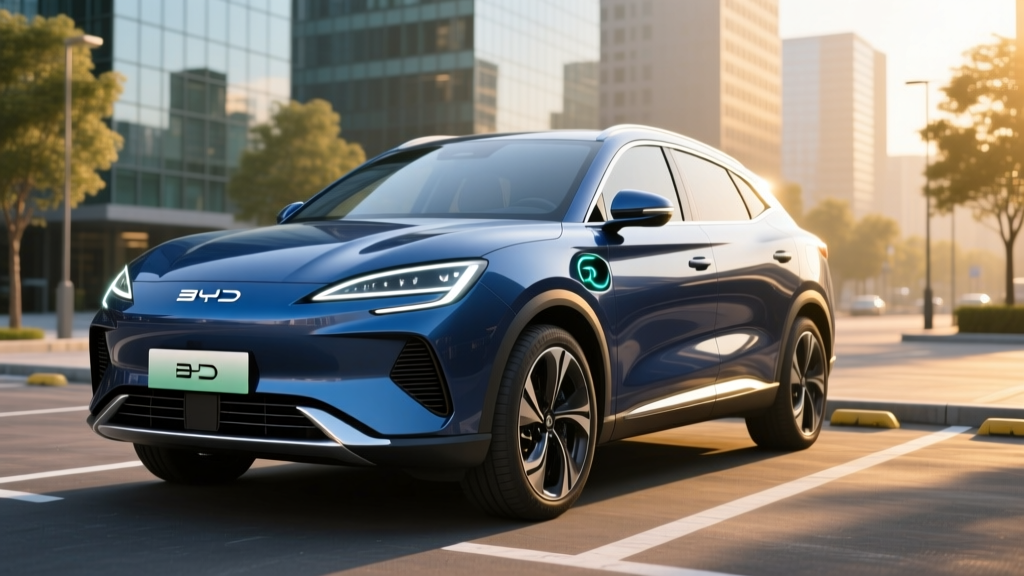
If you've been searching for information on BYD Atang electric SUV orders, you're not alone. The compact electric crossover — sold as the BYD Yuan Plus in China and the Atto 3 in most export markets — has generated significant curiosity among US-based EV shoppers drawn by its aggressive pricing and Blade Battery technology. But before you start configuring one, here's the essential context: as of early 2026, BYD does not sell vehicles directly to consumers in the United States, and there is no official order portal for American buyers.
That doesn't mean the Atang isn't worth studying. For buyers in markets where it's available (Australia, Southeast Asia, Europe, Latin America), it remains one of the most compelling compact electric SUVs under $35,000 USD-equivalent. And for US shoppers watching BYD's global expansion, understanding this vehicle's specs helps benchmark what a potential market entry might look like. Below is a comprehensive technical profile based on the latest global-spec Atto 3 / Yuan Plus data, translated into the metrics American EV buyers use to make decisions.
Core Specifications: BYD Atang / Atto 3 at a Glance
| Specification | Value |
|---|---|
| Battery (usable) | 58.56 kWh (LFP Blade) |
| WLTP Range | 261 miles (420 km) |
| Estimated EPA Range | ~230–240 miles (if US-certified) |
| Motor Output | 150 kW (201 hp) / 229 lb-ft torque |
| Drivetrain | Front-wheel drive (single motor) |
| 0–62 mph (0–100 km/h) | 7.3 seconds |
| Max DC Fast Charge | 80 kW (CCS2 global / GB/T China) |
| 10–80% DC Charge Time | ~29 minutes (claimed) |
| Level 2 AC Charge Rate | 7 kW (single-phase) / 11 kW (three-phase) |
| Efficiency (WLTP) | ~15.6 kWh/100 km (~25 kWh/100 mi) |
| Cargo Volume | 15.5 cu ft (rear seats up) / 47.3 cu ft (folded) |
| Length / Wheelbase | 175.2 in / 106.3 in |
| Curb Weight | ~3,680 lbs (1,670 kg) |
| Battery Warranty (global) | 8 years / 100,000 miles (varies by market) |
Note: Because the Atang/Atto 3 is not EPA-certified for US sale, the EPA range figure above is an estimate derived from typical WLTP-to-EPA conversion ratios (~10–15% reduction). Actual EPA testing could yield different results.
Real-World Range: What WLTP 261 Miles Actually Means on the Road
WLTP Sticker: 261 miles (420 km)
Estimated EPA Equivalent: ~230–240 miles
Real-World Highway (70 mph): ~195–215 miles
Real-World Cold Weather (below 32°F): ~170–195 miles
City / Mild Climate Commuting: ~240–260 miles (regen-friendly)
The BYD Atang's 58.56 kWh LFP Blade Battery delivers competitive efficiency for its class, but the WLTP testing cycle is notably more generous than the EPA's methodology. In independent European and Australian road tests, the Atto 3 Extended Range typically achieves between 350 and 380 km (217–236 miles) in mixed driving conditions — validating the ~10–15% WLTP discount as a reasonable EPA proxy.
Highway driving at sustained 70+ mph speeds pushes consumption to roughly 18–20 kWh/100 km (29–32 kWh/100 mi), reducing effective range to around 200 miles. This is typical for a compact crossover without an active aero package or heat pump as standard equipment in all markets. Cold-weather testing in Scandinavia has shown range reductions of 25–35% in sub-freezing conditions, consistent with LFP chemistry behavior — LFP cells experience slightly higher internal resistance in cold temperatures compared to NMC, though the Blade form factor's thermal management helps mitigate this.
For city commuters with access to regenerative braking routes, the Atang's efficiency shines. Stop-and-go driving with regen set to its highest mode can push real-world range close to or even exceeding the WLTP figure, as the single-motor FWD setup recovers energy effectively at lower speeds.
Charging Speed: The 80 kW Limitation Explained
| Charging Level | Power / Rate | Time (10–80%) | Miles Added per Hour |
|---|---|---|---|
| Level 1 (120V household) | ~1.4 kW | ~40+ hours (full) | ~3–4 mi/hr |
| Level 2 (240V, 7 kW) | 7 kW | ~8.5 hours (full) | ~22–24 mi/hr |
| Level 2 (240V, 11 kW 3-phase) | 11 kW | ~5.5 hours (full) | ~35–38 mi/hr |
| DC Fast Charge (peak) | 80 kW | ~29 min (10–80%) | ~150 mi/hr (peak) |
The most significant criticism of the Atang/Atto 3 among EV enthusiasts is its 80 kW DC fast-charging ceiling. In a 2026 market where competitors like the Hyundai Kona Electric (peak ~100 kW), Chevrolet Equinox EV (peak ~150 kW on capable chargers), and Kia EV6 (peak ~240 kW on 800V architecture) charge substantially faster, the Atang's 80 kW peak places it at the lower end of the compact EV spectrum.
Here's what that means in practice: on a 150 kW or 350 kW DC fast charger, the Atang will peak around 75–80 kW from roughly 10% to 40% state of charge, then taper progressively. The charge curve drops to approximately 50 kW around 60% SoC and further to 30 kW above 80%. The claimed 29-minute 10–80% time assumes optimal battery preconditioning and a charger capable of sustaining the vehicle's peak draw.
For daily home charging on a Level 2 wallbox, the 7 kW single-phase onboard charger (standard in most markets) adds roughly 22–24 miles of range per hour. An overnight session from 20% to full takes about 8–9 hours — perfectly adequate for commuters who charge at home. Markets with three-phase residential power (common in Europe and Australia) can utilize the 11 kW option, cutting that to roughly 5.5 hours.
The practical takeaway: if your driving pattern involves frequent 300+ mile road trips with multiple DC fast-charge stops, the 80 kW ceiling will add 10–15 minutes per stop compared to a 150 kW-capable competitor. For home-centric commuters who DC-charge occasionally, it's a manageable tradeoff for the vehicle's price point.
Battery Technology: The Blade LFP Advantage and Limitations
The Atang uses BYD's proprietary Blade Battery, a lithium iron phosphate (LFP) cell in a long, thin prismatic form factor that BYD claims passes nail-penetration testing without thermal runaway. This is one of the safest battery architectures in production, and it's a meaningful differentiator for buyers who prioritize long-term durability and safety over maximum energy density.
| Attribute | LFP (BYD Blade) | NMC (Typical) |
|---|---|---|
| Cycle Life | 3,000–5,000+ cycles | 1,000–2,000 cycles |
| Energy Density | Lower (~150 Wh/kg cell) | Higher (~250 Wh/kg cell) |
| Thermal Stability | Excellent (no cobalt/nickel) | Good (requires more BMS management) |
| Cold-Weather Performance | Moderate (higher resistance) | Better |
| 100% SoC Charging | Recommended regularly (no degradation penalty) | Avoid daily 100% (80% preferred) |
| Cost per kWh | Lower | Higher |
| SoC Estimation Accuracy | Less precise (flat voltage curve) | More precise |
The practical ownership advantage of LFP: you can (and should) charge to 100% regularly without the degradation anxiety that NMC owners manage. BYD recommends a full charge at least once weekly to help the battery management system recalibrate state-of-charge estimation, which is inherently less accurate with LFP's flat voltage discharge curve. This means the Atang's 58.56 kWh is more "daily usable" than an equivalently sized NMC pack where you'd typically buffer at 80%.
The tradeoff is energy density. The Blade pack is heavier and bulkier per kWh than an NMC equivalent, which is why the Atang's range tops out at 261 miles WLTP despite a reasonably large battery. For a compact SUV, this is an acceptable trade — most buyers in this segment prioritize cost and longevity over maximum range.
Performance and Driving Dynamics
The Atang's single front-mounted motor produces 150 kW (201 horsepower) and 229 lb-ft of torque, delivering a 0–62 mph time of 7.3 seconds. In a segment where the Hyundai Kona Electric posts a 7.4-second 0–60 and the Chevrolet Equinox EV AWD manages around 7.0 seconds, the Atang is competitive but not class-leading.
Driving impressions from international reviewers consistently describe the Atang as composed and comfortable rather than sporty. The suspension tuning favors ride compliance over corner-carving, and the steering is light and numb by enthusiast standards. Regenerative braking offers two levels (standard and high), but neither provides true one-pedal driving to a complete stop — a feature many EV buyers now expect.
There is no all-wheel-drive variant of the Atang/Atto 3 currently in production. For buyers in snow-belt states, this is a notable gap, especially since competitors like the Equinox EV and Volkswagen ID.4 offer AWD configurations.
Pricing, Tax Credits, and the US Import Barrier
| Market | Trim | Local Price | USD Equivalent |
|---|---|---|---|
| China (Yuan Plus) | Extended Range | ¥139,800 | ~$19,300 |
| Australia (Atto 3) | Extended Range | A$47,400 | ~$30,200 |
| UK (Atto 3) | Design | £37,695 | ~$47,500 |
| Thailand (Atto 3) | Extended Range | ฿1,049,900 | ~$29,500 |
| United States | N/A | Not available | N/A |
The pricing disparity across markets is striking — the same vehicle costs roughly $19,000 in China but $47,500 in the UK after taxes, shipping, and market positioning. For US buyers, the question is academic: Section 301 tariffs impose a 100% duty on Chinese-manufactured electric vehicles, effectively doubling the import cost and making the Atang commercially nonviable even if BYD chose to sell it here.
Regarding the federal §30D EV tax credit: even if the Atang were sold in the US, it would almost certainly not qualify for the up-to-$7,500 credit. The credit requires final assembly in North America, compliance with battery-component and critical-mineral sourcing requirements (phasing out Chinese-sourced materials), adherence to MSRP caps ($55,000 for SUVs), and buyer income limits ($150,000 single / $300,000 joint). A BYD vehicle with a Chinese-manufactured Blade Battery and Chinese-assembled drivetrain would fail multiple sourcing thresholds.
Interior, Tech, and Daily Livability
The Atang's interior is where it earns the most praise from international reviewers. The cabin features a distinctive "muscle fiber" textured dashboard (part of BYD's "Sport Fitness" design language), a 12.8-inch rotating infotainment display (landscape for navigation, portrait for media), and a 5-inch digital instrument cluster. The center screen runs BYD's DiLink system, which supports wireless Apple CarPlay and Android Auto in most export markets.
Passenger and cargo dimensions:
- Front headroom: ~39.4 in / Rear headroom: ~38.2 in
- Front legroom: ~41.3 in / Rear legroom: ~37.4 in
- Cargo behind rear seats: 15.5 cu ft
- Cargo with rear seats folded: 47.3 cu ft
- No front trunk (frunk) — the space is occupied by power electronics
Standard driver-assistance features on most export trims include adaptive cruise control, lane-keeping assist, automatic emergency braking, blind-spot monitoring, and rear cross-traffic alert. This is an SAE Level 2 driver-assistance suite — it requires active driver supervision at all times and does not constitute autonomous or self-driving capability.
Notable drawbacks cited by owners and reviewers include: the lack of a physical volume knob (volume is controlled via the touchscreen or steering-wheel buttons), the absence of a frunk, and a panoramic glass roof with no retractable shade in some markets, which can cause cabin heat buildup in sunny climates.
Who Should Consider the BYD Atang — and What to Buy Instead in the US
- Budget-conscious EV buyers wanting a practical compact SUV under $32,000 USD-equivalent
- Commuters with home charging who prioritize battery longevity (LFP cycle life) over fast-charge speed
- Urban and suburban drivers who rarely take 250+ mile road trips
- Buyers who value thermal safety (Blade Battery nail-penetration rating)
- Chevrolet Equinox EV — EPA range up to 319 mi, ~150 kW DC charging, eligible for §30D credit, starting ~$33,000 before credit
- Hyundai Kona Electric — EPA range 261 mi, ~100 kW DC charging, strong warranty, ~$32,975 base
- Volvo EX30 — EPA range 261 mi (Single Motor), 153 kW DC charging, premium interior, ~$36,145 base
- Kia Niro EV — EPA range 239 mi, practical hatchback crossover, ~$39,600 base
Frequently Asked Questions
Can I order a BYD Atang electric SUV in the United States?
No. As of 2026, BYD does not sell passenger vehicles in the US market. A 100% tariff on Chinese-manufactured EVs under Section 301 makes importing the Atang economically unfeasible. BYD has focused its expansion on Europe, Southeast Asia, Australia, Latin America, and the Middle East.
What is the real-world range of the BYD Atang?
The WLTP-rated range is 261 miles (420 km) for the Extended Range model. In real-world mixed driving, expect approximately 217–236 miles. Highway-only driving at 70+ mph reduces this to roughly 195–215 miles, and cold weather (below freezing) can drop range to 170–195 miles. These figures are estimates based on international road tests, as the vehicle has no EPA certification.
How fast does the BYD Atang charge?
DC fast charging peaks at 80 kW, achieving a 10–80% charge in approximately 29 minutes under optimal conditions. Level 2 home charging at 7 kW (single-phase) adds about 22–24 miles of range per hour, with a full charge taking roughly 8.5 hours. Three-phase 11 kW charging (available in some markets) reduces full-charge time to about 5.5 hours.
Would the BYD Atang qualify for the US federal EV tax credit?
Almost certainly not. The IRS §30D credit requires North American final assembly, compliance with battery-component and critical-mineral sourcing rules that increasingly exclude Chinese-sourced materials, MSRP under $55,000 for SUVs, and buyer income below $150,000 (single) or $300,000 (joint). A Chinese-assembled BYD with a Chinese-manufactured battery would not meet these requirements.
Is the BYD Blade Battery safe and long-lasting?
Yes — the LFP Blade Battery is among the safest production EV battery architectures, passing nail-penetration testing without thermal runaway. LFP chemistry offers 3,000–5,000+ charge cycles before significant degradation, meaning the 58.56 kWh pack could theoretically endure 300,000+ miles of driving before reaching 70–80% capacity retention. BYD's global battery warranty is typically 8 years / 100,000 miles, though terms vary by market.
What are the biggest pros and cons of the BYD Atang?
Pros: Excellent LFP battery safety and longevity, competitive pricing in export markets, comfortable ride quality, spacious rear seat for the segment, distinctive interior design, strong standard safety tech.
Cons: 80 kW DC charging is slow for 2026 standards, no AWD option, no frunk, SoC estimation can be imprecise (LFP characteristic), unavailable in the US, infotainment lacks physical knobs, glass roof without shade in some trims.
Will BYD ever sell cars in the US?
BYD executives have stated they are "studying" the US market but have announced no concrete timeline. The current 100% tariff environment and geopolitical tensions make near-term entry unlikely. BYD is building a factory in Mexico, but vehicles produced there would still face significant tariff and trade-agreement complications for US import. Any future US entry would likely involve a purpose-built model assembled at a North American facility.