What Is Tesla Hardware 3.0 and Why the HW3 Update Still Matters in 2026
If you own or are shopping for a used Tesla built between mid-2019 and early 2023, you have likely encountered the term Tesla HW3 update. Hardware 3.0 (also called AP3 or Autopilot Hardware 3.0) is the third-generation Autopilot computer Tesla installed across Model S, Model 3, Model X, and Model Y vehicles during that window. In 2026, HW3 remains in millions of vehicles on the road, and Tesla continues to push over-the-air software updates to the platform — though with meaningful capability gaps versus the newer Hardware 4.0 (HW4/AI4) architecture that now ships in all new-production Teslas.
This guide breaks down exactly what HW3 is, what the latest 2026 software updates enable (and where they fall short), how to check which hardware your Tesla has, and whether an HW3-equipped car is still a smart buy in the current market.
HW3 vs HW4: The Hardware Differences That Affect Real-World Driving
Understanding the Tesla HW3 update landscape requires knowing what HW3 physically is — and what it is not.
| Specification | Hardware 3.0 (HW3) | Hardware 4.0 (HW4 / AI4) |
|---|---|---|
| Production era | April 2019 – early 2023 | Early 2023 – present (2026) |
| Custom FSD chip | Dual FSD chips (Samsung 14nm) | Dual FSD chips (Samsung 7nm, ~2x inference throughput) |
| Camera count | 8 cameras (1.2 MP each) | 7 cameras (higher resolution, ~5 MP front) |
| Camera resolution | 1.2 megapixels | Up to 5 megapixels (forward-facing) |
| Radar | Initially yes, removed in 2021+ (Tesla Vision) | No radar (Tesla Vision only) |
| Ultrasonic sensors (USS) | 12 sensors (removed Oct 2022+) | None (Tesla Vision only) |
| Max FSD capability | FSD Supervised (limited vs HW4) | FSD Supervised (full vision stack) |
| Neural-net model size | Smaller models (memory-constrained) | Larger occupancy networks, better edge cases |
| Redundancy | Dual ECU (failover) | Dual ECU (failover) |
The practical takeaway: HW3's 1.2-megapixel cameras and lower inference throughput mean the vision-only FSD stack runs a more compressed neural network. In real-world use, HW3 vehicles may exhibit slightly more phantom braking events, less confident lane-change decisions in complex merges, and reduced performance in heavy rain or low-light conditions compared to HW4. The gap is not enormous for basic Autopilot highway cruising, but it widens in dense urban FSD Supervised scenarios.
Which 2026 Tesla Models Ship with HW3 vs HW4?
As of the 2026 model year, no new Tesla ships with HW3. All current-production vehicles — Model S, Model 3 (Highland refresh and subsequent updates), Model X, Model Y (Juniper refresh), and Cybertruck — are built with HW4 or its iterative revisions.
HW3 lives on exclusively in the used and certified-pre-owned market. Here is the rough production timeline:
- Model 3: HW3 from April 2019 through approximately March 2023 (pre-Highland)
- Model Y: HW3 from March 2020 through approximately February 2023 (pre-Juniper)
- Model S (refresh): HW3 from mid-2021 through early 2023
- Model X (refresh): HW3 from mid-2021 through early 2023
If you are buying a used Tesla from the 2019–2022 model years, assume it has HW3 unless it received a paid or warranty hardware swap. Tesla has occasionally upgraded HW3 vehicles to HW4 for owners who purchased FSD but whose hardware could not support newer software builds — though this program has been inconsistent and is not guaranteed.
The 2026 Software Experience on HW3: What's Changed
Tesla continues to push firmware and FSD updates to HW3 vehicles through 2026, but the update cadence and feature parity have diverged meaningfully from HW4. Key realities for HW3 owners:
FSD (Supervised) on HW3 in 2026
Tesla's FSD (Supervised) software does run on HW3, but it operates with a constrained neural network. The occupancy networks and end-to-end learning models that power HW4's smoother urban driving are compressed for HW3's memory and compute limits. Expect:
- Slightly more frequent disengagements in complex urban intersections
- More conservative lane-change behavior (sometimes overly hesitant)
- Phantom braking remains more common than on HW4, particularly on shadowed highways
- Highway Autopilot performance remains strong and broadly equivalent to HW4
Standard Autopilot and Enhanced Autopilot
For owners who use only basic Autopilot (Traffic-Aware Cruise Control + Autosteer) or Enhanced Autopilot (Auto Lane Change, Navigate on Autopilot, AutoPark, Summon), the HW3 experience in 2026 remains solid. Highway driving is where Tesla's vision system excels, and HW3 handles these tasks with minimal meaningful degradation versus HW4.
Feature Gaps and Deprecation Risks
Tesla has a history of eventually deprecating features on older hardware. In 2026, some advanced FSD visualization features (detailed curb rendering, complex intersection modeling) are exclusive to HW4. There is no official Tesla announcement that HW3 FSD support will end, but the trajectory suggests HW3 will receive diminishing software investment over time.
How to Check Your Tesla's Autopilot Hardware Version
Before buying a used Tesla — or before paying for an FSD subscription — confirm which hardware is installed:
- Tap Controls (car icon) on the touchscreen
- Select Software
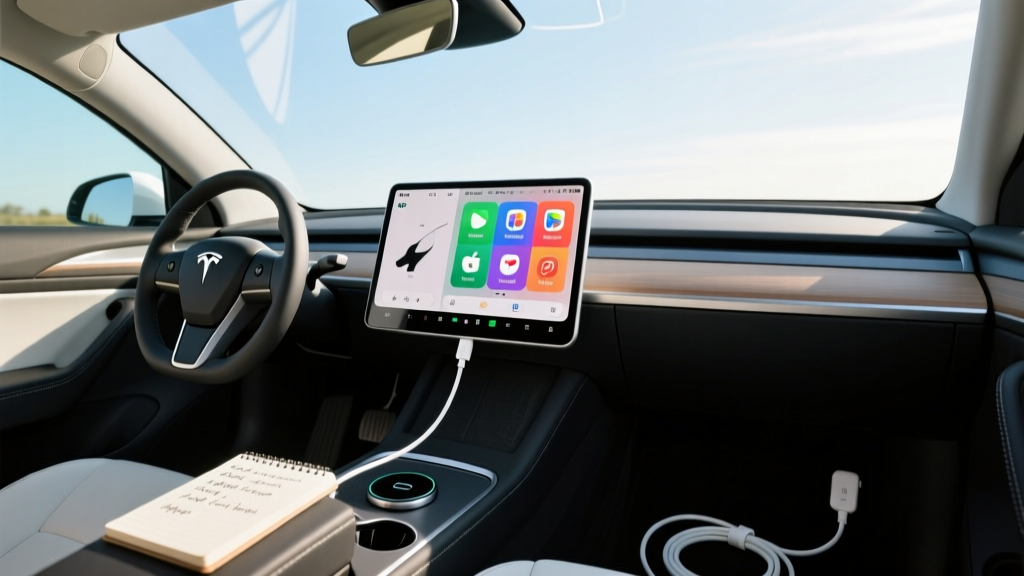
- Look for "Autopilot Computer" — it will read either "Hardware 3" or "Hardware 4" (sometimes labeled "AI4")
- Alternatively, check the glovebox sticker or original window sticker for the AP hardware code
If a listing says "FSD capable" or "Full Self-Driving included," always verify the hardware version. Some pre-2019 Teslas originally shipped with HW2.5 and were later upgraded to HW3 under Tesla's FSD computer swap program — these will correctly show HW3 in the software menu.
Should You Buy an HW3 Tesla in 2026? The Ownership Economics
HW3-equipped Teslas are significantly cheaper on the used market than equivalent HW4 models. A 2022 Model 3 Long Range (HW3) might list for $22,000–$28,000 depending on mileage and condition, compared to $35,000+ for a 2024+ Model 3 Highland with HW4.
Here is how the economics break down for key scenarios:
- Choose HW3 if: You primarily need highway Autopilot, want the lowest entry price into a Tesla, plan to keep the car 3+ years without expecting cutting-edge FSD features, and are comfortable with Tesla Vision's camera-only parking (no USS).
- Choose HW4 if: You plan to use FSD (Supervised) extensively in urban environments, want the latest vision stack with higher-resolution cameras, prioritize future-proofing for software updates, or are buying new and have no reason to look at older hardware.
- Avoid HW3 if: You purchased or plan to purchase the $8,000 FSD lifetime license — the hardware gap limits the return on that investment. The $99/month FSD subscription is a more rational choice for HW3 owners.
Tax Credit Considerations for Used Teslas
Used Teslas purchased from a dealer may qualify for the §25E used clean vehicle credit — up to $4,000 or 30% of the sale price (whichever is less). Key rules per the IRS:
- Sale price must be $25,000 or less
- Buyer income caps: $75,000 (single), $112,500 (head of household), $150,000 (joint)
- Vehicle must be at least 2 model years old
- Must purchase from a licensed dealer (private-party sales excluded)
- Credit is non-refundable and can only be claimed once per vehicle (check the vehicle's history)
Many HW3-era Model 3 vehicles now fall under the $25,000 cap, making the $4,000 credit a significant offset. Always verify current eligibility on irs.gov and consult a tax professional.
Tesla HW3 Owner FAQ
Can Tesla upgrade my HW3 to HW4?
Tesla has not offered a general paid upgrade program from HW3 to HW4 as of 2026. Some owners who purchased FSD have received complimentary HW4 swaps, but this is inconsistent and not something to count on. If you want HW4, buy a vehicle that already has it.
Does FSD work on HW3 in 2026?
Yes. FSD (Supervised) runs on HW3, but with a compressed neural network. Expect more disengagements in complex urban driving versus HW4. Highway Autopilot performance remains strong on HW3.
Is HW3 safe for daily driving?
Absolutely. HW3 Teslas carry top NHTSA 5-star safety ratings and IIHS Top Safety Pick+ awards (model-year dependent). The Autopilot hardware version does not affect passive safety, braking, or structural crashworthiness.
Will Tesla stop supporting HW3?
Tesla has not announced an end-of-life for HW3 software support. However, the company has a pattern of prioritizing newer hardware for advanced features. Basic Autopilot and safety features will likely continue receiving updates for years. FSD feature parity with HW4 is unlikely to improve.
How does Tesla Vision (no ultrasonic sensors) affect parking on HW3?
HW3 vehicles built after October 2022 lack ultrasonic sensors and rely on Tesla Vision for parking distance estimation. The camera-based system works but is less precise than USS at very close distances and can struggle in heavy rain or when cameras are dirty. Many owners add aftermarket parking sensors for tight garage situations.
Is an HW3 Tesla a good buy for a daily commuter?
For a commuter who drives primarily on highways and uses basic Autopilot, an HW3 Tesla is an excellent value in 2026. The Supercharger network, low running costs, and strong highway cruise capability make it a compelling used EV. Reserve FSD expectations and budget for the lower purchase price.
Key Takeaways: The Tesla HW3 Update Landscape in 2026
Hardware 3.0 remains a capable Autopilot platform for highway driving and basic driver assistance. The Tesla HW3 update story in 2026 is one of continued support but widening gaps with HW4 — particularly in urban FSD scenarios, camera resolution, and neural network sophistication. For budget-conscious buyers who prioritize value and highway commuting, HW3 Teslas represent some of the best-used EV deals available. For FSD enthusiasts and tech-forward buyers, HW4 is the clear choice.
- Significant used-market discount vs HW4
- Highway Autopilot still excellent
- Eligible for $4,000 used-EV tax credit (under $25K cap)
- Full Supercharger network access
- Continued OTA software updates
- FSD less capable than HW4 (compressed models)
- Low-res cameras vs HW4's 5MP sensors
- More phantom braking reports
- No paid upgrade path to HW4
- Feature deprecation risk long-term