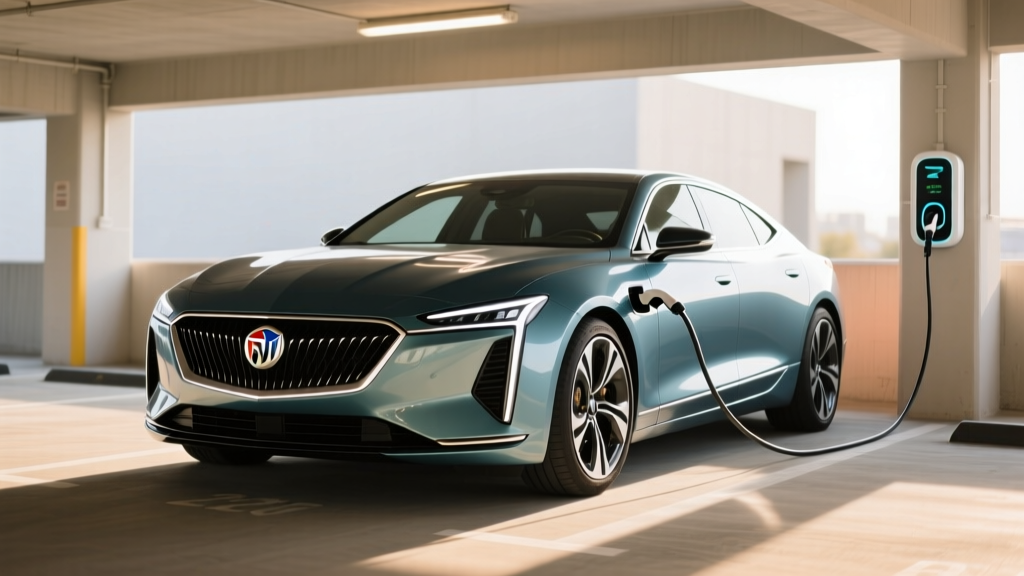
The bottom line on the Buick Electra EV: Buick's first dedicated battery-electric vehicle is expected to arrive for the 2026 model year, built on GM's Ultium platform. Based on preliminary GM disclosures and platform siblings (Cadillac Lyriq, Chevrolet Blazer EV), the Electra EV is projected to offer an EPA-estimated range of approximately 280–310 miles depending on trim, a usable battery capacity near 85–102 kWh (NMC chemistry), and DC fast-charging capability up to 190 kW. Pricing is anticipated to start in the low-to-mid $50,000s before incentives. Federal §30D tax credit eligibility will depend on final battery-sourcing compliance, MSRP caps, and buyer income limits — all of which should be confirmed at the point of sale with your dealer and verified against current IRS rules.
What Is the Buick Electra EV and Who Is It For?
The Buick Electra EV marks the brand's transition from a gasoline-only lineup to an electrified future. Named after the iconic Electra concept, the production model sits on GM's BEV3 architecture shared with the Cadillac Lyriq and upcoming next-generation Chevrolet Blazer EV. Buick is targeting buyers who want a premium-but-approachable electric crossover — more refined than mainstream brands, but without the Cadillac price premium.
For current Buick Encore GX or Envision owners considering an EV, the Electra EV represents a natural upgrade path: familiar brand loyalty paired with zero tailpipe emissions, lower per-mile energy costs, and the instant torque characteristic of electric drivetrains. It's also a contender for luxury-crossover shoppers cross-shopping the Tesla Model Y, Ford Mustang Mach-E, Hyundai Ioniq 5, and Genesis Electrified GV70.
Projected Specs: Range, Battery, and Charging
Because the Electra EV is an announced/upcoming model, the figures below are preliminary estimates based on GM's Ultium platform data and comparable vehicles. Final EPA-certified numbers will be published closer to the on-sale date.
| Specification | Projected Figure |
|---|---|
| EPA Range (est.) | 280–310 miles (trim-dependent) |
| Battery Capacity (usable) | ~85–102 kWh, NMC chemistry |
| DC Fast Charge Peak | Up to 190 kW |
| 10–80% DC Charge Time | ~30–35 minutes (estimated) |
| Level 2 AC Charge Rate | 11.5 kW (est.) |
| Level 2 Full Charge Time | ~8–10 hours |
| Drivetrain | RWD standard; AWD available |
| Horsepower | ~340 hp (RWD) / ~500 hp (AWD est.) |
| 0–60 mph | ~5.5s (RWD) / ~4.5s (AWD est.) |
| Connector | NACS (native Tesla Supercharger access) |
| Battery/Powertrain Warranty | 8 years / 100,000 miles (GM standard) |
Real-world range reality check: The EPA sticker will show a single number, but your actual range depends heavily on conditions. Expect roughly 10–15% range reduction at sustained highway speeds above 70 mph, and 20–30% loss in freezing temperatures (below 32°F) due to battery heating demands and cabin climate use. A 310-mile EPA rating may deliver 240–260 miles on a cold winter highway drive. Plan road trips around 200–220 miles between charging stops for a comfortable buffer.
On charging speed, note that the 190 kW peak is not sustained across the entire session. Like all EVs, the Electra EV's charge curve tapers significantly above 80% state of charge to protect battery longevity. The 10–80% time of roughly 30–35 minutes is the practical metric to plan around — topping off from 80–100% can add another 20+ minutes at progressively lower kW rates.
How Does the Electra EV Compare to a Gas Crossover?
Most Buick buyers are coming from vehicles like the Encore GX or Envision. Here's how an electric crossover stacks up against a typical gasoline compact luxury SUV on the metrics that matter for ownership.
| Metric | Buick Electra EV (est.) | Gas Compact Luxury SUV (avg.) |
|---|---|---|
| Fuel/Energy Cost per Mile | $0.04–$0.06 (home charging) | $0.14–$0.18 (at $3.50/gal, 25 MPG) |
| Annual Fuel/Energy (12,000 mi) | $480–$720 | $1,680–$2,160 |
| Maintenance (annual avg.) | $300–$500 | $800–$1,200 |
| Oil Changes | None | 2–3 per year |
| EPA Range / Tank Range | 280–310 mi | 350–420 mi |
| Refuel/Recharge Time | 30 min (DC fast) / 8+ hrs (L2 home) | 5 minutes |
| Tailpipe Emissions | Zero | ~4.6 metric tons CO₂/year |
The per-mile energy advantage is substantial — roughly 60–70% lower when charging at home on a residential electricity rate of $0.13–$0.16/kWh. However, public DC fast-charging networks (Electrify America, EVgo, Tesla Supercharger) often charge $0.30–$0.50/kWh, which narrows the gap to near parity with gasoline on a per-mile basis. Buyers who rely exclusively on public charging should factor this into their cost calculations.
Real Ownership Costs: 5-Year Breakdown
The purchase price is only the beginning. Here's a realistic 5-year total cost of ownership projection for the Electra EV versus a comparable gasoline luxury crossover, assuming 12,000 miles per year and 80% home / 20% public charging.
| Cost Category | Buick Electra EV (est.) | Gas Crossover Equivalent |
|---|---|---|
| Purchase Price (MSRP base) | $52,000 | $40,000 |
| Federal Tax Credit (§30D) | Up to $7,500 (if eligible) | $0 |
| Effective Purchase Price | $44,500 | $40,000 |
| Fuel/Energy (5 years) | $3,000–$3,600 | $8,400–$10,800 |
| Maintenance (5 years) | $1,500–$2,500 | $4,000–$6,000 |
| Insurance (5 years) | $9,000–$12,000 | $7,000–$9,500 |
| Estimated Depreciation (5 yr) | $18,000–$22,000 | $14,000–$18,000 |
| 5-Year Total Cost | $58,000–$66,100 | $59,400–$70,300 |
Key takeaway: The Electra EV can reach cost parity or beat a gas equivalent over five years — but only if you qualify for the federal tax credit and charge primarily at home. Insurance premiums for EVs tend to run 15–25% higher than gas equivalents due to repair costs and battery replacement risk. Depreciation remains a wildcard as the used EV market stabilizes.
Federal Tax Credit: What You Actually Need to Qualify
The §30D clean vehicle credit can reduce your federal tax liability by up to $7,500 — and as of 2024, it can be transferred to the dealer as a point-of-sale discount. But eligibility is not automatic. Here's the current checklist based on IRS guidelines:
- MSRP cap: SUVs/pickups must have an MSRP at or below $80,000; sedans at or below $55,000. The Electra EV (classified as an SUV) should clear this threshold on most trims.
- Buyer income limits: Modified adjusted gross income (MAGI) must not exceed $300,000 (joint filers), $225,000 (head of household), or $150,000 (single).
- Battery component sourcing: A percentage of battery components must be manufactured or assembled in North America, and a percentage of critical minerals must be sourced from the U.S. or free-trade-agreement partners. These thresholds increase annually.
- Final assembly: Vehicle must undergo final assembly in North America. GM's U.S. and Canadian plants should satisfy this requirement.
- Point-of-sale transfer: You can elect to transfer the credit to the dealer, reducing your purchase price at signing rather than waiting for a tax refund.
Because battery-sourcing rules tighten each year, a vehicle that qualifies in one model year may not in the next. Always confirm credit eligibility for the specific VIN with your dealer and cross-reference the fueleconomy.gov tax credit database before signing paperwork. Consult a tax professional if your situation involves AMT liability or complex income structures.
Charging at Home: What You Need to Know Before You Buy
Home charging is where the economics of EV ownership work best. But not every buyer has straightforward access. Here's a practical breakdown:
| Level | Power | Miles Added per Hour | Typical Use Case |
|---|---|---|---|
| Level 1 (120V) | 1.4 kW | 3–5 mi/hr | Overnight top-up; insufficient for daily full recharge |
| Level 2 (240V) | 7.2–11.5 kW | 20–35 mi/hr | Primary home charging; full overnight recharge |
| DC Fast Charge | 50–190 kW | 150–250+ mi in 30 min | Road trips; public stations |
For the Electra EV's projected ~100 kWh battery, a Level 2 home charger at 11.5 kW will fully replenish the battery in roughly 9–10 hours. Most EV owners charge nightly, plugging in when they get home and waking to a full battery — similar to charging a phone.
Home installation cost reality: A Level 2 hardwired charger (e.g., ChargePoint Home Flex, Emporia Level 2) typically costs $500–$700 for the unit. Professional installation by a licensed electrician runs $500–$2,000 depending on the distance from your panel, whether you need a 240V circuit added, and local permit fees. If your electrical panel is at capacity (common in older homes with 100A service), a panel upgrade to 200A can add $1,500–$3,000. Total home charging setup: $1,000–$5,000 depending on your situation.
Apartment and condo dwellers: If you lack dedicated home parking with electrical access, you'll depend on workplace charging or public networks. This significantly changes the ownership equation — public DC fast charging at $0.35–$0.50/kWh eliminates most of the per-mile cost advantage over gasoline. Be honest about your charging access before committing to an EV purchase.
Common Misconceptions About the Electra EV
| Myth | Fact |
|---|---|
| "The battery will need replacing in a few years." | GM warrants the Ultium battery for 8 years/100,000 miles against capacity loss below 70%. Real-world data from earlier GM EVs shows degradation of roughly 5–10% over the first 100,000 miles — far less than a full replacement scenario. |
| "EVs are worse in cold weather." | Range drops 20–30% in freezing temps — that's real. But EVs start reliably in cold (no engine cranking), and preconditioning the battery while plugged in mitigates much of the range loss. The Electra EV's expected heat pump system will improve cabin efficiency in cold climates. |
| "There are no charging stations near me." | The U.S. now has over 65,000 public charging ports. With native NACS connectivity, the Electra EV will access Tesla's Supercharger network — over 25,000 additional fast-charging stalls — vastly expanding route coverage. Use the PlugShare or A Better Routeplanner apps to map your specific area. |
| "The tax credit is guaranteed." | Eligibility depends on MSRP, buyer income, and battery-sourcing compliance that changes annually. Confirm for your specific VIN and tax year. |
| "EVs cost more to insure." | Generally true — premiums run 15–25% higher on average due to specialized repair requirements and battery replacement costs. Shop quotes from multiple insurers before purchasing. |
Decision Framework: Is the Buick Electra EV Right for You?
Choose the Buick Electra EV if:
- You have access to Level 2 home charging (garage, driveway, or workplace)
- Your daily commute is under 80 miles round-trip (well within the projected range)
- You want a premium-brand crossover without Cadillac or Genesis pricing
- You qualify for the §30D federal tax credit (check income and sourcing rules)
- You value quiet, smooth acceleration and want to reduce per-mile energy costs by 60%+
- You plan to take road trips and are comfortable planning 20–30 minute DC fast-charge stops every 200 miles
Consider a PHEV or stick with gas if:
- You live in an apartment or street-park without charging access
- You regularly drive 400+ miles in a single day through areas with sparse charging infrastructure
- Your household income exceeds §30D limits, making the EV's higher MSRP harder to justify
- You live in an extremely cold climate (regular sub-zero temps) and lack a garage for preconditioning
- You need maximum towing capacity — EVs can tow, but range drops significantly under load
Consider a plug-in hybrid (PHEV) as a bridge option if: you want electric-only commuting (25–40 miles typical) with a gas engine for longer trips, and you're not yet confident in charging infrastructure for your routes.
Frequently Asked Questions
When will the Buick Electra EV be available to buy?
GM has indicated the Electra EV will arrive as a 2026 or 2027 model-year vehicle. Exact on-sale timing has not been confirmed as of early 2026. Check Buick's official channels for production and delivery updates.
Will the Electra EV use Tesla's Supercharger network?
Yes. GM has transitioned its EV lineup to the NACS (North American Charging Standard) connector, which provides native access to Tesla Superchargers without an adapter. This is a significant advantage for road-trip charging coverage.
What is the expected starting price?
Based on platform siblings and Buick's brand positioning, the Electra EV is projected to start in the low-to-mid $50,000 range for a base RWD trim, with AWD and premium trims pushing into the $60,000s. Final MSRP will be announced closer to launch.
How long will the battery last?
GM's Ultium batteries carry an 8-year/100,000-mile warranty guaranteeing at least 70% capacity retention. Industry data suggests NMC batteries of this generation typically retain 85–90% capacity at 100,000 miles under normal use. Full battery replacement, if ever needed outside warranty, currently costs $12,000–$20,000 depending on the pack — but this is rare within the first decade of ownership.
Is the Electra EV eligible for the $7,500 federal tax credit?
It is expected to be, but eligibility depends on final battery-sourcing compliance at the time of purchase, your income level, and the vehicle's MSRP. The MSRP cap for SUVs is $80,000, which most Electra EV trims should fall under. Always verify with the IRS clean vehicle credit page and your dealer for the specific VIN.
Do I need to upgrade my home electrical panel?
Possibly. A Level 2 charger requires a dedicated 240V circuit (typically 40–60 amps). Homes with older 100A panels that are already near capacity may need a 200A upgrade. Have a licensed electrician perform a load calculation before purchasing charging equipment. Budget $1,000–$5,000 total for equipment, installation, and any panel work.
How does the Electra EV compare to the Cadillac Lyriq?
Both ride on GM's Ultium platform and share core battery and powertrain technology. The Lyriq is positioned as a more premium product with a higher starting price (~$58,000+), more standard luxury features, and a slightly different design language. The Electra EV will likely offer similar range and performance at a lower entry price, with Buick's signature quiet-tuned ride quality.