The Quick Answer: Is a Bobcat Electric Right for You?
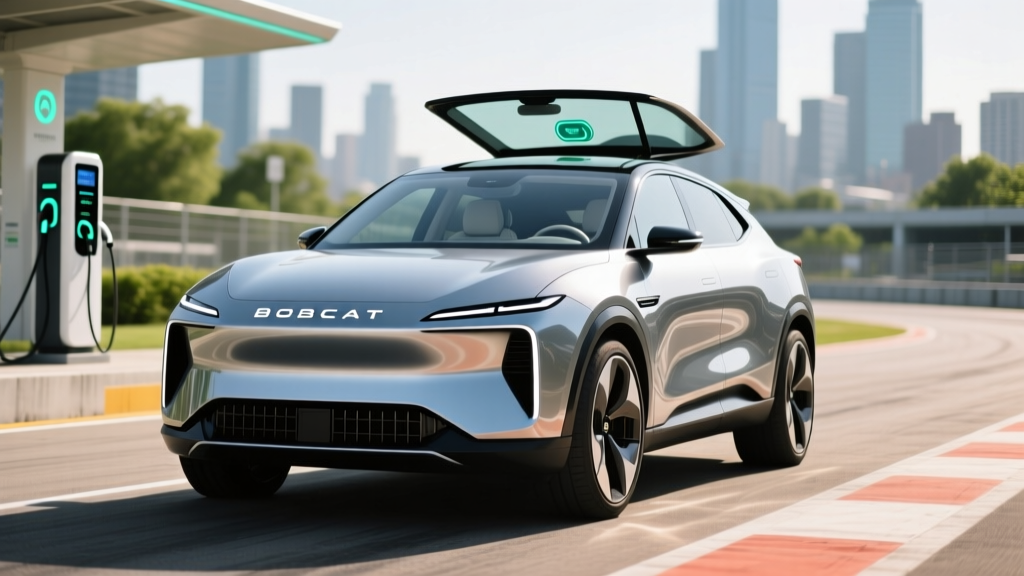
If you're searching for "Bobcat electric," you're likely exploring one of two paths: Bobcat's lineup of electric compact utility vehicles (like the Bobcat CT1000 electric compact track loader or the Bobcat electric utility carts/UTVs used in fleet and agricultural settings), or you're cross-shopping electric work vehicles against gas/diesel equivalents for job-site or property use. As of 2026, Bobcat (a Doosan brand) offers select electric and hybrid-powered compact equipment primarily aimed at commercial, agricultural, and fleet buyers — not consumer passenger EVs. If you're a first-time EV buyer looking for a daily-driver passenger car, Bobcat is not in that market. But if you're evaluating an electric work vehicle or utility EV, the ownership math, charging logistics, and total cost of ownership (TCO) still follow the same EV principles we'll break down below.
What Bobcat Electric Actually Means in 2026
Bobcat is best known for skid-steer loaders, compact track loaders, and utility vehicles. The brand has been expanding into electric and battery-powered equipment, targeting indoor job sites (where diesel exhaust is prohibited), noise-sensitive environments, and fleet operators pursuing emissions-reduction mandates. Key products in or near market include:
- Bobcat CT1000 Electric Compact Track Loader — an announced battery-electric machine aimed at zero-emission job sites
- Bobcat electric UTVs and utility carts — used in agriculture, campuses, and industrial facilities
- Bobcat's partnership with Green Machine Equipment on battery-powered compact machinery
These are not highway-legal passenger vehicles. They don't carry EPA range ratings or qualify for the IRS §30D federal EV tax credit that applies to consumer cars and trucks. Instead, they may qualify for commercial clean vehicle credits (§45W), state-level equipment electrification grants, or utility rebates for off-road electric machinery. Always check IRS §45W guidelines and your state's energy office for current incentive availability.
Electric Work Vehicles vs. Gas/Diesel: The Real Cost Comparison
Whether you're evaluating a Bobcat electric loader, an electric UTV, or cross-shopping a consumer electric truck like the Ford F-150 Lightning or Rivian R1T for work use, the economic framework is similar. Here's how electric work vehicles compare to their internal-combustion counterparts on key cost drivers:
| Cost Factor | Electric Work Vehicle | Gas/Diesel Equivalent |
|---|---|---|
| Upfront Purchase Price | 20–50% higher (battery premium) | Baseline |
| Fuel/Energy Cost per Hour | $2–$5 (electricity at $0.13–$0.18/kWh) | $8–$15 (diesel at ~$4.00/gal, 1.5–2 gal/hr) |
| Maintenance (Annual) | $300–$600 (no oil, filters, DEF fluid) | $1,200–$2,500 (oil changes, filters, emissions systems) |
| Battery/Fuel System Replacement | $8,000–$20,000+ at end-of-life (year 8–12) | Engine/transmission rebuild $5,000–$15,000 |
| Incentives Available | §45W credit up to $40,000 (commercial), state grants | None |
| Noise Output | 65–75 dB (indoor-friendly) | 85–100 dB (hearing protection required) |
| Zero Local Emissions | Yes (critical for indoor/enclosed sites) | No (diesel particulate, CO, NOx) |
The data consistently shows that electric work vehicles have higher upfront costs but lower operating costs. The break-even point typically lands between years 3 and 5 depending on daily utilization hours, local electricity rates, and available incentives. For Bobcat's electric compact equipment specifically, the business case is strongest when machines run 4+ hours daily in environments where diesel is prohibited or where noise restrictions apply.
Charging Infrastructure: What Job-Site EV Charging Actually Requires
One of the biggest ownership considerations — whether you're buying a Bobcat electric loader or a consumer EV — is charging access. For work vehicles, this is often more straightforward than public charging but requires upfront electrical investment.
Job-Site Charging Setup: Estimated Costs
| Component | Level 2 (240V, 7–19 kW) | DC Fast Charge (50–150 kW) |
|---|---|---|
| Equipment Cost | $500–$2,500 per unit | $15,000–$80,000+ per unit |
| Electrical Installation | $1,000–$5,000 (240V circuit run) | $10,000–$50,000+ (480V service, transformer) |
| Panel Upgrade (if needed) | $2,000–$5,000 | $5,000–$25,000+ |
| Charge Time (typical work battery 40–80 kWh) | 4–10 hours (overnight) | 30–90 minutes (10–80%) |
| Best For | Depot charging, overnight top-up | Multi-shift operations, mid-day top-up |
Most Bobcat electric compact equipment is designed for overnight depot charging on Level 2 (240V) power. This means a machine used for a single 8-hour shift charges fully overnight and is ready for the next morning. Multi-shift operations may need DC fast charging or battery-swap capability, which significantly increases infrastructure cost.
Key distinction — kW vs. kWh: A charger rated at 19 kW (power) delivers energy measured in kWh (capacity). A 60 kWh battery charging at 19 kW takes roughly 3.2 hours from empty. Understanding this difference prevents costly misunderstandings when specifying charging equipment.
Battery Chemistry, Degradation, and Long-Term Costs
Electric work vehicles typically use NMC (nickel manganese cobalt) or LFP (lithium iron phosphate) battery chemistries. Here's what that means for ownership:
| Factor | NMC | LFP |
|---|---|---|
| Energy Density | Higher (more range/runtime per kg) | Lower (heavier for same capacity) |
| Cycle Life | 1,000–2,000 cycles to 80% SoH | 3,000–5,000+ cycles to 80% SoH |
| Thermal Stability | Good (requires active cooling) | Excellent (more tolerant of heat) |
| Cost per kWh | $130–$160 | $90–$120 |
| Best Use Case | Space/weight-constrained machines | Heavy-duty, high-cycle fleet use |
| Charging to 100% Daily | Accelerates degradation | Tolerates full charges better |
For work vehicles that charge nightly and run daily, LFP chemistry is increasingly preferred due to its longer cycle life and lower cost — even though the battery pack is heavier. A Bobcat electric machine with an LFP pack rated for 4,000 cycles could deliver 10+ years of daily use before reaching 80% state of health (SoH), at which point runtime per charge drops noticeably but the machine remains functional.
Real-world degradation data: Fleet studies from NREL and utility operators show that electric work equipment batteries typically degrade 2–3% per year under normal use, meaning a machine with 8 hours of runtime when new will deliver roughly 6.5–7 hours by year 5. Cold climates accelerate this slightly; keeping batteries above freezing during charging (via heated storage or battery preconditioning) preserves longevity.
Decision Framework: Should You Go Electric?
If/Then: Is an Electric Work Vehicle Right for Your Operation?
- IF you operate indoors or in noise-restricted areas → THEN electric is strongly recommended (zero emissions, 20–30 dB quieter)
- IF your machines run 4+ hours/day, 5+ days/week → THEN the fuel and maintenance savings justify the upfront premium within 3–5 years
- IF you have access to 240V power at your depot/shop → THEN overnight Level 2 charging is viable and cost-effective
- IF you qualify for §45W commercial credits or state electrification grants → THEN the effective purchase price drops significantly (potentially 20–40%)
- IF you need multi-shift, continuous operation without downtime → THEN evaluate DC fast-charge capability or consider hybrid alternatives until infrastructure catches up
- IF you operate in extreme cold (below 10°F consistently) → THEN expect 20–30% runtime reduction in winter and spec a larger battery or plan for mid-day top-ups
- IF you're a consumer looking for a daily-driver passenger EV → THEN Bobcat is not in this market; look at Ford, Hyundai, Tesla, Rivian, or Chevrolet instead
Common Misconceptions About Electric Work Vehicles
| Myth | Fact |
|---|---|
| "Electric machines don't have enough power for real work." | Electric motors deliver peak torque at 0 RPM. Many electric compact loaders match or exceed diesel breakout force and hydraulic flow rates. |
| "The battery will die in 3 years and cost a fortune to replace." | Modern LFP and NMC packs are warrantied for 5–8 years or 3,000+ cycles. Replacement costs are declining ~10% annually and are offset by years of fuel savings. |
| "I need a massive solar array to charge electric equipment." | A single Level 2 charger draws ~7–19 kW. Most commercial sites have sufficient panel capacity. Grid charging at $0.13/kWh is already cheaper than diesel. |
| "Electric vehicles don't qualify for any tax incentives." | Commercial clean vehicles may qualify for §45W credits up to $40,000 per vehicle. State and utility incentives stack on top. Check IRS.gov for current rules. |
| "Charging takes too long for a work day." | Overnight depot charging (6–8 hours on Level 2) fully replenishes most work-vehicle batteries. This matches natural shift patterns without downtime. |
Frequently Asked Questions
Does Bobcat make a consumer electric car or truck?
No. Bobcat manufactures compact construction and agricultural equipment. Their electric products are work machines — loaders, UTVs, and utility carts — not highway-legal passenger vehicles. If you're looking for a consumer EV, brands like Ford, Tesla, Hyundai, and Rivian are the relevant players.
How much does it cost to charge a Bobcat electric machine per day?
At the US average commercial electricity rate of ~$0.13/kWh, fully charging a 60 kWh battery pack costs roughly $7.80. Compare that to $24–$30 in diesel fuel for equivalent runtime. Annual energy savings can reach $4,000–$8,000 per machine depending on utilization.
What electrical infrastructure do I need on-site?
At minimum, a dedicated 240V/50A circuit (similar to a welder outlet) for Level 2 charging. Installation by a licensed electrician typically costs $1,500–$5,000 depending on run length and panel capacity. For DC fast charging, you'll need 480V three-phase service, which may require a utility transformer upgrade costing $10,000–$50,000+.
Do electric work vehicles perform in cold weather?
Battery capacity drops 15–30% in sub-freezing temperatures, reducing runtime per charge. Mitigation strategies include heated storage, battery preconditioning systems (which warm the pack before use), and specifying a 20–30% larger battery than your minimum runtime requirement. Lithium batteries also charge slower when cold — never fast-charge a frozen pack, as this causes permanent damage.
What's the battery replacement cost and timeline?
Battery pack replacement for electric compact equipment typically runs $8,000–$20,000+ depending on capacity and chemistry. However, most modern packs are designed to last 8–12 years or 3,000–5,000 charge cycles before reaching 80% state of health. Many manufacturers offer 5–8 year battery warranties. The long service life means most owners will never need a replacement during the machine's primary ownership period.
Can I get a tax credit for buying Bobcat electric equipment?
Possibly — but not the consumer §30D credit. Commercial electric equipment may qualify for the §45W Commercial Clean Vehicle Credit (up to $40,000 for vehicles over 14,000 lbs GVWR) or state-level equipment electrification grants. Eligibility depends on battery sourcing, vehicle weight, and your tax situation. Consult a tax professional and review current IRS guidance before purchasing.