The Polestar 1 at a Glance: A Limited-Run PHEV Like No Other
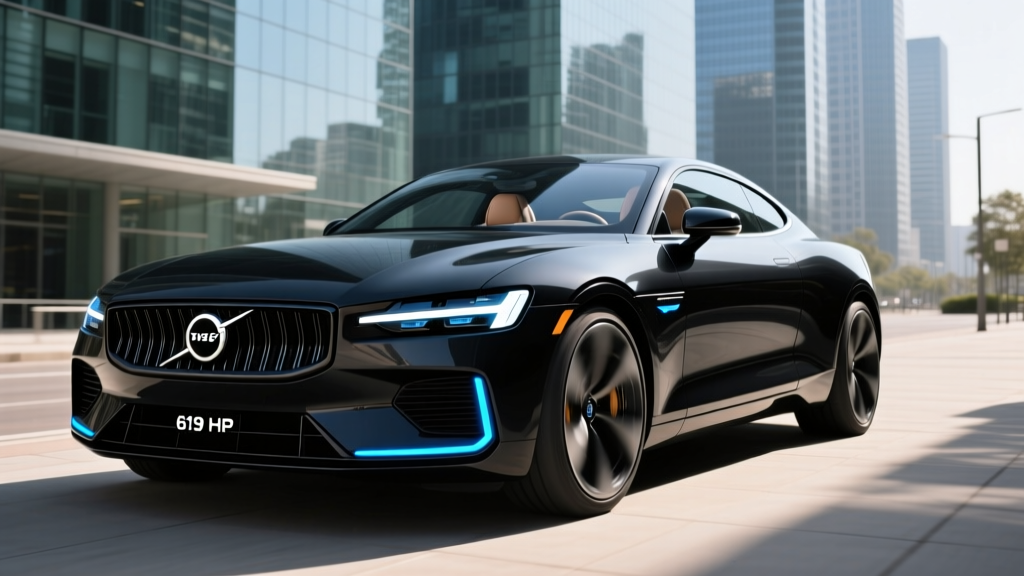
The Volvo Polestar 1 occupies a strange, fascinating corner of the electrified-vehicle world. Produced between 2019 and 2021 as a limited run of exactly 1,500 units globally, this plug-in hybrid grand tourer was Polestar's opening statement — a carbon-fiber-bodied, 619-horsepower halo car that could silently cruise 52 miles on electricity alone before its twin-charged Volvo four-cylinder kicked in. In 2026, the Polestar 1 exists exclusively on the used and collector market, but its engineering remains compelling for enthusiasts shopping the pre-owned PHEV space.
This review covers the Polestar 1's real-world range, charging behavior, ownership economics, and whether it still holds up against modern PHEVs and BEVs. If you're cross-shopping a used Polestar 1 against a new BMW XM, Porsche Panamera E-Hybrid, or a fully electric Polestar 2, the data below will clarify the trade-offs.
| Spec | Polestar 1 (Final Model Year 2021) |
|---|---|
| Powertrain | 2.0L twin-charged I4 + dual rear electric motors (PHEV AWD) |
| Combined Output | 619 HP / 738 lb-ft torque |
| 0–60 mph | 4.0 seconds |
| Battery (gross / usable) | 34 kWh total / ~29 kWh usable (NMC lithium-ion) |
| EPA Electric-Only Range | 52 miles |
| EPA Combined (gas + electric) | 260 miles total range |
| MPGe (electric mode) | 58 MPGe combined |
| MPG (gas-only, charge-sustaining) | 26 MPG combined |
| DC Fast Charge (max) | 50 kW (CCS1) |
| Level 2 Charge Rate | 3.6 kW onboard charger |
| Base MSRP (when new) | $155,000 |
| Battery Warranty (original) | 8 years / 100,000 miles |
Real-World Range: What 52 Electric Miles Actually Looks Like
EPA Electric Range: 52 miles
Real-World Expectation: 38–48 miles in mixed driving; 30–38 miles at sustained highway speeds (70+ mph) or in cold weather below 40°F.
The Polestar 1's 34 kWh battery pack (approximately 29 kWh usable, with a buffer to protect longevity) delivers its EPA-rated 52 miles under ideal conditions: moderate temperatures, city-speed driving, and judicious throttle use. In practice, owners report 42–48 miles on a full charge during spring and fall commutes. Highway driving at 75 mph drops that figure to roughly 35 miles, as the car's 5,200-pound curb weight and 2+2 grand-tourer aerodynamics demand more energy at speed.
Cold weather is the larger penalty. At 25°F, expect 30–35 electric miles before the gasoline engine engages — a 30–40% reduction typical of NMC chemistry without a dedicated heat pump for the cabin. The Polestar 1 uses resistive heating and engine waste heat, which is less efficient than the heat-pump systems found in newer EVs like the Hyundai Ioniq 5 or Tesla Model Y.
Once the battery depletes, the 2.0-liter twin-charged (turbocharged and supercharged) Volvo Drive-E engine takes over, delivering an EPA-rated 26 MPG combined in charge-sustaining mode. On a long road trip, real-world fuel economy hovers around 24–27 MPG depending on terrain and speed — respectable for a 619-HP grand tourer, but not class-leading against the BMW XM Label's 24 MPG combined or the Mercedes-AMG GT 63 S E Performance's estimated 22 MPG.
Charging: Slow by Modern Standards, Adequate for Its Use Case
| Charging Level | Power (kW) | Time (0–100% or 10–80%) | Miles Added per Hour |
|---|---|---|---|
| Level 1 (120V household) | ~1.4 kW | ~22 hours (full) | ~4 mi/hr |
| Level 2 (240V, 16A) | 3.6 kW (onboard limit) | ~8 hours (full) | ~14 mi/hr |
| DC Fast Charge (CCS1) | 50 kW peak | ~35 min (10–80%) | N/A (burst) |
The Polestar 1's charging hardware reflects its 2017 engineering origins. The onboard AC charger caps at 3.6 kW — meaning even a 48-amp Level 2 home charger will only deliver 3.6 kW to the battery. A full charge from empty takes roughly 8 hours on Level 2, which is fine for overnight replenishment of the 52-mile electric envelope.
DC fast charging tops out at 50 kW via the CCS1 connector. That's modest by 2026 standards — a Hyundai Ioniq 5 peaks at 240 kW, and even the Polestar 2 supports 150 kW — but the Polestar 1's smaller 34 kWh battery means 50 kW is still roughly a 1.5C charge rate. In practice, you'll see 10–80% in approximately 35 minutes, with the charge curve tapering significantly above 80% to protect the NMC cells. For a PHEV with 52 miles of electric range, most owners rarely use DC fast charging; overnight Level 2 at home covers the daily commute.
Home charging setup: A standard NEMA 14-50 outlet with a quality Level 2 EVSE (ChargePoint Home Flex, Emporia Level 2) will work perfectly. Expect $500–$1,500 for installation if your electrical panel is near the garage, per fueleconomy.gov guidance. No panel upgrade is typically needed for a 3.6 kW draw.
Performance: 619 Horsepower With a Split Personality
The Polestar 1's powertrain is genuinely unique. The front wheels are driven by the 2.0-liter twin-charged four-cylinder (producing roughly 326 HP on its own), while two independent electric motors on the rear axle contribute 232 HP combined. In Power mode, all systems fire simultaneously for 619 HP and 738 lb-ft of torque, rocketing the 5,200-pound coupe to 60 mph in 4.0 seconds.
What makes the experience special is the torque-vectoring rear axle. Each rear wheel gets its own electric motor, allowing the car to actively distribute torque side-to-side through corners. The result is a rear-biased, adjustable handling character unusual for an all-wheel-drive PHEV. The Öhlins Dual Flow Valve dampers (manually adjustable, 22 settings) and Akebono six-piston front brake calipers underscore that this was engineered as a driver's car first, efficiency machine second.
Drive modes include Pure (electric-only, rear-wheel drive), Hybrid (default blended), Power (maximum combined output), and an individual mode. In Pure mode, the car is rear-drive only — a rare trait in the PHEV world — and accelerates with the quiet urgency unique to electric propulsion, though 232 HP moving 5,200 pounds yields a more relaxed 0–60 time of roughly 7.5 seconds.
Pricing, Tax Credits, and Used-Market Value
| Item | Amount |
|---|---|
| Original MSRP (2021) | $155,000 |
| Typical Used Price (2026, 15k–30k miles) | $95,000–$130,000 |
| Federal Used EV Credit (§25E) | Up to $4,000 (30% of sale price, capped) |
| Federal New EV Credit (§30D) | Not eligible (discontinued, used purchase only) |
| Estimated Out-of-Pocket (after §25E) | $91,000–$126,000 |
The Polestar 1 was never going to be a volume play, and its $155,000 MSRP placed it firmly in exotic-grand-tourer territory alongside the BMW i8 (its most direct competitor). In 2026, used examples trade between $95,000 and $130,000 depending on mileage, condition, and the car's build number (all 1,500 were individually numbered).
Because the Polestar 1 is only available as a used purchase today, the relevant federal incentive is the §25E Used Clean Vehicle Credit, not the §30D new-vehicle credit. Per IRS guidelines, §25E provides up to $4,000 (30% of the sale price, capped at $4,000) for qualifying used EVs and PHEVs purchased from a dealer. Eligibility requirements include:
- Sale price of $25,000 or less — the Polestar 1 does NOT qualify under this cap
- Buyer income limits: $75,000 single / $150,000 married filing jointly
- Vehicle must be at least two model years old (the Polestar 1 qualifies on age)
In practice, because the Polestar 1's used price far exceeds the $25,000 §25E sale-price cap, buyers will not receive any federal tax credit for this purchase. State-level incentives vary by jurisdiction — consult your state's energy office or a tax professional for local programs.
Interior, Cargo, and Daily Practicality
The Polestar 1's cabin is unmistakably Volvo in its Scandinavian restraint — a portrait-oriented 9-inch Sensus infotainment touchscreen, crystal gear selector by Orrefors, and available Nappa leather with gold seatbelts. Build quality is exceptional, with carbon fiber visible in the door sills and structural elements. However, the infotainment system feels dated by 2026 standards: no wireless Apple CarPlay, slow map rendering, and an interface designed a decade ago.
Practicality is where the grand-tourer label reveals its compromises:
- Rear seats: Technically a 2+2, but the rear seats are best suited for children or luggage. Adult legroom is approximately 29 inches — unusable for anyone over 5'6" on longer trips.
- Cargo volume: 6.5 cubic feet in the trunk, partially compromised by the battery pack's intrusion. A golf bag fits; a week's luggage for two requires creative packing.
- Frunk: None. The engine bay is fully occupied by the twin-charged four-cylinder and associated power electronics.
- Visibility: The low roofline and thick C-pillars create significant blind spots. The car includes a rearview camera but no 360-degree view system.
Driver-assistance tech includes Volvo's Pilot Assist (a Level 2 SAE system combining adaptive cruise control and lane-centering), blind-spot monitoring, and run-off-road protection. Pilot Assist works well on highways but requires constant driver supervision — it is not, and was never marketed as, a hands-off or "self-driving" system.
Ownership Costs, Warranty, and Longevity
When new, the Polestar 1 included a comprehensive warranty:
- Battery: 8 years / 100,000 miles (capacity retention threshold: 70% of original)
- Powertrain: 4 years / 50,000 miles
- Bumper-to-bumper: 4 years / 50,000 miles
For a 2021 model purchased in 2026, the original battery warranty has approximately three years or significant mileage remaining. However, the bumper-to-bumper and powertrain warranties have likely expired unless an extended plan was purchased. Given the car's complexity — a twin-charged engine, dual rear electric motors, a high-voltage battery, and Öhlins suspension — out-of-warranty repairs could be expensive. Only select Volvo/Polestar dealerships have technicians certified to service the high-voltage system.
Insurance premiums run 25–40% higher than a comparable luxury coupe, reflecting the car's value, carbon-fiber construction (costly to repair after collision), and limited parts availability. Expect $4,000–$6,000 annually for a good-driving record, per quotes from major carriers.
Maintenance follows Volvo's schedule: annual or 10,000-mile intervals for the gasoline engine (oil, filters, spark plugs), plus cabin air filter and brake fluid. The regenerative braking system significantly extends pad life — many owners report original brake pads at 40,000 miles.
Pros
- 619 HP with 52 miles of silent electric commuting — best of both worlds
- Carbon fiber body, Öhlins dampers, Akebono brakes — genuine exotic-car hardware
- Limited to 1,500 units — future collectibility is strong
- Torque-vectoring rear axle delivers RWD dynamics with AWD traction
- Build quality and materials rival Aston Martin at a fraction of the price
Cons
- 52-mile EV range is modest by 2026 PHEV standards (Toyota RAV4 Prime: 42 mi; BMW XM: 31 mi — but those are SUVs at 1/3 the price)
- 3.6 kW AC charging and 50 kW DC charging are slow for the segment
- $95k–$130k used price with no federal tax credit eligibility
- Tiny rear seats and 6.5 cu-ft trunk limit practicality
- Dated Sensus infotainment with no wireless smartphone integration
- Limited dealer network for high-voltage service
Who Should Buy the Polestar 1 in 2026?
Choose the Polestar 1 if: You want a collectible, limited-production PHEV grand tourer with exotic-car dynamics, your daily commute is under 45 miles (so you can drive electric most days), and you value exclusivity and design over infotainment tech and rear-seat space.
Choose a modern BEV or PHEV instead if: You need daily practicality (four adults, cargo space), want the latest driver-assist and infotainment tech, prefer faster charging for road trips, or want to maximize federal tax credits. A new Polestar 2 ($49,900+), BMW i4 M50, or Porsche Taycan will serve those needs better.
Frequently Asked Questions
What is the real-world electric range of the Volvo Polestar 1?
The EPA rates the Polestar 1 at 52 miles of electric-only range. In real-world mixed driving, expect 42–48 miles in moderate weather, dropping to 30–35 miles in cold conditions or sustained highway driving above 70 mph.
How fast does the Polestar 1 charge at home and on DC fast chargers?
The onboard AC charger is limited to 3.6 kW, so a full Level 2 charge takes about 8 hours. DC fast charging peaks at 50 kW via CCS1, reaching 10–80% in roughly 35 minutes. Most owners charge overnight at home and rarely use DC fast charging.
Does the Polestar 1 qualify for any federal EV tax credit in 2026?
No. The §30D new-vehicle credit does not apply because the Polestar 1 is discontinued and only available used. The §25E used-vehicle credit has a $25,000 sale-price cap, which the Polestar 1 far exceeds. Buyers will not receive a federal credit. Consult a tax professional for state-specific incentives.
Is the Polestar 1 worth buying over a BMW i8 or modern PHEV?
The Polestar 1 offers more electric range (52 vs. the i8's 18 miles), more horsepower (619 vs. 369), and more exclusivity (1,500 units vs. ~20,000 i8s). However, the i8 has better brand recognition, more dealer support, and a larger used-car market. If you prioritize driving dynamics and EV commuting range, the Polestar 1 wins. If you want practicality and resale liquidity, the i8 or a modern PHEV SUV may be smarter.
What is the biggest drawback of owning a Polestar 1?
Service access. Only a handful of Volvo/Polestar dealerships nationwide have technicians certified for the high-voltage system and carbon-fiber repairs. If you live far from a qualifying dealer, routine and warranty service becomes a logistical challenge. Parts availability for the bespoke carbon-fiber body panels is also limited.
How does the Polestar 1's efficiency compare to other PHEVs?
At 58 MPGe in electric mode and 26 MPG in gas-only mode, the Polestar 1 trails efficiency-focused PHEVs like the Toyota RAV4 Prime (94 MPGe / 38 MPG) and Hyundai Tucson PHEV (80 MPGe / 35 MPG). This is expected — the Polestar 1 is a 5,200-pound performance grand tourer, not an efficiency maximizer. Its value proposition is combining exotic performance with a usable electric commute, not minimizing energy consumption.
Sources: EPA fuel economy data via fueleconomy.gov; IRS §25E used clean vehicle credit rules via irs.gov; original Polestar 1 specifications via Polestar press archives.