Quick Answer: Is There a BMW X1 Electric?
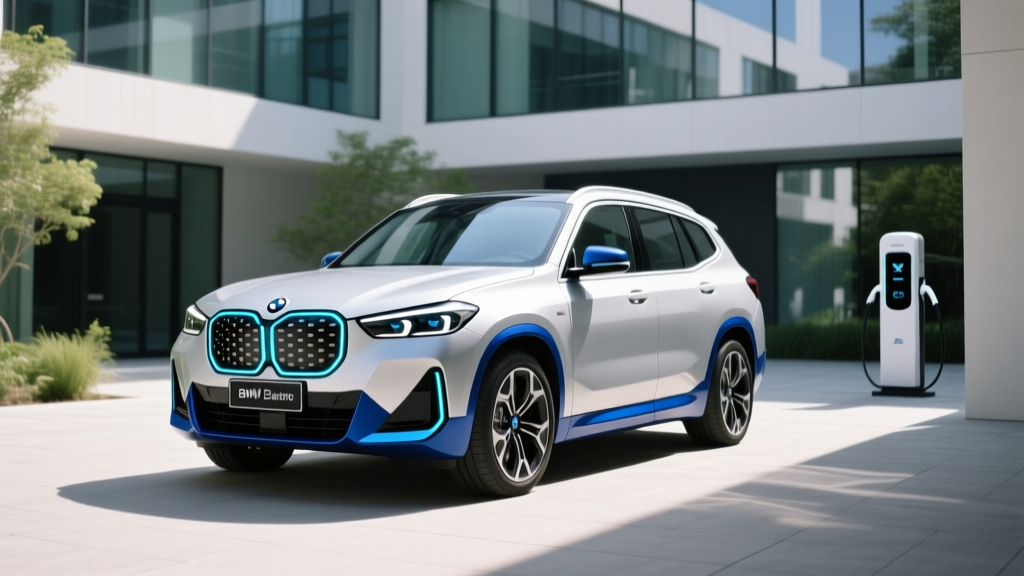
The fully electric version of the BMW X1 is officially called the BMW iX1 (model code U11). As of the 2026 model year, the iX1 is sold in Europe, Australia, and several Asian markets with a 64.7 kWh battery, up to 272 hp, and a WLTP range of approximately 272 miles. However, BMW has not yet launched the iX1 in the United States. U.S. buyers looking for an electric subcompact luxury SUV from BMW should consider the BMW iX (mid-size) or await a potential U.S.-spec iX1 introduction. This guide covers what's known, what it would cost, and how it compares to gas and hybrid alternatives.
What the BMW iX1 (Electric X1) Actually Is
The BMW iX1 is the battery-electric variant of the third-generation X1 subcompact luxury crossover, built on BMW's FA2 platform which supports both internal-combustion and battery-electric powertrains. It launched globally in late 2022 for the 2023 model year and received incremental updates through 2025 and 2026.
The current global-spec iX1 xDrive30 features:
- Battery: 64.7 kWh usable capacity (gross ~66.5 kWh), NMC (nickel-manganese-cobalt) lithium-ion chemistry
- Powertrain: Dual-motor all-wheel drive, 272 hp (200 kW), 369 lb-ft torque
- WLTP range: Up to 272 miles (438 km)
- EPA-estimated range: Not yet published (U.S. model not available). Expect approximately 230–245 miles EPA based on typical WLTP-to-EPA conversion ratios of 12–15% reduction
- DC fast charging: Up to 130 kW peak (CCS connector in global markets; NACS expected if U.S. launch occurs)
- 10–80% DC charge time: Approximately 29 minutes at peak rate
- Level 2 AC charging: Up to 11 kW (three-phase, ~6.5 hours 0–100%); 7.4 kW on single-phase (common U.S. home setup, ~9 hours)
- 0–60 mph: 5.6 seconds
Real-World Range Expectations
WLTP sticker: 272 miles
Estimated EPA equivalent: ~235 miles
Real-world highway (70 mph, moderate temps): ~200–215 miles
Cold weather (below 32°F, highway): ~165–185 miles
The iX1's relatively compact battery and boxy crossover shape mean highway and cold-weather range drop noticeably. BMW's thermal management system includes a heat pump (standard on most markets), which helps mitigate winter losses compared to resistive heating, but expect a 20–30% reduction in freezing conditions. Source: BMW Global.
How the BMW X1 Electric Compares to the Gas X1 and Rivals
For U.S. buyers cross-shopping the X1 lineup, the gas-powered X1 xDrive28i remains the only option currently sold stateside. Here's how the numbers stack up:
| Spec | BMW iX1 xDrive30 (Electric, Global) | BMW X1 xDrive28i (Gas, U.S.) | Volvo EX40 (Electric, U.S.) |
|---|---|---|---|
| Powertrain | Dual-motor AWD, BEV | 2.0L turbo I4, AWD | Single/Dual motor, BEV |
| Horsepower | 272 hp | 241 hp | 248–402 hp |
| 0–60 mph | 5.6 sec | 6.2 sec | 4.5–7.1 sec |
| Range / MPG | ~235 mi (est. EPA) | 28 MPG combined | 254–293 mi EPA |
| Battery / Tank | 64.7 kWh usable | 14.5 gal | 69–82 kWh usable |
| Max DC Charge | 130 kW | N/A | 150–200 kW |
| 10–80% Charge | ~29 min | ~5 min (refuel) | ~28–32 min |
| Cargo (rear seats up) | 17.5 cu ft | 25.7 cu ft | 16.0 cu ft |
| Base MSRP (U.S.) | Not available in U.S. | $40,500 | $53,550 |
Key takeaway: The gas X1 offers significantly more cargo room and far greater road-trip convenience. The iX1 trades practicality for instant torque, lower running costs, and zero tailpipe emissions. If BMW brings the iX1 to the U.S., expect pricing around $43,000–$48,000 based on European pricing conversion and U.S. equipment norms.
Charging the iX1: Speeds, Connectors, and Home Setup
The iX1's 130 kW peak DC charge rate is moderate by 2026 standards. Many rivals in this segment (Hyundai Ioniq 5, Kia EV6) peak at 240+ kW thanks to 800V architectures, while the iX1 uses a conventional 400V system. Here's what charging looks like across levels:
| Charging Level | Power (kW) | Miles Added per Hour | Full Charge Time | Typical Use Case |
|---|---|---|---|---|
| Level 1 (120V household) | 1.4 kW | ~4 mi/hr | ~48 hours | Emergency/trickle only |
| Level 2 (240V, 32A) | 7.4 kW | ~22 mi/hr | ~9 hours | Home daily charging |
| Level 2 (240V, 48A) | 11 kW (max) | ~33 mi/hr | ~6.5 hours | Optimal home setup |
| DC Fast (130 kW peak) | 130 kW | ~190 mi/hr (peak) | 10–80% in ~29 min | Road trips |
Charging curve reality: The 130 kW peak only holds roughly between 10–40% state of charge. Expect the rate to taper to ~80 kW by 60% SoC and ~40 kW above 80%. A 10–80% session at a properly rated DC charger will take approximately 29 minutes, but a 10–95% session could stretch past 50 minutes due to taper.
Home charging cost (U.S. average): At the national average electricity rate of ~$0.17/kWh (EIA, 2025 data), fully charging the 64.7 kWh battery costs approximately $11.00. For a driver covering 12,000 miles/year at 3.5 miles/kWh efficiency, annual home charging cost is roughly $583.
Total Cost of Ownership: iX1 Electric vs. Gas X1
Even without U.S. pricing, we can model ownership costs using the European MSRP (~€47,000 / ~$51,000 before incentives) and the U.S. gas X1 as baselines. Below is a projected 5-year cost comparison assuming a hypothetical U.S. iX1 launch at $45,000 MSRP:
| Cost Category (5 Years / 60,000 mi) | BMW iX1 (Projected U.S.) | BMW X1 xDrive28i (Gas) |
|---|---|---|
| Purchase Price (MSRP) | $45,000 | $40,500 |
| Federal Tax Credit (§30D) | $0–$7,500* | $0 |
| Effective Purchase | $37,500–$45,000 | $40,500 |
| Fuel / Electricity | $2,915 (home charging) | $8,570 ($3.50/gal, 28 MPG) |
| Maintenance | $1,800 (est.) | $3,200 (est.) |
| Insurance (avg.) | $9,500 | $8,200 |
| Depreciation (est. 5-yr) | $20,000 | $18,000 |
| Total 5-Year Cost | $51,715–$59,215 | $78,470 |
*The §30D federal EV tax credit depends on battery component sourcing, critical-mineral requirements, buyer income caps ($150K single / $300K joint), and MSRP caps ($55,000 for SUVs). As of 2026, many BMW EVs have not qualified for the full credit due to battery-sourcing rules. Always verify current eligibility at IRS.gov.
Savings gap: The electric iX1 could save $19,000–$27,000 over five years vs. the gas X1, primarily from fuel and maintenance savings. However, this assumes home charging access, moderate annual mileage, and that the iX1 qualifies for at least a partial tax credit.
Federal Tax Credit Eligibility: What to Expect
If BMW launches the iX1 in the U.S., the §30D credit eligibility will depend on where the battery cells and critical minerals are sourced. As of 2026, the rules are strict:
- MSRP cap: Vehicle must be under $55,000 for SUVs (iX1 likely qualifies if priced at ~$45K)
- Buyer income cap: AGI must not exceed $150,000 (single), $225,000 (head of household), or $300,000 (joint)
- Battery components: Must be manufactured or assembled in North America (phased percentage thresholds increase yearly)
- Critical minerals: Must be sourced from the U.S. or FTA-partner nations
- Foreign entity of concern (FEOC): Battery cannot contain components from a prohibited foreign entity (primarily targeting Chinese-sourced materials)
- Point-of-sale transfer: Eligible buyers can transfer the credit to the dealer for an immediate price reduction at purchase
BMW has historically sourced battery cells from CATL (China) and Samsung SDI (South Korea) for many global models. The FEOC restrictions make full $7,500 credit eligibility uncertain for the iX1 unless BMW reconfigures its supply chain for a U.S.-spec model. Expect $3,750 (partial) or $0 credit unless BMW confirms North American cell sourcing.
Common Misconceptions About the BMW X1 Electric
| Myth | Fact |
|---|---|
| "The electric X1 is available in the U.S." | As of 2026, only the gas X1 xDrive28i is sold in the U.S. The iX1 is a global-market vehicle not yet offered stateside. |
| "It has 272 miles of range." | That's the WLTP figure (more optimistic). The EPA-equivalent range would likely be ~230–245 miles, and real-world highway driving yields ~200–215 miles. |
| "EVs cost more to own than gas cars." | Fuel and maintenance savings typically offset the higher purchase price within 3–5 years, especially with home charging and available tax credits. |
| "The battery will need replacing in 5 years." | BMW warranties the iX1 battery for 8 years/100,000 miles against degradation below 70% capacity. NMC batteries typically retain 85–90% capacity at 100K miles. |
| "I can charge it at any Tesla Supercharger." | Only if BMW adopts NACS for the U.S. model. Currently, global iX1 models use CCS2. U.S. Supercharger access would require a NACS port or adapter. |
Decision Framework: Should You Wait for the iX1 or Buy Now?
Choose the Gas BMW X1 xDrive28i If:
- You need a BMW subcompact luxury SUV now and can't wait for a potential U.S. iX1 launch
- You regularly drive 300+ miles between stops or live in a charging desert
- You lack reliable home or workplace Level 2 charging access
- Cargo space is a priority (25.7 cu ft gas vs. 17.5 cu ft electric)
- You want the lowest upfront cost ($40,500 MSRP)
Wait for the BMW iX1 (U.S. Launch TBD) If:
- You have home Level 2 charging and a daily commute under 80 miles
- You want zero tailpipe emissions and lower running costs
- You value instant torque and a quieter driving experience
- You're willing to wait 12–24 months for a potential U.S. introduction
- A partial or full §30D tax credit would bring the effective price near or below the gas X1
Consider These U.S.-Available Alternatives Instead:
- Volvo EX40 ($53,550, 254–293 mi EPA, 200 kW DC charging) — the closest U.S. rival in size and luxury positioning
- BMW iX xDrive50 ($87,250, 324 mi EPA) — larger and more expensive, but the only electric BMW SUV currently sold in the U.S.
- Genesis GV60 ($53,350, 248–294 mi EPA, 800V architecture, 240 kW DC) — premium subcompact EV with faster charging
- Hyundai Ioniq 5 ($42,600, 290–316 mi EPA, 240 kW DC) — less luxurious but significantly more range and faster charging at a lower price
First-Time EV Buyer Essentials
If the iX1 or any electric BMW is your first EV, here's what to prepare for:
1. Home charging is non-negotiable for most owners. A Level 2 (240V) home charger installation typically costs $800–$2,500 including equipment and electrician labor. If your electrical panel needs an upgrade to 200A, add $1,500–$3,500. Budget accordingly.
2. Public charging is for road trips, not daily use. DC fast charging costs $0.30–$0.50/kWh at networks like Electrify America and EVgo — roughly 2–3× the cost of home charging. Relying exclusively on public charging erases much of the EV cost advantage.
3. Plan for cold-weather range loss. If you live in the northern U.S., expect 20–30% range reduction in winter. The iX1's heat pump helps, but preconditioning the battery (warming it while still plugged in) is essential for preserving range and enabling faster DC charging.
4. Insurance may be higher. EV insurance premiums average 15–25% above comparable gas vehicles due to higher repair costs and battery replacement risk. Get quotes before committing.
5. Maintenance is simpler but not zero. EVs skip oil changes, spark plugs, and transmission fluid. You'll still need tire rotations (EVs wear tires faster due to weight and torque), cabin air filter replacements, brake fluid checks, and wiper fluid. Budget ~$350–$500/year.
Frequently Asked Questions
Is the BMW iX1 available in the United States?
No. As of the 2026 model year, BMW has not launched the iX1 in the U.S. market. The gas-powered X1 xDrive28i is the only X1 variant sold stateside. BMW has not announced a confirmed timeline for a U.S. iX1 introduction.
What is the real-world range of the BMW iX1?
The WLTP-rated range is 272 miles. For a hypothetical U.S. EPA rating, expect approximately 230–245 miles. In real-world highway driving at 70 mph in moderate temperatures, plan for roughly 200–215 miles. In freezing conditions, that drops to 165–185 miles.
How fast does the iX1 charge?
The iX1 peaks at 130 kW on DC fast charging, achieving a 10–80% charge in approximately 29 minutes. On a Level 2 home charger at 11 kW (three-phase), a full charge takes ~6.5 hours. On a standard U.S. 7.4 kW single-phase setup, expect ~9 hours.
Would the BMW iX1 qualify for the $7,500 federal tax credit?
Uncertain. Eligibility under §30D depends on battery sourcing, which BMW has not confirmed for a U.S.-spec iX1. Many BMW EVs currently fall short of the critical-mineral and battery-component requirements. The MSRP cap ($55K for SUVs) and buyer income limits also apply. Check IRS.gov for current eligibility.
How does the iX1 compare to the Volvo EX40?
The Volvo EX40 is the closest U.S.-available competitor. The EX40 offers more range (254–293 mi EPA), faster DC charging (up to 200 kW), and is available now starting at $53,550. The iX1 (if it arrives) would likely be less expensive but offer less range and slower charging.
What is the BMW iX1 battery warranty?
BMW provides an 8-year/100,000-mile high-voltage battery warranty covering defects and capacity degradation below 70% of original capacity. This is standard across the luxury EV segment and consistent with BMW's iX and i4 warranties.