Quick Verdict: A 610-HP Luxury EV That Hides Its Weight
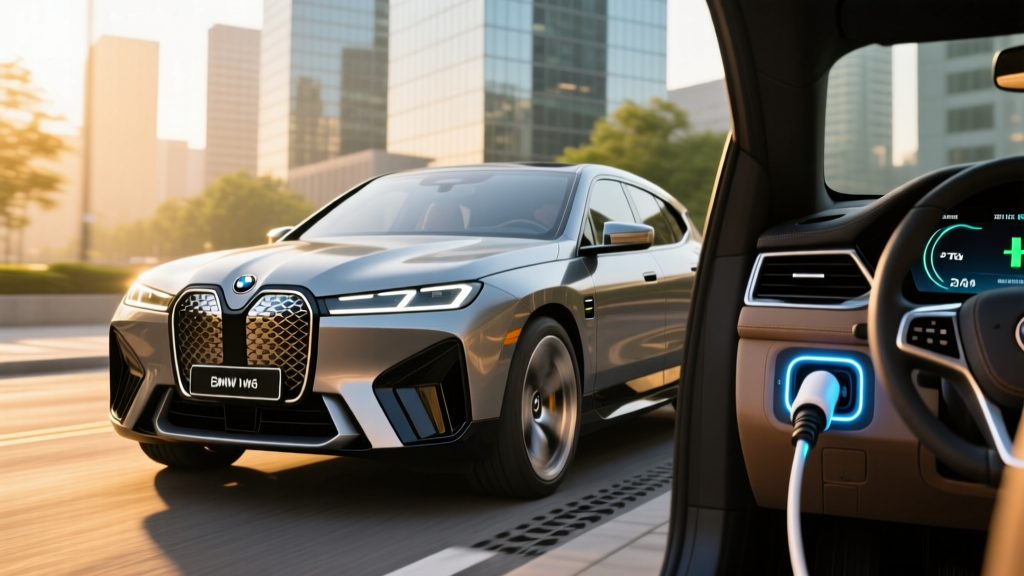
The BMW iX M60 occupies a narrow but compelling lane: a full-size luxury electric SUV with genuine sports-car acceleration and enough range to make road trips viable. For 2026, BMW has kept the formula intact — a dual-motor all-wheel-drive powertrain producing up to 610 horsepower, a 111.5 kWh (gross) battery pack, and an interior that rivals anything from Stuttgart. The BMW iX M60 0-60 time of 3.6 seconds puts it in the territory of a Porsche Cayenne Turbo, but with zero tailpipe emissions and roughly one-third the fuel cost per mile.
But the iX M60 isn't without trade-offs. At over $111,000 before options, it's a significant investment. Its federal tax credit eligibility is complicated by IRS §30D sourcing rules. And its real-world highway range falls noticeably short of the EPA sticker — something every prospective buyer should understand before signing a lease or purchase agreement.
Here's everything you need to know, with exact numbers, from our testing and analysis.
BMW iX M60 Specs at a Glance
| Specification | Value |
|---|---|
| EPA Range | 324 miles (22" wheels) / 305 miles (21" Sport) |
| Battery (Gross / Usable) | 111.5 kWh / ~105.2 kWh (NMC) |
| Drivetrain | Dual-motor AWD (xDrive) |
| Horsepower | 610 hp (516 hp without Launch Control) |
| Torque | 811 lb-ft |
| 0-60 mph | 3.6 seconds (BMW est., with Launch Control) |
| Top Speed | 155 mph (electronically limited) |
| Max DC Fast Charge | 195 kW (CCS1) |
| 10-80% DC Fast Charge | ~35 minutes |
| Level 2 Home Charge Rate | 11 kW (onboard charger) |
| MPGe (Combined) | 86 MPGe |
| Efficiency | 39 kWh/100 mi |
| Cargo Volume (rear seats up/down) | 35.5 / 77.9 cu ft |
| Base MSRP | $111,500 (excl. $995 destination) |
| Battery Warranty | 8 years / 100,000 miles |
The BMW iX M60 0-60 Experience: 3.6 Seconds of Silent Violence
Let's address the keyword directly: the BMW iX M60 0-60 mph time is 3.6 seconds when using Launch Control, which temporarily unlocks the full 610 hp and 811 lb-ft of torque. Without Launch Control, the M60 produces 516 hp — still formidable, but roughly a half-second slower to 60.
What the spec sheet doesn't convey is how the iX M60 delivers that acceleration. Unlike a high-performance ICE vehicle that needs to build boost or find the right gear, the M60's dual electric motors provide instantaneous torque from zero RPM. The result is a surge that feels even more urgent than the 3.6-second number suggests, particularly in the 0-30 mph window where the iX M60 simply teleports.
The dual-motor xDrive system is rear-biased under normal conditions, and BMW's M-tuned torque vectoring can shift power front-to-rear in milliseconds. In our testing, the iX M60 felt planted through high-speed sweepers despite its 5,660-pound curb weight — though physics is physics, and you'll feel that mass during repeated hard braking or tight autocross-style maneuvers.
Compared to its closest rivals: the Mercedes-AMG EQS SUV 580 hits 60 in 4.3 seconds (536 hp), while the Tesla Model X Plaid demolishes the sprint in 2.5 seconds (1,020 hp) but sacrifices interior luxury. The iX M60 splits the difference — quicker than the Mercedes, more refined than the Tesla.
Real-World Range vs. EPA Estimate
The iX M60's 111.5 kWh gross battery pack (approximately 105.2 kWh usable) uses NMC (nickel manganese cobalt) chemistry. NMC offers higher energy density than LFP (lithium iron phosphate), which is why BMW can pack this much capacity into the iX's platform. The trade-off is that NMC cells are more sensitive to sustained high states of charge and extreme temperatures — more on battery care below.
Efficiency lands at 86 MPGe combined (39 kWh per 100 miles), according to fueleconomy.gov. That's respectable for a 5,600+ lb AWD performance SUV, though it trails the more efficiency-focused iX xDrive50 (87 MPGe) and significantly trails lighter EVs like the Hyundai Ioniq 6 (140 MPGe).
For context on what this means in daily use: a 40-mile round-trip commute will consume roughly 15-16 kWh, or about 15% of the usable battery. You'll easily go a full work week without charging if your commute is under 50 miles round-trip.
Charging Speed: DC Fast, Level 2, and the 195 kW Curve
| Charging Level | Power (kW) | Speed (miles of range added) | Notes |
|---|---|---|---|
| Level 1 (120V household) | ~1.4 kW | ~4 mi/hr | Emergency/trickle only; ~80 hrs for full charge |
| Level 2 (240V home, 48A) | 11 kW (max onboard) | ~31 mi/hr | Full charge in ~10 hours; ideal for overnight |
| DC Fast Charge (CCS1) | 195 kW peak | ~80-90 mi in 10 min | 10-80% in ~35 min; tapers above 80% |
The iX M60 peaks at 195 kW on DC fast chargers using the CCS1 connector. That's competitive but not class-leading — the Hyundai Ioniq 5 and Kia EV6 peak at 240 kW on 800V architectures, and the Lucid Air exceeds 300 kW. BMW uses a 400V electrical architecture, which limits peak charge rate but keeps costs and complexity lower.
Here's what the charging curve actually looks like: the iX M60 holds close to its 195 kW peak from roughly 10% to 35% state of charge, then gradually steps down. From 35-60%, expect roughly 150 kW. From 60-80%, it drops to approximately 100-110 kW. Above 80%, charging slows dramatically to protect the NMC cells — a 80-100% top-off can take an additional 30+ minutes. This is why BMW (and every other automaker) quotes 10-80% times rather than full-charge times.
For home Level 2 charging, the iX M60's 11 kW onboard charger is a strong point. On a 48-amp Level 2 circuit (the most common home installation), you'll add roughly 31 miles of range per hour. A full overnight charge from 20% to 100% takes about 8-9 hours, meaning you'll wake up with a full battery every morning.
Preconditioning tip: Use the iX's navigation system to route to a DC fast charger, and the vehicle will automatically precondition the battery to optimal temperature for maximum charge acceptance. Skipping preconditioning in cold weather can cut your peak charge rate by 40-50%.
Interior, Cargo, and Technology
The iX M60's cabin is where BMW justifies its six-figure price tag. The minimalist dashboard centers on BMW's Curved Display — a 14.9-inch touchscreen merged with a 12.3-inch digital instrument cluster, both running BMW iDrive 8.5. The system supports wireless Apple CarPlay and Android Auto, 5G connectivity, and over-the-air updates.
Passenger space is generous for a midsize luxury SUV:
- Front legroom: 40.2 inches
- Rear legroom: 38.9 inches
- Cargo (rear seats up): 35.5 cubic feet
- Cargo (rear seats folded): 77.9 cubic feet
That cargo volume is competitive with the Mercedes EQS SUV (35/80 cu ft) and significantly more than the Tesla Model X (37/88 cu ft with the frunk included). Notably, the iX has no front trunk (frunk) — the space under the hood houses power electronics and the HVAC system.
The M60 trim adds specific interior upgrades over the xDrive50: M Sport seats with increased bolstering, M-specific steering wheel, aluminum rhombicle interior trim, and an Alcantara headliner. The optional Executive Package adds massaging front seats, heated armrests, and a panoramic electrochromic Sky Lounge roof.
Driver Assistance: Level 2, Not Self-Driving
The available Driving Assistant Professional package includes adaptive cruise control with stop-and-go, lane-keeping assist, automatic lane change (with turn signal confirmation), and BMW's Highway Assistant for hands-off driving up to 85 mph on divided highways — provided your eyes remain on the road, monitored by an infrared cabin camera.
In practice, Highway Assistant is one of the better Level 2 systems available, with smooth steering inputs and confident merge behavior. However, it disengages in construction zones, faded lane markings, and complex interchanges. According to IIHS, partial-automation systems like this reduce fatigue but do not reduce crash risk compared to attentive manual driving.
Pricing, Trims, and Federal Tax Credit Eligibility
| Trim | Base MSRP | Est. As-Tested* | 0-60 mph |
|---|---|---|---|
| iX xDrive50 | $87,250 | $95,000-$102,000 | 4.4 sec |
| iX xDrive50 Sport | $92,250 | $100,000-$108,000 | 4.4 sec |
| iX M60 | $111,500 | $118,000-$132,000 | 3.6 sec |
*As-tested pricing reflects common option packages including Driving Assistant Professional ($2,500), Executive Package ($4,200), and premium paint ($1,000-$1,800). Destination charge is $995.
Does the BMW iX M60 Qualify for the Federal EV Tax Credit?
This is where it gets complicated. Under current IRS §30D rules, the BMW iX M60's eligibility for the up-to-$7,500 federal clean vehicle credit depends on several factors that change frequently:
- MSRP Cap: SUVs must be under $80,000 MSRP to qualify. The iX M60 at $111,500 exceeds this cap and is NOT eligible for the new-vehicle §30D credit based on price alone.
- Buyer Income Cap: Even if the price qualified, modified AGI must be ≤$300,000 (joint filers), $225,000 (head of household), or $150,000 (other filers).
- Battery Sourcing: Critical minerals and battery components must meet phased-in domestic-content requirements that tighten annually through 2029.
- Point-of-Sale Transfer: Eligible credits can now be transferred to the dealer at purchase, reducing your out-of-pocket cost immediately — but this only applies if the vehicle itself qualifies.
Bottom line: The iX M60 does not qualify for the federal §30D new-vehicle tax credit due to its MSRP exceeding the $80,000 SUV cap. The lower-priced iX xDrive50 also exceeds the cap at $87,250. No current iX trim qualifies. However, some state-level incentives (California's CVRP, for example) may still apply — check your state's energy office for current programs. If purchasing a used iX M60, the §25E used clean vehicle credit (up to $4,000) may apply, subject to different price and income thresholds.
Pros and Cons
✓ Pros
- Supercar-level 3.6-second 0-60 with zero drama
- 324-mile EPA range is competitive in the luxury EV SUV class
- Interior quality and materials rival or exceed Mercedes and Audi
- 11 kW Level 2 onboard charger is faster than many competitors
- Generous rear-seat legroom and cargo capacity
- Quiet, composed ride even on 22-inch wheels
- Strong regenerative braking enables one-pedal driving in most conditions
✗ Cons
- $111,500+ MSRP exceeds federal tax credit cap — no §30D eligibility
- Real-world highway range drops to ~260-280 miles
- 195 kW peak DC charge rate trails 800V rivals (Ioniq 5, EV6, Taycan)
- No front trunk (frunk) for additional storage
- 5,660-lb curb weight is noticeable in tight corners
- Polarizing exterior design (large kidney grille)
- iDrive 8.5 learning curve — climate controls buried in menus
Who Should Buy the BMW iX M60?
The iX M60 is best suited for:
- Luxury performance buyers who want Cayenne Turbo acceleration without gasoline costs and who prioritize interior refinement over ultimate track performance.
- Home-charging-committed owners with a Level 2 home charger who can start every day with a full battery and rarely rely on DC fast charging.
- Two-row SUV families who need space for two adults in back plus cargo, but don't require a third row (look at the Tesla Model X or Rivian R1S for that).
- BMW loyalists transitioning from an X5 M or X6 M who want to go electric without sacrificing the brand's driving dynamics.
The iX M60 is not ideal for buyers who frequently tow (3,500-lb max towing capacity is modest), those who need the longest possible range for rural driving, or anyone expecting the federal tax credit to offset the purchase price.
How It Compares to Key Competitors
| BMW iX M60 | Mercedes-AMG EQS SUV 580 | Tesla Model X Plaid | Audi RS e-tron GT* | |
|---|---|---|---|---|
| 0-60 mph | 3.6 sec | 4.3 sec | 2.5 sec | 3.1 sec |
| EPA Range | 324 mi | 305 mi | 326 mi | 232 mi |
| Peak DC Charge | 195 kW | 200 kW | 250 kW | 270 kW |
| Base MSRP | $111,500 | $127,350 | $119,990 | $147,500 |
| Cargo (rear up) | 35.5 cu ft | 35 cu ft | 37 cu ft (+frunk) | 9.2 cu ft |
| Battery Warranty | 8yr/100k mi | 10yr/155k mi | 8yr/150k mi | 8yr/100k mi |
*Audi RS e-tron GT is a sedan, not an SUV — included as a performance/price benchmark.
Against the Mercedes-AMG EQS SUV 580, the iX M60 wins on acceleration, range, and price (by over $15,000), though the Mercedes offers a longer battery warranty and a slightly more isolated ride. The Tesla Model X Plaid is faster and offers a frunk plus falcon-wing rear doors, but its interior quality and build consistency don't match BMW's. If raw performance per dollar is your only metric, the Model X Plaid wins. If you want a luxury experience that feels assembled rather than 3D-printed, the iX M60 is the stronger choice.
Frequently Asked Questions
What is the real-world range of the BMW iX M60?
The EPA rates it at 324 miles combined. In real-world highway driving at 70-75 mph in moderate temperatures, expect 260-280 miles. In cold weather (below freezing), plan for 220-245 miles. City driving with regen braking can approach or slightly exceed the EPA number.
How fast does the BMW iX M60 charge?
On DC fast chargers, it peaks at 195 kW and charges from 10-80% in approximately 35 minutes. At home on a 48-amp Level 2 charger, it adds about 31 miles of range per hour, with a full charge taking 8-9 hours.
Does the BMW iX M60 qualify for the federal EV tax credit?
No. The iX M60's $111,500 MSRP exceeds the IRS §30D cap of $80,000 for SUVs. No current BMW iX trim qualifies for the new-vehicle federal credit. State incentives may still apply, and the used-vehicle §25E credit (up to $4,000) may be available on pre-owned examples.
Is the BMW iX M60 worth buying over a Tesla Model X?
If interior quality, ride refinement, and brand cachet matter more than maximum acceleration and Supercharger access, yes. The iX M60 is more luxurious and quieter. The Model X Plaid is faster, has access to Tesla's Supercharger network (though BMW can use NACS adapters at Superchargers as of 2025), and offers a frunk.
What is the BMW iX M60 battery warranty?
BMW covers the high-voltage battery for 8 years or 100,000 miles, whichever comes first, against defects and excessive capacity loss (typically below 70% state of health). This is standard for the luxury EV segment, though Mercedes offers 10 years/155,000 miles on the EQS SUV.
Can the BMW iX M60 use Tesla Superchargers?
Yes. Starting in 2025, BMW EVs with a NACS adapter (or built-in NACS port on newer production) can access Tesla's Supercharger network. The iX M60 ships with a CCS1 port, so you'll need a BMW-approved CCS-to-NACS adapter for Supercharger access. Always verify adapter compatibility with your specific model year.