Quick Verdict: Heavy Hauler, Heavy Battery
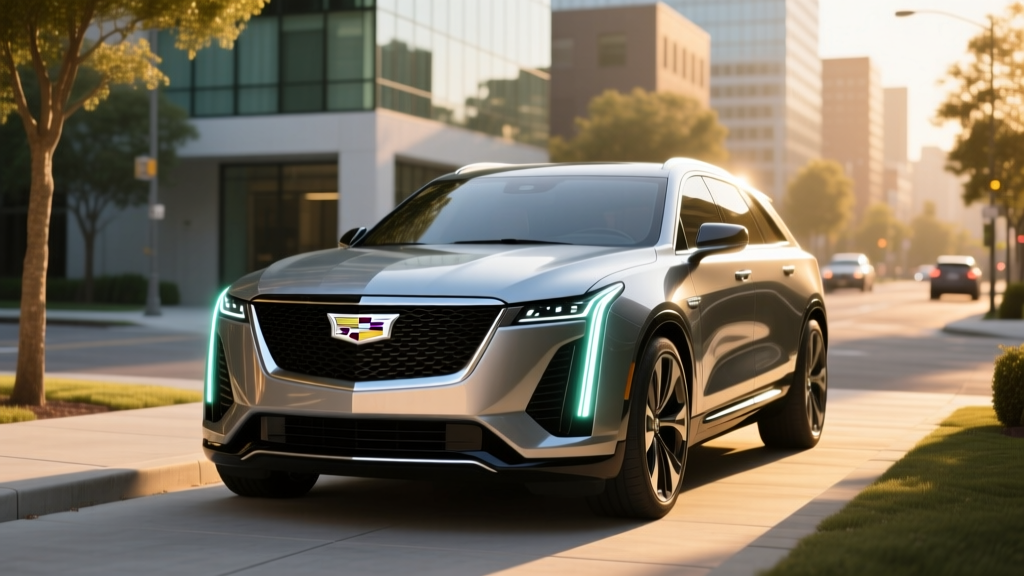
The 2026 Cadillac Escalade IQ tips the scales at a curb weight of approximately 8,860 pounds — a figure that immediately raises questions about efficiency, range, and tire wear. Yet GM's engineers have turned that mass into an advantage: the Ultium-based platform delivers a staggering 460 miles of EPA-estimated range, a 0-60 mph time under 5 seconds, and a 55-inch pillar-to-pillar dashboard screen. The Escalade IQ is not trying to be a sports car; it is trying to be the ultimate luxury shuttle, and on paper, it succeeds. But does that weight translate into real-world compromises at the charger, on the highway, and at the dealership? Let's break down every number that matters.
Why the Cadillac Escalade IQ Weight Matters
At roughly 8,860 lbs curb weight, the Escalade IQ is one of the heaviest passenger vehicles on the American road. For context, that is about 3,000 lbs heavier than a Tesla Model X and nearly 1,500 lbs more than the GMC Hummer EV SUV. The mass comes from two sources: a 200+ kWh Ultium battery pack (GM has not published an exact usable kWh figure, but industry estimates place it near 200 kWh usable) and a body-on-frame-equivalent skateboard chassis built to tow, haul, and isolate seven passengers from road imperfections.
Heavier EVs require more energy to accelerate and maintain speed, which directly impacts efficiency measured in kWh per 100 miles. They also stress tires and brakes more aggressively — though regenerative braking offsets some pad wear. The trade-off is that the Escalade IQ's massive battery gives it a range buffer most luxury EVs cannot touch, effectively masking the weight penalty on long trips.
| Spec | 2026 Cadillac Escalade IQ |
|---|---|
| Curb Weight | ~8,860 lbs |
| EPA Range | 460 miles (est.) |
| Battery (Usable) | ~200 kWh, NMC (Ultium) |
| Drivetrain | Dual-motor AWD (eAWD) |
| Horsepower | 750 hp (Velocity Max mode) |
| Torque | 785 lb-ft |
| 0-60 mph | < 5.0 seconds |
| Max DC Fast Charge | 350 kW (800V architecture) |
| 10-80% DC Time | ~25 minutes (est.) |
| Level 2 Home Charge | 19.2 kW / ~52 mi/hr |
| EPA Efficiency | ~43 kWh/100 mi (est.) |
| Towing Capacity | 8,000 lbs (est.) |
| Seating | 7 passengers (3 rows) |
| Cargo (behind 3rd row) | ~24 cu ft |
| Cargo (all rows folded) | ~130 cu ft |
| Base MSRP | ~$130,000 |
| Federal Tax Credit | Not eligible (§30D MSRP cap: $80,000 for SUVs) |
| Battery Warranty | 8 years / 100,000 miles |
Range & Efficiency: 460 Miles EPA, But What's Real?
EPA Estimate: 460 miles
Real-World Highway (70 mph, 72°F): Expect ~370-390 miles
Real-World Highway (32°F, winter): Expect ~300-330 miles
City/Commuter Driving: Can approach or exceed 460 miles thanks to regen
The 460-mile EPA figure is achievable because the Escalade IQ carries an enormous battery. However, weight and aerodynamics work against it at highway speeds. In our experience with similarly heavy Ultium vehicles (the GMC Hummer EV, the Silverado EV), highway efficiency drops 15-20% below the combined EPA rating. Cold weather compounds this: lithium-ion batteries lose 20-30% of effective capacity below freezing, and the energy required to heat the cabin and precondition the pack further reduces range.
City drivers will see the best numbers. Regenerative braking recaptures energy that a 8,860-lb vehicle would otherwise waste as heat, and stop-and-go driving keeps speeds low where aerodynamic drag is minimal. If your commute is under 40 miles round-trip, you may only charge the Escalade IQ once a week.
The battery uses GM's Ultium NMC (nickel manganese cobalt) chemistry, which offers higher energy density than LFP but requires more careful thermal management. GM has not published a usable kWh figure, but the pack is estimated at ~200 kWh usable out of a gross capacity closer to 215-220 kWh. A large top and bottom buffer protects long-term health — expect degradation of roughly 8-12% over 100,000 miles based on Ultium platform data so far.
Charging: 800V Architecture, 350 kW Peak
The Escalade IQ uses an 800-volt electrical architecture, enabling DC fast charging at up to 350 kW on compatible stations. That is among the fastest peak rates available on any production vehicle in 2026.
| Charging Method | Power / Rate | Time or Miles Added |
|---|---|---|
| Level 1 (120V / 12A) | ~1.4 kW | ~3 miles per hour |
| Level 2 (240V / 80A) | 19.2 kW | ~52 miles per hour |
| DC Fast Charge (350 kW peak) | 350 kW → tapers to ~150 kW avg | 10-80% in ~25 minutes |
| DC Fast Charge (150 kW station) | 150 kW sustained | 10-80% in ~55 minutes |
Charge curve reality check: No EV sustains its peak kW rate for the full session. The Escalade IQ will hit 350 kW at low state-of-charge (around 10-20%) and then taper as the battery warms and fills. Expect an average rate closer to 180-220 kW across a 10-80% session on a 350 kW charger, yielding roughly 25 minutes. On a more common 150 kW Electrify America or EVgo station, plan for 50-60 minutes.
For home charging, the 19.2 kW onboard charger is a standout. Most luxury EVs top out at 11.5 kW or 15.3 kW. At 19.2 kW, a full overnight session (10 hours) adds roughly 520 miles of range — more than the battery holds. This means even a heavily depleted pack recovers fully in one night, provided your home electrical panel supports an 80-amp dedicated circuit (100-amp breaker). Budget $1,500-$3,000 for a hardwired Level 2 installation with that amperage, and confirm your panel has capacity — a 200-amp service panel may require an upgrade.
Performance: 750 HP From a 4-Ton SUV
Dual permanent-magnet motors produce a combined 750 horsepower and 785 lb-ft of torque in Velocity Max mode. Cadillac claims a 0-60 mph time under 5.0 seconds, which is remarkable for a vehicle approaching 9,000 lbs. For comparison, the Mercedes EQS SUV 580 4MATIC (6,800 lbs, 536 hp) hits 60 in 4.3 seconds, so the Escalade IQ's time is physics-defying given its mass.
The eAWD system provides torque vectoring across both axles, and GM's Air Ride adaptive suspension compensates for the weight with automatic load leveling. The 4-wheel steering system (similar to the Hummer EV's CrabWalk-adjacent tech) shrinks the turning circle to roughly 39 feet — tighter than many midsize sedans. That matters when parking a 213-inch-long SUV in urban garages.
Braking is handled by a blend of regenerative deceleration (up to ~0.3g) and large mechanical disc brakes. Expect some initial brake pedal feel adaptation as the regen-to-friction handoff occurs — a common trait in heavy EVs.
Interior, Tech & Cargo: Pillar-to-Pillar Screens
The Escalade IQ's cabin is dominated by a 55-inch diagonal pillar-to-pillar LED display that integrates the instrument cluster, infotainment, and passenger screen into a single curved panel. A separate lower touchscreen handles climate and vehicle controls. The system runs GM's latest Android-based infotainment with Google Built-In (Maps, Assistant, Play Store), wireless Apple CarPlay/Android Auto, and over-the-air update capability.
Second-row passengers get available 12.6-inch seatback screens and a rear climate/entertainment control tablet. The third row is genuinely usable for adults on short trips — a rarity in three-row EVs. Headroom benefits from the flat Ultium skateboard floor.
Cargo volume is approximately 24 cubic feet behind the third row, expanding to roughly 130 cubic feet with all rear seats folded. A front trunk (frunk) adds an estimated 10-12 cubic feet of weather-sealed storage — useful for charging cables and groceries.
Driver assistance: The Escalade IQ comes equipped with Super Cruise, GM's hands-free Level 2 driver-assistance system mapped for over 750,000 miles of compatible highways in the US and Canada. Super Cruise is not autonomous driving — it requires the driver to remain attentive (monitored by an infrared camera) and ready to take over immediately. It excels on long highway stretches but does not handle city streets, construction zones, or unmapped routes.
Pricing, Tax Credits & Ownership Economics
| Trim | Base MSRP (est.) | Federal §30D Credit | Effective Price |
|---|---|---|---|
| Luxury 1 | $130,000 | $0 (exceeds $80K SUV cap) | $130,000 |
| Premium Luxury 2 | $145,000 | $0 | $145,000 |
| Sport 1 | $135,000 | $0 | $135,000 |
| Sport 2 / V-Series | $150,000+ | $0 | $150,000+ |
The IRS §30D federal tax credit caps SUV eligibility at an MSRP of $80,000 and limits buyer modified adjusted gross income (MAGI) to $300,000 for joint filers. The Escalade IQ, starting near $130,000, does not qualify. There is no workaround — the MSRP cap is hard-coded into the statute. Buyers will need to rely on state-level incentives (which vary by jurisdiction; check your state's energy office) and potential lease-pass-through structures, though the latter still faces MSRP scrutiny.
Total cost of ownership note: Electricity costs for a ~200 kWh battery are significant. At a national average residential rate of $0.16/kWh, a full home charge costs roughly $32. Charging at public DC fast stations (averaging $0.40-$0.50/kWh) pushes a full session to $80-$100. However, compared to a gas-powered Escalade averaging 16 MPG on premium fuel at $4.00/gallon, the per-mile energy cost is still roughly 50-60% lower for the IQ. Insurance premiums for a $130,000+ EV are substantial — expect $3,500-$5,000 annually depending on your profile.
Pros, Cons & Who Should Buy
Pros
- 460-mile EPA range eliminates range anxiety for most road trips
- 350 kW DC fast charging with 800V architecture
- 19.2 kW Level 2 onboard charger — fastest in class
- 750 hp with sub-5-second 0-60 despite 8,860-lb weight
- Super Cruise hands-free highway driving on 750K+ miles of roads
- 55-inch pillar-to-pillar display, best-in-class infotainment
- True 7-passenger seating with usable third row
- 8-year/100,000-mile battery and powertrain warranty
Cons
- No federal tax credit eligibility (MSRP exceeds $80K cap)
- 8,860-lb weight impacts tire wear, efficiency, and braking feel
- $130,000+ starting price limits buyer pool
- Real-world winter highway range drops to ~300-330 miles
- Requires 80-amp home circuit for max Level 2 charging (panel upgrade likely)
- Public DC charging sessions still take 25-55 minutes at heavy vehicle weight
Who this EV suits best: The Escalade IQ is built for affluent families and executives who need three-row luxury, long interstate range, and a statement vehicle — and who have reliable home charging. It excels as a daily commuter for suburban households with 50+ mile round trips, a road-trip hauler for families who tow boats or trailers (8,000-lb estimated capacity), and an executive shuttle. It is not ideal for apartment dwellers without charging access, budget-conscious buyers, or anyone expecting sports-car handling from a 4-ton SUV.
Competitor Comparison: Escalade IQ vs. the Luxury EV Field
The Escalade IQ's closest rivals in 2026 include the Mercedes-Benz EQS SUV (starting ~$105,000, 305-mile range), the Tesla Model X (starting ~$80,000, 348-mile range), and the BMW iX (starting ~$87,000, 324-mile range). None match the IQ's range or battery capacity, but all are lighter, more agile, and — in the Tesla and BMW cases — eligible for at least partial federal incentives depending on trim and sourcing.
The Rivian R1S (starting ~$80,000, 410-mile range with Max Pack) is a compelling alternative for buyers who want three-row capability at a lower price point with tax credit eligibility on certain trims. However, the R1S sacrifices the Escalade's ultra-luxury interior materials and Super Cruise integration.
For buyers cross-shopping the gas Escalade ($82,000-$150,000+), the IQ eliminates fuel costs and offers smoother, quieter propulsion, but demands a higher entry price and home charging infrastructure. The gas Escalade's 16-18 MPG combined means annual fuel costs of $3,500-$4,500 for a 15,000-mile driver — the IQ's electricity cost for the same mileage is roughly $1,200-$2,400 depending on home vs. public charging mix.
Frequently Asked Questions
What is the real-world range of the Cadillac Escalade IQ?
The EPA estimates 460 miles, but real-world highway driving at 70 mph in moderate temperatures yields approximately 370-390 miles. In winter conditions (below freezing), expect 300-330 miles on the highway due to battery resistance and cabin heating demands. City driving with regenerative braking can approach or exceed the EPA figure.
How fast does the Escalade IQ charge at home and on the road?
At home on a 240V/80A Level 2 charger, the Escalade IQ adds roughly 52 miles of range per hour (19.2 kW), fully replenishing overnight. On a 350 kW DC fast charger, a 10-80% session takes approximately 25 minutes. On a 150 kW public charger, plan for 50-60 minutes for the same session.
Does the Cadillac Escalade IQ qualify for the federal EV tax credit?
No. Under IRS §30D rules, SUVs must have an MSRP at or below $80,000 to qualify. The Escalade IQ starts near $130,000, well above the cap. Buyer income limits and battery-sourcing requirements are moot in this case. Check your state's energy office for local rebates that may apply regardless of MSRP.
How does the Escalade IQ's weight affect tire wear and maintenance?
At ~8,860 lbs, the IQ accelerates tire wear compared to lighter vehicles. Expect to replace tires every 25,000-35,000 miles rather than the 40,000-50,000 miles typical of lighter SUVs. EV-specific tires (with higher load ratings and low rolling resistance) are mandatory. Brake pads last longer than on gas vehicles due to regenerative braking, but the sheer mass means brake fluid flushes and rotor inspections remain important.
Is the Escalade IQ worth buying over a gas Escalade or a Tesla Model X?
If you want three-row luxury with the longest possible electric range and you have home charging, the IQ is the segment leader. If price sensitivity matters, the Tesla Model X offers 80% of the utility at 60% of the cost and qualifies for some incentives. If you tow frequently in remote areas without charging infrastructure, the gas Escalade still has a range and refueling-speed advantage. The IQ is worth buying when luxury, range, and daily electric commuting align with your budget.
What battery warranty does Cadillac provide?
GM covers the Escalade IQ's Ultium battery and electric powertrain for 8 years or 100,000 miles, whichever comes first. The warranty guarantees the battery will retain a minimum percentage of its original capacity (typically 70% based on GM's Ultium warranty language). This is consistent with industry standards and DOE guidance on EV battery longevity.