Quick Verdict: The Heaviest Sedan in BMW's History
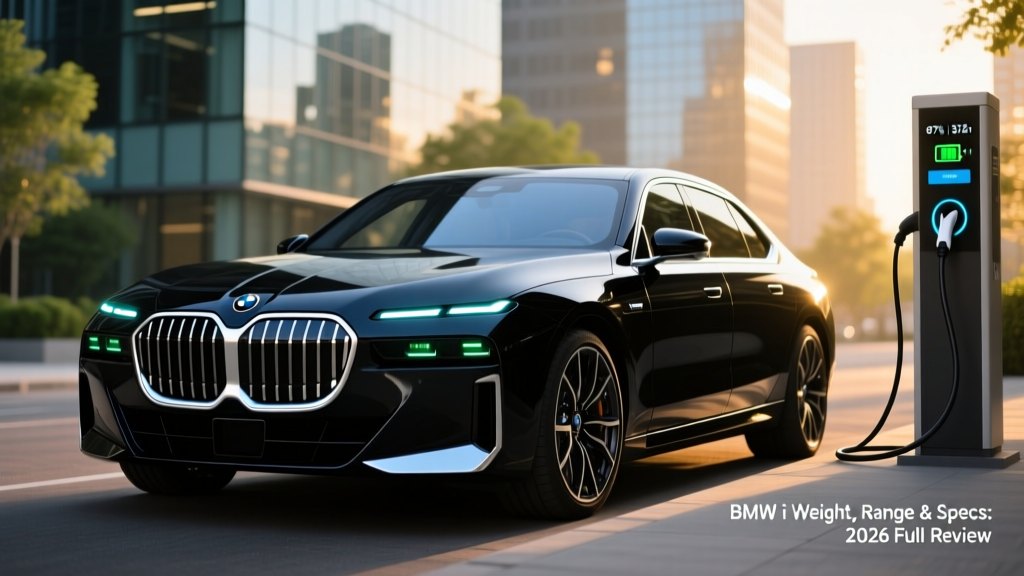
The BMW i7 is a flagship luxury electric sedan that prioritizes silent, effortless cruising over sport-sedan agility. But when buyers search for BMW i7 weight, they're asking the right question: at a curb weight of roughly 5,975 pounds for the xDrive60 and climbing past 6,200 pounds for the M70, this is one of the heaviest passenger sedans on the market. That mass shapes everything — from its real-world range and tire wear to its braking distances and energy consumption at highway speeds.
Despite the heft, BMW's engineering keeps the i7 remarkably composed. Air suspension, rear-wheel steering, and active anti-roll bars mask the mass better than physics should allow. But weight is the enemy of efficiency, and the i7's kWh-per-mile figures reflect that reality. If you're cross-shopping this against a Mercedes EQS or Tesla Model S, understanding the weight-to-range trade-off is essential before signing a six-figure purchase order.
BMW i7 Specs at a Glance
| Spec | i7 xDrive60 | i7 M70 |
|---|---|---|
| Curb Weight | ~5,975 lbs | ~6,217 lbs |
| EPA Range | 318 mi (20" wheels) | 295 mi |
| Battery (usable) | 101.7 kWh, NMC | 101.7 kWh, NMC |
| Horsepower | 536 hp | 650 hp |
| 0–60 mph | 4.5 sec | 3.5 sec |
| Drivetrain | Dual-motor AWD | Dual-motor AWD |
| Peak DC Charge Rate | 195 kW | 195 kW |
| 10–80% DC Time | ~34 min | ~34 min |
| Level 2 Charge Rate | 11 kW (AC) | 11 kW (AC) |
| EPA Efficiency | 82 MPGe (35 kWh/100mi) | 77 MPGe (37 kWh/100mi) |
| Base MSRP | $125,295 | $170,495 |
| Battery Warranty | 8 yr / 100,000 mi | 8 yr / 100,000 mi |
Range Reality: What the EPA Sticker Doesn't Tell You
EPA Estimated Range: 318 miles (xDrive60, 20" wheels) / 295 miles (M70)
Real-World Expectation: Expect 250–280 miles on a mixed highway trip at 70–75 mph. In cold weather (below 30°F), plan for 200–240 miles unless you precondition the battery while plugged in. The i7's weight and large frontal area drive significant energy consumption at sustained highway speeds.
The i7's 101.7 kWh usable battery (NMC lithium-ion chemistry) is among the largest in any production sedan. BMW uses a fifth-generation eDrive system with a battery pack sourced from CATL and assembled in-house. The high energy density helps offset the vehicle's mass, but physics is unforgiving: pushing nearly 6,000 pounds through the air at interstate speeds demands serious watt-hours.
On fueleconomy.gov, the xDrive60 rates at 82 MPGe combined (35 kWh per 100 miles). That's noticeably thirstier than the Mercedes EQS 580 4MATIC (97 MPGe combined) or the Tesla Model S Long Range (124 MPGe). The weight penalty is real — but so is the luxury trade-off. The i7 offers a cabin experience that neither rival fully matches.
One ownership note: the i7 supports battery preconditioning via its navigation system. If you route to a DC fast charger, the car will warm the battery pack to optimal temperature, enabling faster charge speeds upon arrival. Skipping this step in cold weather can add 10–15 minutes to your charging session.
Charging Speed: 195 kW Peak, but the Curve Matters
| Charging Level | Power | Speed / Time |
|---|---|---|
| Level 1 (120V household) | ~1.4 kW | ~4 miles per hour |
| Level 2 (240V home / public) | 11 kW (48A) | ~32 miles per hour; full charge in ~10 hrs |
| DC Fast Charge (CCS) | Up to 195 kW peak | 10–80% in ~34 min; 50–80% tapers sharply |
The i7's 195 kW peak DC fast-charge rate is respectable but not class-leading. The Hyundai Ioniq 6 hits 350 kW on 800V architecture; the Porsche Taycan peaks around 270 kW. The i7 runs on a 400V electrical system, which caps its peak charge rate.
Here's the charging-curve reality: the i7 sustains close to its 195 kW peak from roughly 10% to 35% state of charge, then tapers progressively. Between 50% and 80%, you'll see speeds drop to 80–100 kW. That taper means the advertised "34-minute 10–80% time" assumes ideal conditions — battery preconditioned, warm weather, a charger capable of delivering sustained current. In practice, a 10–80% session at an Electrify America or Tesla Supercharger (with the BMW CCS adapter) typically takes 35–42 minutes.
For home charging, the 11 kW onboard AC charger is a strong point. On a 48-amp Level 2 wallbox (like a ChargePoint Home Flex or BMW's own Wallbox), you'll add roughly 32 miles of range per hour, and a full overnight charge from near-empty is achievable in about 10 hours. Most i7 owners will rarely need public charging for daily use.
Weight, Performance, and Driving Dynamics
The BMW i7 weight figure — approximately 5,975 lbs for the xDrive60 — is roughly 1,000 lbs heavier than a gasoline 7 Series. That mass comes from the 101.7 kWh battery pack (which alone weighs around 1,500 lbs), the dual-motor drivetrain, and the heavy sound-deadening and luxury hardware expected in a flagship sedan.
So how does it drive? Surprisingly well, if you recalibrate expectations. The dual-motor AWD xDrive60 delivers 536 horsepower and 549 lb-ft of torque, hitting 60 mph in 4.5 seconds. The M70 cranks that to 650 hp and a 3.5-second sprint. Both figures are impressive for a car this heavy, but you'll feel the weight in corners and under hard braking. The i7 is a grand tourer, not a sports sedan.
BMW mitigates the mass with integral active rear steering (up to 3° of rear-axle steer), two-axle air suspension with adaptive dampers, and active roll stabilization. The result is a car that shrinks around you at cruising speeds and remains flat through gentle sweepers. But on tight canyon roads, the i7's inertia is unmistakable — tire scrub, body mass, and brake fade all remind you this is a 3-ton vehicle.
Towing capacity is limited to 4,400 lbs with the optional tow package, adequate for a small boat or light trailer but far below truck-based EVs. The i7 isn't a hauler; it's a chauffeur-grade luxury cruiser.
Pricing, Tax Credits, and Ownership Cost
| Trim | Base MSRP | Federal Tax Credit (§30D) | Effective Price |
|---|---|---|---|
| i7 xDrive60 | $125,295 | $0 (MSRP cap: $55,000 for sedans) | $125,295 |
| i7 M70 | $170,495 | $0 (MSRP cap: $55,000 for sedans) | $170,495 |
This is the hard truth for i7 buyers: the BMW i7 does not qualify for the federal §30D EV tax credit. Under current IRS rules, the credit applies only to sedans with an MSRP at or below $55,000. At $125,295 and up, the i7 is more than double that threshold. No amount of income eligibility or battery-sourcing compliance can overcome the MSRP cap.
Additionally, the §30D credit has buyer income caps ($150,000 single / $300,000 joint filer for new vehicles) and strict critical-mineral and battery-component sourcing requirements that shift annually. Even if BMW released a lower-priced i7 variant, those rules would apply. Always verify current-year eligibility with a tax professional before factoring credits into your purchase decision.
State-level incentives may apply — California's CVRP, Colorado's state credit, and various utility rebates can offset a few thousand dollars. Check your state energy office and local utility for current programs, as these vary by jurisdiction and funding availability.
On the ownership-cost side, the i7's efficiency penalty matters. At 35 kWh per 100 miles and a national average electricity rate of ~$0.17/kWh, you're spending roughly $5.95 per 100 miles of driving. Compare that to a Model S at ~28 kWh/100mi ($4.76/100mi). Over 15,000 annual miles, the i7 costs about $180 more per year in electricity. Insurance premiums for a $125K+ luxury EV also run significantly higher — expect $3,000–$4,500 annually depending on your profile and state.
Interior, Tech, and Standout Features
The i7's cabin is where BMW justifies the premium. The centerpiece is the 31-inch 8K BMW Theater Screen, which deploys from the headliner to transform the rear seats into a cinema. Streaming via built-in Amazon Fire TV (with a data connection) is genuinely impressive — it's the kind of feature that sells the car to rear-seat passengers and executives.
Up front, BMW's Curved Display combines a 12.3-inch instrument cluster and 14.9-inch infotainment touchscreen running iDrive 8.5. Wireless Apple CarPlay and Android Auto, a head-up display, and the Interaction Bar (a crystalline ambient-light strip across the dash) round out the tech stack.
Driver assistance comes via BMW's Driving Assistant Professional, which includes adaptive cruise with stop-and-go, lane-centering, and automatic lane-change on highways. This is an SAE Level 2 system — the driver must remain attentive with hands on or near the wheel at all times. It is not self-driving. BMW also offers Remote Parking, which lets you maneuver the i7 into tight spaces via smartphone — useful given the car's 207-inch length.
Cargo space is a notable drawback: the trunk offers 17.7 cubic feet, and there is no front trunk (frunk). The battery pack's placement eliminates underhood storage entirely. Rear legroom is generous at 42.8 inches, and the Executive Lounge rear-seat package adds heated, ventilated, massaging reclining seats with calf rests.
Pros, Cons, and Who Should Buy
Pros
- Class-leading rear-seat luxury with Theater Screen
- Whisper-quiet ride quality; superb sound isolation
- 11 kW AC charging enables full overnight home charging
- 536–650 hp provides effortless acceleration despite weight
- 8-year / 100,000-mile battery warranty
- Rear-wheel steering makes parking manageable
Cons
- 5,975+ lb curb weight hurts efficiency (35 kWh/100mi)
- No federal tax credit eligibility (MSRP far exceeds $55K cap)
- No frunk; only 17.7 cu ft of trunk space
- 195 kW peak DC charge rate lags 800V rivals
- Real-world highway range drops to ~250–280 mi
- High insurance premiums and tire replacement costs
Who this EV suits best: The i7 is ideal for luxury-sedan buyers who want a silent, tech-rich daily driver with genuine rear-seat executive comfort. It's best for owners with reliable home Level 2 charging who commute 40–80 miles daily and take occasional road trips where the 318-mile EPA range and ~34-minute fast-charge stops are acceptable. It is not the right choice for efficiency-focused buyers, budget-conscious shoppers, or anyone who needs serious cargo versatility.
BMW i7 vs. Key Competitors
The i7's natural rivals are the Mercedes-Benz EQS Sedan (305–350 mi range, 97 MPGe, starting ~$105K) and the Tesla Model S Long Range (402 mi range, 124 MPGe, starting ~$80K). Both are significantly lighter and more efficient. The EQS offers comparable luxury with better efficiency but a less intuitive interior. The Model S wins on range, efficiency, and price but can't match the i7's build quality or rear-seat experience.
If BMW i7 weight is your primary concern, the Mercedes EQS is roughly 500 lbs lighter and delivers noticeably better MPGe. But if you value BMW's driving dynamics, iDrive interface, and the Theater Screen experience, the i7's mass is the price of admission for its particular brand of luxury.
Frequently Asked Questions
What is the real-world range of the BMW i7?
The EPA rates the i7 xDrive60 at 318 miles and the M70 at 295 miles. In real-world highway driving at 70–75 mph, expect 250–280 miles. In cold weather below 30°F without preconditioning, range can drop to 200–240 miles. The car's weight and large frontal area are the primary range killers at speed.
How fast does the BMW i7 charge?
On a DC fast charger, the i7 peaks at 195 kW and charges from 10–80% in approximately 34 minutes under ideal conditions. Real-world sessions typically take 35–42 minutes due to charge-curve taper above 50%. At home on Level 2 (11 kW), expect about 32 miles of range per hour and a full charge in roughly 10 hours.
Does the BMW i7 qualify for the federal EV tax credit?
No. Under IRS §30D rules, the federal new clean vehicle credit is limited to sedans with an MSRP of $55,000 or less. The i7 starts at $125,295, making it ineligible regardless of buyer income or battery sourcing. State-level incentives may still apply — check your jurisdiction.
How much does the BMW i7 weigh, and why does it matter?
The i7 xDrive60 has a curb weight of approximately 5,975 lbs; the M70 is around 6,217 lbs. This weight impacts energy efficiency (35–37 kWh/100mi), tire wear (expect replacement intervals of 20,000–30,000 miles on performance tires), braking distances, and real-world highway range. BMW compensates with air suspension and rear-wheel steering, but the mass is always present.
Is the BMW i7 worth buying over the Mercedes EQS or Tesla Model S?
Choose the i7 if rear-seat luxury, the Theater Screen, and BMW's driving dynamics are priorities. Choose the EQS for better efficiency and a lower starting price. Choose the Model S for maximum range, efficiency, and value. All three are excellent — the right choice depends on whether you prioritize luxury theater (i7), efficiency (EQS), or range-per-dollar (Model S).
What battery chemistry does the BMW i7 use?
The i7 uses NMC (nickel manganese cobalt) lithium-ion chemistry with 101.7 kWh of usable capacity. NMC offers higher energy density than LFP, which is important given the i7's need to pack maximum range into a sedan floor. BMW covers the battery with an 8-year / 100,000-mile warranty guaranteeing at least 70% capacity retention.