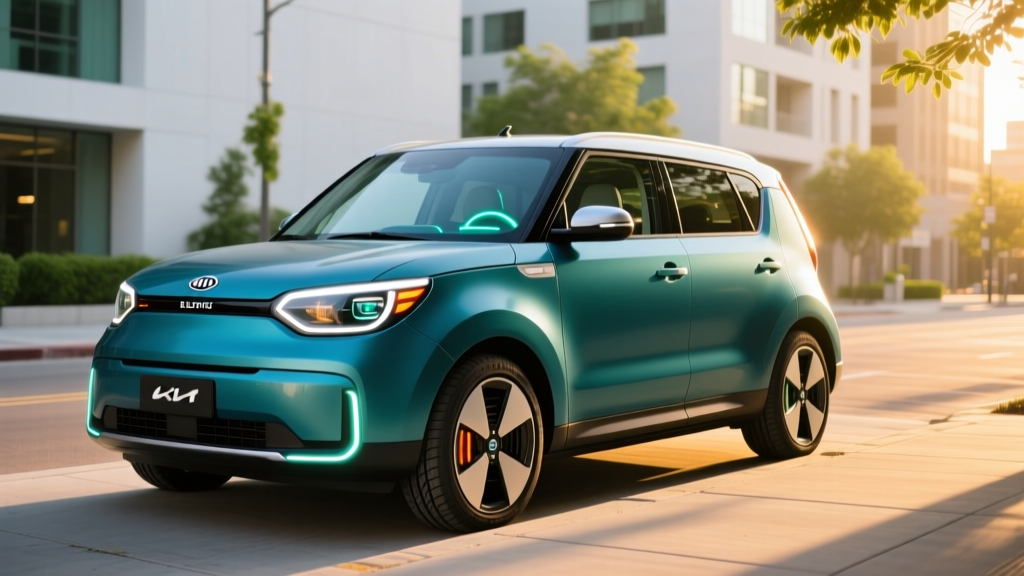
Quick Answer: Is the 2026 Kia Soul Electric Worth It?
The 2026 Kia Soul Electric (e-Soul) offers an EPA-estimated 243 miles of range from its 77.4 kWh battery, DC fast charging up to 77 kW (10–80% in roughly 54 minutes), and a starting MSRP near $35,500 before incentives. It's a practical, boxy urban commuter with excellent visibility and cargo space for its footprint. However, its relatively modest DC fast-charging speed and lack of all-wheel drive make it better suited for daily commuting and city driving than frequent long-distance road trips. If you have Level 2 home charging access and mostly drive under 200 miles per day, it's one of the most affordable and spacious small EVs available.
2026 Kia Soul Electric: Key Specs at a Glance
| Spec | Value |
|---|---|
| EPA Range | 243 miles (Wind trim) / 238 miles (GT-Line) |
| Battery Capacity | 77.4 kWh usable (NMC chemistry) |
| Motor Output | 201 hp / 291 lb-ft torque (FWD) |
| 0–60 mph | ~7.2 seconds |
| DC Fast Charge (Peak) | 77 kW (10–80% in ~54 min) |
| Level 2 AC Charge | 10.9 kW (~7.25 hours 0–100%) |
| MPGe (Combined) | 120 MPGe |
| Efficiency | 28 kWh/100 miles |
| Cargo Volume | 24.2 cu ft (rear seats up) / 62.1 cu ft (folded) |
| Battery Warranty | 10 years / 100,000 miles |
| Starting MSRP | $35,500 (Wind) / $37,500 (GT-Line) |
Real-World Range vs. EPA Sticker
The EPA rates the Soul Electric at 243 miles, but real-world results depend heavily on conditions. In mild weather (60–75°F) at city speeds, expect 230–250 miles. On sustained highway driving at 70+ mph, plan for roughly 190–210 miles. In freezing temperatures (below 32°F), range can drop to 160–185 miles due to cabin heating demands and battery chemistry limitations. The Soul Electric lacks a heat pump on the base Wind trim, which exacerbates cold-weather losses — the GT-Line includes one, improving winter efficiency by roughly 10–15%.
Charging: Home and Public Speeds
The Soul Electric uses the CCS1 connector standard on most non-Tesla EVs, though Kia has confirmed that 2026 models will ship with a NACS adapter for Tesla Supercharger access starting mid-2026. Here's what charging looks like in practice:
| Level | Power (kW) | Charge Time | Miles Added/Hour |
|---|---|---|---|
| Level 1 (120V outlet) | 1.4 kW | ~55 hours (0–100%) | ~5 mi/hr |
| Level 2 (240V, home/public) | 10.9 kW | ~7.25 hours (0–100%) | ~37 mi/hr |
| DC Fast Charge | 77 kW peak | ~54 min (10–80%) | ~155 mi/hr at peak |
The 77 kW peak DC rate is the Soul Electric's most significant limitation for road-trippers. While competitors like the Hyundai Kona Electric (100+ kW) and Chevrolet Equinox EV (150 kW) charge substantially faster, the Soul Electric's charging curve holds relatively steady between 10–60% SoC before tapering sharply above 80%. On a 250-mile highway trip requiring one DC fast-charge stop, you'll spend roughly 40–50 minutes at the charger — noticeably longer than the 18–25 minutes you'd spend in a faster-charging EV.
Home charging reality: A full Level 2 installation (240V, 48-amp circuit) typically costs $800–$2,200 depending on your electrical panel's proximity to the garage and whether a panel upgrade is needed. With a Level 2 home charger, an overnight session easily refills the battery from 20% to 100%, making daily commuting essentially effortless. If you lack home charging access and rely solely on public infrastructure, the Soul Electric's slower DC charging becomes a more meaningful drawback.
EV vs Gas: Kia Soul Electric Compared to Gas Soul
The gasoline Kia Soul starts around $22,500 and gets roughly 30 MPG combined. Here's how the math works over five years and 75,000 miles of driving:
| Factor | Soul Electric (Wind) | Soul Gas (LX) |
|---|---|---|
| Purchase Price | $35,500 | $22,500 |
| Federal Tax Credit (§30D) | Up to $7,500* | $0 |
| Effective Price After Credit | ~$28,000 | $22,500 |
| Fuel/Energy Cost (75k mi) | ~$2,625 (home charging at $0.14/kWh) | ~$8,750 (gas at $3.50/gal, 30 MPG) |
| Maintenance (5 years) | ~$900 | ~$2,800 |
| Insurance (5-year avg) | ~$7,500 | ~$6,250 |
| 5-Year Total Cost | ~$39,025 | ~$40,300 |
*§30D credit eligibility depends on your modified adjusted gross income, the vehicle's MSRP cap compliance, battery component and critical-mineral sourcing requirements, and point-of-sale transfer rules. Check the IRS clean vehicle credit page for current-year rules.
The Soul Electric breaks even or pulls ahead financially over five years thanks to dramatically lower fuel and maintenance costs — no oil changes, no spark plugs, and regenerative braking that extends brake pad life to 100,000+ miles. However, the electric version carries a higher upfront price and typically higher insurance premiums (roughly 15–20% more than the gas Soul, per industry averages). If you drive fewer than 8,000 miles per year, the payback period extends considerably.
Federal Tax Credit & Incentive Eligibility
§30D Clean Vehicle Credit Checklist (2026)
- MSRP Cap: Vans, SUVs, and trucks — up to $80,000. Sedans — up to $55,000. The Soul Electric qualifies under the SUV/van threshold.
- Buyer Income Cap: $150,000 (single), $225,000 (head of household), $300,000 (joint filers) based on modified AGI.
- Battery Component Sourcing: Percentage of battery components manufactured or assembled in North America must meet escalating annual thresholds (100% for 2026+).
- Critical Minerals Sourcing: Percentage of critical minerals sourced from the US or FTA partners must meet thresholds (80% for 2026+).
- Point-of-Sale Transfer: You can transfer the credit to the dealer at purchase, reducing your out-of-pocket cost immediately — no need to wait for tax filing.
Kia has worked to shift battery sourcing for US-market Soul Electrics to comply with §30D requirements, but eligibility can vary by production batch and model year. Always verify with your dealer and cross-reference the fueleconomy.gov tax credit lookup before committing to a purchase.
First-Time EV Buyer: What You Should Know
| Myth | Fact |
|---|---|
| "EV batteries need replacing every 5 years." | The Soul Electric's NMC battery carries a 10-year/100,000-mile warranty against degradation below 70% capacity. Most EV batteries retain 85–92% capacity at 100,000 miles based on fleet data. |
| "I'll be stranded without a charger." | With 243 miles of range and home Level 2 charging, most drivers cover weeks between public charges. The average American drives 37 miles/day — well within the Soul's buffer. |
| "EVs cost more to insure, always." | While EV insurance averages 15–20% higher, the gap is narrowing. Shop quotes from EV-friendly insurers (GEICO, State Farm, Progressive) — some now offer EV-specific discounts. |
| "Level 1 charging is useless." | Level 1 (120V) adds ~5 miles per hour. For drivers covering under 40 miles/day, overnight Level 1 charging may be sufficient — though a Level 2 install is strongly recommended for convenience. |
Home charging access is the single biggest ownership variable. If you own a home with a garage or dedicated parking spot near your electrical panel, a Level 2 charger installation is straightforward ($800–$2,200). If you live in an apartment or park on the street, investigate workplace charging, public Level 2 networks (ChargePoint, EVgo, Electrify America), and whether your city has curbside charging programs before buying.
Cold climate? Plan accordingly. The Soul Electric's range drops meaningfully below freezing. If you live in the upper Midwest or Northeast, expect 160–185 miles of real winter range. Preconditioning the battery while plugged in (using the Kia Connect app) mitigates this loss by warming the battery before departure, preserving range for actual driving.
Decision Framework: Is the Kia Soul Electric Right for You?
Choose the Soul Electric If:
- You have Level 2 home charging access (or reliable workplace charging)
- Your daily commute is under 100 miles round-trip
- You value upright seating, excellent visibility, and generous cargo space in a small footprint
- You mostly drive in urban or suburban environments
- You qualify for the §30D tax credit, bringing the effective price near $28,000
- You want Kia's 10-year/100,000-mile battery and powertrain warranty
Look Elsewhere If:
- You frequently take road trips exceeding 200 miles (the 77 kW charging speed adds significant stop time)
- You live in a region with harsh winters and lack garage parking (cold-weather range loss is real)
- You need all-wheel drive (the Soul Electric is FWD only — consider the Hyundai Ioniq 5 AWD or Subaru Solterra)
- You lack any reliable charging access at home, work, or nearby public stations
- You don't qualify for the federal credit (the price premium over the gas Soul becomes harder to justify)
Frequently Asked Questions
Does the 2026 Kia Soul Electric qualify for the $7,500 federal tax credit?
It depends on your income, the vehicle's battery sourcing compliance in the specific production batch, and MSRP caps. The Soul Electric's MSRP falls well under the $80,000 SUV/van cap. Verify eligibility on irs.gov and confirm with your dealer at purchase. The credit can be transferred to the dealer as a point-of-sale discount.
How long does it take to charge the Soul Electric at home?
On a Level 2 (240V, 10.9 kW) home charger, a full 0–100% charge takes approximately 7.25 hours. Most owners plug in overnight and wake to a full battery. A typical 20–80% session (sufficient for daily driving) takes about 4.5 hours on Level 2.
What is the real-world range in winter?
In sustained below-freezing temperatures, expect 160–185 miles from a full charge — a roughly 25–35% reduction from the 243-mile EPA estimate. The GT-Line trim's heat pump reduces this penalty by about 10–15%. Preconditioning while plugged in helps preserve range.
Is the Soul Electric good for road trips?
It's adequate but not ideal. The 243-mile range covers most segments, but the 77 kW peak DC charging speed means 10–80% stops take roughly 54 minutes — significantly longer than faster-charging competitors. If road trips are a priority, consider the Hyundai Kona Electric (100+ kW DC) or Ioniq 5 (240+ kW DC with 800V architecture).
What does maintenance cost compared to the gas Soul?
The Soul Electric eliminates oil changes, spark plugs, transmission fluid, and exhaust system maintenance. Expect to spend roughly $180/year on cabin air filters, tire rotations, wiper fluid, and brake inspections (regenerative braking drastically extends pad life). The gas Soul averages $560/year in routine maintenance — a $380/year savings with the electric version.
Does the Soul Electric support Tesla Superchargers?
Kia has confirmed that 2026 Soul Electric models will include a NACS adapter for access to Tesla's Supercharger network (15,000+ stations). Native CCS1 charging remains available at Electrify America, EVgo, ChargePoint, and other networks.