The BMW i7 Electric Vehicle: Flagship Luxury Goes Fully Electric
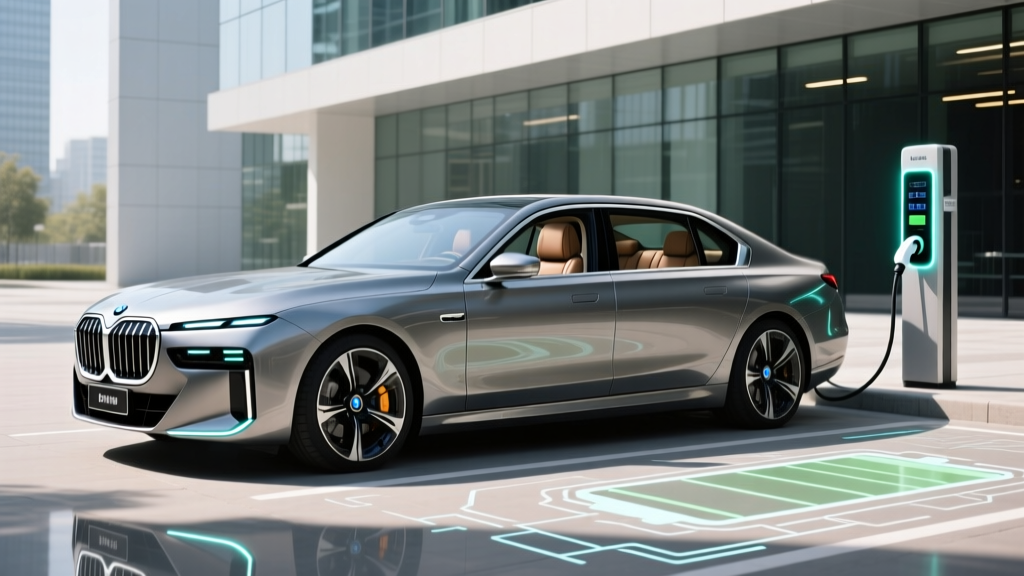
The BMW i7 is the battery-electric counterpart to BMW's 7 Series flagship sedan, and it makes a bold argument that full-size luxury can transition to electric power without compromise. For the 2025-2026 model years, BMW offers the i7 in three trims — the xDrive60, the performance-oriented M70, and the ultra-luxurious eDrive50 — each targeting a different slice of the six-figure EV sedan market. This review breaks down exactly what you get for the money: real-world range, charging behavior, interior space, and whether the i7 actually qualifies for federal incentives.
The BMW i7 xDrive60 carries an EPA-estimated range of 318 miles on its 101.7 kWh (usable) battery pack. In real-world highway driving at 70-75 mph, expect approximately 265-285 miles before needing to charge. In cold weather (below 30°F), that figure drops to roughly 230-250 miles due to cabin heating demands and reduced battery chemistry efficiency. City driving with regenerative braking can push closer to the EPA sticker, sometimes exceeding 320 miles in mild conditions.
Specs at a Glance: BMW i7 xDrive60 and M70
| Specification | i7 xDrive60 | i7 M70 |
|---|---|---|
| EPA Range | 318 miles | 295 miles |
| Battery (Usable) | 101.7 kWh (NMC) | 101.7 kWh (NMC) |
| Drivetrain | Dual-motor AWD | Dual-motor AWD |
| Horsepower | 536 hp | 650 hp |
| 0-60 mph | 4.5 seconds | 3.5 seconds |
| Peak DC Fast Charge | 195 kW | 195 kW |
| 10-80% DC Charge Time | ~34 minutes | ~34 minutes |
| Level 2 Charge Rate | 11 kW (~30 mi/hr) | 11 kW (~30 mi/hr) |
| MPGe (Combined) | 82 MPGe | 74 MPGe |
| Efficiency | 41 kWh/100 mi | 45 kWh/100 mi |
| Cargo Volume | 17.7 cu ft | 17.7 cu ft |
| Rear Legroom | 42.8 inches | 42.8 inches |
| Base MSRP | $124,200 | $168,500 |
| Battery Warranty | 8 yr / 100,000 mi | 8 yr / 100,000 mi |
The i7 uses an NMC (nickel manganese cobalt) lithium-ion battery pack manufactured by CATL and Samsung SDI, housed in a structural floor module. NMC chemistry provides the energy density needed to push a 5,800-pound sedan past 300 miles of range, though it requires more careful thermal management than LFP cells. BMW's thermal management system includes a heat pump as standard equipment, which helps preserve range in cold weather and precondition the battery for DC fast charging.
Charging Speed and Behavior: What the Curve Actually Looks Like
The i7's peak DC fast-charge rate of 195 kW is competitive within the luxury EV sedan segment, though it trails the Lucid Air's 300+ kW capability. Here's the critical detail that spec sheets omit: the 195 kW peak is not sustained. The i7 holds approximately 180-195 kW between 10% and 40% state of charge, then tapers progressively. From 40-60%, expect roughly 140-150 kW. Above 80%, charging slows dramatically to around 50-60 kW, which is why BMW quotes 10-80% time rather than a full charge.
| Charging Method | Power | Speed | Typical Use Case |
|---|---|---|---|
| Level 1 (120V outlet) | ~1.4 kW | ~4 miles/hour | Emergency / overnight trickle |
| Level 2 (240V, 48A) | 11 kW | ~30 miles/hour | Home daily charging |
| DC Fast Charge | Up to 195 kW | 10-80% in ~34 min | Road trips |
For home charging, the i7's 11 kW onboard charger is a genuine advantage. On a 48-amp Level 2 circuit (the most common residential installation), you'll add roughly 30 miles of range per hour — meaning a depleted battery reaches full in about 10-11 hours overnight. This is faster than many competitors limited to 9.6 kW or 7.2 kW onboard chargers. If your home has 200-amp electrical service with available capacity, a Level 2 installation typically runs $1,200-$2,500 including the charger and electrician labor, per U.S. Department of Energy estimates.
Performance, Ride, and the M70 Question
The i7 xDrive60's 536 horsepower and 4.5-second 0-60 mph time are more than adequate for a flagship sedan. Dual-motor all-wheel drive provides confident traction, and BMW's adaptive air suspension delivers a ride quality that absorbs road impermissions with genuine authority. The steering is weighted appropriately for a luxury cruiser — not sporty, but precise.
The M70 variant bumps output to 650 hp and drops the 0-60 time to 3.5 seconds, making it one of the quickest full-size sedans on the road. However, that performance comes at a cost: the M70 sacrifices 23 miles of EPA range (295 vs. 318) and commands a $44,300 premium over the xDrive60. For most buyers, the xDrive60 delivers the optimal balance of acceleration, range, and value within the i7 lineup.
One area where the i7 excels is regenerative braking calibration. BMW offers adjustable regen levels, including an adaptive mode that uses radar and navigation data to modulate deceleration automatically. In practice, this enables near one-pedal driving in city traffic while allowing coasting on highways — a thoughtful implementation that many competitors still get wrong.
Interior Space, Technology, and the Theater Screen
The i7's cabin is where BMW justifies its flagship pricing. The 31.3-inch BMW Theater Screen drops from the ceiling for rear passengers, transforming the back seat into a mobile cinema with Amazon Fire TV integration. Rear executive lounge seating (a $3,600 option) includes heated and ventilated massaging seats with power-adjustable footrests.
Dimensions matter in a full-size sedan:
- Cargo volume: 17.7 cubic feet (competitive with the Mercedes EQS at 17.0 cu ft, but less than the Lucid Air's 32 cu ft frunk+trunk combined)
- Rear legroom: 42.8 inches — generous for adults on long trips
- Front headroom: 39.8 inches (adequate even with the panoramic glass roof)
The i7 runs BMW's iDrive 8.5 infotainment system on a curved 14.9-inch central display. Wireless Apple CarPlay and Android Auto are standard. The system is responsive, though the menu hierarchy requires a learning curve. Notably, BMW retains physical climate controls — a welcome decision in an era of touchscreen-only interfaces.
On the driver-assistance front, the i7 includes BMW's Driving Assistant Professional as standard, featuring adaptive cruise control with stop-and-go, lane-keeping assist, and automated lane changes. This is an SAE Level 2 system — the driver must remain fully engaged with hands on the wheel. It is not autonomous driving. An optional Highway Assistant (Level 2+ with hands-off capability at up to 85 mph on divided highways, where permitted) is available but still requires the driver's eyes on the road, monitored by an infrared camera.
Pricing, Trims, and Federal Tax Credit Eligibility
The 2025-2026 BMW i7 lineup breaks down as follows:
| Trim | Base MSRP | As-Tested (Typical) | §30D Federal Credit | Effective Price |
|---|---|---|---|---|
| i7 eDrive50 (RWD) | $105,700 | $112,000-$118,000 | Not eligible (MSRP cap) | $105,700+ |
| i7 xDrive60 (AWD) | $124,200 | $132,000-$145,000 | Not eligible (MSRP cap) | $124,200+ |
| i7 M70 (AWD) | $168,500 | $175,000-$190,000 | Not eligible (MSRP cap) | $168,500+ |
Destination charges, options, and dealer adjustments routinely push well-equipped i7 xDrive60 models into the $135,000-$145,000 range. The M70, with typical options, lands near $180,000. These are serious investments, and buyers should factor in higher insurance premiums (typically 15-25% above equivalent ICE 7 Series models) and the reality that luxury EV depreciation can be steep in the first three years.
How the BMW i7 Stacks Up Against Competitors
The i7 competes in a narrow but growing segment of full-size luxury electric sedans:
- Mercedes-Benz EQS Sedan: EPA range up to 390 miles (EQS 450+), MSRP from $104,400. The EQS offers more range and a lower starting price but less rear-seat headroom and a polarizing interior design.
- Lucid Air Pure: EPA range up to 419 miles, MSRP from $69,900. The Air dominates on range and efficiency (146 MPGe) and costs significantly less, though its service network is far smaller than BMW's.
- Porsche Taycan: Smaller and sportier, EPA range up to 283 miles (Taycan 4S), MSRP from $99,400. The Taycan prioritizes driving dynamics over rear-seat comfort.
- Tesla Model S: EPA range up to 402 miles, MSRP from $74,990. The Model S offers superior range and Supercharger access but an aging interior and inconsistent build quality.
The i7's advantage is its holistic execution: it combines a proven dealer and service network, excellent build quality, a class-leading rear-seat experience, and competitive (if not class-leading) range. It trades outright range leadership to the Lucid Air and EQS in exchange for traditional luxury sedan proportions and BMW's driving dynamics heritage.
- Refined ride quality with standard air suspension
- 11 kW Level 2 charging — faster overnight replenishment than most rivals
- BMW Theater Screen creates a genuine rear-seat entertainment experience
- Heat pump standard — better cold-weather range retention
- Strong build quality and extensive dealer/service network
- No federal tax credit eligibility — MSRP far exceeds §30D sedan cap
- Range trails Lucid Air and EQS by 70-100+ miles
- 195 kW peak DC charging is slower than Lucid's 300+ kW architecture
- Cargo space (17.7 cu ft) lags the Lucid Air significantly
- High entry price with steep depreciation risk in early ownership years
Who Should Buy the BMW i7 Electric Vehicle?
- Want a full-size luxury sedan with electric powertrain and don't need maximum range
- Prioritize rear-seat comfort and entertainment for chauffeured or family use
- Value BMW's dealer network for service and support over startup brands
- Have reliable home Level 2 charging and take road trips within 250-mile segments
- Are not dependent on the $7,500 federal tax credit to justify the purchase
- Need 400+ miles of range for frequent long-distance driving (consider the Lucid Air)
- Want the fastest possible DC charging for road-trip efficiency (Lucid Air or Porsche Taycan 800V)
- Are budget-sensitive and need federal/state incentives to make the math work
- Prefer a sportier driving experience over limousine comfort (Porsche Taycan)
The i7 serves best as a primary luxury daily driver for buyers with home charging who take occasional road trips and value cabin refinement above all else. It is not a range champion, and it doesn't pretend to be — it's a luxury sedan that happens to be electric, rather than an EV that happens to be luxurious.
Frequently Asked Questions
What is the real-world range of the BMW i7?
The EPA rates the i7 xDrive60 at 318 miles. In real-world highway driving at 70-75 mph, expect 265-285 miles. Cold weather (below 30°F) reduces that to approximately 230-250 miles. City driving with regenerative braking can match or slightly exceed the EPA figure in mild temperatures.
How fast does the BMW i7 charge at home and on the road?
On a 48-amp Level 2 home charger, the i7 charges at 11 kW, adding roughly 30 miles of range per hour — a full charge from empty takes about 10-11 hours overnight. On DC fast chargers, it peaks at 195 kW and charges from 10-80% in approximately 34 minutes. The charge curve tapers significantly above 80% SoC.
Does the BMW i7 qualify for the $7,500 federal EV tax credit?
No. Under IRS §30D rules, sedans must have an MSRP of $55,000 or less to qualify. All i7 trims start well above $100,000, disqualifying them from the federal new-vehicle credit. State-level incentives may still apply — check your local energy office.
Is the BMW i7 worth buying vs. the Mercedes EQS or Lucid Air?
The i7 is worth considering if you prioritize rear-seat luxury, BMW's service network, and balanced driving dynamics. The Mercedes EQS offers more range (up to 390 mi EPA) at a lower starting price. The Lucid Air dominates on range (up to 419 mi) and efficiency at a much lower cost. The i7 wins on overall cabin execution and dealer support but loses on pure EV metrics.
What are the biggest drawbacks of the BMW i7?
The primary cons are its high price (no federal tax credit offset), range that trails key competitors by 70-100+ miles, DC fast-charging speed that's outpaced by 800-voltage architectures, and relatively modest cargo space (17.7 cu ft) for a vehicle of this size. Insurance costs also run 15-25% higher than the gasoline 7 Series.
What battery warranty does BMW offer on the i7?
BMW covers the i7's high-voltage battery for 8 years or 100,000 miles, whichever comes first, against defects and capacity loss below 70% of original capacity. This aligns with the industry standard set by the EPA and most manufacturers. The basic vehicle warranty is 4 years / 50,000 miles.
Sources: EPA Fueleconomy.gov, BMW USA Official Specifications, IRS §30D Clean Vehicle Credit Rules. Pricing and specifications reflect 2025-2026 model year data and are subject to change. Always verify current eligibility and pricing with official sources before purchasing.