Why the BMW i4 Weight Matters for Buyers
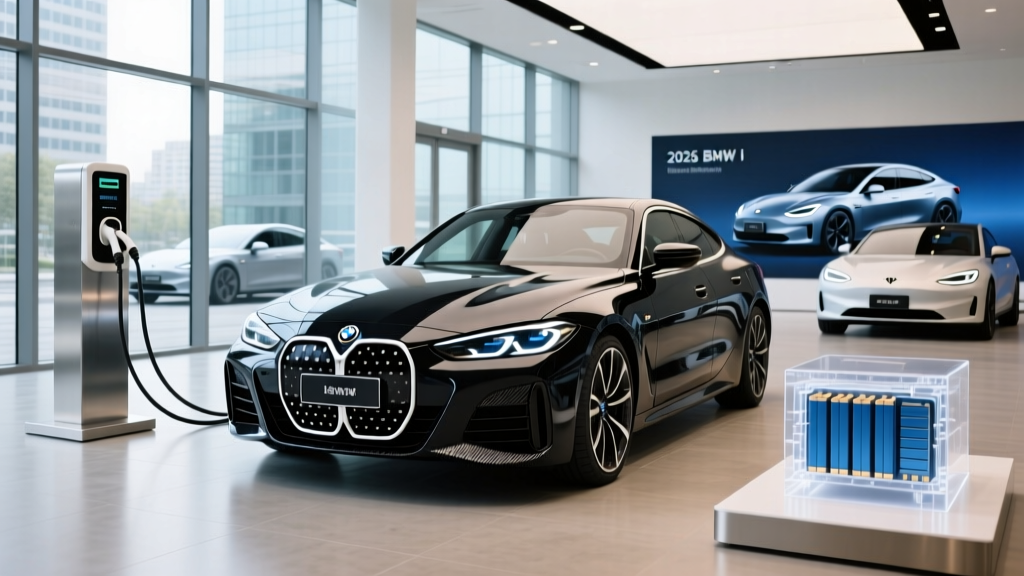
The 2026 BMW i4 slots into the premium electric sedan segment as the brand's answer to the Tesla Model 3, Polestar 2, and Hyundai Ioniq 6. But one spec consistently shapes the ownership conversation more than buyers expect: the BMW i4 weight. Curb weight directly influences real-world range, tire wear, braking distances, and how the car feels on a winding back road — and at roughly 4,600 to 5,050 pounds depending on the trim, the i4 is not a lightweight. Understanding how that mass interacts with the powertrain, battery, and aerodynamics is essential before signing a purchase agreement.
This profile covers every 2026 i4 variant — eDrive35, eDrive40, xDrive40, and the performance M50 — with exact figures for range, charging, pricing, and efficiency. We'll also address the federal tax credit situation, which has become significantly more restrictive under current IRS §30D rules.
2026 BMW i4 Spec Table: Weight, Range, Power & Pricing
| Spec | eDrive35 | eDrive40 | xDrive40 | M50 |
|---|---|---|---|---|
| Curb Weight (lbs) | ~4,603 | ~4,682 | ~4,863 | ~5,047 |
| Drivetrain | RWD (single motor) | RWD (single motor) | AWD (dual motor) | AWD (dual motor) |
| Horsepower | 281 hp | 335 hp | 396 hp | 536 hp |
| 0-60 mph | 5.8 sec | 5.5 sec | 4.9 sec | 3.7 sec |
| Battery (usable kWh) | 66 kWh (NMC) | 81.5 kWh (NMC) | 81.5 kWh (NMC) | 81.5 kWh (NMC) |
| EPA Range (miles) | 256 | 307 | 282 | 245–270 |
| MPGe (combined) | 110 | 109 | 102 | 97–101 |
| Efficiency (kWh/100 mi) | 30 | 31 | 33 | 34–35 |
| Base MSRP | $52,200 | $57,200 | $62,200 | $69,700 |
Sources: EPA fueleconomy.gov, BMW USA product specifications. EPA range varies by wheel size and option packages.
Real-World Range: What the EPA Sticker Doesn't Tell You
The eDrive40's EPA-estimated 307 miles assumes a mix of city and highway driving at moderate temperatures. In real-world use:
- Highway-only (70-75 mph): Expect ~250–275 miles. The i4's 4,682-lb curb weight and sedan aerodynamics mean energy consumption rises sharply above 65 mph.
- Cold weather (below 32°F): Range drops 20–30%, putting the eDrive40 at roughly 215–245 miles. The i4 uses a heat pump (standard on 2026 models), which mitigates cabin-heating losses but doesn't eliminate cold-weather battery chemistry effects.
- City/commuter driving: You may see 310–325 miles thanks to regenerative braking recovering energy in stop-and-go traffic.
The heavier xDrive40 and M50 variants suffer proportionally more range loss at highway speeds because more mass requires more energy to maintain velocity. The M50, at over 5,000 lbs, sees the most pronounced drop — its 270-mile EPA figure (with 19-inch wheels) can fall to ~210 miles on a cold-weather highway run.
Charging Speed: DC Fast Charge and Home Level 2
Charging infrastructure compatibility is where the 2026 i4 makes a significant practical improvement. BMW has adopted the NACS (North American Charging Standard) port for 2026, giving i4 owners native access to Tesla Supercharger stations without an adapter — a major convenience upgrade over prior CCS-only models.
| Charging Level | Power | Speed / Time | Notes |
|---|---|---|---|
| Level 1 (120V) | 1.4 kW | ~3–4 mi/hr | Emergency/trickle only; a full charge takes 40+ hours on the 81.5 kWh battery |
| Level 2 (240V home) | 11 kW (onboard charger) | ~30–35 mi/hr; full charge in ~9 hrs | Requires a 48-amp or higher circuit; the i4's 11 kW onboard charger is above average |
| DC Fast Charge | Up to 205 kW (81.5 kWh battery) | 10–80% in ~31 min | Peak rate sustained to ~40% SoC, then tapers; 80–100% adds another 20+ min |
| DC Fast Charge (eDrive35) | Up to 180 kW (66 kWh battery) | 10–80% in ~28 min | Smaller battery charges to 80% slightly faster despite lower peak kW |
Charging-curve reality check: The "up to 205 kW" figure is a peak, not a sustained rate. In testing at Electrify America and Tesla Supercharger stalls, the i4 eDrive40 typically holds 180–200 kW from roughly 10% to 35% state of charge, then steps down to ~130 kW through 60%, and further tapers to ~70 kW approaching 80%. This is typical for NMC chemistry in this segment, but it means your average charging power over a 10–80% session is closer to 130–140 kW, not 205 kW.
Preconditioning the battery — which the i4 initiates automatically when a DC fast charger is set as your navigation destination — is critical. Without it, cold-soaked batteries may peak at only 100–120 kW, adding 10–15 minutes to a road-trip stop.
How Does BMW i4 Weight Affect Driving Dynamics?
At 4,603 to 5,047 lbs, the i4 is heavier than the gas-powered 4 Series Gran Coupe it shares architecture with. That weight is largely attributable to the battery pack — the 81.5 kWh NMC (nickel manganese cobalt) battery alone accounts for roughly 1,000 lbs. However, BMW engineers placed the battery low in the chassis, giving the i4 a lower center of gravity than its combustion sibling.
The practical effects of this weight:
- Ride quality: The mass gives the i4 a planted, substantial feel over highway imperfections. Adaptive M Suspension (available on M Sport trims) manages body control well despite the curb weight.
- Tire wear: Heavier EVs consume tires faster. Expect 25,000–35,000 miles from the OEM all-season tires — budget for replacements sooner than you would on a gas 4 Series.
- Braking: Regenerative braking handles most deceleration, saving the friction brakes. However, emergency stopping distances are longer than lighter sedans. The M50's 5,047-lb mass is noticeable during repeated hard braking.
- Cornering: The i4 M50 can feel its weight during aggressive direction changes. It's a grand tourer, not a track car, despite the M badge.
Pricing, Trims & Federal Tax Credit Eligibility
The 2026 BMW i4 lineup starts at $52,200 for the eDrive35 and tops out near $70,000 for the M50 before options. Here's what buyers need to know about the bottom line — including the complicated federal tax credit picture.
| Trim | Base MSRP | As-Tested (typical) | Federal §30D Credit |
|---|---|---|---|
| eDrive35 | $52,200 | $55,000–$58,000 | Eligibility depends on battery sourcing — check current IRS guidance |
| eDrive40 | $57,200 | $60,000–$65,000 | Same sourcing rules apply; MSRP under the $55,000 sedan cap is exceeded |
| xDrive40 | $62,200 | $66,000–$72,000 | Exceeds $55,000 sedan MSRP cap — ineligible for §30D |
| M50 | $69,700 | $74,000–$82,000 | Exceeds $55,000 sedan MSRP cap — ineligible for §30D |
- MSRP cap: Sedans must have an MSRP at or below $55,000 to qualify. This eliminates the xDrive40 and M50 entirely. The eDrive40 base MSRP of $57,200 also exceeds the cap.
- Income limits: Modified adjusted gross income cannot exceed $150,000 (single), $225,000 (head of household), or $300,000 (joint filers).
- Battery sourcing: Critical minerals and battery components must meet phased-in domestic/Fta-country sourcing thresholds that tighten annually. BMW's supply chain has been in flux — verify current eligibility on the IRS qualified vehicles list before purchasing.
- Point-of-sale transfer: If eligible, you can transfer the credit to the dealer for an immediate price reduction rather than claiming it on your tax return.
Always consult a tax professional and verify on irs.gov before relying on credit eligibility. Rules and manufacturer sourcing compliance change frequently.
Interior, Cargo & Technology
The i4 uses BMW's Curved Display layout — a 12.3-inch instrument cluster merged with a 14.9-inch touchscreen running iDrive 8.5 (updated for 2026). The system supports wireless Apple CarPlay and Android Auto, over-the-air updates, and BMW's latest voice assistant.
Passenger and cargo dimensions:
- Front legroom: 41.5 inches
- Rear legroom: 34.5 inches (tight for taller passengers on long trips)
- Cargo volume (rear seats up): 16.6 cu ft (liftback design provides wide opening)
- Cargo volume (rear seats folded): 45.7 cu ft
- No front trunk (frunk): The i4's CLAR platform, shared with ICE models, doesn't provide frunk storage — a notable omission versus the Tesla Model 3 or Hyundai Ioniq 6.
Driver assistance (ADAS): The i4 comes standard with Active Driving Assistant, which includes adaptive cruise control, lane-keeping assist, and blind-spot monitoring. The optional Driving Assistance Professional Package adds Highway Assistant — BMW's hands-free, eyes-on Level 2 system that permits hands-off driving up to 85 mph on divided highways (with driver monitoring via camera). This is SAE Level 2 automation — the driver must remain attentive and is legally responsible for the vehicle at all times.
Pros, Cons & Who Should Buy the BMW i4
- Refined ride quality and cabin quietness rival the gas 4 Series
- Strong DC fast-charge capability (up to 205 kW)
- NACS port standard for 2026 — native Supercharger access
- iDrive 8.5 is one of the best luxury infotainment systems
- Liftback cargo versatility (16.6 cu ft, 45.7 cu ft folded)
- Heat pump standard for improved cold-weather efficiency
- Weight (4,600–5,050 lbs) reduces efficiency vs. lighter rivals
- No frunk — CLAR platform limitation
- Rear legroom is tight at 34.5 inches
- Most trims exceed the $55K sedan MSRP cap for §30D credit
- M50's highway range drops below 220 mi in cold weather
- Higher starting price than Hyundai Ioniq 6 or Tesla Model 3
Who the i4 is best for: Luxury-oriented commuters and grand-touring drivers who prioritize build quality, cabin materials, and BMW driving dynamics over maximum range-per-dollar. The eDrive40 is the sweet spot — 307 miles EPA, 335 hp, and a sub-$60K starting price. The i4 is less ideal for families needing generous rear-seat space or buyers whose primary goal is minimizing cost-per-mile (the Ioniq 6 and Model 3 both win on efficiency and price).
How the BMW i4 Stacks Up Against Key Rivals
The i4 competes in a crowded premium electric sedan segment. Here's how its weight, range, and pricing compare:
- Tesla Model 3 Long Range (~4,034 lbs, 341 mi EPA, ~$47,740): Lighter, longer range, significantly cheaper — but less luxurious interior and no traditional instrument cluster.
- Hyundai Ioniq 6 SE Long Range (~4,541 lbs, 342 mi EPA, ~$42,715): More efficient and affordable; less premium badge appeal and dealer experience.
- Polestar 2 Long Range Dual Motor (~4,680 lbs, 276 mi EPA, ~$53,300): Similar weight and price, but less range and slower DC charging.
The i4's weight penalty versus the Model 3 (nearly 650 lbs heavier for the eDrive40) translates directly into a ~50-mile range deficit and higher tire and brake wear costs over time. Buyers choosing the i4 are paying for refinement, brand cachet, and build quality — not efficiency leadership.
Frequently Asked Questions
What is the real-world range of the BMW i4?
The eDrive40 achieves 307 miles EPA, but expect 250–275 miles on highway trips and 215–245 miles in freezing weather. The eDrive35 (256 EPA) and M50 (245–270 EPA) deliver proportionally less. City driving with regen braking can push the eDrive40 slightly above its EPA figure.
How fast does the BMW i4 charge at home and on the road?
At home on a Level 2 (240V, 48-amp) charger, the i4 adds roughly 30–35 miles of range per hour, with a full charge taking about 9 hours for the 81.5 kWh battery. On DC fast chargers, the eDrive40/xDrive40/M50 peak at 205 kW, reaching 10–80% in approximately 31 minutes. The eDrive35 peaks at 180 kW with a similar 10–80% time of ~28 minutes.
Does the BMW i4 qualify for the $7,500 federal EV tax credit?
Most trims do not. Under current IRS §30D rules, sedans must have an MSRP at or below $55,000. The eDrive35 at $52,200 is the only trim under the cap, but it must also meet battery critical-mineral and component sourcing requirements that change annually. Verify on the IRS qualified clean vehicles list before purchasing. Income caps also apply.
How does BMW i4 weight affect tire wear and maintenance?
The i4's 4,600–5,050 lb curb weight accelerates tire wear compared to lighter EVs and gas sedans. Budget for tire replacement every 25,000–35,000 miles. BMW recommends specific EV-rated tires with higher load ratings and foam liners for noise reduction. Brake wear is minimal thanks to regenerative braking, but brake fluid should still be flushed every two years.
Is the BMW i4 worth buying over the Tesla Model 3 or Ioniq 6?
If luxury interior quality, traditional BMW driving feel, and dealership service experience matter most, the i4 justifies its premium. If maximum range-per-dollar, lighter weight, and lower cost are priorities, the Model 3 Long Range and Ioniq 6 offer more efficiency and value. The i4's NACS adoption for 2026 removes a major previous disadvantage (Supercharger access), narrowing the gap with Tesla on road-trip convenience.
What is the BMW i4 battery warranty?
BMW covers the i4's high-voltage battery for 8 years or 100,000 miles (whichever comes first), guaranteeing at least 70% of original capacity retention. If degradation drops below that threshold within the warranty period, BMW will repair or replace the battery to restore it above 70%. The general vehicle warranty covers 4 years/50,000 miles.