The 2026 Tesla Model 3: Beyond the Default White
If you've browsed Tesla's configurator, you already know the drill: Pearl White Multi-Coat is the only no-cost exterior color. Every other colored Tesla Model 3 demands a premium — and for 2026, those premiums still range from $1,000 to $2,500 depending on the hue. But paint is just the surface. The 2026 Model 3 Long Range RWD remains one of the most efficient, longest-range electric sedans on the market, and understanding what you're getting — beyond the color picker — is critical before you hit "Order."
This review covers the full 2026 Model 3 lineup with a focus on exterior color options, real-world range, charging performance, pricing after federal tax credits, and whether this sedan still earns its spot against growing competition from Hyundai, BMW, and Polestar.
Every Colored Tesla Model 3 Option (2026 Paint Menu)
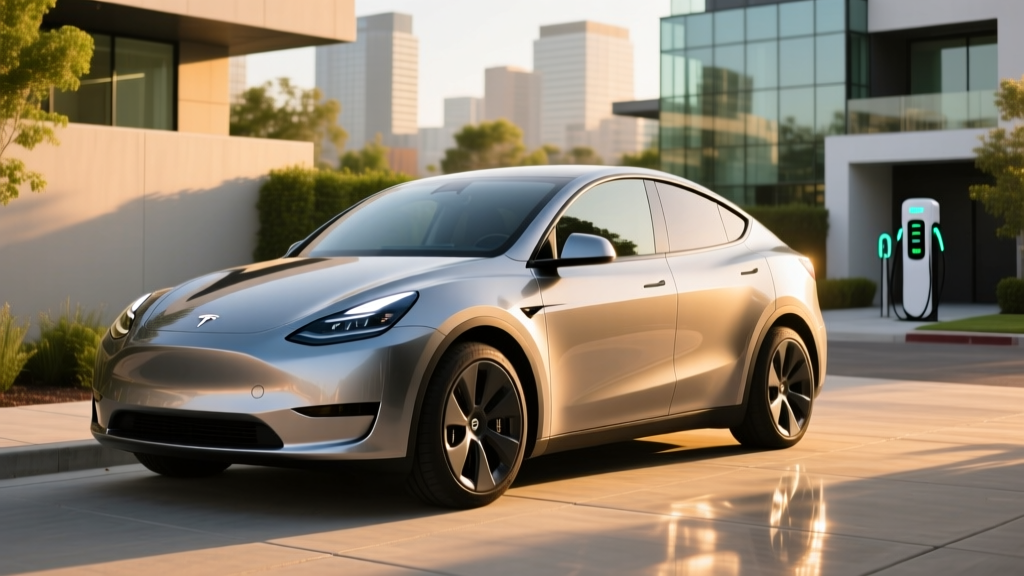
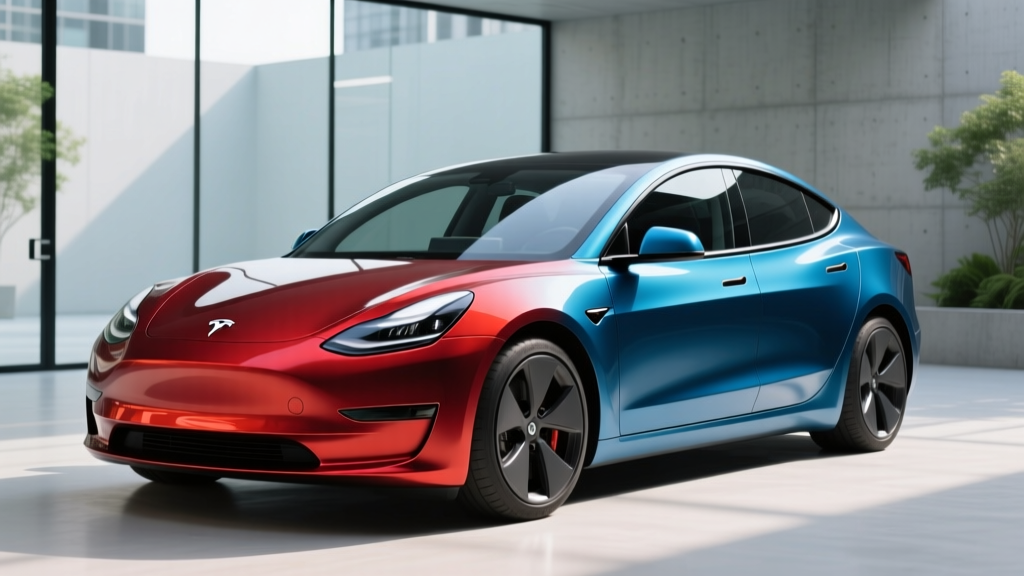
Tesla currently offers five exterior colors on the Model 3. Here's the breakdown with pricing and what each finish actually looks like in person:
| Color | Cost | Finish Type | Notes |
|---|---|---|---|
| Pearl White Multi-Coat | $0 | Tri-coat pearl | Default; hides minor scratches well, high resale demand |
| Solid Black | $1,500 | Single-stage solid | Shows swirl marks easily; dramatic at night |
| Midnight Silver Metallic | $1,500 | Metallic | Subtle gunmetal tone; excellent at hiding road grime |
| Deep Blue Metallic | $1,500 | Metallic | Rich navy in shade, bright cobalt in direct sun |
| Ultra Red | $2,500 | Multi-coat metallic | Replaced Red Multi-Coat in late 2023; deeper, more saturated with copper undertones |
The Ultra Red premium is steep, but the multi-coat application gives it genuine depth that photographs poorly — it's a color you need to see under varied lighting. Midnight Silver Metallic is the pragmatic enthusiast pick: it reads as sophisticated without the maintenance headaches of Solid Black, which demands frequent hand-washing and ceramic coating to avoid a spiderweb of micro-scratches within the first year.
If you're considering a colored Tesla and plan to use Tesla's ceramic coating or a third-party PPF (paint protection film), factor in $1,500–$3,500 for full-body coverage. Black and Ultra Red benefit most from PPF due to their visibility of imperfections.
Range, Battery & Efficiency: Real Numbers, Not Marketing
| Specification | Model 3 Long Range RWD | Model 3 Long Range AWD | Model 3 Performance AWD |
|---|---|---|---|
| EPA Range | 363 mi | 341 mi | 315 mi |
| Battery (usable) | ~75 kWh (NMC) | ~75 kWh (NMC) | ~75 kWh (NMC) |
| MPGe (combined) | 132 MPGe | 124 MPGe | 115 MPGe |
| Efficiency | 25 kWh/100 mi | 27 kWh/100 mi | 29 kWh/100 mi |
| 0–60 mph | 4.9 sec | 4.2 sec | 2.9 sec |
| Horsepower | 271 hp | 346 hp | 510 hp |
| Drivetrain | RWD (single motor) | AWD (dual motor) | AWD (dual motor) |
Tesla uses NMC (nickel manganese cobalt) chemistry across the Long Range and Performance trims. NMC offers higher energy density than LFP (lithium iron phosphate), which is why the Long Range RWD achieves 363 miles from a ~75 kWh pack. The trade-off: Tesla recommends daily charging to 80% for NMC batteries to maximize longevity, unlike LFP packs (found in the base RWD trim in prior years) which tolerate regular 100% charges.
According to fueleconomy.gov, the Long Range RWD's 132 MPGe combined makes it one of the most efficient EVs in its class — edging out the Hyundai Ioniq 6 (140 MPGe combined for the SE Light RWD but with less total range) and significantly outperforming the BMW i4 eDrive40 (109 MPGe combined).
Charging Speed: DC Fast, Level 2, and the Supercharger Advantage
| Charging Method | Power | Speed / Time |
|---|---|---|
| DC Fast Charge (peak) | 250 kW | 10–80% in ~25 min |
| Tesla Supercharger V3 | 250 kW | ~175 mi in 15 min (preconditioned) |
| Level 2 (home, 48A) | 11.5 kW | ~44 mi/hr of charging |
| Level 2 (home, 32A) | 7.7 kW | ~30 mi/hr of charging |
| Level 1 (120V outlet) | ~1.4 kW | ~5 mi/hr of charging |
The Model 3 peaks at 250 kW on V3 Superchargers, but as with all EVs, that peak is not sustained. The charge curve tapers significantly above 60% state of charge. In practice, a 10–80% session takes roughly 25 minutes when the battery is preconditioned (navigating to a Supercharger triggers automatic thermal preconditioning). Without preconditioning — say, arriving at a third-party CCS charger via an adapter — expect 10–80% to stretch to 30–35 minutes in cool weather.
With the 2026 Model 3 now natively equipped with the NACS (North American Charging Standard) port, you have access to Tesla's Supercharger network without adapters. You can also use the growing number of NACS-equipped Electrify America and EVgo stations. This is a significant advantage over CCS-equipped competitors, where adapter dependency and network fragmentation still cause friction.
For home charging, a 48-amp Level 2 wall connector on a 60-amp circuit delivers roughly 44 miles of range per hour. An overnight 8-hour session adds ~350 miles — more than enough to replenish a full day's driving. Installation costs typically range from $800 to $2,000 depending on panel proximity and local permitting; budget up to $4,500 if your home requires a 200-amp panel upgrade.
Pricing, Trims & Federal Tax Credit Eligibility
| Trim | Base MSRP | As-Tested (Ultra Red, FSD) | Est. After §30D Credit |
|---|---|---|---|
| Long Range RWD | $42,380 | $50,380 | ~$34,880–$44,880* |
| Long Range AWD | $47,380 | $55,380 | ~$39,880–$49,880* |
| Performance AWD | $54,380 | $62,880 | ~$46,880–$56,880* |
*Tax credit estimates assume full $7,500 eligibility. Actual credit depends on IRS §30D requirements.
- MSRP cap: Sedans must be ≤$55,000. The Long Range RWD and AWD qualify at base MSRP; the Performance trim does NOT qualify at base MSRP ($54,380 is under the cap, but adding Ultra Red + FSD pushes it over).
- Buyer income cap: Modified AGI ≤$150,000 (single), ≤$225,000 (head of household), ≤$300,000 (joint).
- Battery sourcing: Critical minerals and battery components must meet phased-in domestic/free-trade-partner thresholds. Verify current compliance on irs.gov before purchase.
- Point-of-sale transfer: You can transfer the credit to the dealer at purchase, reducing your out-of-pocket cost immediately rather than waiting for tax filing.
The Long Range RWD is the value champion here. At $42,380 before destination, and with the full $7,500 credit applied at point of sale, your effective price drops to roughly $34,880 — competitive with a well-equipped Toyota Camry XSE when you factor in fuel savings and minimal maintenance. Adding Ultra Red ($2,500) keeps you comfortably under the $55,000 sedan cap at $44,880.
Interior Space, Cargo & Daily Practicality
The Model 3's cabin prioritizes minimalism over luxury, which draws polarized reactions. Here's what the numbers tell you:
- Front legroom: 42.7 inches
- Rear legroom: 35.2 inches (tight for 6'+ passengers on long trips)
- Cargo (trunk): 23 cu ft
- Frunk (front trunk): ~3.1 cu ft (enough for a charging cable bag or small backpack)
- Total cargo: ~26 cu ft (less than a Model Y's 30 cu ft behind the rear seats)
The glass roof creates an airy cabin but contributes to noticeable solar heat gain in summer. Tesla includes UV/IR protection in the glass, but many owners add an aftermarket tint or sunshade panel ($50–$150) for the rear glass section.
The 15.4-inch center touchscreen handles everything — climate, media, navigation, vehicle settings — with no physical buttons aside from steering wheel controls. The 2026 refresh retains the rear-seat 8-inch screen for climate and media control, a welcome addition from the Highland redesign.
Tech, Driver Assistance & What Autopilot Actually Does
Every Model 3 includes Basic Autopilot (Traffic-Aware Cruise Control + Autosteer), which provides solid lane-centering on highways. Tesla's Full Self-Driving (Supervised), available as an $8,000 package or $99/month subscription, adds city-street navigation, traffic light/stop sign recognition, and automatic turns.
Beyond driver assists, the Model 3's tech stack includes:
- Over-the-air updates that add features post-purchase (e.g., improved regenerative braking profiles, UI updates)
- Dashcam and Sentry Mode (uses the 8-camera suite for security recording)
- Phone-as-key with BLE and UWB for passive entry
- Native Spotify, Apple Music, and podcast apps (requires Premium Connectivity at $12.99/month for streaming without phone tethering)
- HEPA-grade cabin air filtration
Notable drawbacks: no Apple CarPlay or Android Auto (Tesla's ecosystem is closed), no heads-up display, and the turn-signal stalks were removed in the Highland refresh — signals are now activated via steering wheel buttons, which draws persistent complaints from new owners during roundabout-heavy drives.
Pros, Cons & Who Should Buy a Colored Tesla Model 3
Pros
- Class-leading efficiency (132 MPGe combined, 25 kWh/100 mi)
- 363-mile EPA range on Long Range RWD — top of its segment
- Native NACS port = full Supercharger access, no adapter needed
- 250 kW DC fast charging with excellent preconditioning
- Strong OTA update track record
- Low cost of ownership: no oil changes, minimal brake wear (regen), ~$0.04–0.06/mi on home electricity
Cons
- Every colored Tesla costs $1,500–$2,500 extra; white-only base feels stingy
- Rear seat legroom tight for tall adults (35.2 in)
- No Apple CarPlay / Android Auto
- Turn signals on steering wheel buttons (no stalk) — steep learning curve
- FSD ($8,000) remains SAE Level 2; value proposition debated
- Service center wait times can stretch to weeks in some metro areas
Who This EV Suits Best
- Commuters (30–80 mi/day round trip): The Long Range RWD is ideal. Charge at home nightly, never visit a gas station, and your "fuel" cost drops to roughly $50/month on average residential electricity rates.
- Road trippers: The Supercharger network makes long-distance travel genuinely practical. Plan 20–25 minute stops every 250–300 miles.
- Tech-forward buyers: If you value OTA updates, native navigation, and a closed-but-polished software ecosystem, Tesla's integration is unmatched.
- Not ideal for: Families needing maximum cargo (get a Model Y), buyers who demand Apple CarPlay, or those in rural areas with no Supercharger coverage within 100+ miles.
Warranty & Long-Term Ownership
Tesla provides the following coverage on the 2026 Model 3:
- Basic vehicle: 4 years / 50,000 miles
- Battery & drive unit: 8 years / 120,000 miles (Long Range RWD); 8 years / 120,000 miles (AWD/Performance)
- Battery degradation threshold: Tesla warrants retention of at least 70% capacity during the warranty period
Real-world data from owner surveys and Tesla's own impact reports suggest NMC packs in the Model 3 typically lose 8–12% capacity over the first 100,000 miles, with degradation slowing significantly after the initial break-in period. If you charge primarily at home on Level 2 and avoid habitual DC fast charging, your pack should comfortably exceed 200,000 miles before approaching the 70% threshold.
Frequently Asked Questions
What is the real-world range of the 2026 Tesla Model 3?
The EPA rates the Long Range RWD at 363 miles. Expect 300–320 miles on the highway at 70+ mph, and 250–280 miles in freezing weather with cabin heat running. City driving with regenerative braking can push past 370 miles in mild conditions.
How fast does the Model 3 charge at home and on the road?
On a V3 Supercharger at 250 kW, 10–80% takes roughly 25 minutes with preconditioning. At home on a 48-amp Level 2 charger (11.5 kW), you gain about 44 miles of range per hour — a full overnight session covers most drivers' weekly needs.
How much does a colored Tesla Model 3 cost after tax credits?
A Long Range RWD in Ultra Red starts at $44,880 MSRP. If you qualify for the full $7,500 federal credit (meeting income, MSRP, and battery sourcing requirements per IRS §30D), your effective price drops to approximately $37,380. Point-of-sale transfer lets you apply this at purchase.
Does the 2026 Model 3 qualify for the $7,500 federal EV tax credit?
The Long Range RWD ($42,380) and Long Range AWD ($47,380) both fall under the $55,000 sedan MSRP cap and should qualify, pending battery sourcing compliance and buyer income limits. The Performance trim at $54,380 base also qualifies, but adding options that push MSRP above $55,000 disqualifies it. Always verify current rules on irs.gov before ordering.
Is the Model 3 worth buying vs. competitors in 2026?
Against the Hyundai Ioniq 6 (361 mi range, 350 kW charging, ~$42,000), the Model 3 wins on Supercharger network access and software polish but loses on charging speed and rear-seat space. Against the BMW i4 eDrive40 (307 mi range, ~$52,000), the Model 3 offers more range for less money but can't match BMW's interior material quality. If Supercharger access and efficiency are your top priorities, the Model 3 remains the benchmark.
Which colored Tesla paint hides scratches best?
Midnight Silver Metallic and Pearl White Multi-Coat are the most forgiving of light scratches and road grime. Solid Black shows every imperfection and is the highest-maintenance choice. Ultra Red falls in the middle — swirl marks are visible under direct sunlight but less obvious than on black.