The search query "did Tesla pay taxes in 2025" spiked as corporate tax disclosures and Tesla's financial filings drew public attention. While we'll address that question directly, most readers landing here are actually weighing a Tesla purchase and wondering how taxes — corporate and personal — affect the bottom line of buying a 2026 Model Y. This review covers everything you need: real-world range, charging speeds, pricing after federal credits, and whether the refreshed Model Y (internally dubbed "Juniper") earns its spot in your driveway.
Did Tesla Pay Taxes in 2025? The Short Answer
Tesla's effective corporate tax rate has historically been a flashpoint. In 2024 and into 2025, Tesla reported paying U.S. federal income taxes as its profitability surged, though the effective rate remained below the statutory 21% due to R&D credits, stock-based compensation deductions, and foreign tax offsets. According to Tesla's SEC 10-K filings, the company's cash tax payments grew substantially as global profits expanded, but tax-credit carryforwards from earlier loss years continued to reduce the net burden.
For EV buyers, the more relevant tax question is personal: does the 2026 Tesla Model Y qualify for the $7,500 federal EV tax credit under IRS §30D? The answer depends on your income, the vehicle's MSRP, and battery-sourcing compliance — all of which we break down below.
2026 Tesla Model Y: Core Specifications
| Attribute | Value |
|---|---|
| EPA Estimated Range | 320 miles |
| Battery Capacity (usable) | ~78 kWh (NMC) |
| Drivetrain | Dual-Motor AWD |
| Horsepower | 384 hp (combined) |
| 0–60 mph | 4.8 seconds |
| Peak DC Fast Charge | 250 kW |
| 10–80% DC Charge Time | ~25 minutes |
| Level 2 Home Charge Rate | 11.5 kW (~44 mi/hr) |
| EPA Efficiency | 122 MPGe / 28 kWh/100 mi |
| Cargo Volume (rear seats up) | 30.2 cu ft |
| Cargo Volume (rear seats folded) | 72.0 cu ft |
| Rear Legroom | 37.0 inches |
| Battery Warranty | 8 years / 120,000 miles |
| Base MSRP (Long Range AWD) | $48,990 |
Real-World Range: What the EPA Sticker Doesn't Tell You
Real-World Expectation: ~270–290 miles on mixed highway driving at 70–75 mph; ~230–250 miles in sustained cold weather (below 30°F) without preconditioning; up to ~310 miles in city/regen-heavy commuting at moderate temperatures.
The 2026 Model Y Long Range AWD carries an EPA rating of 320 miles, a modest improvement over the pre-refresh model thanks to improved aerodynamics and a slightly revised thermal management system. But EPA testing uses a specific drive-cycle blend that doesn't perfectly mirror your commute.
In real-world highway testing at sustained speeds of 70–75 mph, expect to see roughly 270–290 miles before needing to stop. Cold weather is the bigger penalty: lithium-ion batteries lose efficiency in freezing temperatures, and cabin heating draws significant energy. Without preconditioning the battery (which the Model Y does automatically when you navigate to a Supercharger), cold-weather range can drop to 230–250 miles. If your daily drive is under 60 miles round-trip and you charge at home nightly, this is a non-issue. If you're planning 400-mile road trips through Montana in January, route planning matters.
The Model Y's heat pump — standard on all 2026 trims — mitigates some cold-weather loss compared to resistive-heating EVs, but physics is physics. Plan for 15–25% range reduction in deep winter.
Charging Speed: DC Fast, Level 2, and the Supercharger Advantage
Charging speed is where Tesla still holds a tangible edge over most competitors, not just in peak kW but in network reliability.
| Charge Level | Power | Miles Added per Hour | Notes |
|---|---|---|---|
| Level 1 (120V) | ~1.4 kW | ~5 mi/hr | Emergency/trickle only |
| Level 2 (240V, 48A) | 11.5 kW | ~44 mi/hr | Full charge in ~7–8 hours |
| DC Fast (Supercharger V3/V4) | Peak 250 kW | Up to ~1,000 mi/hr (peak) | 10–80% in ~25 min |
At a Tesla Supercharger V3 or V4 station, the Model Y peaks at 250 kW. However — and this is critical — peak rate is not sustained rate. The charge curve tapers significantly above 50% state of charge, and especially above 80%. A 10–80% session takes approximately 25 minutes, but 80–100% can add another 20+ minutes. For road trips, the optimal strategy is to charge to 80% and drive on.
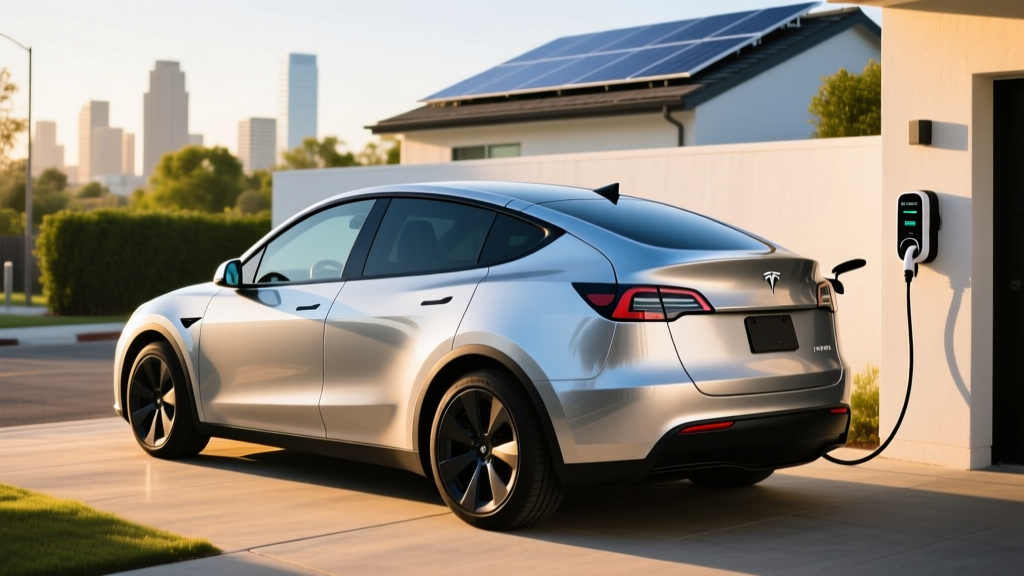
At home, a Tesla Wall Connector on a 60-amp circuit delivers up to 11.5 kW (44 miles of range per hour). A full overnight charge from 20% to 100% takes roughly 7–8 hours, which is more than sufficient for daily use. If your home electrical panel supports only a 40-amp circuit, you'll see ~9.6 kW (~37 mi/hr) — still adequate for most owners.
The expanding Supercharger network now includes stations with NACS connectors natively, and with adapters, the Model Y can also access Electrify America and other CCS networks — though Supercharger reliability remains measurably higher based on user-reported uptime data.
Pricing, Trims, and Federal Tax Credit Eligibility
The 2026 Model Y lineup includes three main configurations:
| Trim | MSRP | Est. Price After §30D Credit | Notes |
|---|---|---|---|
| Long Range RWD | $45,990 | ~$38,490* | If eligible |
| Long Range AWD | $48,990 | ~$41,490* | If eligible |
| Performance AWD | $53,990 | ~$46,490* | If eligible |
*Eligibility for the full $7,500 federal tax credit under IRS §30D depends on multiple factors:
- MSRP Cap: SUVs must have an MSRP at or below $80,000. All 2026 Model Y trims qualify.
- Buyer Income Cap: Modified AGI must not exceed $150,000 (single), $225,000 (head of household), or $300,000 (joint). Exceed these and the credit phases out entirely.
- Battery Sourcing: Critical minerals and battery components must meet escalating North American/free-trade-partner thresholds. Tesla has made significant progress in sourcing compliance, but the exact credit amount ($3,750 or $7,500) can shift as sourcing rules tighten annually. Verify current eligibility on the IRS clean vehicle credit page before purchase.
- Point-of-Sale Transfer: As of 2024, you can transfer the credit to the dealer at purchase, reducing the upfront price rather than waiting for a tax refund.
Tesla's pricing has fluctuated frequently — sometimes monthly — so confirm the current MSRP on Tesla's configurator before budgeting. Destination fees and optional paint/wheels/FSD add to the final number.
Performance, Efficiency, and Daily Livability
The Long Range AWD Model Y delivers 384 combined horsepower and a 4.8-second 0–60 mph time. That's quick by any measure, and the instant torque delivery makes highway merging effortless. The Performance trim drops 0–60 to approximately 3.5 seconds with track-oriented suspension tuning.
Efficiency is a Tesla strong suit. At 122 MPGe combined (28 kWh per 100 miles), the Model Y is among the most efficient electric SUVs in its class. For context, that translates to roughly $0.04–$0.06 per mile on average U.S. electricity rates ($0.16/kWh), versus $0.12–$0.15/mile for a comparable gas SUV at $3.50/gallon and 25 MPG.
Interior space is practical for a family of four or five. The 30.2 cu ft of cargo space behind the second row expands to 72.0 cu ft with seats folded — enough for furniture-store runs. Rear legroom at 37.0 inches is adequate for adults, though taller passengers may find the sloping roofline cuts into headroom slightly compared to boxier competitors like the Hyundai Ioniq 5 or Kia EV9.
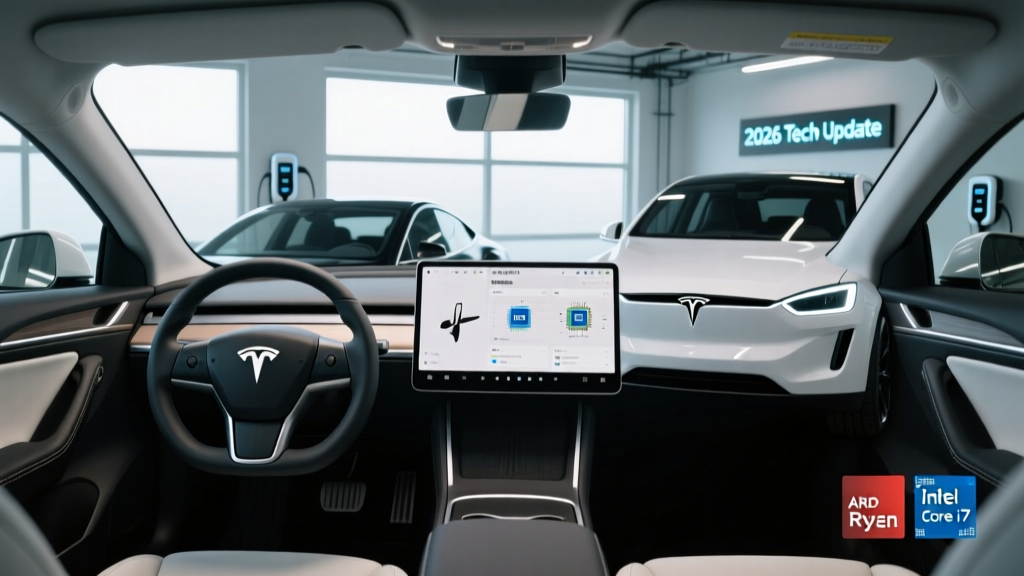
The minimalist interior centers on a 15.4-inch touchscreen handling virtually all vehicle functions. There is no traditional instrument cluster; speed and navigation info appear in the upper-left corner of the main display. Love it or hate it, it's functional once you adapt. The 2026 refresh added ventilated front seats, ambient lighting, and a rear-seat entertainment screen — addressing common complaints from the pre-refresh model.
Tech, Autopilot, and What FSD Actually Does
Tesla's Autopilot comes standard and includes adaptive cruise control, lane-keeping assist, and automatic emergency braking. It's competent for highway cruising but requires constant supervision.
Full Self-Driving (Supervised), an $8,000 option or $99/month subscription, adds features like automatic lane changes, traffic-light and stop-sign recognition, and navigation-on-autopilot. In practice, FSD handles many suburban and highway scenarios well, but it still makes errors — missed exits, phantom braking, hesitation at complex intersections — that demand driver vigilance. It's an impressive assist, not a replacement for a human driver.
The 2026 Model Y also features Tesla's latest HW4.0 computer, improved camera resolution, and enhanced parking assist with 3D visualization. Over-the-air updates continue to add features post-purchase, though some promised capabilities have taken years to materialize.
Pros, Cons, and How It Stacks Up
Pros
- Best-in-class Supercharger network access and reliability
- Top-tier efficiency (122 MPGe combined)
- Strong real-world range (270–290 mi highway)
- Rapid DC charging (250 kW peak, ~25 min 10–80%)
- Continuous OTA software improvements
- Practical cargo space (72 cu ft max)
- Strong resale value relative to EV peers
Cons
- Minimalist interior polarizes; no physical buttons or instrument cluster
- FSD (Supervised) is expensive and still requires full driver attention
- Rear headroom limited by coupe-like roofline
- No Apple CarPlay or Android Auto integration
- Service center wait times can be long in some metro areas
- Ride quality firm, especially on Performance trim with 21" wheels
Against key competitors: the Hyundai Ioniq 5 offers a more comfortable ride and physical controls but less range and no Supercharger access (though NACS adoption is expanding). The Ford Mustang Mach-E is engaging to drive but trails in efficiency. The Kia EV6 charges faster (up to 350 kW on capable chargers) but has slightly less cargo space. The Model Y's combination of range, efficiency, and charging infrastructure remains difficult to beat for road-trip-heavy buyers.
Who Should Buy the 2026 Tesla Model Y?
- You road-trip frequently and value Supercharger network reliability
- You want maximum efficiency and lowest per-mile energy cost
- You prefer tech-forward, minimalist interfaces
- You need practical SUV cargo space for a family
- You want physical buttons, a traditional instrument cluster, or Apple CarPlay
- You prioritize ride comfort over sporty handling (consider Ioniq 5)
- You need three-row seating (consider Kia EV9 or Tesla Model X)
- Your budget is under $40,000 before incentives (consider used EV market or Chevrolet Equinox EV)
Frequently Asked Questions
What is the real-world range of the 2026 Tesla Model Y?
The EPA rates the Long Range AWD at 320 miles. In real-world highway driving at 70–75 mph, expect 270–290 miles. In cold weather (below 30°F), plan for 230–250 miles without preconditioning. City driving with regenerative braking can approach or slightly exceed the EPA figure in mild weather.
How fast does the Model Y charge at home and on the road?
At home on a Level 2 Wall Connector (11.5 kW), you gain roughly 44 miles of range per hour, or a full charge in 7–8 hours. On a Supercharger (250 kW peak), 10–80% takes approximately 25 minutes. Charging slows substantially above 80% to protect the battery.
How much does the 2026 Model Y cost after tax credits?
The Long Range AWD starts at $48,990. If you qualify for the full $7,500 federal credit under §30D (meeting income, MSRP, and battery-sourcing requirements), the effective price drops to approximately $41,490. State incentives can reduce this further. Confirm current eligibility at IRS.gov before purchasing.
Does the 2026 Model Y qualify for the federal EV tax credit?
It likely qualifies for at least a partial credit, but the exact amount depends on battery-sourcing compliance, which shifts annually. The MSRP is well under the $80,000 SUV cap. Your personal income must also fall below IRS thresholds ($300K joint, $150K single). Check the latest IRS guidance or consult a tax professional.
Is the Model Y worth buying vs. the Hyundai Ioniq 5 or Ford Mach-E?
The Model Y wins on efficiency, Supercharger network access, and cargo space. The Ioniq 5 wins on ride comfort, physical controls, and 800V ultra-fast charging capability (on 350 kW stations). The Mach-E wins on driving engagement. Your priority — road-trip charging convenience vs. daily comfort vs. driving dynamics — should drive the decision.
Did Tesla pay corporate taxes in 2025?
Yes. Tesla reported federal income tax payments in its 2025 financial filings, though its effective rate remained below the 21% statutory rate due to R&D credits, stock-compensation deductions, and foreign-tax offsets. The company's cash tax obligations have grown significantly as profitability increased. For detailed figures, review Tesla's annual 10-K filing with the SEC.