The BMW i3 in 2026: A Used-EV Bargain or a Battery Risk?
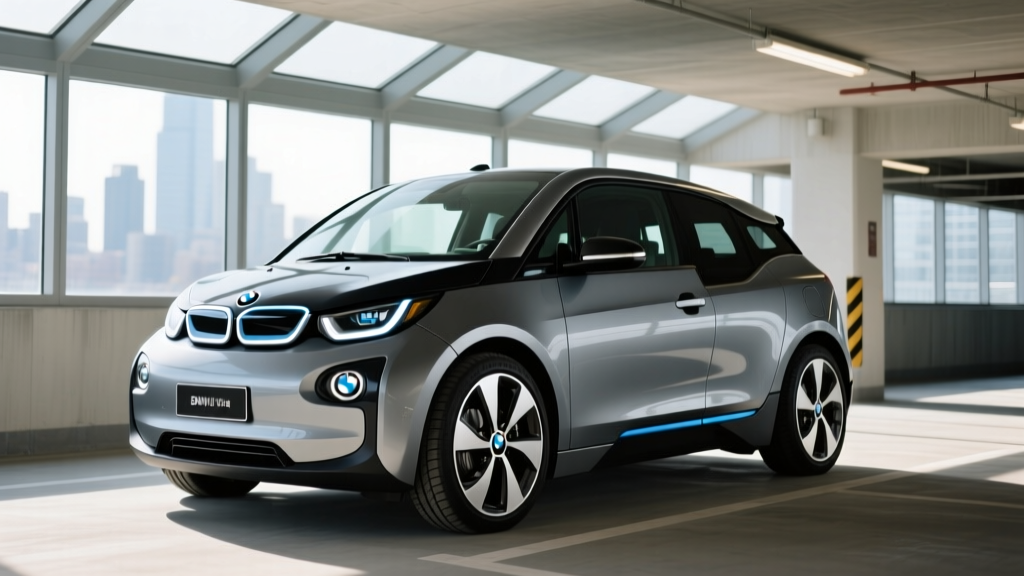
BMW discontinued the i3 after the 2021 model year, but this quirky carbon-fiber hatchback remains a fixture on the used EV market and occasionally surfaces through certified preowned programs or lease-return specials. If you're searching for BMW i3 lease deals in 2026, you're likely encountering CPO inventory, third-party lease transfers, or used-car listings rather than traditional new-vehicle leases. That distinction matters enormously for pricing, warranty coverage, and battery health.
The i3 was ahead of its time — a purpose-built EV with a carbon-fiber-reinforced plastic (CFRP) passenger cell, rear-wheel drive, and an available range-extender gasoline engine. But its small battery and modest range by today's standards mean buyers need to go in with eyes wide open. Here's the complete data-driven breakdown.
BMW i3 Specifications at a Glance
| Spec | i3 BEV (120 Ah) | i3 REx (120 Ah) |
|---|---|---|
| EPA Range (electric only) | 153 miles | 126 miles (electric) + ~70 miles (gas) |
| Battery Capacity (usable) | 37.9 kWh (42.2 kWh gross) | 37.9 kWh (42.2 kWh gross) |
| Battery Chemistry | NMC (Samsung SDI cells) | NMC (Samsung SDI cells) |
| Motor Output | 170 hp / 184 lb-ft torque | 170 hp / 184 lb-ft torque |
| Drivetrain | RWD (single motor) | RWD (single motor + 2-cyl REx) |
| 0-60 mph | 6.9 seconds | 7.5 seconds |
| DC Fast Charge (max) | 50 kW (CCS) | 50 kW (CCS) |
| 10-80% DC Charge Time | ~36 minutes | ~36 minutes |
| Level 2 Charge Rate | 7.4 kW (onboard charger) | 7.4 kW (onboard charger) |
| EPA Efficiency | 113 MPGe (29 kWh/100 mi) | 100 MPGe (combined w/ REx) |
| Cargo Volume | 15.1 cu ft (rear seats up) | 15.1 cu ft (rear seats up) |
| Rear Legroom | 31.9 inches | 31.9 inches |
| Battery Warranty (original) | 8 years / 100,000 miles | 8 years / 100,000 miles |
| Original MSRP (2021 base) | $44,450 | $48,300 |
Real-World Range: What the EPA Number Doesn't Tell You
Real-World Expectation: Plan for 120-135 miles on mixed driving in moderate temperatures. Highway-heavy driving at 70+ mph drops this to roughly 105-115 miles. In freezing conditions (below 32°F), expect a 25-35% reduction, yielding as little as 85-100 miles from the BEV model. The i3 has no heat pump — it uses resistive cabin heating, which is a significant energy draw in winter.
The i3's 42.2 kWh gross battery (37.9 kWh usable) was competitive for 2019-2021 but is small by 2026 standards. For context, the current Chevrolet Equinox EV offers over 300 miles of EPA range. The i3's tall, narrow tires (155/70 R19) are optimized for low rolling resistance, which helps efficiency but limits grip. According to fueleconomy.gov, the 2021 i3 BEV achieves 113 MPGe combined — excellent efficiency, but from a small energy pool.
If your daily commute is under 40 miles round-trip and you have reliable home charging, the i3's real-world range is perfectly manageable. For road trips, you'll be stopping every 90-100 miles for 30+ minutes at DC fast chargers — and the 50 kW peak charge rate means those stops are longer than in modern EVs that pull 150-250 kW.
Charging Speed and Infrastructure
| Charging Level | Power (kW) | Miles of Range per Hour | Notes |
|---|---|---|---|
| Level 1 (120V household) | ~1.4 kW | ~5 mi/hr | Full charge in ~30 hours; viable only for topping off |
| Level 2 (240V, 32A) | 7.4 kW | ~25 mi/hr | Full charge in ~5.5 hours; standard home setup |
| DC Fast Charge (CCS) | 50 kW peak | ~150 mi/hr (peak) | 10-80% in ~36 min; tapers significantly above 80% |
The i3's 50 kW DC fast-charging cap is its most significant limitation for road-trip use. Modern EVs like the Hyundai Ioniq 5 or Tesla Model 3 can accept 150-250 kW, completing a 10-80% charge in 18-25 minutes. The i3 takes roughly twice as long. The charge curve is relatively flat from 10-70% SoC, then tapers hard above 80% — a common trait in older NMC packs without advanced thermal management.
For home charging, the 7.4 kW onboard charger is adequate. A standard Level 2 home station (like a ChargePoint Home Flex or Emporia Vue) will fully replenish the battery overnight. Installation costs for a 240V/40A circuit typically run $500-$1,500 depending on panel proximity, though older homes may need a panel upgrade ($1,500-$3,000+).
The i3 uses the CCS1 connector for DC fast charging and J1772 for Level 2. As the industry shifts toward NACS (Tesla's connector), CCS remains widely supported at Electrify America, EVgo, and ChargePoint stations, so connector availability is not a near-term concern.
BMW i3 Lease Deals and Pricing in 2026
Because BMW ended i3 production in 2021, traditional new-vehicle lease deals no longer exist. What you'll find in 2026 falls into three categories:
- Certified Preowned (CPO): BMW dealers occasionally offer CPO i3 models with extended warranty coverage. Prices typically range from $18,000-$26,000 depending on mileage, model year, and battery health. CPO vehicles carry a 1-year/unlimited-mileage warranty beyond the original coverage.
- Lease transfers (swapalease, leasetrader): Extremely rare in 2026 since the last i3 leases written in 2021 have matured. Any remaining transfers would be unusual edge cases.
- Used market outright purchase: The most common path. A 2019-2021 i3 (120 Ah battery) in good condition with 30,000-60,000 miles typically sells for $16,000-$25,000. Earlier 60 Ah and 94 Ah models (2014-2018) go for $9,000-$16,000 but carry substantially less range.
| Scenario | Estimated Cost | Federal Tax Credit |
|---|---|---|
| Used 2021 i3 BEV (dealer, ~35k mi) | $20,000-$24,000 | Potentially $4,000 (used EV credit, §25E) |
| Used 2019 i3 BEV (private party, ~50k mi) | $14,000-$18,000 | Potentially $4,000 (used EV credit, §25E) |
| CPO 2021 i3 from BMW dealer | $22,000-$26,000 | Potentially $4,000 (used EV credit, §25E) |
Tax credit note: The federal used EV tax credit (§25E) offers up to $4,000 or 30% of the sale price (whichever is less) for qualifying preowned EVs purchased from a dealer. The vehicle must have an MSRP (original) under $25,000 — wait, that's incorrect for used: the sale price must be $25,000 or less. Buyer income caps apply ($75,000 single / $150,000 joint AGI). The credit can be transferred to the dealer at point of sale. Always verify current rules at IRS.gov and consult a tax professional. The original §30D new-vehicle credit no longer applies since the i3 is not available new.
Battery Health, Degradation, and Warranty Reality
The i3's Samsung SDI NMC battery has proven reasonably durable. Real-world data from i3 owner communities and fleet studies show typical capacity retention of 85-92% after 5 years / 60,000 miles. BMW's battery warranty guarantees 70% capacity retention for 8 years or 100,000 miles. A 2021 model in 2026 is 5 years old — meaning most examples still fall within the original battery warranty window.
Key battery considerations for used i3 buyers:
- Request a battery health report: BMW dealers can pull a State of Health (SoH) reading. Independent shops with BMW-compatible diagnostic tools can as well. Look for SoH above 85%.
- Avoid the 60 Ah (2014-2016) models unless budget is the primary concern. These have only 18.8 kWh usable and an EPA range of 72-81 miles. Degradation hits harder on smaller packs because you're cycling through a larger percentage of total capacity daily.
- The 94 Ah (2017-2018) models offer 27.2 kWh usable and ~114 miles EPA — a meaningful step up but still limited.
- The 120 Ah (2019-2021) is the one to target: 37.9 kWh usable and 153 miles EPA.
- Battery replacement cost: A new i3 battery pack from BMW runs approximately $13,000-$16,000 installed. Third-party refurbishment options exist for $7,000-$10,000. This is a worst-case scenario — most i3 batteries are lasting well — but it's a figure to factor into your total cost of ownership.
Driving Experience, Tech, and Daily Livability
The i3 drives unlike any other BMW. The electric motor delivers 170 hp and instant torque to the rear wheels through a single-speed transmission. The 0-60 mph time of 6.9 seconds (BEV) feels quicker than the number suggests because city acceleration from 0-30 mph is nearly instant. The steering is quick and the turning radius is remarkably tight (32.1 feet), making the i3 an exceptional urban runabout.
The cabin uses sustainable materials — eucalyptus wood trim, recycled plastic accents, and available wool-blend upholstery — giving it a distinctly Scandinavian-modern feel. However, the rear-hinged "coach doors" (clamshell design) require the front doors to be open before the rears can open, which is inconvenient in tight parking spots.
Tech highlights:
- iDrive 6.0 infotainment with 10.25-inch display (final model years)
- Apple CarPlay (wired) — no Android Auto on most model years
- Available Driving Assistant Plus: adaptive cruise control, lane-keeping assist, traffic jam assist (SAE Level 2 — driver must remain engaged)
- Parking Assistant with surround-view camera
- Optional harman/kardon premium audio
Notable drawbacks:
- No Android Auto support on most model years
- Rear seats are tight for adults (31.9 inches of legroom)
- Cargo space is modest at 15.1 cu ft (36.8 cu ft with rear seats folded)
- Thin, tall tires are expensive to replace and offer limited wet/snow grip
- No DC fast-charge upgrade path — 50 kW is the permanent ceiling
- REx models require occasional oil changes and fuel-system maintenance for the 647cc two-cylinder engine
Pros
- Unique carbon-fiber construction keeps weight low (2,972 lbs)
- Tight turning radius and nimble city manners
- Excellent efficiency (113 MPGe / 29 kWh/100 mi)
- Premium materials and build quality
- Strong used-market value — affordable entry to BMW EV ownership
- REx option eliminates range anxiety for cautious buyers
Cons
- 153-mile EPA range is limiting for road trips
- 50 kW max DC charge rate — slow by 2026 standards
- Cramped rear seats and modest cargo space
- No Android Auto on most trims
- Expensive proprietary tires
- Discontinued — no new-vehicle warranty or lease availability
- No heat pump — significant winter range loss
BMW i3 vs. Key Competitors: Is It Worth It?
In the $16,000-$25,000 used EV market, the i3 competes with several compelling alternatives:
| Vehicle (Model Years) | EPA Range | DC Fast Charge | Used Price Range | Best For |
|---|---|---|---|---|
| BMW i3 120 Ah (2019-2021) | 153 mi | 50 kW | $16,000-$25,000 | City commuters who value style and efficiency |
| Chevrolet Bolt EV (2020-2023) | 259 mi | 55 kW | $14,000-$22,000 | Budget buyers wanting maximum range per dollar |
| Nissan LEAF SV Plus (2019-2023) | 212-226 mi | ~50 kW (CHAdeMO) | $13,000-$21,000 | Commuters; CHAdeMO network is shrinking |
| Tesla Model 3 SR+ (2019-2021) | 250-263 mi | 170 kW | $19,000-$28,000 | Road-trip capable; Supercharger access |
| Hyundai Kona Electric (2019-2022) | 258 mi | 75 kW | $16,000-$24,000 | Practical crossover with strong range |
The i3 wins on urban driving dynamics, build quality, and efficiency. It loses decisively on range and charging speed. If road trips are part of your routine, the Bolt EV, Model 3, or Kona Electric are more practical. If you want a premium-feeling city car with a unique design story and you charge at home, the i3 remains compelling — especially at post-depreciation prices.
Who Should Buy (or Lease-Transfer) a BMW i3 in 2026?
The i3 is the right choice if:
- Your daily driving is under 60 miles round-trip
- You have reliable Level 2 home charging
- You value a premium interior and distinctive design over maximum range
- You want an affordable second car or urban commuter
- The REx model appeals as a range-anxiety safety net
Look elsewhere if:
- You regularly drive more than 100 miles between charges
- You need rear-seat space for adults or bulky car seats
- You want fast DC charging for road trips
- You need Android Auto or the latest infotainment
- You live in a cold climate and need reliable winter range without constant charging
Frequently Asked Questions
Can I still get a BMW i3 lease deal in 2026?
Not through BMW Financial Services — the i3 was discontinued after 2021, and all original leases have matured. Your options are certified preowned purchases, used-car dealer inventory, or private-party sales. Occasionally, lease-transfer sites may list unusual scenarios, but these are extremely rare.
Does a used BMW i3 qualify for any federal tax credit?
Yes, potentially. The §25E used clean vehicle credit offers up to $4,000 (or 30% of sale price, whichever is less) for qualifying used EVs purchased from a licensed dealer. Requirements include: sale price of $25,000 or less, buyer AGI under $75,000 (single) or $150,000 (joint), and the vehicle must be at least 2 model years old. The credit can be transferred to the dealer at point of sale for an immediate price reduction. Verify details at IRS.gov.
How long will the BMW i3 battery last?
Real-world data suggests the 120 Ah (2019-2021) NMC battery retains 85-92% capacity after 5 years / 60,000 miles under normal use. BMW's warranty covers capacity below 70% for 8 years or 100,000 miles. Many i3 packs from earlier model years are still performing well at 8-10 years of age. Avoiding frequent DC fast charging and not routinely charging to 100% can extend battery life.
Is the BMW i3 REx (range extender) worth it?
The REx adds a 647cc two-cylinder gasoline engine that acts as a generator, extending total range by roughly 70 miles. It's useful for occasional longer trips but adds weight, complexity, and maintenance (oil changes, fuel system). The REx also reduces electric-only range from 153 to 126 miles due to the added mass and fuel tank occupying space. If you rarely drive beyond 100 miles, the pure BEV is simpler and more efficient. If range anxiety is a dealbreaker, the REx provides psychological comfort — but a modern 250+ mile EV is a better solution.
What are the biggest maintenance costs for a used i3?
Beyond the battery (which is generally reliable), watch for: tire replacement ($200-$350 per tire for the specialized 155/70 R19 size), brake fluid flushes (regenerative braking means pads last a long time), cabin air filter, and 12V auxiliary battery replacement ($200-$350). REx models also need engine oil changes and fuel-system service. Overall, maintenance costs are lower than a comparable gas-powered BMW but higher than a Chevrolet Bolt.
Is the BMW i3 safe?
The i3 earned a Top Safety Pick rating from the IIHS in its final years, with Good ratings in most crash tests. Standard equipment includes stability control, multiple airbags, and a rigid carbon-fiber passenger cell. Available driver-assistance features include forward collision warning, automatic emergency braking, and lane-departure warning. It lacks some modern active-safety features standard on 2026 vehicles.