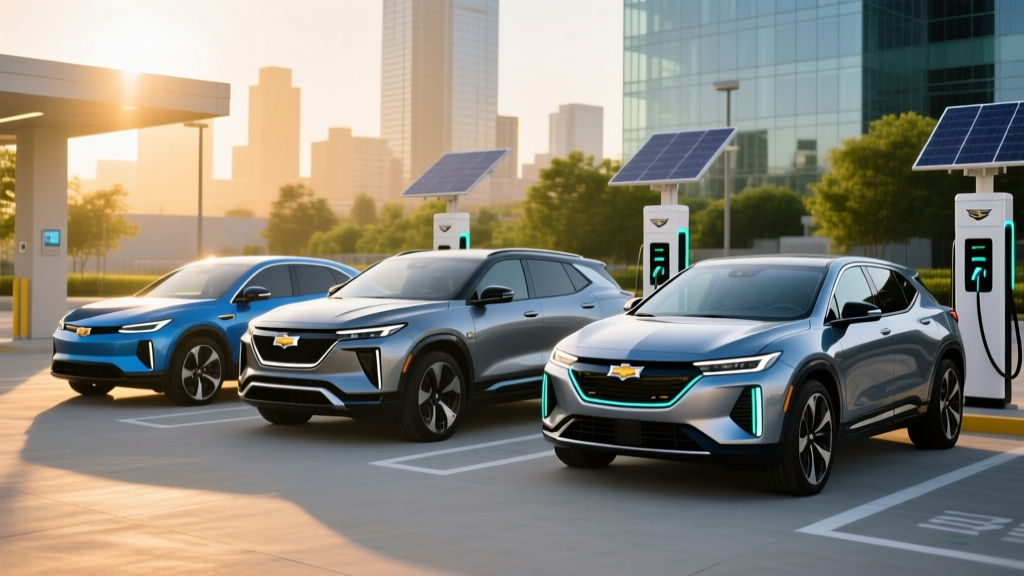
The short answer: General Motors reported a significant EV sales surge in August 2025, driven primarily by the Chevrolet Equinox EV, Cadillac Lyriq, and Chevrolet Blazer EV reaching broader dealer inventories and competitive pricing. For buyers in 2026, this surge signals three things: better dealer availability, aggressive lease incentives, and a maturing Ultium platform. But before you buy, you need to evaluate whether a GM EV fits your driving pattern, charging access, and budget — because the real-world ownership math depends far more on your personal situation than on sales headlines.
Why GM EV Sales Surged — and Why It Matters for You
GM's August 2025 sales numbers reflected a turning point: the company delivered over 32,000 EVs in a single quarter-ending month, with the Equinox EV alone accounting for a substantial share. This wasn't accidental. GM had spent 18 months ramping Ultium battery production at its Spring Hill and Orion facilities, resolving early software glitches that plagued the 2024 Blazer EV launch, and expanding its dealer network's EV certification.
For buyers, a sales surge like this matters practically:
- Inventory is on lots. Unlike 2023-2024, when GM EVs were allocation-limited, most metro-area Chevy and Cadillac dealers now carry Equinox EV, Blazer EV, and Lyriq stock you can test-drive today.
- Incentives are aggressive. To sustain momentum, GM has layered manufacturer rebates on top of federal tax credits, particularly on lease deals.
- Software is stable. The Ultium infotainment and battery management systems have received multiple OTA updates addressing early complaints about charging handshake failures and route-planning bugs.
But sales volume alone doesn't tell you whether a GM EV is the right purchase. Let's look at the actual numbers.
The 2026 GM EV Lineup: Specs That Matter
Here's the current GM EV lineup with the figures that affect your daily ownership experience. All ranges are EPA estimates; real-world expectations follow.
| Model | Battery (kWh usable) | EPA Range | Peak DC Charge | 10-80% Time | 0-60 mph | Starting MSRP |
|---|---|---|---|---|---|---|
| Chevy Equinox EV 2LT | 85 kWh (NMC) | 319 mi | 150 kW | ~30 min | 8.1 sec | $33,600 |
| Chevy Blazer EV 2LT AWD | 102 kWh (NMC) | 279 mi | 190 kW | ~26 min | 5.8 sec | $44,600 |
| Cadillac Lyriq Luxury | 102 kWh (NMC) | 314 mi | 190 kW | ~26 min | 5.8 sec | $58,590 |
| Chevy Silverado EV 4WT | 200 kWh (NMC) | 440 mi | 350 kW | ~20 min | 4.5 sec | $55,900 |
| GMC Sierra EV Denali | 200 kWh (NMC) | 440 mi | 350 kW | ~20 min | 4.2 sec | $99,495 |
Real-world range reality check: EPA estimates assume mixed driving at moderate temperatures. Expect highway-only range to drop 10-15% below EPA (e.g., Equinox EV ~270-285 mi at 70 mph). In sub-freezing weather, plan for 20-30% reduction unless you precondition the battery while plugged in. The Silverado EV's 440-mile EPA figure is impressive, but towing a 5,000-lb trailer can cut that roughly in half.
Cost Breakdown: What Ownership Actually Costs
The headline price is only the start. Here's a 5-year total cost of ownership comparison for the Equinox EV 2LT versus a comparably equipped gasoline Equinox LT AWD, assuming 15,000 miles/year and home Level 2 charging at $0.14/kWh (national average).
| Cost Category | Equinox EV 2LT | Equinox LT AWD (Gas) |
|---|---|---|
| Base MSRP | $33,600 | $31,900 |
| Federal Tax Credit (§30D) | Up to -$7,500* | $0 |
| Effective Purchase Price | ~$26,100 | $31,900 |
| Fuel/Energy (5 yr) | $3,675 | $9,375 |
| Maintenance (5 yr) | $1,200 | $3,800 |
| Insurance (5 yr avg) | $8,750 | $7,200 |
| Depreciation (est. 5 yr) | $11,200 | $13,500 |
| Total 5-Year Cost | ~$50,925 | ~$65,775 |
*Federal §30D credit eligibility depends on buyer income caps ($150K single / $300K joint), MSRP caps ($55K for SUVs), and battery critical-mineral sourcing requirements that continue to tighten through 2026. Verify current eligibility at IRS.gov or use the point-of-sale transfer option at a participating dealer.
The EV wins on total cost primarily through energy savings ($5,700 over five years) and lower maintenance (no oil changes, fewer brake replacements due to regenerative braking). Insurance runs 15-25% higher on EVs due to repair cost data, which partially offsets gains.
EV vs. Gas vs. Hybrid: Which Powertrain Fits Your Situation?
The GM sales surge doesn't mean an EV is the right call for every buyer. Here's a data-grounded comparison across powertrains, using the Equinox family as a baseline:
| Factor | Equinox EV | Equinox Gas AWD | Competitor PHEV (e.g., Toyota RAV4 Prime) |
|---|---|---|---|
| EPA Efficiency | 114 MPGe (29 kWh/100mi) | 28 MPG combined | 94 MPGe / 38 MPG gas-only |
| Electric-Only Range | 319 mi | N/A | 42 mi |
| Home Charging Needed? | Strongly recommended | No | Recommended for max savings |
| Road-Trip Refueling | 30-min DC fast stops | 5-min gas stops | 5-min gas stops (beyond 42 mi) |
| Cold-Weather Penalty | 20-30% range loss | ~10% MPG loss | Reduced EV range, gas compensates |
| Maintenance Complexity | Low | Moderate | Higher (two powertrains) |
Key takeaway: If you have Level 2 home charging and drive under 250 miles/day, the Equinox EV's operating cost advantage is substantial. If you regularly drive 400+ miles in a single day, live in an apartment without charging access, or face winter temperatures below 10°F routinely, a PHEV offers a pragmatic middle ground with no range compromise.
Charging at Home and on the Road: The Practical Picture
GM's Ultium vehicles use the NACS (Tesla-style) connector starting with 2025 models, giving access to Tesla Superchargers via native port — no adapter required for newer vehicles. This was a significant factor in the August sales surge, as buyers gained confidence in charging network access.
| Charging Level | Power | Miles Added/Hour | Typical Use Case |
|---|---|---|---|
| Level 1 (120V outlet) | 1.4 kW | ~3-4 mi/hr | Overnight top-up, emergency |
| Level 2 (240V home) | 7.7-11.5 kW | ~25-40 mi/hr | Daily home charging |
| DC Fast (public) | 150-350 kW | ~600-1,200 mi/hr | Road trips, quick stops |
Home charging installation reality: A Level 2 home charger (like the ChargePoint Home Flex or Emporia Level 2) costs $500-$750 for the unit. Professional installation by a licensed electrician typically runs $800-$2,500 depending on panel proximity and whether your electrical panel needs a 200-amp upgrade (an additional $1,500-$3,500). Budget $1,500-$4,000 total for a complete home charging setup.
On the road, GM's Super Cruise-equipped vehicles integrate charging stops into navigation, preconditioning the battery before arrival at a DC fast charger. This matters because a cold battery may charge at 50 kW instead of the rated 150-190 kW peak, adding 15-20 minutes to your stop. Always precondition before fast charging.
Common Misconceptions — Corrected With Data
| Myth | Fact |
|---|---|
| "EV batteries need replacing every few years" | GM warrants Ultium batteries for 8 years/100,000 miles at 70% capacity retention. Real-world degradation data from Bolt EVs shows ~8-10% loss over 100K miles. Expect 200,000+ miles of usable service. |
| "The tax credit is automatic for every EV" | §30D eligibility requires meeting income caps, MSRP limits, and battery-sourcing thresholds that change annually. Some trims qualify; others may not. Check fueleconomy.gov for current vehicle eligibility. |
| "GM EVs can't road-trip because of charging" | With NACS ports and Supercharger access, a Blazer EV can add ~150 miles of range in 15 minutes on a V3/V4 Supercharger. Cross-country trips require planning but are routine. |
| "EVs are worse in winter" | Range drops 20-30% in extreme cold, but preconditioning while plugged in and using a heat pump (standard on Lyriq and Silverado EV) mitigates this. Traction and AWD performance are often superior due to instant torque and low center of gravity. |
| "Dealers don't have any in stock" | Following the August sales surge and production ramp, most major-market Chevy dealers now carry multiple Equinox EV and Blazer EV units. Rural dealer availability still lags — call ahead. |
Your Decision Framework: Should You Buy a GM EV Now?
Choose a GM EV (Equinox EV or Blazer EV) if:
- You can install or already have Level 2 home charging (covers 80%+ of daily driving needs)
- Your typical daily driving is under 200 miles round-trip
- You qualify for the §30D federal tax credit (check income and sourcing rules)
- You value low operating costs and are willing to plan road-trip charging stops
- You want NACS Supercharger access without an adapter (2025+ models)
Choose a PHEV or stick with gas if:
- You live in an apartment or condo with no charging access and no prospect of installing it
- You regularly tow heavy loads over long distances (trucks: consider the Silverado EV's range penalty under load)
- You frequently drive in temperatures below 0°F and can't garage or precondition
- You need a vehicle today and your local dealer has no EV inventory
- Your annual mileage is very low (under 6,000 miles/year) — the fuel savings may not offset the upfront premium
First-Time EV Buyer Essentials
If the GM sales surge has you considering your first EV, here's what the sales brochures won't emphasize:
- Charge where you sleep. Home Level 2 charging is the single biggest determinant of EV satisfaction. If you can't charge at home, investigate workplace charging or reliable public Level 2 stations near your routine before buying.
- kW is charge speed, kWh is tank size. A 150 kW charge rate (power) fills the 85 kWh battery (energy). Think of kW as the hose diameter and kWh as the bucket. Peak kW is never sustained — the charge curve tapers above 80% SoC to protect the battery.
- Don't charge to 100% daily. For NMC batteries (used in all current GM Ultium vehicles), keeping daily charge between 20-80% extends long-term battery health. Reserve 100% charges for road trips.
- Insurance quotes vary wildly. Get quotes before purchasing. Some insurers charge 30%+ more for EVs; others offer EV-specific discounts. Shop at least three carriers.
- The point-of-sale credit option is real. Under current IRS rules, you can transfer the §30D credit to the dealer at purchase, reducing your out-of-pocket cost immediately rather than waiting for a tax refund. Confirm the dealer participates.
For detailed safety ratings on specific models, check the NHTSA 5-Star Safety Ratings and IIHS before finalizing your decision. The Equinox EV and Lyriq have performed well in crash testing, but ratings are trim-specific.
Frequently Asked Questions
Does the GM EV sales surge mean prices will drop?
Increased production volume and competition typically pressure pricing downward over time. GM has already reduced Equinox EV MSRPs by roughly $4,000 compared to initial 2024 pricing. Further modest reductions or incentive stacking are likely through 2026 as GM targets volume goals, but don't expect dramatic cuts — battery material costs remain a floor.
Can I use Tesla Superchargers with a 2026 GM EV?
Yes. Starting with 2025 model-year vehicles, GM equips EVs with the NACS charge port natively. You can plug directly into Tesla Superchargers without an adapter. For 2024 model-year GM EVs with CCS ports, GM provides a NACS adapter — confirm availability with your dealer.
What happens if the battery degrades past warranty?
GM's Ultium battery warranty covers 8 years/100,000 miles with a 70% capacity retention threshold. If your battery drops below 70% of original capacity within that period, GM will repair or replace it. Out-of-warranty replacement costs are estimated at $8,000-$15,000 depending on the module configuration, but real-world data suggests most Ultium packs will retain 85%+ capacity at 150,000 miles based on current NMC degradation curves.
Is the Equinox EV eligible for the full $7,500 tax credit?
Eligibility depends on three factors that change over time: (1) your adjusted gross income must be below $150K single / $225K head of household / $300K joint filers, (2) the vehicle MSRP must not exceed $80,000 for SUVs, and (3) the battery must meet escalating critical-mineral and component sourcing thresholds. As of 2026, sourcing requirements are stricter, which may reduce the credit amount for some builds. Always verify current eligibility at IRS.gov or consult a tax professional.
How does GM's Super Cruise compare to Tesla Autopilot?
Both are SAE Level 2 driver-assistance systems — meaning you must remain attentive and keep hands available at all times. Super Cruise operates on over 750,000 miles of mapped divided highways in the US and Canada, using a driver-facing camera to monitor attention. It's highly competent for highway cruising but does not handle city streets. Tesla's Autopilot/FSD (Supervised) covers more road types but has a more variable performance record. Neither system is "self-driving" — that term applies only to Level 4 services like Waymo in designated zones.