The BMW i3 in 2026: A Used-EV Market Reality Check
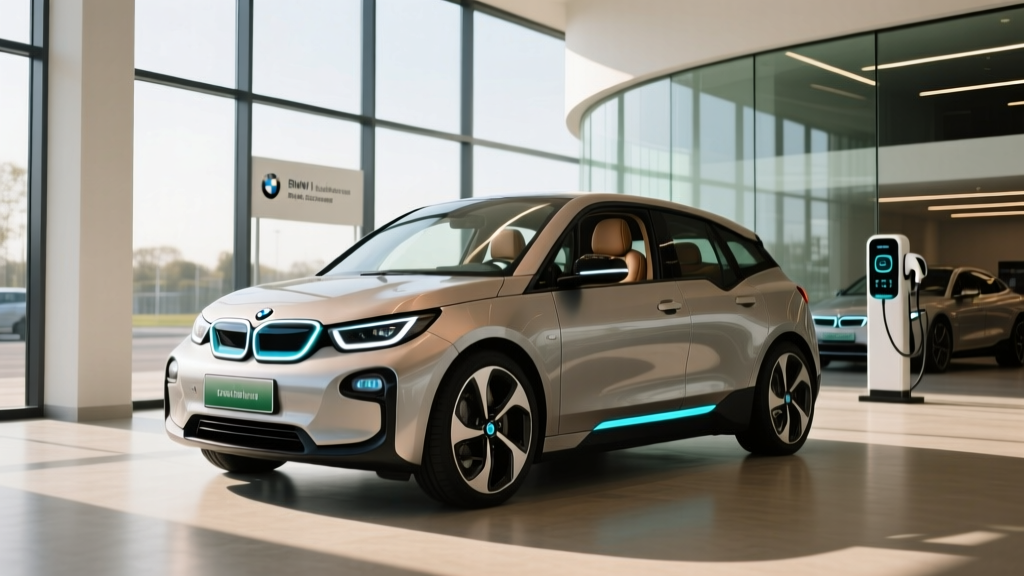
If you're typing "BMW i3 dealer" into a search engine, you're likely one of two people: a current owner hunting for service support, or a bargain-hunter eyeing the used-EV market for one of the most distinctive electric cars ever built. Here's the reality — BMW ended i3 production in July 2022 after nearly a decade on the market. There are no new 2026 BMW i3 models sitting on showroom floors. But the i3 remains a compelling proposition on the used market, with well-maintained examples (especially the later 120 Ah models) offering a uniquely efficient, city-friendly electric experience at prices that have become genuinely accessible.
This guide gives you everything you need before contacting a BMW dealer or browsing used listings: exact range figures, charging realities, battery longevity data, and what ownership actually costs in 2026.
BMW i3 Specs at a Glance: The Final 120 Ah Model
| Specification | Value |
|---|---|
| EPA Range (BEV) | 153 miles |
| Battery (Usable) | 37.9 kWh (42.2 kWh gross) |
| Battery Chemistry | NMC (Nickel Manganese Cobalt) — Samsung SDI cells |
| Max DC Fast Charge | 50 kW (CCS Combo 2) |
| 10–80% DC Fast Charge | ~36 minutes |
| Level 2 Onboard Charger | 7.4 kW (single-phase) |
| Level 2 Charge Time (0–100%) | ~5.5 hours |
| Motor Output | 170 hp / 184 lb-ft torque |
| 0–60 mph | 6.9 seconds |
| Drivetrain | Rear-wheel drive (single motor) |
| EPA Efficiency | 113 MPGe combined (30 kWh/100 mi) |
| Cargo Volume (rear seats up) | 15.1 cu ft |
| Cargo Volume (rear seats folded) | 35.3 cu ft |
| Battery Warranty (original) | 8 years / 100,000 miles (70% capacity retention) |
| Original Base MSRP (2022) | $45,445 (BEV) |
Real-World Range: What the EPA Sticker Doesn't Tell You
Real-World Expectation: Plan for 120–140 miles in mixed driving. Highway speeds (70+ mph) reduce range to roughly 110–125 miles. In cold weather (below 32°F), expect a 25–35% reduction — that means as little as 95–115 miles on a full charge in winter conditions.
The i3's relatively small battery means range is its most honest limitation. BMW's thermal management system uses a heat pump (standard on later models), which helps mitigate cold-weather loss compared to EVs relying solely on resistive heating. But physics is physics — a 37.9 kWh usable pack simply doesn't hold enough energy for long road trips or sustained high-speed driving without careful planning.
For context, the earlier 94 Ah models (2017–2018) carry an EPA rating of 114 miles, while the original 60 Ah models (2014–2016) manage just 81 miles. If range matters, target the 120 Ah (2019–2022) variants exclusively.
The i3's EPA efficiency rating of 113 MPGe combined is genuinely excellent — one of the highest of any EV ever sold. That 30 kWh/100 mi figure means charging costs are remarkably low: at a national average of $0.16/kWh, you're paying roughly $4.80 for a full charge, or about $0.048 per mile.
Charging Speed: Functional but Modest by 2026 Standards
| Charging Level | Power | Speed | Notes |
|---|---|---|---|
| Level 1 (120V household) | ~1.4 kW | ~5 miles/hour | Full charge in ~27 hours; emergency use only |
| Level 2 (240V home/public) | 7.4 kW | ~25 miles/hour | Full charge in ~5.5 hours; ideal daily solution |
| DC Fast Charge (CCS) | 50 kW peak | 10–80% in ~36 min | Peak rate sustains to ~60%, then tapers significantly |
The 50 kW DC fast-charging ceiling is the i3's biggest practical drawback for anyone considering it beyond city commuting. In 2026, where mainstream EVs commonly accept 150–250 kW (and the Hyundai Ioniq 5 can peak at 350 kW), the i3's charge curve feels dated. A 36-minute 10–80% session is manageable for a grocery run but painful for road trips — and with only 153 miles of range, you'll be stopping often on longer drives.
The charge curve itself is relatively flat to about 60% state of charge, then tapers sharply. BMW caps DC charging at roughly 85% to protect battery longevity, which is sensible engineering but further reduces practical fast-charging utility.
For home Level 2 charging, the 7.4 kW onboard charger is perfectly adequate. A standard 32-amp Level 2 wallbox will replenish the battery overnight with ease. If you're installing a home charger, budget $500–$1,200 for a quality Level 2 unit (ChargePoint Home Flex, Emporia Level 2, or similar) plus $500–$2,000 for electrician installation depending on panel proximity and local permit requirements.
Finding a BMW i3 Dealer: Service, Parts, and Support
Any authorized BMW dealer can service the i3 — BMW has not orphaned the model. However, not all dealerships have technicians trained on high-voltage systems, and some smaller dealers may lack the specific diagnostic equipment for the i3's unique carbon-fiber-reinforced plastic (CFRP) body structure. Before scheduling service, call ahead and confirm:
- The dealer has an i3-certified high-voltage technician on staff
- They can perform battery State of Health (SoH) diagnostics
- They stock or can order i3-specific parts (the CFRP body panels, for instance, are not interchangeable with any other BMW)
BMW's electrified vehicle support page can help locate dealers with EV service capabilities. Independent BMW specialists and EV-focused shops are often excellent alternatives — frequently more knowledgeable and less expensive than franchise dealers for routine maintenance.
For used buyers: BMW Certified Pre-Owned (CPO) i3s occasionally appear at dealers and carry an extended warranty. These command a premium but offer peace of mind on battery health. Always request a battery SoH report before purchasing any used i3 — a healthy pack should show 85–95% capacity retention for a 2019–2022 model with typical mileage.
Federal Tax Credit and Used-EV Incentives
The new-vehicle §30D federal tax credit no longer applies — the i3 is out of production. However, the used-EV credit (§25E) is very much alive in 2026 and makes the i3 an attractive bargain:
- Credit amount: 30% of the sale price, up to a maximum of $4,000
- Vehicle price cap: Sale price must be $25,000 or less
- Vehicle age requirement: Must be at least 2 model years old (all i3s qualify)
- Buyer income caps: $75,000 single / $112,500 head of household / $150,000 joint (modified AGI)
- Transfer option: The credit can be transferred to the dealer at point of sale as a price reduction (as of 2024 onward)
Given that a 2019–2022 BMW i3 120 Ah typically sells for $16,000–$23,000 on the used market in 2026, most buyers will fall under the $25,000 cap and qualify for the full $4,000 credit (30% of a $20,000 purchase = $6,000, but capped at $4,000). That can bring a clean, late-model i3 down to the $12,000–$19,000 range — exceptional value for a premium electric city car. Always verify current IRS §25E rules before purchase, as incentive programs are subject to legislative change.
Who the BMW i3 Actually Suits in 2026
The i3 is not a compromise EV — it's a purpose-built city car that excels in a specific role. Here's the decision framework:
- Your daily commute is under 60 miles round-trip
- You have reliable home Level 2 charging
- You primarily drive in urban/suburban environments
- You value unique design and premium interior materials
- You want one of the lowest cost-per-mile EVs available
- You appreciate the tight turning radius and nimble handling
- You regularly drive 100+ miles in a day
- You need to take frequent road trips (50 kW DC charging will frustrate you)
- You need seating for more than 4 or significant cargo space
- You live in an extreme cold climate without garage parking
- You want modern ADAS features like adaptive cruise or lane-centering
Pros and Cons: The Honest i3 Assessment
Pros
- Outstanding efficiency — 113 MPGe, ~$0.05/mile
- Lightweight CFRP construction; nimble and fun in the city
- Premium interior with sustainable materials (eucalyptus wood, recycled textiles)
- Tight 32.8-ft turning circle — ideal for urban parking
- Strong used-EV tax credit eligibility (up to $4,000)
- Heat pump standard on later models — good cold-weather efficiency
- BMW dealer network for service and support
Cons
- 153-mile EPA range is limiting even for a city car
- 50 kW DC fast charging is painfully slow by 2026 standards
- Rear-hinged "coach doors" require front doors open for rear access
- Minimal driver-assistance tech — no adaptive cruise or lane-centering
- Small cargo area (15.1 cu ft) with rear seats up
- CFRP body repairs are expensive and specialist-only
- Discontinued — no new models, potential long-term parts scarcity
- Narrow tires (155/70 R19) limit wet-weather grip
BMW i3 vs. Key Used-EV Competitors
In the $15,000–$25,000 used-EV bracket, the i3 faces competition from several compelling alternatives:
| Vehicle (Model Years) | EPA Range | DC Fast Charge | Used Price Range (2026) | Best For |
|---|---|---|---|---|
| BMW i3 120 Ah (2019–2022) | 153 mi | 50 kW | $16,000–$23,000 | Premium city commuting |
| Chevrolet Bolt EV (2020–2023) | 259 mi | 55 kW | $14,000–$22,000 | Best range per dollar |
| Nissan Leaf Plus (2019–2023) | 212 mi | 50 kW (CHAdeMO) | $13,000–$20,000 | Practical hatchback utility |
| Hyundai Kona Electric (2019–2022) | 258 mi | 75 kW | $16,000–$24,000 | Efficiency + faster charging |
The Bolt EV dominates on range and value. The Kona Electric offers superior charging speed. But neither matches the i3's build quality, material sophistication, or driving character. If range and road-trip capability are priorities, the Bolt or Kona wins. If you want a premium-feeling urban EV with genuine personality and don't mind the range limitation, the i3 has no equal.
Frequently Asked Questions
Is the BMW i3 still being made?
No. BMW ended i3 production in July 2022 after approximately 250,000 units built since 2013. There are no plans for a direct successor under the i3 nameplate. All i3s on the market are used or certified pre-owned.
How long will a BMW i3 battery last?
BMW's original battery warranty covers 8 years/100,000 miles with a 70% capacity retention threshold. Real-world data from high-mileage i3 owners shows NMC packs holding up well — many 2014–2016 (60 Ah) models still show 80–85% State of Health after 80,000+ miles. A 2019–2022 (120 Ah) model with moderate mileage should deliver reliable service well past 150,000 miles with proper care (avoiding repeated 100% charges and DC fast-charging daily).
What does it cost to replace an i3 battery?
Full battery replacement runs approximately $12,000–$16,000 at a BMW dealer, though individual module replacement (the i3 pack uses 8 modules) can cost $1,500–$3,000 per module at specialist shops. For most used buyers, a pre-purchase battery SoH check makes full replacement unlikely during ownership.
Can I charge a BMW i3 at Tesla Superchargers?
Not directly. The i3 uses a CCS Combo 2 connector (or CHAdeMO on very early models in some markets). Tesla's NACS connector is incompatible without an adapter, and BMW has not released a CCS-to-NACS adapter for the i3. You'll rely on Electrify America, EVgo, ChargePoint, and other CCS-compatible networks.
Does the BMW i3 qualify for any tax credit in 2026?
Yes — the federal used-EV credit (§25E) offers up to $4,000 (30% of sale price) on i3s sold for $25,000 or less, subject to buyer income caps ($75K single / $150K joint). The credit can be transferred to the dealer at point of sale. Verify current eligibility on IRS.gov before purchasing.
Is the i3 REx (range extender) worth considering?
The REx models include a small 650cc two-cylinder gasoline generator that maintains battery charge, extending total range to roughly 200+ miles. If range anxiety is a concern and you lack reliable charging, the REx provides a safety net. However, it adds weight, complexity, and maintenance (oil changes, fuel system). For most buyers with home charging, the pure BEV is simpler, lighter, and more efficient.