The BMW EV Lease Equation: Sticker Price vs. Real Ownership Cost
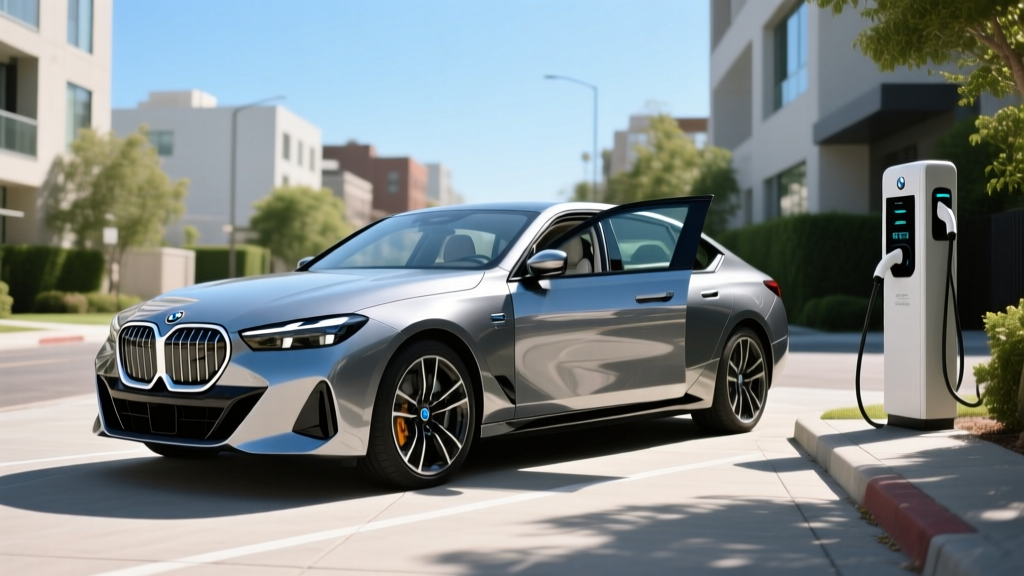
Leasing a BMW electric vehicle in 2026 looks compelling on the surface. The i4 eDrive40 starts around $52,200, the i5 begins near $66,800, and the flagship iX xDrive50 lists at $87,250. But the monthly payment is only one variable in a five-year ownership equation that includes federal incentives, electricity costs, insurance premiums, and depreciation. This guide breaks down the real numbers behind a BMW EV lease so you can decide whether electrifying your next Ultimate Driving Machine actually saves money.
BMW's current EV lineup spans three core models with distinct value propositions:
| Model | Base MSRP | Battery (usable) | EPA Range | Peak DC Charge | 0-60 mph | HP |
|---|---|---|---|---|---|---|
| i4 eDrive40 | $52,200 | 81.5 kWh (NMC) | 307 mi | 205 kW | 5.5 sec | 335 |
| i5 eDrive40 | $66,800 | 81.2 kWh (NMC) | 295 mi | 205 kW | 5.7 sec | 335 |
| iX xDrive50 | $87,250 | 105.2 kWh (NMC) | 324 mi | 200 kW | 4.4 sec | 516 |
Federal Tax Credit: How §30D Applies to BMW EV Leases
The federal EV tax credit under IRS §30D offers up to $7,500 for qualifying new electric vehicles. However, the leasing pathway has a unique advantage: under the commercial clean vehicle credit (§45W), the leasing company (lessor) technically claims the credit and can pass savings to you as a "lease cash" reduction or lower monthly payment. BMW Financial Services has historically passed through the full $7,500 on qualifying models, but this is not guaranteed and varies by model and quarter.
For buyers purchasing instead of leasing, the §30D credit has strict eligibility requirements that apply to the buyer and the vehicle:
- Income Caps: Modified AGI must not exceed $300,000 (joint filers), $225,000 (head of household), or $150,000 (single filers)
- MSRP Caps: Vans, SUVs, and pickups capped at $80,000; sedans and other vehicles capped at $55,000
- Battery Sourcing: Critical minerals and battery components must meet escalating domestic/free-trade-partner thresholds (phased in annually through 2026)
- Point-of-Sale Transfer: Buyers can transfer the credit to the dealer at purchase for an immediate price reduction (effective Jan 2024)
- Assembly: Vehicle must undergo final assembly in North America (for purchases; lease loophole bypasses this)
Source: IRS.gov — Clean Vehicle Credits. Rules are subject to change; consult a tax professional for your specific situation.
Why leasing matters for BMW specifically: The i4 eDrive40 at $52,200 falls under the $55,000 sedan cap, so buyers could qualify directly. But the i5 at $66,800 exceeds the sedan cap, and the iX at $87,250 exceeds the SUV cap of $80,000. Through a lease, however, the MSRP cap and North American assembly requirement may not apply (since the lessor claims §45W instead), potentially unlocking the full $7,500 on all three models. BMW Financial Services has historically applied lease cash broadly, but always confirm current incentives with your dealer before signing.
5-Year Total Cost of Ownership: BMW EV vs. Gas Equivalent
To compare apples to apples, let's model a 5-year ownership period for the BMW i4 eDrive40 against a similarly equipped BMW 430i Gran Coupe (gas). Assumptions: 15,000 miles/year, home Level 2 charging at $0.14/kWh average, gas at $3.60/gallon, and the i4 receiving $7,500 in lease cash applied as a capitalized cost reduction.
| Cost Category | BMW i4 eDrive40 | BMW 430i (Gas) |
|---|---|---|
| Effective Purchase/Lease Price (after incentives) | $44,700 | $48,900 |
| Fuel/Energy (5 yrs, 75,000 mi) | $3,940 | $8,470 |
| Insurance (5 yrs) | $11,250 | $9,500 |
| Maintenance (5 yrs) | $1,800 | $4,200 |
| Estimated Resale/Residual Value | $22,000 | $26,000 |
| Net 5-Year Cost | $39,690 | $45,070 |
The i4 shows a roughly $5,400 advantage over five years, driven primarily by fuel and maintenance savings. However, this gap narrows if you lack home charging access and must rely on public DC fast charging at $0.35–$0.50/kWh, which would raise the i4's energy cost to $9,850–$13,890 over five years.
Charging vs. Gas: The Per-Mile Cost Reality
The BMW i4 eDrive40 achieves an EPA-rated 105 MPGe combined, translating to roughly 30 kWh per 100 miles. At the national average residential electricity rate of $0.14/kWh (EIA, 2025 data), that works out to $0.042 per mile.
The gas-powered BMW 430i Gran Coupe earns 29 MPG combined per fueleconomy.gov. At $3.60/gallon, that's $0.124 per mile.
| Scenario | Cost/Mile | Annual Cost (15k mi) |
|---|---|---|
| i4 — Home charging ($0.14/kWh) | $0.042 | $630 |
| i4 — Public DC fast charging ($0.42/kWh avg) | $0.126 | $1,890 |
| 430i — Gas ($3.60/gal, 29 MPG) | $0.124 | $1,860 |
The takeaway: home charging delivers a 3x cost advantage over gasoline. But exclusive reliance on public fast charging erases that advantage entirely, making the i4 marginally more expensive to "fuel" than the gas 430i. Home Level 2 charging is essentially a prerequisite for EV cost savings.
Maintenance Savings: Where EVs Genuinely Win
Electric powertrains eliminate the most routine maintenance items associated with internal combustion engines. Over a 5-year/75,000-mile ownership period, the differences are measurable:
| Service Item | BMW i4 (EV) | BMW 430i (Gas) |
|---|---|---|
| Oil Changes (synthetic, ~$180 each) | $0 (none required) | $1,080 (6 changes) |
| Brake Pads/Rotors | $0–$400 (regen braking extends life 2-3x) | $1,200–$1,800 |
| Transmission Fluid/Service | $0 (single-speed reduction gear, sealed) | $350–$500 |
| Coolant, Filters, Spark Plugs | $0–$200 (cabin filter only) | $600–$900 |
| Tire Rotation/Replacement | $1,200–$1,600 (EV weight increases wear ~10-15%) | $1,000–$1,400 |
| Total Estimated Maintenance | $1,200–$2,200 | $4,230–$5,680 |
Regenerative braking is the unsung hero here. BMW's adaptive regen system recovers kinetic energy during deceleration, meaning the friction brakes see far less use. Many EV owners report original brake pads lasting 80,000–100,000+ miles. The one maintenance area where EVs cost slightly more is tires — the i4 weighs approximately 4,700 lbs (roughly 500 lbs more than the 430i), and instant electric torque accelerates tread wear.
Insurance: The Cost Category Where EVs Lose
EV insurance premiums run 15–25% higher than equivalent gas vehicles, and BMW's premium positioning compounds this. Based on national average quotes for a 35-year-old driver with a clean record:
- BMW i4 eDrive40: ~$2,250/year ($188/month)
- BMW 430i Gran Coupe: ~$1,900/year ($158/month)
The premium gap exists for three reasons:
- Higher repair costs: EV battery packs and power electronics are expensive to replace after collision damage. Even minor rear-end impacts can trigger battery safety inspections costing $2,000–$5,000.
- Specialized labor: High-voltage system repairs require certified EV technicians, and fewer shops have this capability.
- Total-loss thresholds: Insurers may declare an EV a total loss at lower damage thresholds because battery replacement can exceed $15,000–$25,000 for the i4's 81.5 kWh pack.
Some insurers (Geico, Progressive, State Farm) offer EV-specific discounts of 5–10%, and BMW's own insurance program through Allianz sometimes bundles gap coverage. Always compare quotes from at least three carriers before committing to a lease.
Depreciation and Resale Value Trends
EV depreciation has been volatile. Early EVs suffered steep drops due to rapid battery technology advancement and range improvements in newer models. However, the market has stabilized as EV adoption has matured. According to industry data from iSeeCars and Kelley Blue Book, average 5-year EV depreciation sits around 45–55%, compared to 38–45% for comparable gas luxury vehicles.
For BMW specifically, 5-year residual values are estimated at:
- i4 eDrive40: ~42–46% of MSRP (resale ~$22,000–$24,000)
- i5 eDrive40: ~40–44% of MSRP (resale ~$27,000–$29,000)
- iX xDrive50: ~38–42% of MSRP (resale ~$33,000–$37,000)
The i4 holds value relatively well because its $52,200 starting price positions it competitively in the used luxury EV market. The iX faces steeper depreciation partly because its $87,250 sticker pushes it into territory where buyers expect the latest technology — and a 5-year-old iX will face competition from next-generation solid-state battery vehicles expected in the late 2020s.
State, Local, and Utility Incentives
Beyond the federal credit, many states and utilities offer additional incentives that can further reduce the effective cost of a BMW EV lease:
- California: CVRP rebate up to $2,000 for income-qualified buyers; additional $1,000 for low-income households
- Colorado: State tax credit up to $5,000 for EVs with MSRP under $80,000
- New York: Drive Clean Rebate up to $2,000 (point-of-sale)
- Utility Rebates: Many utilities offer $500–$1,500 for home Level 2 charger installation (e.g., PG&E, ConEdison, Xcel Energy)
- HOV Lane Access: Several states grant solo HOV lane access to EVs — a non-monetary benefit with real commute-time value
Incentive amounts, income qualifications, and program availability change frequently. Check AFDC's state incentive database and your local utility for current programs.
Frequently Asked Questions
How much does it really cost to own a BMW EV over 5 years?
For the i4 eDrive40 with home charging and the $7,500 lease credit applied, expect approximately $39,000–$42,000 in net 5-year cost (purchase price + energy + insurance + maintenance, minus resale). This is roughly $4,000–$6,000 less than an equivalently equipped gas BMW 430i, assuming you can charge at home at residential electricity rates.
Do I qualify for the federal tax credit on a BMW EV lease?
Under a lease, the lessor (BMW Financial Services) claims the commercial clean vehicle credit under §45W, which does not have the same MSRP caps, income limits, or North American assembly requirements as the §30D purchase credit. BMW has historically passed this through as lease cash on most models. However, this is a manufacturer decision, not a legal requirement — always confirm the current lease incentive with your dealer before signing.
How much do I save on fuel and maintenance with a BMW EV?
With home charging at $0.14/kWh, the i4 costs about $630/year in electricity versus $1,860/year in gasoline for the 430i — a $1,230 annual savings. Maintenance savings add another $500–$700/year from eliminated oil changes, extended brake life, and fewer fluid services. Combined annual savings: roughly $1,700–$1,900.
Are BMW EVs more expensive to insure?
Yes, typically 15–25% more than their gas counterparts. Expect to pay approximately $2,200–$2,500/year for the i4 versus $1,800–$2,100/year for the 430i. Higher repair costs, specialized EV technician requirements, and expensive battery replacement drive the premium. Shop multiple insurers and ask about EV-specific discounts.
How well do BMW EVs hold their value?
5-year residual values range from approximately 38% (iX) to 46% (i4) of original MSRP. This trails comparable gas BMWs by 5–10 percentage points, though the gap has narrowed as the used EV market matures. Leasing transfers depreciation risk to BMW Financial Services, making it a practical hedge against uncertain long-term EV resale values.
What happens if I exceed my lease mileage on a BMW EV?
BMW Financial Services typically charges $0.20–$0.30 per excess mile at lease-end. If you drive more than the contracted 10,000 or 12,000 miles/year, factor this into your cost analysis. For high-mileage drivers (15,000+ miles/year), purchasing may be more economical despite losing the lease-specific credit advantages.