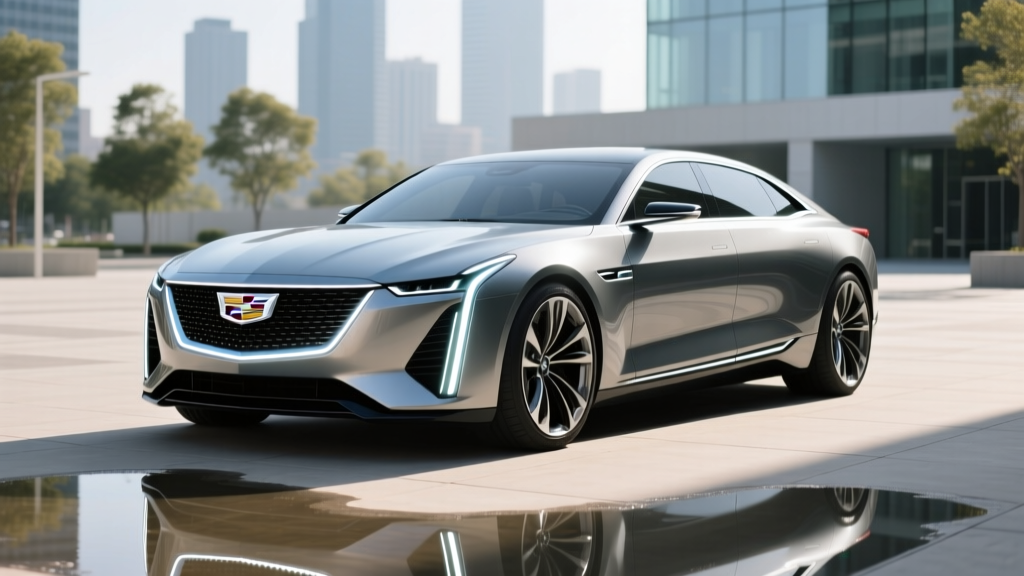
If you've been searching how many Cadillac Celestiq have been sold, the short answer is: very few. Cadillac's hand-built, ultra-luxury electric flagship is produced in extremely limited numbers at GM's Factory ZERO in Detroit, with each unit commissioned individually. Industry estimates and registration data suggest cumulative U.S. deliveries remain well under 500 units as of early 2026 — a number more consistent with a coachbuilt exotic than a production automobile. But rarity alone doesn't justify a $340,000+ starting price. This review digs into what the Celestiq actually delivers in range, charging, technology, and daily usability.
Range, Battery, and Real-World Efficiency
The Celestiq rides on GM's dedicated Ultium BEV3 platform, powered by a massive 111 kWh (usable) lithium-ion battery using NMC (nickel-manganese-cobalt) chemistry — chosen for its higher energy density, which matters in a vehicle this heavy. The EPA rates the Celestiq at 300 miles of combined range.
EPA estimate: 300 miles (combined)
Highway (70-80 mph): ~245-265 miles — the Celestiq's 5,800+ lb curb weight and large frontal area cut into efficiency at sustained speed.
Cold weather (below 32°F): ~220-250 miles — expect 15-25% loss without preconditioning, partly mitigated by the standard heat pump.
City/commute: 300-320 miles — regenerative braking recovers energy effectively in stop-and-go traffic.
Efficiency comes in at roughly 70 MPGe combined, or about 48 kWh per 100 miles. That's thirstier than a Tesla Model S or Lucid Air, but expected given the Celestiq's mass and luxury insulation. If your daily driving stays under 150 miles round-trip, range won't be a concern.
Charging Speed: DC Fast and Home Level 2
The Celestiq supports up to 200 kW DC fast charging via its CCS1 connector (NACS adapter available). That's respectable, though not class-leading — the Lucid Air peaks at 250 kW and the Porsche Taycan at 320 kW on 800V architecture.
| Charging Level | Power | Speed / Time | Connector |
|---|---|---|---|
| Level 1 (120V) | ~1.4 kW | ~3-4 miles per hour | J1772 |
| Level 2 (240V, 48A) | 11.5 kW | ~23 miles per hour; 0-100% in ~10.5 hrs | J1772 / NACS adapter |
| DC Fast Charge | Up to 200 kW | 10-80% in ~30 minutes | CCS1 (NACS adapter avail.) |
Charging curve reality: The Celestiq sustains near-peak 200 kW from roughly 10-40% state of charge, then tapers progressively. Expect 150-170 kW through 60%, dropping to ~80 kW by 80%. The 10-80% time of approximately 30 minutes is competitive but not exceptional. On road trips, plan for 20-25 minute stops at Electrify America or EVgo 350 kW stations — the car won't bottleneck the charger, but it won't max it out either.
At home on a properly installed 48-amp Level 2 charger (requiring a 60-amp circuit), you'll add roughly 23 miles per hour of charging. A full overnight session from 20% to 100% takes about 8-9 hours — easily managed with scheduled charging.
Performance and Driving Dynamics
| Specification | Figure |
|---|---|
| Drivetrain | Dual-motor AWD |
| Horsepower | 655 hp |
| Torque | 646 lb-ft |
| 0-60 mph | 3.8 seconds |
| Top Speed | ~130 mph (electronically limited) |
| Curb Weight | ~5,830 lbs |
| Suspension | Adaptive air w/ Magnetic Ride Control 4.0 |
The dual-motor all-wheel-drive powertrain delivers 655 horsepower and a 3.8-second 0-60 mph time. That's brisk, but deliberately restrained compared to the Tesla Model S Plaid (1.99 sec) or Lucid Air Sapphire (1.89 sec). Cadillac tuned the Celestiq for effortless surge rather than track heroics — the powertrain calibration prioritizes smoothness and silence over neck-snapping launches.
The four-wheel steering system (standard) shrinks the turning circle and adds low-speed agility surprising for a 215-inch sedan. Magnetic Ride Control 4.0 with adaptive air suspension reads the road 500 times per second, isolating occupants from pavement imperfections with genuine authority. This is a car that makes 80 mph feel like 50.
Interior, Cargo, and Standout Technology
Every Celestiq is commissioned through Cadillac's bespoke program. Buyers work directly with the design team to select materials, colors, and finishes — no two cars are identical. The cabin features:
- 55-inch pillar-to-pillar LED display spanning the entire dashboard
- Executive rear seating with individual reclining chairs, heated/cooled cupholders, and dedicated 12.6-inch screens
- Smart Glass panoramic roof with selectable opacity zones
- 3D-printed metal trim elements and hand-stitched leather throughout
- 21-speaker AKG Studio Reference audio system
- Ultra Cruise hands-free driving on 200,000+ miles of compatible roads (SAE Level 2 — driver must remain attentive)
Cargo and passenger space:
- Front legroom: 42.1 inches
- Rear legroom: 41.3 inches
- Trunk: ~18.5 cubic feet (limited by battery packaging and the fixed rear glass design)
- No front trunk (frunk) — the Ultium platform's electronics occupy that space
The trunk is the Celestiq's most practical compromise. At 18.5 cu ft, it handles luggage for two on a weekend trip but struggles with bulkier items. This is a chauffeur-class sedan, not a cargo hauler.
Pricing, Tax Credits, and Ownership Costs
| Item | Amount |
|---|---|
| Base MSRP | ~$340,000 |
| As-tested (typical commission) | $380,000 - $450,000+ |
| Federal §30D EV Tax Credit | $0 — MSRP exceeds $55,000 sedan cap |
| Destination / delivery | Included in bespoke commissioning |
| Estimated annual insurance | $8,000 - $12,000 |
Does the Celestiq qualify for the federal EV tax credit? No. Under IRS §30D rules, new clean vehicle credits are capped at $55,000 MSRP for sedans (and $80,000 for SUVs/pickups/vans). The Celestiq, starting at $340,000, is ineligible regardless of buyer income or battery sourcing. Buyers should consult a tax professional about potential state incentives or business-use depreciation strategies (Section 179/bonus depreciation), but the federal credit is off the table.
Who this EV suits best: The Celestiq exists for ultra-high-net-worth individuals who want a hand-built American luxury EV that makes a statement without defaulting to a Rolls-Royce or Bentley. It's a grand touring car for collectors who value exclusivity, bespoke craftsmanship, and GM's best EV technology. It is not a practical daily driver for most buyers — it's a commissioned artwork that happens to be road-legal.
Sales Numbers: Why the Celestiq Is So Rare
Returning to the core question — how many Cadillac Celestiq have been sold — the answer reflects Cadillac's intentional strategy. GM has not published official cumulative sales figures, but industry analysts tracking registration and delivery data estimate fewer than 500 units delivered in the U.S. through early 2026. Cadillac limits production to maintain exclusivity, with each vehicle hand-assembled at the Factory ZERO Detroit-Hamtramck plant.
For context, Rolls-Royce delivered approximately 6,000 vehicles globally in 2024. The Celestiq operates at an even lower volume — closer to a Bugatti or Koenigsegg production model. This scarcity is the point: Cadillac is repositioning itself in the ultra-luxury segment, and limited availability preserves residual values and brand mystique.
Pros, Cons, and Competitor Comparison
- Truly bespoke — no two Celestiqs are identical
- 300-mile EPA range is solid for the luxury sedan class
- Ride quality and cabin isolation are world-class
- Ultra Cruise hands-free driving on 200K+ miles of roads
- Four-wheel steering makes it surprisingly maneuverable
- Exclusivity and American provenance
- $340K+ starting price with no federal tax credit
- Trunk space (18.5 cu ft) is modest for the class
- 200 kW DC charging isn't class-leading
- 655 hp feels restrained vs. Plaid/Sapphire competitors
- Limited service network for a bespoke vehicle
- No frunk
Is it worth buying vs. key competitors? If you're cross-shopping the Celestiq, you're also considering the Rolls-Royce Spectre (~$420K, 260-mile EPA range, 102 kWh battery), the Lucid Air Grand Touring (~$140K, 516-mile range), and the Mercedes-Maybach EQS SUV (~$180K). The Spectre offers comparable exclusivity and superior brand prestige but worse range and charging. The Lucid Air is dramatically more efficient and affordable but lacks bespoke craftsmanship. The Maybach splits the difference but rides on a modified ICE platform. The Celestiq occupies a unique niche: American, electric, hand-built, and technologically current.
Battery Warranty and Long-Term Ownership
GM backs the Celestiq's Ultium battery and electric powertrain with an 8-year / 100,000-mile warranty, covering defects and capacity loss below 60% of original capacity. Given the NMC chemistry and the vehicle's weight (which keeps average cycle depths moderate), degradation should be manageable — expect 8-12% capacity loss over the first 100,000 miles under normal use.
However, replacement cost is the unspoken concern. A 111 kWh NMC pack replacement out of warranty would likely exceed $25,000-$35,000 based on current Ultium pricing. For a $340K+ vehicle, this is proportionally less alarming than it would be on a mass-market EV, but it's a factor in long-term cost of ownership. Extended warranty and prepaid maintenance packages are available through Cadillac's bespoke ownership program.
Frequently Asked Questions
What is the real-world range of the Cadillac Celestiq?
The EPA rates it at 300 miles combined. In real-world highway driving at 75-80 mph, expect 245-265 miles. In cold weather (below freezing), plan for 220-250 miles unless you precondition the battery while plugged in.
How fast does the Celestiq charge?
On a DC fast charger, it peaks at 200 kW, reaching 10-80% in approximately 30 minutes with taper above 60% SoC. At home on a 48-amp Level 2 charger, it adds about 23 miles per hour, with a full charge taking roughly 10.5 hours.
Does the Cadillac Celestiq qualify for the $7,500 federal EV tax credit?
No. The IRS §30D credit caps eligible sedans at $55,000 MSRP. The Celestiq starts at $340,000, making it ineligible regardless of buyer income or battery component sourcing.
How many Celestiqs has Cadillac actually sold?
GM does not publish official Celestiq-specific sales data. Industry registration estimates suggest fewer than 500 units have been delivered in the U.S. through early 2026. Production is intentionally limited to maintain exclusivity.
Is the Celestiq self-driving?
No. Ultra Cruise is an SAE Level 2 driver-assistance system — it handles steering, acceleration, and braking on compatible roads but requires the driver to remain attentive and ready to take over. It is not autonomous driving.
What's the biggest drawback of owning a Celestiq?
Beyond price, it's service logistics. As a bespoke, low-volume vehicle, any body or powertrain repair may require specialized technicians and longer parts lead times than a mass-produced EV. The limited trunk (18.5 cu ft) and lack of a frunk are practical compromises as well.