The Short Answer on the BMW Electric M3
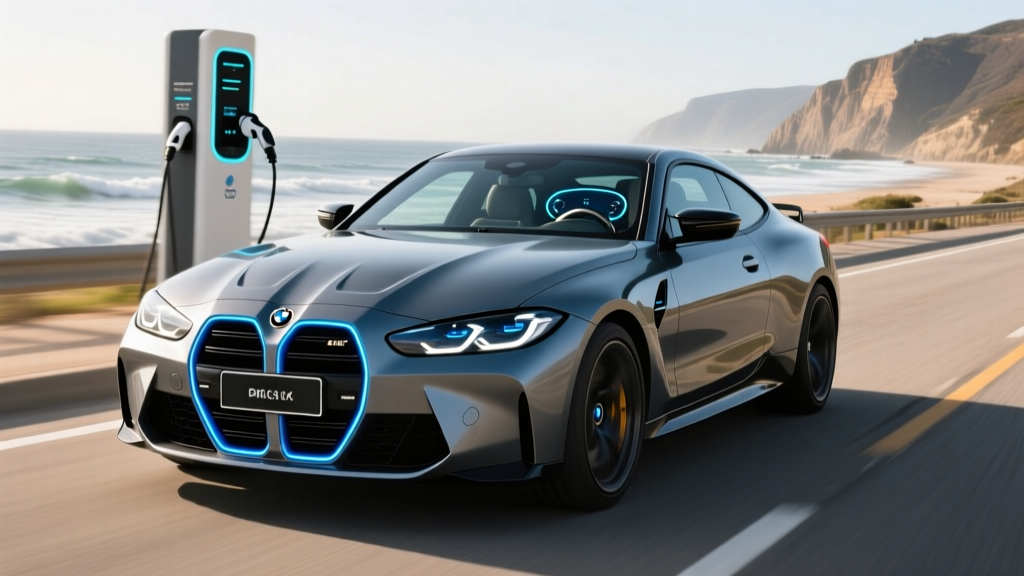
The BMW electric M3 is an announced, not-yet-on-sale high-performance EV sedan based on BMW's Neue Klasse platform. Expected to debut as a 2028 model (revealed late 2026 or 2027), preliminary reports indicate a quad-motor AWD configuration producing over 1,300 horsepower, an estimated EPA range of 300–350 miles, and 800-volt architecture enabling DC fast charging at up to 350 kW. Pricing will likely start above $90,000, placing it above the federal §30D tax credit MSRP cap of $55,000 for sedans. If you need a BMW electric performance car today, the i4 M50 (from ~$72,000) or i5 M60 (from ~$85,000) are the current production alternatives.
What Is the BMW Electric M3? Platform and Powertrain
The electric M3 will be the first M-badged performance sedan built on BMW's Neue Klasse architecture — a dedicated EV skateboard platform featuring cylindrical battery cells (similar in form factor to Tesla's 4680 cells), 800V electrical architecture, and next-generation BMW iDrive. This is a clean-sheet design, not a conversion of the current G80 M3 chassis.
BMW M CEO Frank van Meel confirmed the electric M3 will use a four-motor layout, with one motor per wheel, enabling precise torque vectoring that no mechanical differential can match. The target output exceeds 1,300 hp, which would make it one of the most powerful production sedans ever built. For context, the current gas M3 Competition produces 503 hp, and the Tesla Model S Plaid delivers 1,020 hp.
| Specification | Estimated Figure | Notes |
|---|---|---|
| Powertrain | Quad-motor AWD | One motor per wheel, torque vectoring |
| Horsepower | 1,341 hp (target) | Per BMW M board presentations |
| 0–60 mph | ~2.5 seconds (est.) | Comparable to Tesla Model S Plaid |
| Battery Capacity | ~100 kWh usable (est.) | Cylindrical cells, Neue Klasse platform |
| Battery Chemistry | Likely NMC | High energy density needed for performance |
| EPA Range | 300–350 miles (est.) | Real-world highway: expect ~260–300 mi |
| Architecture | 800V | Enables faster DC charging and lighter wiring |
| Peak DC Fast Charge | Up to 350 kW (est.) | 10–80% in ~18–22 minutes (est.) |
| Level 2 AC Charging | 11–22 kW (est.) | Full charge overnight on home Level 2 |
| Base MSRP | $90,000–$110,000 (est.) | Final pricing TBD at launch |
| Federal Tax Credit (§30D) | Not eligible (est.) | Sedan MSRP cap is $55,000; this will exceed it |
| Battery Warranty | 8 years / 100,000 miles (BMW std.) | Minimum 70% capacity retention per BMW policy |
All figures above are preliminary estimates based on BMW's public statements, Neue Klasse concept disclosures, and industry reporting. Final EPA-certified specifications will be published closer to the vehicle's on-sale date.
Range and Charging: What to Expect in the Real World
BMW has targeted a WLTP range exceeding 400 miles for the Neue Klasse platform, which typically translates to an EPA range roughly 15–20% lower — hence the 300–350 mile EPA estimate. But EPA stickers don't tell the full story.
Real-World Range Reality Check
EPA Estimate: 300–350 miles (preliminary)
Highway driving at 75 mph: Expect ~260–300 miles. High-speed driving increases aerodynamic drag exponentially, and a 1,300-hp performance sedan will consume energy aggressively when pushed.
Cold weather (below 32°F): Expect ~220–270 miles. Battery chemistry slows in cold temperatures, and cabin heating draws significant power. The Neue Klasse platform is expected to include a heat pump, which mitigates but does not eliminate cold-weather range loss.
Track / aggressive driving: Range could drop below 150 miles. Sustained high-power output drains the battery rapidly — this is physics, not a flaw.
Charging Speed and the 800V Advantage
The 800-volt architecture is the electric M3's most practical ownership feature. Higher voltage means lower current for the same power, which reduces heat and allows thinner, lighter wiring. More importantly, it enables charging at up to an estimated 350 kW on compatible DC fast chargers.
| Charging Level | Power (kW) | Miles Added Per Hour | Use Case |
|---|---|---|---|
| Level 1 (120V household) | ~1.4 kW | ~4–5 mi/hr | Emergency top-up only |
| Level 2 (240V home) | 11–22 kW | ~35–70 mi/hr | Overnight full charge |
| DC Fast (350 kW peak) | Up to 350 kW | ~15–20 min (10–80%) | Road trips |
| DC Fast (150 kW station) | Up to 150 kW | ~25–30 min (10–80%) | Older fast chargers |
A critical point about DC fast charging: peak kW is not sustained kW. The battery management system tapers charging speed as the state of charge rises, especially above 80%. A 350 kW peak might sustain for only the 10–40% SoC window, then step down. The 10–80% time of 18–22 minutes is the number that actually matters for road-trip planning.
Electric M3 vs. Gas M3 vs. Current BMW EVs: By the Numbers
How does the upcoming electric M3 stack up against what you can buy today — both from BMW's current EV lineup and the gas M3 it will eventually replace alongside?
| Spec | 2025 BMW M3 Comp. (Gas) | 2025 BMW i4 M50 (EV) | 2025 BMW i5 M60 (EV) | Electric M3 (Est.) |
|---|---|---|---|---|
| Powertrain | 3.0L I6 twin-turbo, RWD/AWD | Dual-motor AWD | Dual-motor AWD | Quad-motor AWD |
| Horsepower | 503 hp | 536 hp | 593 hp | ~1,341 hp |
| 0–60 mph | 3.4 sec | 3.7 sec | 3.7 sec | ~2.5 sec |
| EPA Range | ~370 mi (16-gal tank) | 279 mi | 256 mi | 300–350 mi (est.) |
| Energy / Fuel Cost Per Mile | ~$0.19 (premium gas) | ~$0.04 (home elec.) | ~$0.04 (home elec.) | ~$0.04 (est.) |
| Base MSRP | $80,200 | $72,100 | $85,100 | $90,000–$110,000 |
| Federal Tax Credit | N/A | Likely eligible (check IRS) | Not eligible (>$55K sedan cap) | Not eligible (>$55K cap) |
| Annual Maintenance | ~$1,200–$1,800 | ~$400–$600 | ~$400–$600 | ~$400–$600 (est.) |
The gas M3 still wins on refueling convenience — five minutes at any gas station versus 20 minutes at a fast charger. But the electric M3's estimated 2.5-second 0–60 would demolish the gas M3's 3.4 seconds, and the per-mile energy cost drops by roughly 75–80% when charging at home.
Total Ownership Cost: Purchase, Charging, Insurance, and Maintenance
High-performance EVs carry unique ownership economics. Here's a realistic five-year cost projection for the electric M3 compared to the gas M3 Competition, assuming 12,000 miles per year.
| Cost Category | Gas M3 Competition | Electric M3 (Estimated) | Difference |
|---|---|---|---|
| Purchase Price | $80,200 | $100,000 (mid-estimate) | +$19,800 EV |
| Federal Tax Credit | $0 | $0 (exceeds MSRP cap) | — |
| Fuel / Energy (60K mi) | $11,400 (premium gas) | $2,400 (home electricity) | −$9,000 EV savings |
| Maintenance (5 yr) | $7,500 | $2,500 | −$5,000 EV savings |
| Insurance (5 yr) | $14,000 | $17,500 | +$3,500 EV |
| Estimated Depreciation | $32,000 | $45,000 | +$13,000 EV |
| Total 5-Year Cost | $145,100 | $167,400 | +$22,300 EV |
The electric M3 saves substantially on fuel and maintenance — roughly $14,000 over five years — but the higher purchase price, steeper depreciation (performance EVs depreciate faster than their gas counterparts historically), and elevated insurance premiums offset those savings. This is a car you buy for performance and technology, not total-cost-of-ownership superiority.
Home Charging: The Non-Negotiable Requirement
For any EV in this price class, home Level 2 charging is essential. Relying solely on public fast charging would cost roughly $0.30–$0.48 per kWh at networks like Electrify America or EVgo — nearly tripling the per-mile cost versus home charging, and adding significant inconvenience.
A typical Level 2 home installation (240V, 48-amp hardwired charger) costs $1,200–$3,500 including equipment, electrician labor, and permits, per the U.S. Department of Energy. If your home electrical panel needs an upgrade to 200 amps, add $1,500–$4,000. Always get a quote from a licensed electrician before purchasing an EV.
Common Misconceptions About the Electric M3
| Myth | Fact |
|---|---|
| "It's available to order now." | False. The electric M3 is announced but not yet on sale. BMW targets a 2028 model-year launch. Current BMW EVs include the i4, i5, i7, iX, and the Neue Klasse-based iX3 (2026). |
| "The electric M3 will qualify for the $7,500 tax credit." | Very unlikely. Under IRS §30D rules, sedans must have an MSRP at or below $55,000 to qualify. The electric M3 will almost certainly start above $90,000. |
| "Electric M3s will lose the M driving experience." | Debatable, but BMW is addressing it. BMW M has confirmed simulated gearshifts and synthetic engine sound via the iDrive system, plus the quad-motor torque vectoring provides handling precision no mechanical system can match. Whether it "feels" like an M3 is subjective and won't be clear until press drives. |
| "I can charge it at any public charger." | Mostly true, with caveats. BMW has adopted NACS (Tesla-style) for North American Neue Klasse vehicles, granting access to Tesla Superchargers. CCS1 adapters or stations will also work. CHAdeMO is effectively dead in the U.S. market. |
| "The battery will need replacing in 5 years." | False. BMW warranties its EV batteries for 8 years/100,000 miles with a minimum 70% capacity retention guarantee. Modern NMC and LFP batteries routinely exceed 200,000 miles before significant degradation based on data from current-generation EVs. |
Decision Framework: Should You Wait or Buy Now?
Choose Your Path
Wait for the electric M3 if:
- You want a next-generation performance EV with 1,300+ hp and cutting-edge torque vectoring
- You currently own a gas M3 or M4 and want to transition to electric without sacrificing performance
- Your budget accommodates $90,000–$110,000+ without relying on federal tax incentives
- You have reliable home Level 2 charging and access to DC fast chargers for road trips
- You're comfortable buying a first-year model on a new platform (potential early-production quirks)
Buy a current BMW EV now if:
- You need a vehicle within the next 12 months — the electric M3 is 1.5–2+ years away
- The i4 M50 (536 hp, 279 mi range, ~$72K) fits your performance needs and may qualify for partial incentives
- The i5 M60 (593 hp, 256 mi range, ~$85K) offers the luxury-sedan form factor you want today
- You want proven reliability data from vehicles already in customer hands
- You want to test BMW's current EV driving dynamics before committing to the Neue Klasse platform
Stick with the gas M3 if:
- You frequently drive in areas with sparse DC fast-charging infrastructure
- You track your car regularly and don't want to manage battery thermal constraints during repeated hot laps
- The sound, shift feel, and mechanical engagement of the inline-six are central to your driving enjoyment
- You want lower upfront cost ($80K vs. $90K+) and proven long-term depreciation patterns
What First-Time EV Buyers Should Know Before Committing
If the electric M3 would be your first EV, understand these ownership fundamentals before reserving:
kW vs. kWh — know the difference. Kilowatts (kW) measure power — how fast you charge or how hard the motors can push. Kilowatt-hours (kWh) measure energy — the size of the battery tank. A 100 kWh battery charged at 350 kW doesn't fill in 17 minutes; the charge curve tapers as the battery fills.
Preconditioning matters. Before DC fast charging, the battery must be at an optimal temperature (typically 77–95°F internally). The car's navigation system should automatically precondition the battery when you route to a charger. Skipping this step can cut charging speed by 30–50% in cold weather.
Insurance costs more for performance EVs. High-horsepower EVs carry higher insurance premiums due to repair costs (battery packs are expensive to replace after collision damage) and the instant torque that makes them statistically more likely to be involved in certain types of incidents. Budget $3,000–$4,000 annually for a vehicle in this power and price class.
Tire wear accelerates with EV torque. The instant torque of a 1,300-hp quad-motor sedan will wear tires faster than a gas car. Expect to replace performance tires every 15,000–25,000 miles, at roughly $300–$500 per corner for Michelin Pilot Sport or Pirelli P Zero EV-specific compounds.
Frequently Asked Questions
When will the BMW electric M3 be available to buy?
BMW has confirmed the electric M3 is in development on the Neue Klasse platform, with a target launch as a 2028 model year vehicle. A formal reveal is expected in late 2026 or 2027, with customer deliveries following 6–12 months later. Exact timing has not been confirmed by BMW as of early 2026.
Will the BMW electric M3 have a manual transmission or simulated gears?
No manual transmission — EVs don't need multi-speed gearboxes. However, BMW M has indicated that simulated gearshifts and synthetic powertrain sound will be available through the iDrive system, similar to what Hyundai implemented in the Ioniq 5 N. Whether you find this engaging or gimmicky is a personal judgment best made during a test drive.
Can I charge the electric M3 at Tesla Superchargers?
Yes. BMW has confirmed that Neue Klasse vehicles sold in North America will use the NACS (North American Charging Standard) connector, which is the Tesla Supercharger plug. This grants access to Tesla's network of over 20,000 Superchargers in the U.S. — currently the most reliable and widespread DC fast-charging network. CCS1 stations will also be compatible via the NACS standard's design.
How does the electric M3 compare to the Tesla Model S Plaid or Lucid Air Sapphire?
On paper, the electric M3's ~1,341 hp would exceed the Tesla Model S Plaid (1,020 hp, $89,990) and rival the Lucid Air Sapphire (1,234 hp, $249,000). The key differentiator will be chassis tuning — BMW M's decades of suspension and handling development should produce a sedan that prioritizes corner-carving precision over straight-line drag-strip dominance. Real-world comparison data won't exist until independent testing begins post-launch.
Will BMW continue selling the gas M3 alongside the electric M3?
BMW has stated that the current-generation G80 M3 will continue production alongside the upcoming electric variant for a transition period. Long-term, BMW M has committed to an all-electric future, but the timeline for phasing out the inline-six gas M3 has not been specified. Expect both to coexist for at least 2–3 model years.
What battery chemistry will the electric M3 use?
BMW has not officially confirmed the chemistry, but the Neue Klasse platform uses cylindrical cells that are expected to be NMC (nickel manganese cobalt) for performance variants like the M3. NMC offers higher energy density than LFP (lithium iron phosphate), which is critical for a car that needs both long range and high power output. LFP is more common in entry-level and mid-range EVs where cost and cycle life are prioritized over energy density.