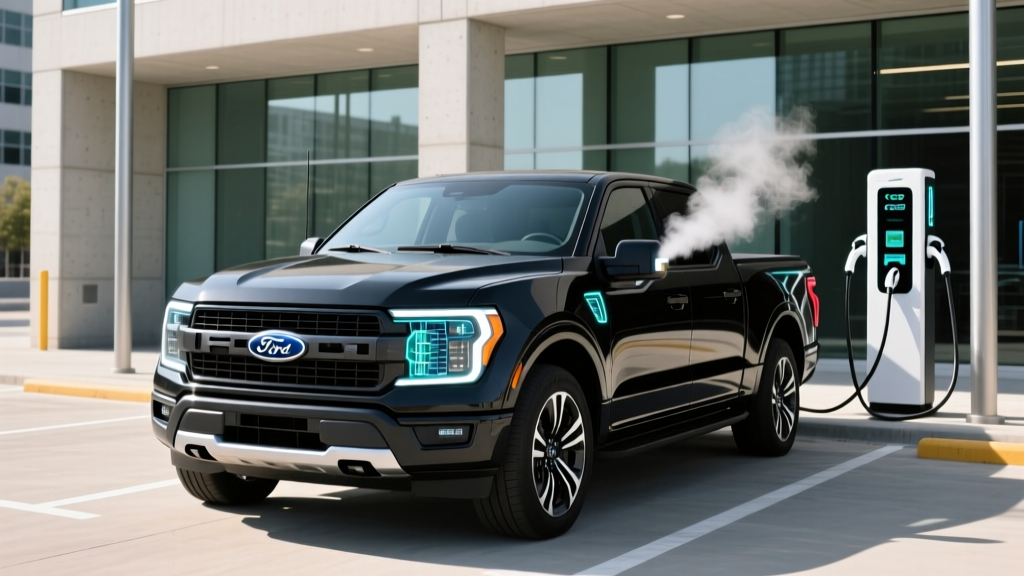
If you've been searching for answers about whether the Ford F-150 Lightning is being killed off, you're not alone. Rumors have circulated since early 2024, when Ford idled shifts at its Rouge Electric Vehicle Center and cut Lightning production targets. As of early 2026, the F-150 Lightning remains in Ford's lineup — but the truck's future is more nuanced than a simple yes or no. Here's what we know about production status, the 2026 model year, and whether this electric pickup still makes sense to buy today.
The Short Answer: Is Ford Discontinuing the F-150 Lightning?
No — Ford has not officially announced a discontinuation of the F-150 Lightning as of early 2026. The truck remains available for order through Ford dealers. However, production volumes have been significantly reduced from original targets, and Ford has pivoted its next-generation truck strategy toward a universal platform that will support both electric and hybrid powertrains. The current-generation Lightning (introduced for the 2022 model year) continues through the 2026 model year, but industry analysts expect a major platform overhaul or potential wind-down by the 2027–2028 timeframe.
2026 F-150 Lightning: Specs at a Glance
| Specification | Standard Range | Extended Range |
|---|---|---|
| EPA Range | 240 miles | 320 miles |
| Battery (Usable) | 98 kWh (NMC) | 131 kWh (NMC) |
| Horsepower | 580 hp | 580 hp |
| Torque | 775 lb-ft | 775 lb-ft |
| 0–60 mph | ~4.0 sec | ~3.8 sec |
| Drivetrain | Dual-motor AWD | Dual-motor AWD |
| Max DC Fast Charge | 150 kW | 150 kW |
| 10–80% DCFC Time | ~41 min | ~41 min |
| Level 2 Home Charge | 19.2 kW (~30 mi/hr) | 19.2 kW (~30 mi/hr) |
| MPGe (Combined) | 68 MPGe | 66 MPGe |
| Efficiency | 49 kWh/100 mi | 51 kWh/100 mi |
| Max Towing | 7,700 lb | 10,000 lb |
| Max Payload | 2,235 lb | 1,800 lb |
| Base MSRP (2026) | $54,995 | $69,995 |
Source: EPA / fueleconomy.gov, Ford Motor Company. MSRP excludes destination charge.
Real-World Range: What to Actually Expect
Extended Range (131 kWh): EPA rates it at 320 miles. In mixed real-world driving, expect 270–290 miles in moderate temperatures. On sustained 75+ mph highway runs, plan for 220–250 miles. In freezing conditions (below 32°F), range can drop 25–35%, yielding as low as 200–220 miles without preconditioning.
Standard Range (98 kWh): EPA rates it at 240 miles. Expect 200–220 miles mixed, 170–190 highway, and 150–170 in deep cold.
Towing impact: Pulling a 5,000–7,000 lb trailer at highway speeds cuts range roughly in half — expect 120–160 miles for the Extended Range pack. This remains the Lightning's most significant practical limitation for work-truck buyers.
The Lightning uses NMC (nickel manganese cobalt) lithium-ion cells supplied by SK On. NMC offers higher energy density than LFP chemistry, which is critical for a full-size truck carrying a massive battery pack. However, NMC cells are more sensitive to sustained 100% SoC storage and high-temperature fast-charging — follow Ford's recommended charge limits (80% daily, 100% only for trips) to maximize long-term battery health.
Charging Speed: DC Fast and Home Level 2
The F-150 Lightning's charging architecture is adequate but not class-leading by 2026 standards. It uses a CCS1 connector and maxes out at 150 kW on DC fast chargers. For context, the Rivian R1T Gen 2 and Hyundai Ioniq 5 can pull 200–350 kW on compatible stations.
| Charging Level | Power | Miles Added per Hour | Notes |
|---|---|---|---|
| Level 1 (120V) | ~1.4 kW | ~2–3 mi/hr | Emergency/trickle only |
| Level 2 (240V, 48A) | 11.5 kW | ~18–20 mi/hr | Standard home setup |
| Level 2 (240V, 80A) | 19.2 kW | ~30 mi/hr | Ford Mobile Power Cord or Charge Station Pro; full Extended Range in ~7 hr |
| DC Fast (150 kW) | 150 kW peak | ~150 mi in 30 min | 10–80% in ~41 min; tapers sharply above 80% |
Charging curve reality: The Lightning hits its 150 kW peak briefly between 15–40% SoC, then steadily tapers. Above 80%, charge speed drops below 50 kW. If you're road-tripping, plan stops to leave at 80% rather than waiting for a full charge — the last 20% can add 25+ minutes.
For home charging, the Ford Charge Station Pro (80A, hardwired) is the recommended solution for Extended Range owners. It requires a 100-amp dedicated circuit — budget $1,200–$2,500 for professional installation depending on your electrical panel. Standard-range owners can get by with a 48-amp Level 2 charger on a 60-amp circuit.
Pricing, Trims, and Federal Tax Credit
| 2026 Trim | Battery | MSRP | Est. After §30D Credit |
|---|---|---|---|
| Pro (Standard Range) | 98 kWh | $54,995 | ~$47,495* |
| XLT (Standard Range) | 98 kWh | $62,995 | ~$55,495* |
| Lariat (Extended Range) | 131 kWh | $76,995 | ~$69,495* |
| Platinum (Extended Range) | 131 kWh | $96,874 | ~$89,374* |
*Estimated prices assume full $7,500 §30D credit eligibility. Actual credit depends on buyer income, battery sourcing, and MSRP caps. Verify at IRS.gov.
- MSRP cap: Trucks/vans/SUVs must be ≤$80,000 — this eliminates the Platinum trim from credit eligibility.
- Buyer income cap: AGI ≤$300,000 (joint), $225,000 (head of household), $150,000 (single).
- Battery sourcing: Critical minerals and battery components must meet phased-in domestic/free-trade sourcing thresholds. Ford has worked to localize supply, but confirm VIN eligibility at the IRS or your dealer at point of sale.
- Point-of-sale transfer: Since 2024, eligible buyers can transfer the credit to the dealer at purchase, reducing the purchase price upfront rather than waiting for tax filing.
Technology, Interior, and Driver Assistance
The Lightning shares much of its interior with the 14th-generation ICE F-150, which is both a strength and a weakness. You get a spacious, practical cabin with generous rear-seat legroom (43.6 inches) and a deep 52.8 cubic-foot bed. The Mega Power Frunk (front trunk) adds 14.1 cubic feet of lockable, weather-sealed storage — one of the Lightning's most genuinely useful features for job-site and camping use. It also includes a built-in drain plug and four 120V outlets.
Pro Power Onboard turns the Lightning into a mobile generator: the standard 2.4 kW system powers tools and appliances through bed and frunk outlets, while the available 9.6 kW system (Extended Range) can run significant loads — Ford even markets it as a home backup power source when paired with the Ford Intelligent Backup Power system and a compatible transfer switch.
The infotainment system runs Ford's SYNC 4A on a 12-inch touchscreen (15.5-inch portrait screen on Lariat and above). Wireless Apple CarPlay and Android Auto are standard. The available BlueCruise hands-free driving system operates on pre-mapped divided highways — but it is an SAE Level 2 system, meaning you must remain attentive and keep your eyes on the road at all times. It is not autonomous driving.
Warranty and Long-Term Ownership
| Coverage | Term |
|---|---|
| Basic (Bumper-to-Bumper) | 3 years / 36,000 miles |
| Powertrain | 5 years / 60,000 miles |
| High-Voltage Battery | 8 years / 100,000 miles (retains ≥70% capacity) |
| Electrical Components | 8 years / 100,000 miles |
| Roadside Assistance | 5 years / 60,000 miles |
The 8-year/100,000-mile battery warranty with a 70% capacity retention threshold is standard for the industry. Early Lightning owners (2022–2023 models) have reported modest degradation — roughly 3–6% loss over the first 30,000–50,000 miles — consistent with NMC chemistry under normal use. Replacement cost for the Extended Range pack, if out of warranty, is estimated at $15,000–$22,000 based on current SK On pricing, though this is expected to decline through the late 2020s.
Lightning vs. Rivian R1T and Chevy Silverado EV
The Lightning's closest competitors tell a different story about the electric truck market:
- Rivian R1T (Dual-Motor): More expensive ($73,000+ base), but offers 352 miles of range (Max Pack), 300+ kW DC fast charging on the Gen 2 platform, and a more car-like unibody design. Better for adventure/lifestyle buyers; less suited for fleet/commercial use.
- Chevrolet Silverado EV: The 4WT and RST variants offer up to 440 miles of range on the Ultium platform and 350 kW DC fast charging. However, pricing climbs steeply on higher trims, and availability has been limited through 2025–2026.
- ICE F-150 PowerBoost Hybrid: Worth considering if you tow frequently or lack home charging. Gets ~24 MPG combined, costs $20,000+ less, and has no range limitation — but sacrifices the frunk, Pro Power Onboard at scale, and EV-smooth daily driving.
✅ Pros
- Best-in-class frunk (14.1 cu ft) with 400W+ of onboard power
- Pro Power Onboard (up to 9.6 kW) — genuine worksite and backup utility
- Familiar F-150 ergonomics, parts availability, dealer network
- Strong 0–60 performance (sub-4 sec) for a 6,500-lb truck
- Competitive pricing on Pro and XLT trims after tax credit
❌ Cons
- 150 kW peak DC charging is slow by 2026 standards
- Real-world range drops sharply when towing (120–160 mi loaded)
- Extended Range trims exceed $80K MSRP cap — no tax credit
- Heavy: 6,500+ lbs curb weight reduces efficiency vs. lighter EVs
- Uncertain long-term production future creates resale-value risk
Who Should Buy the F-150 Lightning in 2026?
Buy it if: You need a full-size truck for daily commuting, light job-site work, or weekend use — and you have reliable home Level 2 charging. The Pro and XLT Standard Range trims at ~$47,500–$55,500 (after the credit) offer the best value proposition. The frunk and Pro Power Onboard are genuinely differentiated features no ICE truck matches.
Skip it if: You tow heavy trailers over long distances regularly, lack home charging access, or need maximum road-trip range. In those cases, the Silverado EV (440-mi range, faster charging) or the F-150 PowerBoost hybrid may serve you better. Also consider waiting if you're concerned about long-term production support and residual values.
Frequently Asked Questions
Is Ford discontinuing the F-150 Lightning?
Not officially. The Lightning remains in Ford's 2026 lineup and is available for order. However, Ford has reduced production volumes and announced a next-generation universal truck platform that will support EV, hybrid, and ICE powertrains. The current-generation Lightning may be redesigned or consolidated into this platform by 2027–2028.
What is the real-world range of the F-150 Lightning?
The Extended Range model is EPA-rated at 320 miles, but real-world mixed driving yields 270–290 miles. Highway driving at 75+ mph drops this to 220–250 miles, and freezing temperatures can reduce range by 25–35%. The Standard Range model delivers roughly 200–220 miles mixed in practice.
Does the F-150 Lightning qualify for the $7,500 federal tax credit?
It can — but eligibility depends on your income (AGI caps apply), the specific trim's MSRP (must be ≤$80,000 for trucks), and battery-component/critical-mineral sourcing compliance. The Pro and XLT trims generally qualify; the Platinum trim's MSRP exceeds the cap. Always verify your VIN's eligibility through your dealer or the IRS clean vehicle credit page.
How fast does the F-150 Lightning charge at home?
With the Ford Charge Station Pro (80A, 19.2 kW), you'll add approximately 30 miles of range per hour — enough to fully recharge the Extended Range battery overnight in about 7 hours. A standard 48-amp Level 2 charger adds about 18–20 miles per hour.
Is the F-150 Lightning worth buying vs. the Rivian R1T or Silverado EV?
For fleet buyers, tradespeople, and budget-conscious truck shoppers, the Lightning Pro and XLT remain the most affordable and practical electric full-size trucks available. The Rivian R1T is more capable off-road and charges faster but costs significantly more. The Silverado EV offers superior range and charging speed but has limited trim availability and a less established dealer service network for EVs.
Will I still get parts and service if Ford discontinues the Lightning?
Ford is legally required to maintain parts availability for at least 10 years after a model's discontinuation, and the Lightning shares many non-powertrain components with the ICE F-150. Ford's extensive dealer network is a significant advantage over Rivian or startups. However, specialized high-voltage components may carry longer lead times if production volumes remain low.