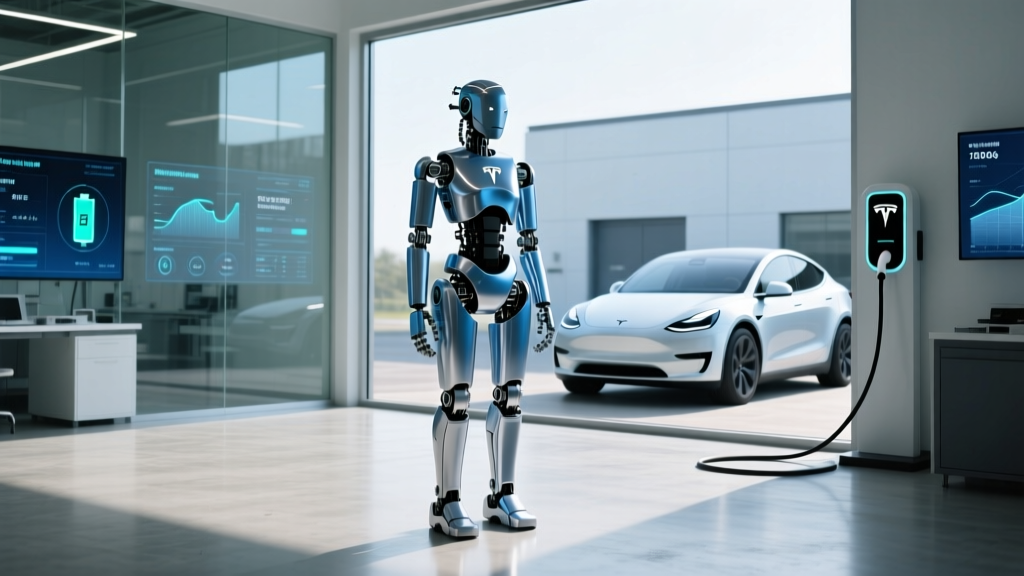
Tesla's Optimus humanoid robot program has undergone significant leadership changes in 2026, raising questions about the company's strategic focus and what it means for the core automotive business. While Optimus itself isn't a vehicle you can buy, the executive reshuffling around it has real implications for Tesla EV shoppers — from Full Self-Driving development timelines to capital allocation priorities.
This analysis breaks down the leadership shifts, connects them to Tesla's current EV lineup (Model 3, Model Y, Cybertruck), and gives buyers the concrete data they need on range, charging, pricing, and tax credit eligibility to make an informed decision right now.
What the Tesla Optimus Program Leadership Changes Actually Mean
In early-to-mid 2026, Tesla restructured its Optimus robotics division, bringing in senior engineering talent from the Autopilot/FSD team and reassigning key manufacturing leaders. Elon Musk has repeatedly stated that Optimus could eventually be worth more than Tesla's automotive business, but the leadership changes signal a tension: pulling top talent toward robotics while the EV market grows increasingly competitive from Hyundai, BMW, Rivian, and Chinese OEMs.
For EV buyers, the practical question isn't about the robot — it's whether these shifts slow down vehicle development, FSD improvements, and Supercharger expansion. So far in 2026, Tesla's vehicle lineup hasn't seen a major new platform launch, and the refreshed Model Y (codenamed Juniper) remains the most recent significant update.
Current Tesla EV Lineup: 2026 Specs at a Glance
Since the Optimus leadership story connects to Tesla's automotive future, here's exactly what you can buy today and the numbers that matter.
| Model / Trim | EPA Range | Battery (kWh) | Chemistry | 0-60 mph | HP | Base MSRP |
|---|---|---|---|---|---|---|
| Model 3 RWD | 272 mi | ~60 kWh usable | LFP | 5.8s | 283 | $38,990 |
| Model 3 Long Range AWD | 341 mi | ~79 kWh usable | NMC | 4.2s | 346 | $42,490 |
| Model Y Long Range AWD | 320 mi | ~79 kWh usable | NMC | 4.8s | 384 | $44,990 |
| Cybertruck AWD | 340 mi | ~123 kWh usable | NMC | 4.1s | 600 | $79,990 |
Charging Speed: DC Fast Charge and Home Level 2
Charging speed is where Tesla still holds a meaningful advantage thanks to the Supercharger network, but competitors have closed the gap on peak charge rates. Here's what each current model delivers:
| Model | Max DC Fast Charge | 10-80% Time | Level 2 Home Rate | Miles Added/Hr (L2) |
|---|---|---|---|---|
| Model 3 RWD (LFP) | 170 kW | ~30 min | 11.5 kW (48A) | ~37 mi/hr |
| Model 3 Long Range | 250 kW | ~25 min | 11.5 kW (48A) | ~44 mi/hr |
| Model Y Long Range | 250 kW | ~27 min | 11.5 kW (48A) | ~40 mi/hr |
| Cybertruck AWD | 350 kW | ~20 min | 11.5 kW (48A) | ~35 mi/hr |
Critical nuance: Peak kW is not sustained kW. A Model 3 Long Range hitting 250 kW at 10% SoC will taper significantly above 50-60%, which is why the 10-80% time is the more useful metric. The Cybertruck's 800V architecture allows it to sustain higher charge rates longer, but it requires a V4 Supercharger or compatible 350 kW station. Home charging on a standard NEMA 14-50 outlet at 40A delivers about 30 miles of range per hour across the lineup — plan for overnight charging to cover daily needs.
Pricing, Tax Credits, and Total Cost
Tesla's pricing has been volatile over the past two years. Here's where things stand for 2026, including federal tax credit implications under IRS §30D rules.
| Model / Trim | Base MSRP | MSRP Cap Met? | Estimated Credit | Effective Price |
|---|---|---|---|---|
| Model 3 RWD | $38,990 | Yes (under $55K) | Up to $7,500* | ~$31,490 |
| Model 3 Long Range AWD | $42,490 | Yes (under $55K) | Up to $7,500* | ~$34,990 |
| Model Y Long Range AWD | $44,990 | Yes (under $80K SUV) | Up to $7,500* | ~$37,490 |
| Cybertruck AWD | $79,990 | Yes (under $80K truck) | Varies* | ~$72,490+ |
*Critical eligibility requirements: The §30D credit is not automatic. To qualify, you must meet ALL of the following:
- Income caps: Modified AGI ≤ $150,000 (single), $225,000 (head of household), $300,000 (joint)
- MSRP caps: ≤ $55,000 for sedans; ≤ $80,000 for SUVs, vans, and trucks
- Battery sourcing: Critical minerals and battery components must meet escalating domestic-content thresholds — Tesla's LFP cells (sourced from CATL in China) have faced scrutiny, and partial credit ($3,750) may apply if only one requirement is met
- Point-of-sale transfer: As of 2024+, you can transfer the credit to the dealer at purchase, reducing your out-of-pocket cost immediately
Always verify current eligibility on fueleconomy.gov before purchasing, as battery sourcing rules tighten annually.
Efficiency, Performance, and Daily Usability
Tesla vehicles remain among the most efficient EVs on the market, measured in MPGe and kWh per 100 miles — a key advantage that translates directly to lower electricity costs and longer real-world range.
- Model 3 RWD: 132 MPGe combined / 25 kWh/100mi — the efficiency leader in the lineup
- Model 3 Long Range AWD: 125 MPGe combined / 27 kWh/100mi
- Model Y Long Range AWD: 117 MPGe combined / 29 kWh/100mi
- Cybertruck AWD: ~70 MPGe combined / ~48 kWh/100mi — heavy, boxy, and less aero-efficient
Cargo and passenger space:
- Model 3: 23 cu ft trunk + frunk; 42.3" front legroom, 35.3" rear
- Model Y: 76 cu ft (seats folded) + frunk; family-friendly with optional 7-seat config
- Cybertruck: ~67 cu ft bed (6.5 ft bed length); 34.8" rear legroom — tight for a vehicle this large
FSD, Autopilot, and the Optimus Connection
Here's where the Optimus leadership changes matter most to EV buyers. Tesla's Full Self-Driving (Supervised) software shares underlying neural network architecture with Optimus's perception and planning stack. When top AI engineers move from the vehicle autonomy team to robotics, there's a real risk of slowed FSD iteration.
Standout tech features:
- Tesla's 15.4" (Model 3/Y) or 18.5" (Cybertruck) center touchscreen runs a responsive, if minimalist, infotainment system
- Over-the-air updates continue to add features post-purchase
- Supercharger network access (now opening to NACS-equipped competitors) remains the gold standard for public charging reliability
- No Apple CarPlay or Android Auto — a dealbreaker for some buyers
- Cabin camera monitoring for FSD engagement — privacy considerations apply
Notable drawbacks: Build quality inconsistency (panel gaps, paint), phantom braking with Autopilot engaged, absence of traditional controls (no turn signal stalk on refreshed Model 3/Y — buttons on the steering wheel), and limited service center capacity in many markets.
Who Should Buy a Tesla in 2026 — and Who Shouldn't?
Pros
- Best-in-class Supercharger network (17,000+ stalls in North America)
- Industry-leading efficiency (kWh/100mi)
- Strong OTA update cadence
- Competitive pricing after tax credit
- Extensive real-world range on Long Range trims
Cons
- No Apple CarPlay / Android Auto
- FSD (Supervised) still requires constant attention — $8K-$15K option
- Leadership focus divided between auto, Optimus, and xAI
- Build quality remains inconsistent
- Service center wait times in many metro areas
Decision Framework
Choose Tesla if: You prioritize charging network reliability, want maximum efficiency per kWh, and value OTA feature updates. The Model 3 RWD at ~$31,490 after tax credit is one of the best value propositions in EVs.
Look elsewhere if: You want Apple CarPlay, prefer traditional build quality and dealer service, need a guaranteed 300+ mile real-world highway range, or are concerned about Tesla's executive bandwidth being split across Optimus, xAI, and vehicle development. Consider the Hyundai Ioniq 6 (360 mi EPA, 10-yr warranty) or BMW i4 (premium interior, CarPlay standard).
Frequently Asked Questions
What is the real-world range of a Tesla Model 3 or Model Y?
The Model 3 Long Range's 341-mile EPA estimate translates to roughly 290-305 miles on a highway road trip at 70 mph in mild weather. In cold conditions (below freezing), expect 240-270 miles. The Model Y Long Range (320 EPA) delivers approximately 270-290 miles highway in fair weather, dropping to 225-255 in winter. The LFP Model 3 RWD is more affected by cold — plan for 180-200 miles in freezing weather from its 272-mile EPA rating.
How fast does a Tesla charge at home and on the road?
At home on a 48A Level 2 wall connector, expect 37-44 miles of range added per hour — a full overnight charge covers any daily commute. On DC fast chargers, the Model 3/Y Long Range peaks at 250 kW with a 10-80% time of about 25-27 minutes. The Cybertruck's 800V system can peak at 350 kW at V4 Superchargers, achieving 10-80% in roughly 20 minutes. Remember: charging slows substantially above 80% SoC to protect battery health.
Does Tesla qualify for the $7,500 federal EV tax credit?
It depends on the specific model, your income, and battery sourcing compliance. The Model 3 and Model Y generally qualify for up to $7,500 under §30D, but you must meet income caps ($150K single / $300K joint) and the vehicle must meet critical-mineral and battery-component sourcing thresholds. LFP Model 3 variants with CATL-sourced cells may only qualify for $3,750 (half credit) if only one sourcing requirement is met. Always check the latest eligibility on fueleconomy.gov and consult a tax professional.
How do the Optimus leadership changes affect Tesla vehicle buyers?
The direct impact is minimal today — you're buying a finished vehicle, not a future promise. But the indirect risk is real: if Tesla continues redirecting top AI and manufacturing talent toward Optimus and xAI, the pace of vehicle innovation, FSD improvement, and new model development could slow relative to competitors investing 100% of their engineering resources in EVs. Watch for gaps in the product roadmap through 2027.
Is a Tesla still worth buying vs. competitors in 2026?
For many buyers, yes — particularly the Model 3 RWD and Model Y Long Range, which offer strong efficiency, Supercharger access, and competitive post-credit pricing. But the competition is formidable. The Hyundai Ioniq 5/6 offers faster 800V charging, a 10-year warranty, and CarPlay. The BMW i4 and iX deliver premium interiors Tesla can't match. The Rivian R1S/R1T leads for adventure-oriented families. Your priorities (charging network vs. build quality vs. warranty vs. tech features) should drive the decision, not brand loyalty alone.
Sources: fueleconomy.gov (EPA range and efficiency data), IRS.gov (§30D tax credit rules), Tesla.com official specifications. All pricing and specs reflect 2026 model year data available at time of publication. Tax credit eligibility is subject to change — verify before purchase.