Quick Answer: Is the BMW Electric 3 Series Worth It?
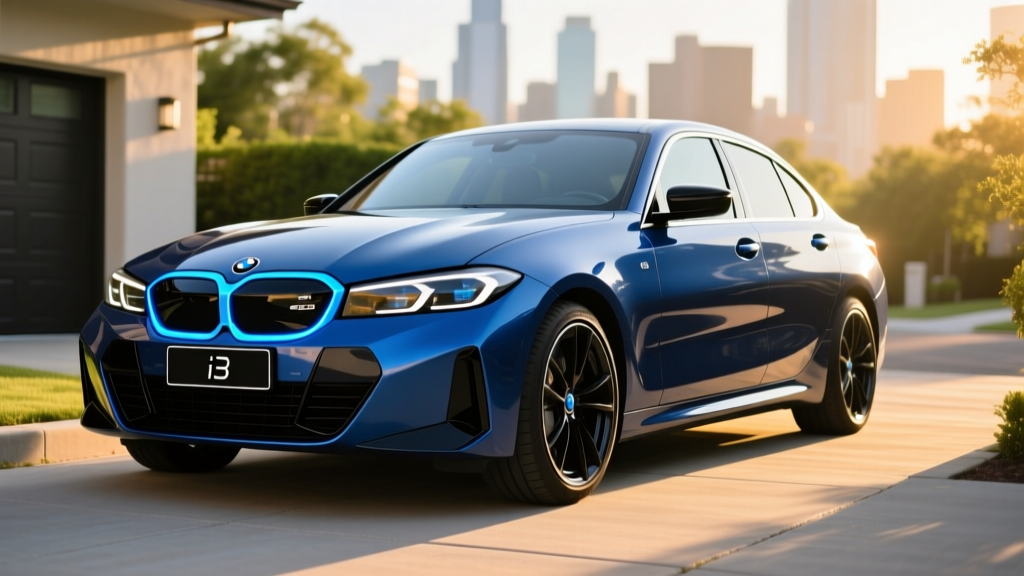
The BMW electric 3 Series — officially branded the BMW i3 sedan (Neue Klasse platform, arriving late 2026 as a 2027 model) — targets buyers who want 3 Series driving dynamics with zero tailpipe emissions. Based on BMW's announced specs, expect an EPA-estimated range near 300–340 miles from an ~80–100 kWh (usable) battery, DC fast charging up to 250+ kW (10–80% in approximately 20–25 minutes), and a starting MSRP likely in the $50,000–$55,000 range. If you need a sport sedan today, the BMW i4 (EPA range up to 307 mi, starting ~$52,200) is the current electric equivalent. The i3 sedan will compete directly with the Tesla Model 3, Hyundai Ioniq 6, and upcoming Mercedes CLA EV.
What Is the BMW Electric 3 Series (i3 Sedan)?
BMW's next-generation 3 Series will be offered as a battery-electric vehicle (BEV) on the company's new Neue Klasse architecture. This is not the discontinued 2014–2022 BMW i3 hatchback — that car shared only a badge. The new i3 sedan is a ground-up EV built on an 800-volt platform, enabling faster charging and improved efficiency compared to BMW's current CLAR-based EVs like the i4 and i5.
BMW has confirmed the Neue Klasse i3 sedan will be produced starting in 2026 at its new Debrecen, Hungary plant, with U.S. deliveries expected in late 2026 or early 2027. Until then, the BMW i4 remains the electric 3 Series equivalent you can buy today.
BMW i3 Sedan (Est.) vs. BMW 330i Gas vs. BMW i4: Spec Comparison
Below is a side-by-side look at how the upcoming i3 sedan compares to the current gas 3 Series and the existing i4 electric Gran Coupe. Figures for the i3 are based on BMW's announced targets and may change at launch.
| Spec | BMW i3 Sedan (Est. 2027) | BMW 330i (2025 Gas) | BMW i4 eDrive40 (2025) |
|---|---|---|---|
| Powertrain | BEV (800V, Neue Klasse) | 2.0L Turbo I-4 | BEV (400V, CLAR) |
| EPA Range | ~300–340 mi (est.) | ~420 mi (16 gal tank) | Up to 307 mi |
| Battery (Usable) | ~80–100 kWh (NMC, gen-6 cells) | N/A | 81.5 kWh (NMC) |
| Horsepower | ~300–350 hp (est.) | 255 hp | 335 hp |
| 0–60 mph | ~5.0–5.5 sec (est.) | 5.6 sec | 5.5 sec |
| DC Fast Charge Peak | ~250+ kW (est.) | N/A | 205 kW |
| 10–80% Charge Time | ~20–25 min (est.) | N/A | ~31 min |
| Level 2 Charge Rate | ~11–22 kW (est.) | N/A | 11 kW |
| Starting MSRP | ~$50,000–$55,000 (est.) | ~$44,900 | ~$52,200 |
| Federal Tax Credit (§30D) | TBD (battery sourcing TBD) | Not eligible | Up to $7,500 if eligible |
| Battery Warranty | 8 yr / 100,000 mi (BMW std) | N/A | 8 yr / 100,000 mi |
Sources: fueleconomy.gov (EPA data for 330i and i4), BMW USA official specs. i3 sedan figures are preliminary estimates based on BMW Neue Klasse announcements.
Real-World Range: What to Actually Expect
BMW's estimated 300–340 mile EPA range is promising, but real-world results depend heavily on driving conditions. Here's how to calibrate expectations:
EPA Estimate: ~300–340 miles (i3 sedan, preliminary)
Real-World Highway (70–80 mph): Expect ~250–290 miles. EVs lose efficiency at sustained high speeds due to aerodynamic drag — no regenerative braking to recapture energy on flat interstate driving.
Cold Weather (below 32°F): Expect 20–35% range reduction. Battery chemistry slows in cold temps, and cabin heating draws significant power. A 320-mile EPA range could drop to ~210–250 miles in freezing conditions without preconditioning.
Mixed Commute (city/suburban): This is where EVs shine — regenerative braking recaptures energy in stop-and-go traffic. You may actually exceed EPA estimates in city driving.
The 800-volt architecture should also improve thermal management during both fast charging and cold-weather operation. BMW's gen-6 cylindrical battery cells (similar in form factor to Tesla's 4680 cells) promise higher energy density and better thermal characteristics than the prismatic cells in the current i4.
Charging Speed & Infrastructure: What You Need to Know
The i3 sedan's 800V platform is the headline upgrade. Here's what that means in practice:
| Charging Level | Power (kW) | Est. Miles Added per Hour | Use Case |
|---|---|---|---|
| Level 1 (120V outlet) | ~1.4 kW | ~4–5 mi/hr | Emergency/overnight trickle |
| Level 2 (240V, 48A home) | ~11.5 kW | ~35–45 mi/hr | Daily home charging |
| Level 2 (240V, high-power) | ~22 kW (if equipped) | ~70–85 mi/hr | Faster home/workplace |
| DC Fast Charge | ~250+ kW peak | ~600+ mi/hr (peak) | Road trips, 10–80% in ~20–25 min |
Charging curve reality: Peak kW rates are not sustained across the full session. Expect the i3 to charge at or near 250 kW from roughly 10–40% State of Charge (SoC), then taper progressively. From 80–100%, charging slows dramatically to protect battery longevity — this is normal for all lithium-ion packs and why we recommend charging to 80% for daily use and only going to 100% before long trips.
Connector: BMW has committed to adopting the NACS (Tesla) connector for North American models. The i3 sedan should ship with a native NACS port, granting access to Tesla Superchargers (now open to non-Tesla EVs via the NACS standard) in addition to Electrify America, EVgo, and other CCS networks via adapter.
Total Cost of Ownership: i3 Sedan vs. Gas 330i
EV ownership economics depend on your electricity rate, driving habits, and whether you can charge at home. Here's a 5-year cost projection assuming 15,000 miles/year, $0.14/kWh home electricity, $3.50/gallon gas, and estimated pricing.
| Cost Category (5 Years / 75,000 mi) | BMW i3 Sedan (Est.) | BMW 330i (Gas) |
|---|---|---|
| Purchase Price (base MSRP) | $52,000 (est.) | $44,900 |
| Federal Tax Credit (§30D) | –$0 to –$7,500 (TBD)* | $0 |
| Effective Purchase Price | $44,500–$52,000 | $44,900 |
| Fuel/Energy Cost | $2,360 (225 kWh/mo × $0.14)** | $8,750 (25 MPG, $3.50/gal) |
| Maintenance | ~$1,500 (no oil changes, less brake wear) | ~$3,500 (oil, filters, spark plugs, brakes) |
| Insurance (avg) | ~$12,000 ($2,400/yr est.) | ~$10,500 ($2,100/yr est.) |
| Estimated Depreciation | ~$20,000 (EV depreciation still higher) | ~$18,000 |
| 5-Year Total Cost | ~$80,360–$87,860 | ~$85,650 |
* §30D credit eligibility depends on battery sourcing, critical mineral content, buyer income caps ($150K single / $300K joint), and MSRP caps ($55,000 for sedans). Verify at IRS.gov before purchasing.
** Assumes ~3.0 mi/kWh efficiency and 80% home charging. Public DC fast charging costs significantly more ($0.35–$0.55/kWh).
Key takeaway: The i3 sedan can break even with or beat the gas 330i on total cost over 5 years, but only if you qualify for the federal tax credit and charge primarily at home. Without the credit, or if you rely on expensive public fast charging, the gas 330i retains a cost advantage. Insurance premiums for EVs tend to run 10–20% higher due to repair costs for battery packs and specialized bodywork.
Home Charging: The Make-or-Break Factor
Before ordering any EV, confirm your home charging situation. This is the single biggest predictor of EV ownership satisfaction.
Best case: You have a garage or driveway where a Level 2 (240V) charger can be installed. A typical 48-amp Level 2 installation costs $800–$2,500 (charger hardware + electrician + permit), assuming your electrical panel has capacity. This adds ~35–45 miles of range per hour of charging — more than enough to replenish a full day's driving overnight.
Panel upgrade gotcha: If your home has a 100-amp panel and it's near capacity, adding a 48-amp EV circuit may require a panel upgrade to 200 amps — costing $1,500–$4,000+. Get a licensed electrician's assessment before committing to a charger purchase.
Apartment/condo or street parking: Without reliable home charging, you'll depend on public Level 2 and DC fast chargers. This is feasible in cities with robust infrastructure but adds time and cost (public charging is typically 2–4× the cost of home electricity). Check PlugShare or your local utility's charger map before buying.
Federal Tax Credit: Will the i3 Sedan Qualify?
The IRS §30D Clean Vehicle Credit offers up to $7,500 for qualifying new EVs, but eligibility is complex and changes as battery sourcing rules tighten. Here's what we know and don't know for the i3 sedan:
- MSRP cap: Sedans must be under $55,000 MSRP. If BMW prices the base i3 sedan above $55,000, it won't qualify regardless of sourcing.
- Buyer income cap: Adjusted gross income must not exceed $150,000 (single) / $225,000 (head of household) / $300,000 (joint filing).
- Battery sourcing: The battery must meet critical mineral and component sourcing thresholds that increase annually. BMW's gen-6 cells will use new supply chains — qualification status is TBD until closer to launch.
- Point-of-sale transfer: If eligible, you can transfer the credit to the dealer at purchase, reducing your out-of-pocket cost immediately rather than waiting for tax season.
Don't assume eligibility. Check fueleconomy.gov for the latest qualified vehicle list closer to the i3's launch date, and consult a tax professional for your specific situation.
Common Misconceptions About the BMW Electric 3 Series
| Myth | Fact |
|---|---|
| "The BMW i3 is just a hatchback" | The old i3 (2014–2022) was a hatch. The new i3 sedan is a proper 3 Series–sized sport sedan on BMW's Neue Klasse platform. |
| "EV batteries need replacing every few years" | Modern NMC and LFP packs are designed for 15+ years / 200,000+ miles with <10% degradation. BMW warranties its EV batteries for 8 years/100,000 miles with a minimum 70% capacity retention guarantee. |
| "You can't road-trip in an EV" | With 300+ miles of range and 20–25 minute fast-charge stops, road trips are practical — just plan charging stops using the car's nav or PlugShare. The 800V architecture makes this faster than current-gen BMW EVs. |
| "The $7,500 tax credit applies to everyone" | Credit eligibility depends on MSRP, buyer income, and battery sourcing. Many luxury EVs fail the MSRP cap, and high-income buyers are excluded. |
| "EVs are slower in cold weather" | EVs deliver instant torque regardless of temperature — acceleration is unaffected. Range drops in cold, but performance does not. |
Decision Framework: Should You Buy the i3 Sedan, i4, or Gas 3 Series?
Choose the BMW i3 sedan (wait for 2027 model) if:
- You want the latest 800V charging tech and next-gen battery chemistry
- You can charge at home and drive under 250 miles/day
- You value 3 Series sedan proportions over the i4's Gran Coupe liftback
- You're willing to wait until late 2026/early 2027 for delivery
Choose the BMW i4 (available now) if:
- You need an electric BMW today and can't wait 12+ months
- You prefer the liftback cargo versatility of the i4 Gran Coupe
- You want proven CLAR-platform reliability with established service networks
- You find a lease deal with the $7,500 credit passed through as a lease bonus
Choose the gas BMW 330i if:
- You lack home charging access and your area has sparse public infrastructure
- You frequently drive 400+ miles in a single day (towing, remote areas)
- Upfront cost is your priority and you don't qualify for EV tax credits
- You live in an extreme cold climate where 30%+ winter range loss is unacceptable
FAQ: BMW Electric 3 Series
When will the BMW i3 sedan be available in the U.S.?
BMW has confirmed production begins in 2026 at its Debrecen plant. U.S. deliveries are expected in late 2026 or early 2027 as a 2027 model year vehicle. Exact timing depends on market allocation.
Will the BMW i3 sedan use a Tesla-style NACS charging connector?
Yes. BMW has committed to the NACS standard for North American vehicles. The i3 sedan should have a native NACS port, enabling direct access to Tesla Superchargers and other NACS-equipped networks without an adapter.
How does the i3 sedan's range compare to the Tesla Model 3?
The 2025 Tesla Model 3 Long Range achieves an EPA-estimated 341 miles. BMW's i3 sedan target of 300–340 miles puts it in the same ballpark. Real-world highway range for both will be approximately 250–290 miles at 70–80 mph.
What will home charging installation cost for the i3 sedan?
Expect $800–$2,500 for a standard Level 2 (240V, 48A) home charger installation if your electrical panel has capacity. A panel upgrade from 100A to 200A adds $1,500–$4,000+. Always get a quote from a licensed electrician before purchasing equipment.
Is the BMW i3 sedan eligible for the $7,500 federal tax credit?
This is unconfirmed. Eligibility under IRS §30D depends on final MSRP (must be under $55,000 for sedans), your income, and battery component/mineral sourcing at time of manufacture. Check IRS.gov closer to launch for the definitive answer.
How long will the i3 sedan's battery last?
BMW's gen-6 cylindrical cells are engineered for long cycle life. The battery warranty covers 8 years or 100,000 miles with a minimum 70% State of Health guarantee. Based on current NMC cell data, expect 85–90% capacity retention at 100,000 miles under normal use.