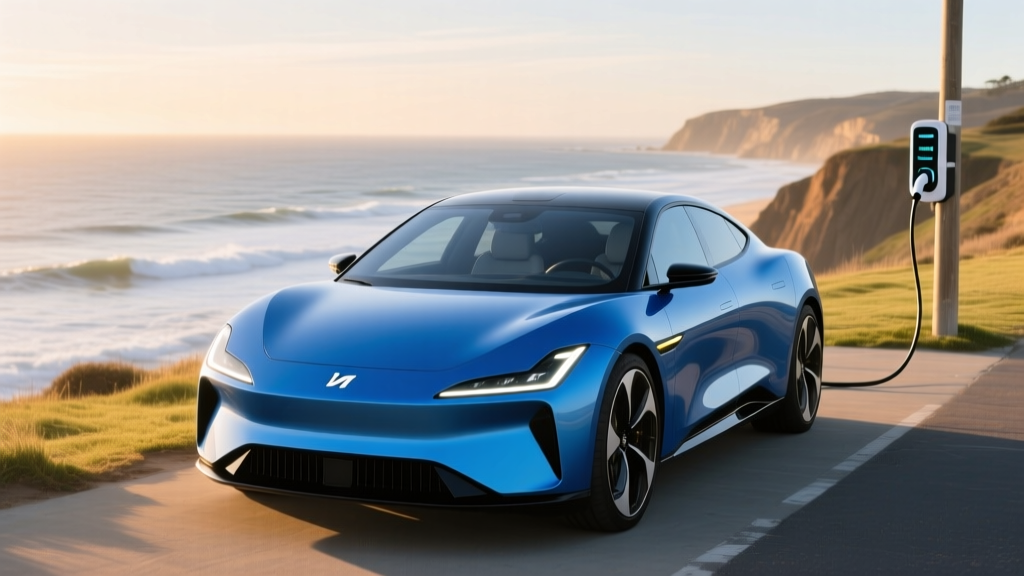
If you've been searching for a blue Fisker Ocean — or any Fisker Ocean — in 2026, you've likely hit a wall. The distinctive electric SUV, once praised for its Scandinavian design, solar roof, and California Mode drop-down windows, is no longer in production. Fisker Inc. filed for bankruptcy in mid-2024 after delivering roughly 10,000–12,000 vehicles, leaving owners, reservation holders, and prospective used-car buyers with a complicated set of questions about parts, software, and long-term viability.
This review covers the Fisker Ocean as it exists today: a used-market-only vehicle with real strengths and serious ownership risks. We'll break down the exact EPA range, charging speeds, battery chemistry, and pricing — and help you decide whether a blue Fisker Ocean (or any color) is a smart buy or a cautionary tale.
Fisker Ocean Specs at a Glance
| Spec | Sport (RWD) | Ultra / Extreme (AWD) |
|---|---|---|
| EPA Range | 250 miles | 360 miles (Extreme) |
| Battery (Usable) | ~80 kWh LFP | ~113 kWh NMC |
| Max DC Fast Charge | ~170 kW (peak) | ~250 kW (peak) |
| 10–80% DC Time | ~34 min (est.) | ~30 min |
| Level 2 Home Rate | 11 kW (~37 mi/hr) | 11 kW (~37 mi/hr) |
| 0–60 mph | 6.9 sec | 3.7 sec (Extreme) |
| Horsepower | 275 hp | 550 hp |
| Drivetrain | Single-motor RWD | Dual-motor AWD |
| EPA Efficiency | ~100 MPGe | ~95 MPGe |
| Cargo (rear seats up) | ~32 cu ft | ~32 cu ft |
| Original MSRP | $37,499 | $61,499 (Extreme) |
Sources: EPA / fueleconomy.gov, Fisker Inc. original press specifications.
Real-World Range: What the EPA Number Doesn't Tell You
The Fisker Ocean Extreme achieved its 360-mile rating thanks to a massive 113 kWh (usable) NMC battery pack supplied by CATL. That's one of the largest packs in any consumer EV — larger than the Tesla Model X's current pack and comparable to the GMC Hummer EV (though the Hummer is far heavier). The efficiency penalty of AWD and dual motors is offset by sheer capacity.
The Sport trim used an LFP (lithium iron phosphate) battery at ~80 kWh usable. LFP chemistry offers longer cycle life and can be charged to 100% daily without degradation concerns, but its lower energy density means less range in a physically smaller pack. LFP also suffers more range loss in extreme cold compared to NMC.
For context, a Tesla Model Y Long Range AWD achieves 310 miles EPA with a ~75 kWh pack, thanks to superior aerodynamics and lighter weight. The Ocean's boxy SUV profile creates more drag at highway speeds, which is why its real-world highway efficiency falls to roughly 3.0–3.2 miles/kWh versus the Model Y's ~3.5 miles/kWh.
Charging Speed: DC Fast and Home Level 2
| Charging Level | Power / Rate | What That Means |
|---|---|---|
| Level 1 (120V) | ~1.4 kW | ~4–5 miles/hour (overnight trickle) |
| Level 2 (240V, 48A) | 11 kW | ~37 miles/hour; full charge in ~10–11 hours (Extreme) |
| DC Fast Charge (Sport) | ~170 kW peak | 10–80% in ~34 min; tapers significantly above 80% |
| DC Fast Charge (Extreme) | ~250 kW peak | 10–80% in ~30 min; sustained ~150–180 kW through 60% |
The Ocean uses a CCS1 connector for DC fast charging. With Tesla opening its Supercharger network to CCS-equipped vehicles via the Magic Dock adapter, Ocean owners can access most major charging networks — Electrify America, EVgo, ChargePoint, and Tesla Superchargers (where adapters are deployed).
A critical nuance: the Ocean's DC charging curve is front-loaded. On a 350 kW-capable Electrify America station, the Extreme peaks near 250 kW from roughly 10–35% state of charge, then tapers to ~150 kW through 60%, and drops to ~80 kW by 80%. Charging from 80–100% on DC is painfully slow — plan to charge to 80% and go, as is standard EV road-trip practice.
The 11 kW Level 2 onboard charger is competitive — it matches the Tesla Model Y and beats some rivals limited to 7.7 or 9.6 kW. On a home 240V/48A circuit (the most common Level 2 installation), you'll add roughly 37 miles of range per hour of charging. A full overnight session easily replenishes daily driving.
Performance and Driving Dynamics
The Fisker Ocean Extreme's 550-horsepower dual-motor AWD powertrain delivers a 3.7-second 0–60 mph time — genuinely quick for a 5,400-pound SUV. The Sport RWD, at 275 hp and 6.9 seconds, is adequate for commuting and merging but won't win any stoplight races.
What sets the Ocean apart dynamically is its "California Mode" — a feature that simultaneously lowers all windows, opens the rear hatch glass, and retracts the solar roof shade, creating an open-air experience no other SUV offers. The "Solar Roof" (standard on Extreme, optional on Ultra) uses photovoltaic cells embedded in the glass roof. In optimal sunlight, it can add roughly 1–2 miles of range per day — not a game-changer, but a clever efficiency supplement and a conversation starter.
Ride quality on the Ocean is comfortable, with well-damped suspension tuning, though the heavy battery pack is noticeable on rough pavement. The steering is light and numb by enthusiast standards, but perfectly suited for the daily-commute and family-hauler use case this vehicle targets. The turning radius is generous for a midsize SUV.
ADAS Note: The Fisker Ocean shipped with a basic Level 2 driver-assistance suite (adaptive cruise control, lane-centering, automatic emergency braking). This is a driver-supervision-required system per SAE Level 2 — it is not autonomous or "self-driving." Compared to Tesla Autopilot, GM Super Cruise, or Ford BlueCruise, the Ocean's ADAS is rudimentary and was a common complaint in early reviews. No hands-free driving capability exists.
Pricing, Tax Credits, and Used-Market Reality
| Trim | Original MSRP | Used Market (2026 est.) | §30D Credit Eligibility |
|---|---|---|---|
| Sport (RWD) | $37,499 | $15,000–$22,000 | Used EV credit: up to $4,000 (if dealer registered, income caps met) |
| Ultra (AWD) | $52,999 | $22,000–$30,000 | Used EV credit: up to $4,000 |
| Extreme (AWD) | $61,499 | $28,000–$38,000 | Used EV credit: up to $4,000 |
Depreciation has been severe. Fisker's bankruptcy cratered resale values, with some Ocean Extremes selling for under $30,000 — less than half their original MSRP. For bargain-hunters, this represents a lot of range and performance per dollar. But the risks are real.
Interior, Cargo, and Tech
The Ocean's cabin was designed with sustainability as a headline feature: recycled materials, vegan leather, and reclaimed fishing-net carpeting. The aesthetic is minimalist and Scandinavian — clean lines, a large 17.1-inch rotating center touchscreen (on Ultra and Extreme), and a digital driver display.
Cargo space measures approximately 32 cubic feet behind the second row and ~58 cubic feet with rear seats folded — competitive with the Tesla Model Y (30/76 cu ft) and Hyundai Ioniq 5 (27/59 cu ft). Rear legroom is generous at ~41 inches.
The infotainment system was a sore point in reviews. The software, developed largely in-house by Fisker, was buggy at launch — slow response times, occasional freezes, and limited app availability. Over-the-air updates improved things somewhat, but with Fisker's bankruptcy, the future of software support is uncertain. There is no Apple CarPlay or Android Auto — a significant omission for a 2024+ vehicle.
Warranty and Long-Term Ownership Risks
| Coverage | Original Terms | 2026 Status |
|---|---|---|
| Basic Vehicle | 6 yr / 60,000 mi | Likely unenforceable post-bankruptcy |
| Battery / Powertrain | 10 yr / 100,000 mi | Uncertain — no active warranty administrator confirmed |
| Corrosion | 12 yr / unlimited mi | Likely unenforceable |
This is the single biggest risk of buying a Fisker Ocean in 2026. Fisker's original warranty package was generous — 10 years/100,000 miles on the battery and powertrain. But with the company in bankruptcy, there is no clear entity to honor warranty claims. Battery replacement costs for the 113 kWh Extreme pack could exceed $20,000–$25,000 if sourced independently, and the CATL pack is not a drop-in replacement from any other mainstream EV.
Parts availability is also a concern. Body panels, trim pieces, and proprietary components (like the solar roof assembly) are in limited supply. Some Fisker owners have formed community groups to source parts and share repair knowledge, but this is a grassroots effort, not a manufacturer-backed support network.
Insurance costs reflect this uncertainty. Expect premiums 20–40% higher than comparable mainstream EVs, with some carriers declining to write policies on Fisker vehicles entirely.
Pros and Cons
✅ Pros
- Class-leading 360-mile EPA range (Extreme)
- Unique California Mode open-air experience
- Solar roof adds marginal daily range and style
- Strong 550 hp / 3.7-sec performance (Extreme)
- Sustainable interior materials
- Massive used-market depreciation = bargain pricing
- LFP option (Sport) offers daily 100% charging without degradation worry
❌ Cons
- Manufacturer bankrupt — no warranty support
- Parts availability uncertain and shrinking
- Software/OTA updates may cease entirely
- No Apple CarPlay or Android Auto
- Mediocre ADAS — basic Level 2 only
- Insurance premiums elevated or unavailable
- Battery replacement cost: $20,000+ if needed
- Resale value likely to remain depressed
Who Should (and Shouldn't) Buy a Blue Fisker Ocean
✅ This EV suits you if:
- You're an EV-savvy buyer comfortable with risk and self-managed maintenance
- You want maximum range per dollar and can find an Extreme under $30K
- You have home Level 2 charging and rarely need public fast charging
- You value distinctive design and the open-air California Mode experience
- You plan to drive it 5–7 years and accept near-zero resale value at trade-in
❌ Look elsewhere if:
- You need a reliable warranty and manufacturer support network
- You're a first-time EV buyer who wants a simple, worry-free experience
- You rely on advanced driver-assist features for highway commuting
- You want strong resale value or plan to trade in within 3 years
- You live in an area with limited EV repair infrastructure
Competitor Comparison: What Else Can You Get?
| Vehicle | EPA Range | DC Fast Charge | Price (2026 new/used) | Warranty |
|---|---|---|---|---|
| Fisker Ocean Extreme | 360 mi | 250 kW | $28K–$38K (used) | None (bankrupt) |
| Tesla Model Y LR AWD | 310 mi | 250 kW | $47K (new) | 8yr/120K mi battery |
| Hyundai Ioniq 5 LR AWD | 290 mi | 240 kW | $50K (new) | 10yr/100K mi battery |
| Ford Mustang Mach-E ER AWD | 290 mi | 150 kW | $48K (new) | 8yr/100K mi battery |
The Ocean wins on raw range and used-market value. It loses badly on support, warranty, software, and peace of mind. A new Hyundai Ioniq 5 or Tesla Model Y costs more upfront but comes with active warranties, OTA updates, established service networks, and far lower risk.
Frequently Asked Questions
What is the real-world range of the blue Fisker Ocean?
The EPA rates the Fisker Ocean Extreme at 360 miles and the Sport RWD at 250 miles. In real-world highway driving at 70 mph, expect 290–320 miles (Extreme) and 200–220 miles (Sport). Cold weather (below freezing) reduces range by 20–30% across both trims.
How fast does the Fisker Ocean charge?
On a DC fast charger, the Extreme peaks at ~250 kW and charges from 10–80% in approximately 30 minutes. The Sport peaks at ~170 kW with a 10–80% time of ~34 minutes. At home on Level 2 (240V/48A), both trims accept 11 kW, adding roughly 37 miles of range per hour.
Does the Fisker Ocean qualify for the federal EV tax credit?
Not the new-vehicle §30D credit ($7,500), since the Ocean is discontinued and only available used. The §25E used-EV credit may provide up to $4,000, but eligibility requires a sale price ≤ $25,000, purchase from a licensed dealer, and buyer income within caps ($75K single / $150K joint). Check IRS §25E guidelines before purchasing.
Is the Fisker Ocean worth buying vs. a Tesla Model Y or Hyundai Ioniq 5?
Only if you're comfortable accepting significant ownership risk. The Ocean offers more range and distinctive features at a lower used-market price. But the lack of warranty support, uncertain parts supply, buggy software, and no CarPlay/Android Auto make it a niche choice. Most buyers are better served by a new or certified-pre-owned Model Y or Ioniq 5.
What battery chemistry does the Fisker Ocean use?
The Sport (RWD) uses an LFP (lithium iron phosphate) battery at ~80 kWh usable — known for long cycle life and safe daily 100% charging. The Ultra and Extreme (AWD) use NMC (nickel manganese cobalt) at ~113 kWh usable — higher energy density but more susceptible to degradation if routinely charged to 100%.
Can I get a Fisker Ocean serviced?
Some independent EV repair shops and former Fisker-authorized service centers may still perform basic maintenance. However, proprietary diagnostics, software resets, and major battery/powertrain repairs are increasingly difficult. Owner communities on forums and social media are the best resource for finding knowledgeable technicians.
What color options were available for the Fisker Ocean?
Fisker offered several colors including Blue Planet (a deep metallic blue), Storm Gray, White Silver, Black Pearl, Mariana, and Great White. The "blue Fisker Ocean" that many shoppers search for is typically the Blue Planet exterior — one of the brand's signature colors and among the most sought-after on the used market.