The modern EV market traces back to the Tesla Roadster in 2008 — widely recognized as the first production electric car built for highway use with a lithium-ion battery. Since then, the landscape has shifted dramatically. In 2026, a first-time EV buyer can choose from over 80 models spanning $28,000 compacts to $100,000+ luxury SUVs, with EPA ranges commonly between 250 and 350 miles, DC fast charging from 10–80% in 18–35 minutes, and federal tax credits up to $7,500 for eligible buyers and vehicles.
Quick Answer: Is an EV Right for You?
If you drive under 300 miles per day, have access to Level 2 home or workplace charging, and live in a moderate or warm climate, a battery-electric vehicle (BEV) will likely save you $4,000–$8,000 over five years versus a comparable gas car after accounting for fuel savings, reduced maintenance, and available tax credits. If you lack home charging, regularly tow heavy loads, or live in extreme cold without a garage, a plug-in hybrid (PHEV) may be the smarter first step.
What Exactly Is a Production Electric Car?
A "production electric car" is a battery-electric vehicle (BEV) mass-manufactured for public sale — not a concept, conversion, or limited fleet pilot. The 2008 Tesla Roadster was the first to pair a highway-capable chassis with a lithium-ion traction battery (53 kWh, ~244-mile EPA range). Today's lineup is far broader. The 2026 Hyundai Ioniq 6 SE Long Range delivers an EPA-estimated 361 miles from an 77.4 kWh NMC battery at a $42,715 MSRP. The Chevrolet Equinox EV 2LT starts at $34,995 (before credits) with 319 miles EPA from a ~85 kWh Ultium battery. The Tesla Model 3 Long Range AWD posts 363 miles EPA, 0–60 in 4.2 seconds, and a $47,740 sticker.
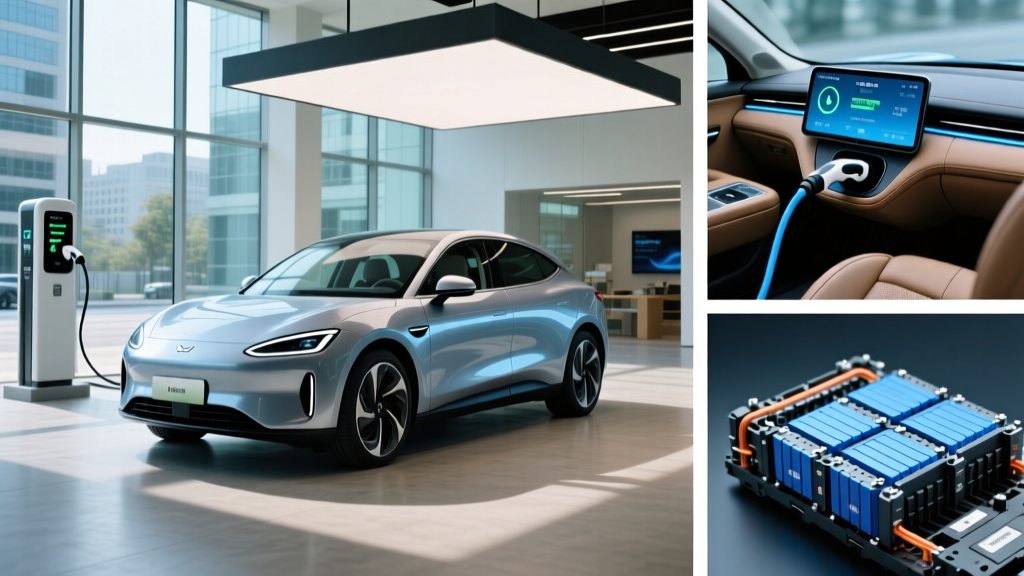
Every current BEV uses one of two dominant battery chemistries:
- NMC/NCA (Nickel Manganese Cobalt / Nickel Cobalt Aluminum): Higher energy density, longer range per kWh, but more sensitive to sustained 100% state of charge. Typical degradation: ~10–12% over 8 years / 100,000 miles.
- LFP (Lithium Iron Phosphate): Slightly lower energy density (shorter range for same pack weight), but can be charged to 100% daily without accelerated degradation and shows ~5–8% loss over 8 years. Tesla Model 3 RWD, standard-range Ford Mustang Mach-E, and base BYD models use LFP.
EV vs Gas: The Real Cost Comparison
The sticker price of an EV is typically $3,000–$8,000 higher than an equivalent gas car before incentives. But the total cost of ownership (TCO) tells a different story. Below is a five-year / 75,000-mile comparison using a 2026 Hyundai Ioniq 5 SEL ($47,695 MSRP, 318 mi EPA, 132 MPGe combined) versus a 2026 Toyota RAV4 XLE AWD ($33,425 MSRP, 29 MPG combined).
| Category | Hyundai Ioniq 5 SEL (BEV) | Toyota RAV4 XLE AWD (Gas) |
|---|---|---|
| Purchase Price (MSRP) | $47,695 | $33,425 |
| Federal Tax Credit (§30D) | −$7,500 (if eligible) | $0 |
| Effective Purchase | $40,195 | $33,425 |
| Energy/Fuel (75k mi) | $2,850 (home L2 @ $0.14/kWh) | $9,050 ($3.50/gal, 29 MPG) |
| Maintenance (5 yr) | $1,200 | $3,800 |
| Insurance (5 yr avg) | $9,500 | $7,800 |
| Estimated Depreciation | $18,000 | $14,500 |
| Total 5-Year Cost | $71,745 | $68,575 |
With the full $7,500 credit, the Ioniq 5 costs roughly $3,170 more over five years — but delivers a quieter, quicker, tech-forward daily drive with zero tailpipe emissions. Without the credit (e.g., income above the IRS §30D caps — $150k single / $300k joint), the gap widens to ~$10,670. Run the numbers on your specific electricity rate, annual mileage, and state incentives before deciding.
Efficiency at a Glance
| Metric | BEV (Ioniq 5) | Gas (RAV4) | PHEV (RAV4 Prime) |
|---|---|---|---|
| EPA Combined | 132 MPGe | 29 MPG | 94 MPGe / 38 MPG |
| Cost per mile (energy) | $0.038 | $0.121 | $0.045 (electric) / $0.092 (gas) |
| 0–60 mph | 5.1 sec | 8.1 sec | 5.7 sec |
| EPA Range | 318 mi | 420 mi (14.5 gal) | 42 mi EV + 570 mi total |
Charging in the Real World: What First-Time Buyers Must Know
Charging is where new EV owners experience the steepest learning curve. Here are the three tiers, with concrete numbers based on 2026 infrastructure:
| Level | Power (kW) | Miles Added/Hour | Typical Cost | Best For |
|---|---|---|---|---|
| Level 1 (120V outlet) | 1.4 kW | 3–5 mi/hr | $0.12–0.18/kWh | Overnight top-ups, PHEVs, low-mileage drivers |
| Level 2 (240V home/public) | 7.2–19.2 kW | 20–60 mi/hr | $0.10–0.30/kWh | Daily home charging, workplace, apartments |
| DC Fast Charge | 50–350 kW | 150–1,000+ mi/hr | $0.30–0.60/kWh | Road trips, emergency top-ups |
Home Level 2 installation is the single biggest ownership variable. A basic 48-amp hardwired charger (e.g., ChargePoint Home Flex, Emporia J1772) runs $500–$700 for equipment. Electrician labor to run a 60-amp circuit from a 200-amp panel: $800–$2,000. If your home has a 100-amp panel, a service upgrade to 200 amps adds $1,500–$3,500. Total installed cost: $1,300–$6,200 depending on panel capacity and conduit run distance.
Charging curve reality check: A vehicle advertising "250 kW peak DC fast charging" does not sustain 250 kW for the full session. Most BEVs peak near 220–250 kW from 10–30% state of charge (SoC), then taper to ~100 kW by 60% SoC and ~50 kW above 80%. A realistic 10–80% session on a 350 kW Electrify America or Tesla Supercharger stall takes 18–28 minutes for a 77–85 kWh pack. Plan road-trip stops around 20-minute breaks, not 10-minute sprints.
Tax Credits, Incentives, and the Fine Print
The IRS §30D Clean Vehicle Credit offers up to $7,500 for new EVs and $4,000 for qualifying used EVs. But eligibility is layered:
- Buyer income caps: AGI ≤ $150,000 (single), $225,000 (head of household), $300,000 (joint).
- MSRP caps: ≤ $80,000 for SUVs/pickups/vans; ≤ $55,000 for sedans.
- Battery sourcing: Required percentages of critical minerals and battery components must be sourced from the U.S. or free-trade-agreement partners. These thresholds tighten annually — some 2025-eligible models lost credit qualification in 2026.
- Point-of-sale transfer: You can apply the credit as a down-payment reduction at the dealer rather than waiting for a tax refund, but you must file IRS Form 8936 with your return to reconcile.
Always verify a specific VIN's eligibility on fueleconomy.gov before signing a purchase agreement. State incentives (e.g., California's CVRP, Colorado's $5,000 credit, New York's DRIVE program) stack on top but vary by jurisdiction — check your state energy office.
Real-World Range: Why the EPA Sticker Isn't the Full Story
EPA Range vs. What You'll Actually Get
EPA estimates assume a mix of city and highway driving at moderate temperatures. Real-world range depends heavily on three factors:
- Highway speed: Sustained 75–80 mph driving reduces range 15–25% versus the EPA combined figure. A 320-mile EPA vehicle may deliver 240–270 miles at interstate speeds.
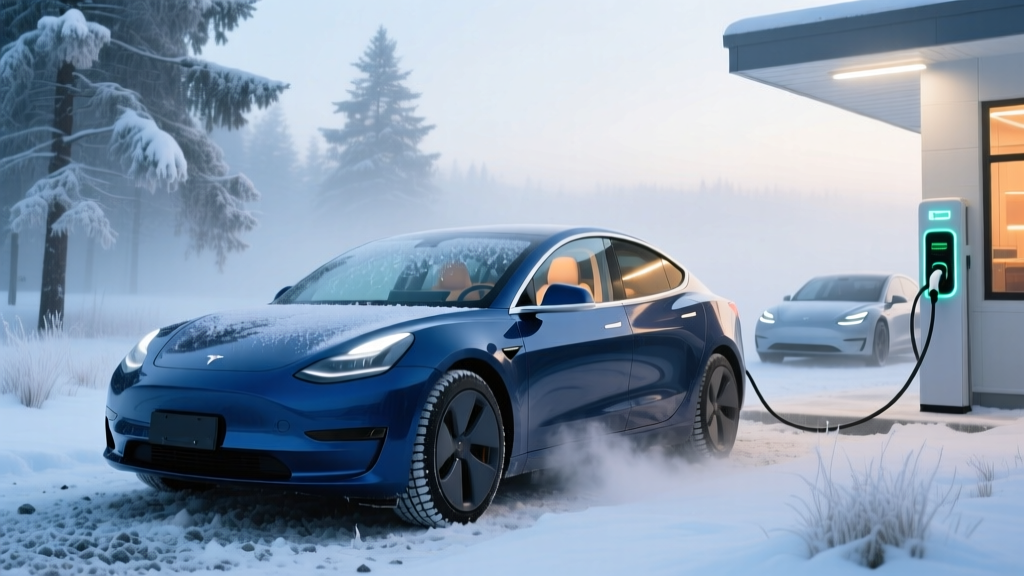
- Cold weather: At 20°F, expect 20–35% range loss due to battery resistance and cabin heating. LFP packs are slightly more affected than NMC. Vehicles with a heat pump (Hyundai Ioniq 5/6, Tesla Model 3/Y, BMW i4) lose ~15–25% versus ~30–40% for resistive-heater models.
- Terrain and towing: Mountain passes and towing a 2,000+ lb trailer can cut range 30–50%. If you tow frequently, size your battery 25% larger than your typical route demands.
For a first-time buyer, the practical rule: choose a vehicle whose EPA range is at least 1.5× your longest regular trip. If your commute plus errands total 80 miles, a 250-mile EPA car is sufficient. If you drive 200 miles to family on weekends, target 320+ miles EPA to account for highway and seasonal losses.
Common EV Myths — Fact-Checked
| Myth | Fact |
|---|---|
| "EV batteries need replacing every 5 years." | Federally mandated warranty is 8 years / 100,000 miles for battery capacity retention (typically ≥70% of original). Real-world data from Recurrent shows most packs retain 88–93% at 100k miles. |
| "EVs are worse in cold weather." | Range drops 20–35%, yes — but EVs start instantly, have no cold-start emissions, and preconditioning (heating the battery while plugged in) recovers much of the loss. Norwegians buy 90%+ EVs despite harsh winters. |
| "The grid can't handle mass EV adoption." | Most charging occurs overnight during off-peak hours. A single BEV charging at 7.2 kW draws about the same as an electric dryer. Utilities are upgrading distribution; the concern is localized, not systemic. |
| "EVs cost more to insure." | Typically 15–25% higher premiums due to repair costs and battery replacement expense. Shop quotes before buying — Tesla Insurance, Progressive, and GEICO vary widely by model and ZIP code. |
| "Public charging is unreliable." | Improving but still inconsistent. Tesla Superchargers maintain ~99% uptime. Electrify America and EVgo average 90–95%. CCS adapters for NACS-equipped vehicles expand options in 2026. Always have a backup charging plan on road trips. |
Decision Framework: Which Electrified Vehicle Fits Your Life?
If-Then EV Buying Guide
- If you have a garage or driveway with 240V access, drive <300 miles/day, and want minimal running costs → Choose a BEV (Ioniq 5, Model 3, Equinox EV, Rivian R2 when available).
- If you live in an apartment without charging, or regularly drive 400+ miles in rural areas with sparse DC infrastructure → Choose a PHEV (Toyota RAV4 Prime, Jeep Wrangler 4xe, Hyundai Tucson PHEV) for 30–42 miles of electric commuting plus gas range.
- If you tow >5,000 lbs frequently → Consider a heavy-duty PHEV or diesel until BEV towing range improves. The Ford F-150 Lightning and Rivian R1T tow 7,700–11,000 lbs but lose 40–50% range under load.
- If your budget is under $30,000 → Look at used EVs (2022–2024 Nissan Leaf SV+, Chevy Bolt EUV, Tesla Model 3 SR+) which qualify for the $4,000 used-EV credit under §25E.
- If you want the lowest possible TCO and qualify for the full credit → Target a $35,000–$48,000 BEV with LFP battery chemistry for maximum longevity and daily 100% charging flexibility.
Frequently Asked Questions
What was the first production electric car, and why does it matter today?
The 2008 Tesla Roadster was the first highway-legal production EV with a lithium-ion battery, proving that electric drivetrains could deliver performance and range beyond neighborhood use. It catalyzed the industry that now offers 80+ models. Understanding this history helps contextualize why today's BEVs have matured rapidly — battery costs have dropped from ~$1,100/kWh in 2010 to approximately $115/kWh in 2026, according to BloombergNEF.
How long does an EV battery actually last?
Most 2026 BEV batteries are engineered for 1,500–2,500 full charge cycles before dropping below 70% capacity. At an average of 250 miles per cycle, that's 375,000–625,000 miles — far beyond the vehicle's mechanical lifespan. Replacement costs, if needed out of warranty, range from $8,000–$18,000 depending on pack size, but are rarely required before 150,000 miles.
Do I need to install a home charger before buying an EV?
Not strictly — Level 1 (120V) charging adds 3–5 miles per hour, which covers drivers who travel under 40 miles daily. But for convenience and to preserve battery health (avoiding daily DC fast charging), a Level 2 home installation is strongly recommended. Budget $1,300–$3,500 for a typical install on a 200-amp panel.
Will my EV lose half its value in three years?
EV depreciation has been volatile. Post-2023 price wars (led by Tesla) crushed resale values for 2021–2023 models. By 2026, depreciation has stabilized as MSRPs normalized and demand recovered. Expect a 3-year-old BEV to retain 48–58% of original MSRP, versus 55–65% for comparable gas vehicles. LFP-equipped models may depreciate slightly more due to lower initial range, but battery longevity could narrow the gap.
Is a plug-in hybrid a better first step than a full EV?
For many first-time buyers, yes — especially those without reliable home charging or who take frequent long road trips. A PHEV like the Toyota RAV4 Prime (42 miles EPA electric, 38 MPG gas, $44,990 MSRP, eligible for $7,500 credit) gives you electric commuting with zero range anxiety. The trade-off: you maintain two powertrains (oil changes, gas engine maintenance) and carry the weight penalty of both systems.