Verdict: The Tesla Model Y in 2026 — Cleared by NHTSA, Still the Benchmark?
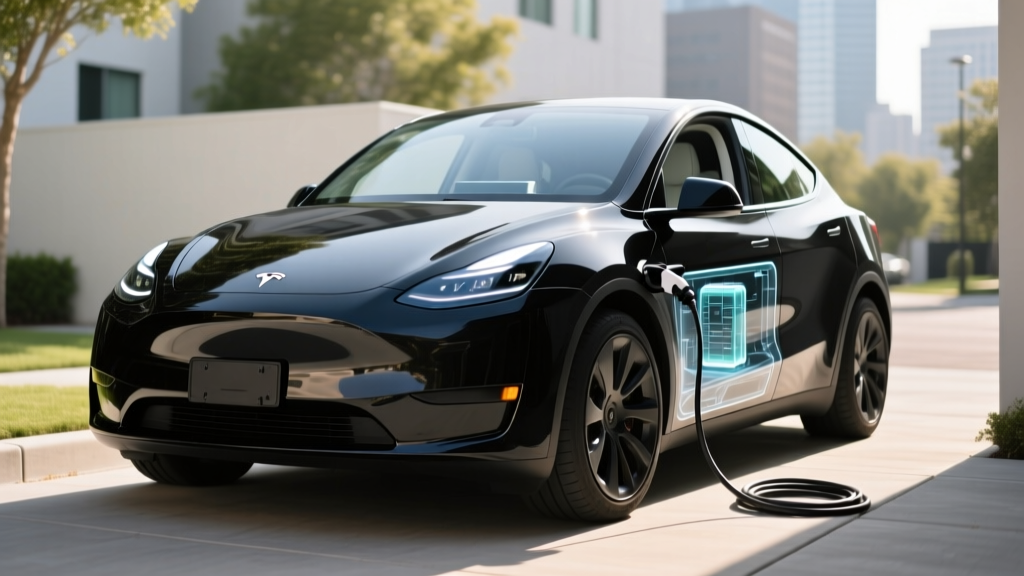
When the NHTSA closed its investigation into Tesla Model Y steering issues in late 2025, it removed one of the last lingering safety-cloud concerns hanging over America's best-selling electric vehicle. The National Highway Traffic Safety Administration opened the probe after a cluster of consumer complaints about momentary steering assist torque losses, but ultimately determined the pattern did not constitute a safety defect — a finding that reaffirms the Model Y's position as a fundamentally sound vehicle.
For 2026, the refreshed Model Y (internally dubbed "Juniper") carries forward the improvements introduced in early 2025: a stiffer body structure, ventilated front seats, ambient lighting, a rear touchscreen, and a slightly larger battery pack. It remains the default answer for buyers wanting a practical, efficient, fast-charging electric crossover — but the competitive landscape has shifted. Let's break down exactly what you're getting.
2026 Tesla Model Y Core Specifications
| Spec | Long Range AWD | Performance AWD |
|---|---|---|
| EPA Range | 320 miles | 295 miles |
| Battery (usable) | ~78 kWh (NMC) | ~78 kWh (NMC) |
| Drivetrain | Dual-Motor AWD | Dual-Motor AWD |
| Horsepower | 384 hp | 456 hp |
| 0–60 mph | 4.8 sec | 3.5 sec |
| Max DC Fast Charge | 250 kW | 250 kW |
| 10–80% DC Charge Time | ~25 min | ~25 min |
| Level 2 Home Charging | 11.5 kW (~44 mi/hr) | 11.5 kW (~44 mi/hr) |
| MPGe (combined) | 111 MPGe | 103 MPGe |
| Efficiency | 28 kWh/100 mi | 30 kWh/100 mi |
| Base MSRP | $46,630 | $51,630 |
| Battery Warranty | 8 yr / 120,000 mi | 8 yr / 120,000 mi |
Source: fueleconomy.gov and Tesla's official specifications. Prices exclude destination fee ($1,390) and are subject to change.
Real-World Range: What the EPA Sticker Doesn't Tell You
Real-World Expectation: ~270–290 mi highway at 70 mph; ~240–260 mi in freezing temperatures with cabin heat
The Model Y Long Range AWD's 320-mile EPA figure is among the best in its class, and Tesla's powertrain efficiency is genuinely class-leading. In mixed suburban-and-highway driving in moderate temperatures (55–75°F), owners consistently report achieving 290–310 miles on a full charge. The vehicle's heat pump — standard since 2021 — significantly reduces cold-weather energy penalties compared to EVs using resistive cabin heaters.
However, sustained 75–80 mph highway driving in summer heat or winter cold will pull that number down. On a 300-mile road trip at interstate speeds in 30°F weather, expect to arrive with roughly 10–15% state of charge remaining, or plan a brief DC fast-charge stop. This is normal EV physics, not a Model Y deficiency — but buyers in northern climates should factor in 15–20% winter range loss when planning commutes.
The base RWD variant (if available in your market) uses an LFP (lithium iron phosphate) battery with approximately 60 kWh usable capacity and an EPA rating around 260 miles. LFP chemistry trades energy density for longevity — Tesla recommends charging LFP packs to 100% regularly, which partially offsets the smaller capacity.
Charging Speed and Infrastructure Access
| Charging Level | Power | Miles Added per Hour | Notes |
|---|---|---|---|
| Level 1 (120V household) | ~1.4 kW | ~5 mi/hr | Emergency/trickle only |
| Level 2 (240V home) | 11.5 kW max | ~44 mi/hr | Full charge in ~7–8 hours |
| DC Fast Charge (Supercharger V3/V4) | 250 kW peak | ~200+ mi in 15 min | 10–80% in ~25 min |
The Model Y's 250 kW peak DC fast-charge rate isn't the fastest in the segment — the Hyundai Ioniq 5 and Porsche Macan Electric both accept higher peak rates — but Tesla's Supercharger network reliability is the equalizer. At a V3 or V4 Supercharger, the Model Y's charge curve holds above 150 kW through roughly 50% state of charge before tapering. A 10–80% session takes approximately 25 minutes, which is competitive but not class-leading.
For home charging, the onboard 11.5 kW AC charger is excellent. On a 48-amp Level 2 circuit (hardwired, 60-amp breaker), you'll add roughly 44 miles of range per hour — enough to fully replenish overnight. Tesla's Wall Connector ($420) is a solid unit, but any J1772/NACS-compatible Level 2 EVSE works. Note: as of 2025, Tesla adopted the NACS connector natively, eliminating the need for adapters at home or at Superchargers.
Preconditioning matters. Navigate to a Supercharger using the built-in navigation, and the Model Y will preheat the battery en route, enabling peak charge rates even in cold weather. Skipping this step in winter can add 5–10 minutes to your charge session.
The NHTSA Steering Investigation: What Happened and What It Means
In 2024, NHTSA's Office of Defects Investigation opened a probe into certain Model Y vehicles following reports of momentary increases in steering effort — primarily during low-speed maneuvers. The complaints centered on the electric power steering (EPS) system briefly reducing assist torque, requiring the driver to apply slightly more effort to the wheel.
After reviewing data, conducting tests, and analyzing Tesla's over-the-air (OTA) software updates addressing the steering calibration, NHTSA closed the investigation without ordering a recall. The agency determined that while the steering assist variations were perceptible to some drivers, they did not rise to the level of a safety defect — the steering system always maintained full mechanical connection and manual steering capability.
For current and prospective 2026 Model Y buyers, this closure is significant. The Juniper refresh introduced updated steering hardware and revised calibration software. The 2026 Model Y's steering feel is precise, well-weighted, and free of the vague or notchy behavior reported in some earlier builds. Tesla's OTA update capability means any future calibration refinements can be deployed wirelessly — no service center visit required.
It's worth noting: NHTSA's full investigation archive is publicly available at nhtsa.gov, and transparency in this process is a positive signal for consumer confidence.
Performance, Ride, and Daily Drivability
The Long Range AWD's 384 horsepower and 4.8-second 0–60 mph time make it genuinely quick — quicker than most buyers will ever need. The Performance trim drops that to 3.5 seconds, which is sports-car territory in a family crossover. Both trims feature dual-motor all-wheel drive with precise torque vectoring.
The Juniper refresh brought meaningful improvements to ride quality. The previous Model Y's firm, sometimes crashy ride over broken pavement was a common criticism. The 2025–2026 model uses revised damping, additional sound deadening, and laminated rear glass. The result is a noticeably quieter, more compliant cabin — still sporty, but no longer punishing on rough roads.
Regenerative braking offers two modes: standard (strong regen enabling near one-pedal driving) and low (coasting feel closer to a gas car). There is no adjustable regen slider, which some competitors offer. The brake pedal feel is consistent, and the blend between regen and friction braking is seamless.
Interior, Cargo, and Technology
The Model Y's interior remains minimalist — a 15.4-inch center touchscreen handles virtually all vehicle functions, climate controls, and infotainment. The 2026 refresh adds ambient lighting, ventilated front seats, power-folding second-row seats, and a 8-inch rear touchscreen for rear passengers.
Cargo volume:
- Behind second row: 30.2 cu ft
- Second row folded: 72.1 cu ft
- Front trunk (frunk): 4.1 cu ft
- Rear legroom: 41.6 inches
- Front headroom: 41.0 inches
These numbers are competitive with the Ford Mustang Mach-E and slightly behind the Hyundai Ioniq 5 in rear-seat space, but the Model Y's hatchback design and flat load floor make it exceptionally practical for bulky items. The frunk is small but useful for charging cables.
On the technology front, Tesla's infotainment remains the industry benchmark for responsiveness and functionality. Wireless phone mirroring is not supported — Tesla uses its own native apps for Spotify, Apple Music, YouTube, and Netflix (the latter usable only while parked). The phone-as-key system is seamless, and OTA updates continue to add features years after purchase.
Driver assistance: Basic Autopilot (Traffic-Aware Cruise Control + Autosteer) is standard. Enhanced Autopilot ($6,000) adds automatic lane changes, Navigate on Autopilot, and Smart Summon. Full Self-Driving (Supervised) ($8,000) adds traffic-light and stop-sign recognition with city-street autosteer. All of these are SAE Level 2 systems — the driver must remain fully attentive and keep hands on or near the wheel at all times.
Pricing, Trims, and Federal Tax Credit Eligibility
| Trim | Base MSRP | Est. Destination | §30D Credit Eligibility |
|---|---|---|---|
| Long Range AWD | $46,630 | $1,390 | Up to $7,500 (see rules below) |
| Performance AWD | $51,630 | $1,390 | Up to $7,500 (see rules below) |
Federal tax credit eligibility for the Model Y under IRS §30D is subject to several requirements that change periodically:
- MSRP cap: SUVs must have a base MSRP at or below $80,000 — the Model Y clears this easily.
- Buyer income cap: Modified AGI must not exceed $150,000 (single), $225,000 (head of household), or $300,000 (joint filers).
- Battery sourcing: A percentage of critical minerals and battery components must be sourced from the U.S. or FTA partners. Tesla's U.S.-built packs have generally qualified for the full $7,500, but these thresholds tighten annually. Verify current-year requirements on irs.gov before purchasing.
- Point-of-sale transfer: As of 2024, you can transfer the credit to the dealer at purchase, reducing the upfront price rather than waiting for a tax refund. This effectively brings the Long Range AWD to approximately $39,130 before destination, if you qualify.
Tax credit rules are complex and subject to change. Consult a tax professional and check IRS guidance for your specific situation.
Pros, Cons, and Who Should Buy the Model Y
Pros
- Class-leading efficiency (28 kWh/100 mi)
- Supercharger network reliability
- Excellent real-world range (320 mi EPA)
- Spacious cargo area with hatchback practicality
- Continuous OTA updates add features post-purchase
- Strong resale value
- NHTSA steering investigation closed — clean safety record
Cons
- Touchscreen-only controls (no physical buttons for climate)
- No Apple CarPlay or Android Auto
- 250 kW peak charge rate trails some competitors
- FSD (Supervised) costs $8,000 extra and is still Level 2
- Rear-seat space tighter than Ioniq 5
- Insurance premiums tend to be higher than average
- Minimalist interior not to everyone's taste
Who the Model Y suits best:
- Daily commuters who can charge at home and want minimal running costs
- Small families needing hatchback cargo versatility with 5-seat comfort
- Road-trip enthusiasts who value Supercharger network coverage on long drives
- Tech-forward buyers who appreciate OTA updates and integrated software
Consider alternatives if: You need maximum rear-seat room (look at the Ioniq 5), want Apple CarPlay (most competitors offer it), or prioritize the absolute fastest DC charging (Hyundai/Kia's E-GMP platform peaks at 350 kW).
2026 Model Y vs. Key Competitors
The electric compact-SUV segment is now crowded. Here's how the Model Y stacks up on the metrics that matter:
| Metric | Tesla Model Y LR AWD | Hyundai Ioniq 5 Limited AWD | Ford Mustang Mach-E Premium AWD |
|---|---|---|---|
| EPA Range | 320 mi | 290 mi | 290 mi |
| Max DC Charge | 250 kW | 350 kW | 150 kW |
| 10–80% Time | ~25 min | ~18 min | ~37 min |
| 0–60 mph | 4.8 sec | 4.5 sec | 5.1 sec |
| Efficiency (kWh/100 mi) | 28 | 30 | 32 |
| Starting MSRP | $46,630 | $50,100 | $44,495 |
| Apple CarPlay | No | Yes | Yes |
The Ioniq 5 charges faster. The Mach-E starts cheaper. But the Model Y wins on range and efficiency — and the Supercharger network remains a decisive advantage for buyers who road-trip frequently.
Frequently Asked Questions
What is the real-world range of the 2026 Tesla Model Y?
Expect 270–310 miles in real-world driving depending on speed, temperature, and terrain. The 320-mile EPA figure is achievable in moderate-temperature mixed driving but drops 15–20% in freezing conditions or sustained high-speed highway travel.
How fast does the Model Y charge at home and on the road?
At home on a 240V Level 2 charger (48A), the Model Y adds roughly 44 miles of range per hour, reaching a full charge in 7–8 hours. On a Tesla Supercharger (DC fast charge), it peaks at 250 kW and charges from 10–80% in approximately 25 minutes.
Does the 2026 Model Y qualify for the $7,500 federal EV tax credit?
It is eligible, but your personal qualification depends on income caps ($150K single / $300K joint), the MSRP cap ($80K for SUVs — easily cleared), and current battery-sourcing requirements. The credit can be transferred at point of sale. Always verify on irs.gov and consult a tax professional.
Is the Model Y worth buying over the Ioniq 5 or Mach-E?
If range, efficiency, and Supercharger access are your priorities, yes. If you want faster DC charging, Apple CarPlay, or a more conventional interior with physical buttons, the Ioniq 5 or Mach-E may suit you better. All three are excellent vehicles — the right choice depends on your specific use case.
What's the warranty coverage on the Model Y's battery?
Tesla covers the battery and drive unit for 8 years or 120,000 miles (whichever comes first) with a minimum 70% capacity retention guarantee. This is competitive with the industry standard of 8 years / 100,000 miles offered by most automakers.
Is Tesla's Autopilot or FSD actually self-driving?
No. Both Autopilot and Full Self-Driving (Supervised) are SAE Level 2 driver-assistance systems. They can manage steering, acceleration, and braking under certain conditions, but the driver must remain fully engaged, monitor the road, and be prepared to take over instantly. No Tesla vehicle currently offers autonomous (Level 4 or 5) driving capability.