Quick Answer: Best Blue Electric Cars for 2026
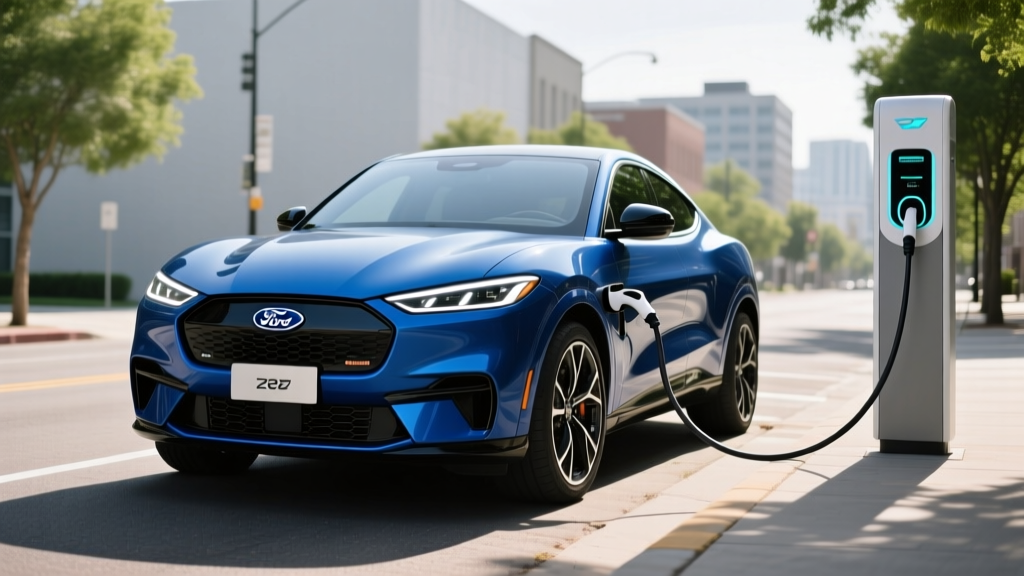
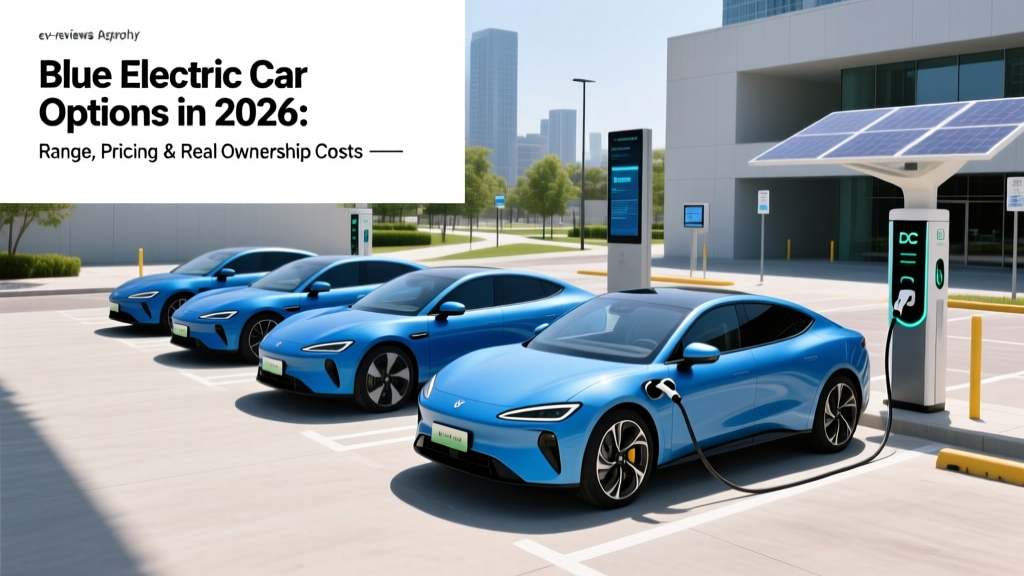
If you're searching for a blue electric car, several 2026 models offer factory blue paint across key segments. The Hyundai Ioniq 5 (Lucid Blue), BMW i4 (Portimao Blue), Ford Mustang Mach-E (Grabber Blue), and Chevrolet Equinox EV (Riptide Blue) all ship in blue hues with EPA ranges from 285 to 318 miles and starting MSRPs between $33,600 and $52,200. Your best pick depends on budget, charging access, and daily driving distance — not just color.
Why Color Matters Less Than Specs (But We Get It)
Aesthetic preference is valid — you'll look at this car every day. But a blue electric car should earn your purchase on its engineering merits first. The EV market in 2026 has matured enough that most mainstream models offer at least one blue exterior option, so you rarely need to compromise on specs to get the color you want. What you should prioritize:
- EPA range vs. your real commute: A 300-mile EPA sticker doesn't mean 300 miles at 75 mph in January. Expect 75-85% of EPA range in mixed highway/cold conditions.
- DC fast-charge speed (kW): Peak rate and 10-80% time determine road-trip viability far more than total range.
- Home charging feasibility: A Level 2 home charger (240V, 32-48 amps) is the single biggest ownership satisfaction factor. If you can't install one, public charging costs and convenience shift the math significantly.
- Federal tax credit eligibility: Under current IRS §30D rules, up to $7,500 is available — but only if the vehicle's MSRP, your income, and battery mineral sourcing all qualify.
2026 Blue Electric Car Lineup: Spec-by-Spec Comparison
| Spec | Hyundai Ioniq 5 (Lucid Blue) | Ford Mustang Mach-E (Grabber Blue) | Chevrolet Equinox EV (Riptide Blue) | BMW i4 (Portimao Blue) |
|---|---|---|---|---|
| EPA Range | 318 mi (RWD Long Range) | 320 mi (Extended Range RWD) | 319 mi (3RS) | 307 mi (eDrive40) |
| Battery (usable) | 84 kWh, NMC | 91 kWh, NMC | 85 kWh, NMC | 81.5 kWh, NMC |
| Peak DC Fast Charge | 240 kW (10-80% ~18 min) | 150 kW (10-80% ~35 min) | 150 kW (10-80% ~32 min) | 205 kW (10-80% ~22 min) |
| Level 2 Rate | 10.9 kW | 10.5 kW | 11.5 kW | 11 kW |
| Horsepower | 225 hp (RWD) | 290 hp (RWD) | 220 hp (FWD) | 335 hp (RWD) |
| 0-60 mph | 7.2 sec | 6.3 sec | 7.9 sec | 5.5 sec |
| MPGe (combined) | 114 MPGe | 105 MPGe | 109 MPGe | 109 MPGe |
| Starting MSRP | $42,600 | $43,495 | $33,600 | $52,200 |
| Connector | NACS (native Tesla Supercharger access) | NACS (native) | NACS (native) | CCS2 (adapter for NACS) |
| Battery/Powertrain Warranty | 10 yr / 100,000 mi | 8 yr / 100,000 mi | 8 yr / 100,000 mi | 8 yr / 100,000 mi |
Sources: EPA / fueleconomy.gov, manufacturer 2026 spec sheets. Real-world highway range is typically 15-25% below EPA; cold-weather (below 32°F) can reduce range an additional 10-20%.
Real-World Range Reality Check
The Hyundai Ioniq 5's 318-mile EPA figure translates to roughly 255-270 miles on a sustained 70-75 mph highway trip in moderate temperatures. In sub-freezing winter conditions with cabin heating, plan for 220-240 miles before needing a charge stop. The Mach-E and Equinox EV show similar proportional reductions. Always plan road trips using 75% of the EPA sticker as your safe working range.
Total Cost of Ownership: EV vs. Gas Equivalent
Let's compare the Chevrolet Equinox EV 3RS ($33,600 MSRP) against a comparably equipped gas-powered Chevrolet Equinox AWD (~$31,000 MSRP) over five years and 75,000 miles of driving.
| Cost Category (5 yr / 75k mi) | Equinox EV 3RS | Gas Equinox AWD |
|---|---|---|
| Purchase Price (before incentives) | $33,600 | $31,000 |
| Federal Tax Credit (§30D) | -$7,500 (if eligible) | $0 |
| Effective Purchase Price | $26,100 | $31,000 |
| Energy/Fuel (home charging avg $0.14/kWh vs $3.30/gal) | $3,940 | $8,120 |
| Maintenance (no oil changes, fewer brake replacements) | $1,200 | $3,400 |
| Insurance (EVs typically 10-15% higher premiums) | $7,800 | $6,800 |
| Estimated Depreciation | $12,500 | $13,200 |
| Total 5-Year Cost | $51,540 | $62,520 |
Assumptions: 15,000 mi/year, home Level 2 charging at national average electricity rate, gas at $3.30/gal national average, 28 MPG combined for gas Equinox. Actual costs vary by state, utility rate, and driving pattern. Tax credit eligibility depends on income caps ($150k single / $300k joint), MSRP caps ($55k SUVs), and battery sourcing requirements per IRS §30D.
Charging at Home vs. Public: What First-Time Buyers Must Know
The single most important ownership question isn't range — it's whether you can charge at home. Here's the breakdown:
Level 1 (120V Standard Outlet)
Adds roughly 3-5 miles of range per hour. An overnight 10-hour plug-in yields 30-50 miles — sufficient only if your daily driving is under 40 miles and you never need a full recharge quickly. This is a stopgap, not a long-term solution for most owners.
Level 2 (240V, Recommended Home Setup)
A 48-amp Level 2 charger (like the ChargePoint Home Flex or Emporia Level 2) delivers 10-11.5 kW, adding 30-40 miles per hour. A full overnight charge easily refills any of the blue EVs above. Installation costs vary:
- Best case (panel nearby, no upgrade): $500-$1,200 for electrician labor + permit + hardware
- Typical case (200-amp panel, moderate run): $1,200-$2,500
- Worst case (panel upgrade to 200A required): $3,000-$5,000+
Always hire a licensed electrician and pull a permit. A NEMA 14-50 outlet is the most versatile installation — it supports portable chargers and can serve a future second EV.
Public DC Fast Charging
Without home charging, you'll rely on public DC fast chargers. At national average rates of $0.35-$0.48/kWh, filling the Ioniq 5's 84 kWh battery from 10-80% costs roughly $22-$30 — comparable to a gas fill-up. Networks like Tesla Supercharger (now open to NACS-equipped non-Tesla EVs), Electrify America, and EVgo vary in reliability. Plan for occasional downtime and always have a backup charger on your route.
Common EV Myths vs. Facts
| Myth | Fact |
|---|---|
| "EV batteries need replacing every few years" | Modern NMC and LFP batteries are warrantied for 8-10 years / 100,000 miles at 70%+ capacity retention. Data from fueleconomy.gov and long-term fleet studies show most packs retain 85-90% capacity at 100,000 miles. Full replacement costs $8,000-$18,000 but is rarely needed within typical ownership. |
| "EVs are worse in cold weather" | Range drops 10-30% below freezing — real and measurable. But EVs start instantly in cold (no cranking), and preconditioning the battery while plugged in recovers much of the loss. A heat pump (standard on Ioniq 5, optional on others) reduces cabin-heating range penalty. |
| "Public charging is always unreliable" | Network uptime varies. Tesla Superchargers consistently report 95%+ uptime. Electrify America and EVgo have improved but still experience 5-15% failure rates at some stations. Apps like PlugShare and A Better Routeplanner provide real-time status. |
| "All EVs qualify for the $7,500 tax credit" | Eligibility requires meeting MSRP caps ($55,000 for SUVs, $50,000 for sedans), buyer income limits ($150k single / $300k joint AGI), and critical-mineral/battery-component sourcing thresholds that tighten annually. Always verify on the IRS clean vehicle credit page before purchasing. |
| "EVs cost more to insure" | Generally true — premiums run 10-15% higher on average due to higher repair costs and parts pricing. However, the fuel and maintenance savings typically offset this within the first 1-2 years of ownership. |
Decision Framework: Which Blue Electric Car Should You Buy?
If/Then Buyer Guide
- If your budget is under $35,000 (after credit): The Chevrolet Equinox EV in Riptide Blue starts at $33,600 and can drop to ~$26,100 with the full §30D credit. It offers 319 miles of EPA range, adequate 150 kW DC charging, and practical crossover space. Best value pick.
- If road-trip charging speed is your top priority: The Hyundai Ioniq 5 in Lucid Blue peaks at 240 kW and charges 10-80% in approximately 18 minutes on a capable 350 kW charger. Its NACS connector gives native Tesla Supercharger access — the largest and most reliable network.
- If you want performance and premium feel: The BMW i4 in Portimao Blue delivers 335 hp, a 5.5-second 0-60, and a well-appointed cabin. At $52,200, it exceeds the §30D SUV MSRP cap (it qualifies under the $55,000 sedan cap if classified as such — verify body-style classification with your dealer). Expect 205 kW peak charging.
- If you prefer an American brand with strong dealer support: The Ford Mustang Mach-E in Grabber Blue offers 320 miles of range, 290 hp, and Ford's widespread dealer network for service. Its 150 kW peak charging is the slowest in this group, which matters on longer trips.
- If you can't install a Level 2 charger at home: Prioritize the Ioniq 5 for its superior DC fast-charge speed and NACS Supercharger access, which minimizes time spent at public chargers. Budget extra for higher per-kWh public charging costs.
- If you live in a cold climate (sub-freezing winters): Choose a model with a heat pump (Ioniq 5 standard, others check trim) and precondition your car while plugged in. Expect 20-25% range loss and plan charging stops accordingly.
Frequently Asked Questions
Can I get a blue electric car under $30,000?
After the §30D federal tax credit, the Chevrolet Equinox EV can reach an effective price near $26,100. Before the credit, no new blue EV in 2026 starts below $30,000. If you're shopping used, the used clean vehicle credit offers up to $4,000 (30% of sale price, capped) on qualifying pre-owned EVs sold for $25,000 or less.
Do blue EVs hold resale value better or worse than other colors?
Color has minimal impact on EV depreciation compared to battery health, mileage, and market demand. Neutral colors (white, black, gray) traditionally sell faster in the used market, but unique colors like Grabber Blue on the Mach-E can command a slight premium among enthusiasts. Depreciation is driven more by the rapid pace of new EV technology than by paint.
What's the cheapest blue electric car to charge?
The Hyundai Ioniq 5 leads this group at 114 MPGe combined, meaning it uses less energy per mile. At a national average electricity rate of $0.14/kWh, the Ioniq 5 costs roughly $0.042 per mile to charge at home. The Mach-E, at 105 MPGe, costs about $0.046 per mile. Both are dramatically cheaper than a 28 MPG gas vehicle at $3.30/gallon ($0.118 per mile).
Is it worth waiting for a specific blue color, or should I take what's on the lot?
Factory-ordering your preferred color typically adds 4-12 weeks of wait time depending on the manufacturer and trim. If the vehicle qualifies for the §30D point-of-sale credit transfer, ordering from the factory doesn't change your eligibility. However, dealer inventory may offer immediate availability and possible negotiation leverage. If blue is a must-have, ordering is usually worth the wait — dealer lots skew heavily toward white, black, and gray.
Do any of these blue EVs have Level 4 self-driving?
No. Every vehicle listed here offers SAE Level 2 driver-assistance systems (Hyundai Highway Driving Assist, Ford BlueCruise, GM Super Cruise, BMW Driving Assistant Professional). Level 2 means the car can manage steering and acceleration on highways, but you must remain fully attentive and ready to take over at all times. True Level 4 driverless operation is currently limited to geofenced robotaxi services like Waymo in select metro areas — not available in any consumer vehicle.