What Is the "Bezos EV Truck"?
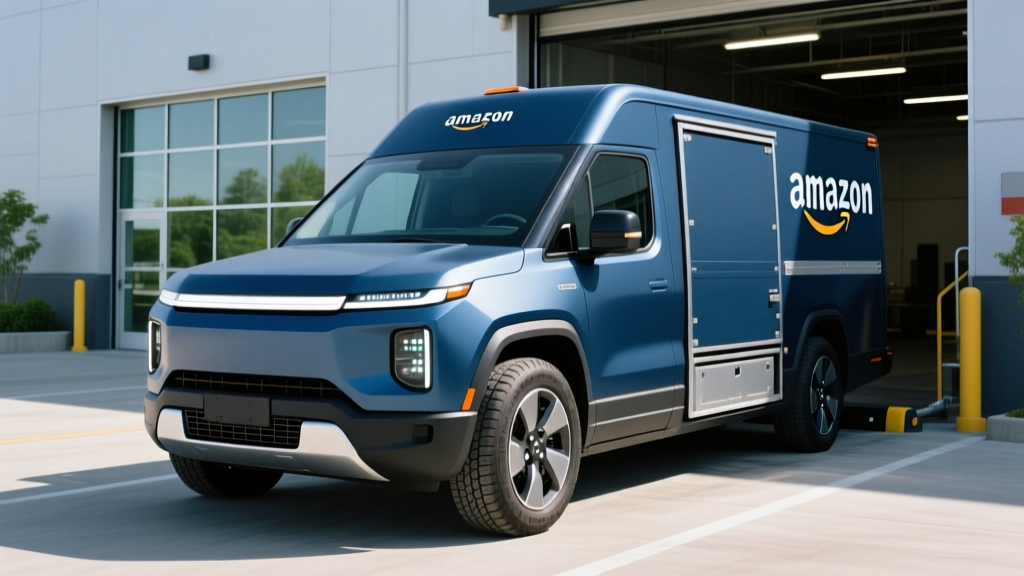
The "Bezos EV truck" refers to the Rivian EDV (Electric Delivery Van), a commercial electric vehicle built exclusively for Amazon's logistics fleet. Jeff Bezos, as Amazon's founder, championed the company's 2019 order of 100,000 electric delivery vans from Rivian — the largest EV fleet order in history at the time. As of early 2026, Amazon has deployed over 20,000 EDVs across the U.S. and Europe. The Rivian EDV is not available for private purchase; it is a purpose-built commercial vehicle owned and operated solely by Amazon.
Why "Bezos EV Truck" Keeps Trending
The search term "Bezos EV truck" spikes whenever Amazon announces fleet expansions, Rivian posts earnings, or Bezos makes public comments about electrification. The curiosity is understandable: Amazon's bet on Rivian helped launch the automaker, and the EDV's distinctive boxy silhouette has become a familiar sight in neighborhoods nationwide. But conflating Amazon's delivery van with a consumer truck leads to confusion. Let's separate what the EDV actually is from what private buyers can actually purchase.
Rivian EDV Specs: The Numbers Behind Amazon's Fleet
The Rivian EDV comes in three body lengths — the EDV-500, EDV-700, and EDV-900 — with the 500, 700, and 900 referring to approximate cargo volume in cubic feet. Here's what we know from Rivian's commercial specifications and fleet reporting:
| Spec | EDV-500 | EDV-700 | EDV-900 |
|---|---|---|---|
| Battery Capacity | ~90 kWh (NMC) | ~120 kWh (NMC) | ~140 kWh (NMC) |
| EPA-Est. Range | ~120 mi | ~150 mi | ~161 mi |
| Peak DC Charge Rate | ~125 kW | ~150 kW | ~150 kW |
| 10-80% DC Charge | ~40 min | ~45 min | ~50 min |
| Level 2 Charge Rate | ~11.5 kW | ~11.5 kW | ~11.5 kW |
| Cargo Volume | ~500 cu ft | ~700 cu ft | ~900 cu ft |
| Payload Capacity | ~2,500 lbs | ~3,200 lbs | ~3,800 lbs |
| Drive Configuration | FWD (single motor) | FWD (single motor) | FWD (single motor) |
A few things stand out. The EDV uses front-wheel drive with a single motor — not the quad-motor AWD system found in the consumer Rivian R1T or R1S. Range is modest by consumer standards (120-161 miles), but that's intentional: Amazon delivery routes are typically 70-120 miles per day, and the vans return to a depot for overnight Level 2 charging. The battery chemistry is NMC (nickel manganese cobalt), chosen for energy density to maximize cargo space.
How the Rivian EDV Compares to Consumer EV Trucks
Since you can't buy the EDV, the natural question is: how does it stack up against the Rivian R1T and other electric trucks that are available? Here's a side-by-side comparison using 2026 model-year data from fueleconomy.gov and manufacturer specs:
| Attribute | Rivian EDV-700 (Amazon only) | Rivian R1T Dual-Motor (2026) | Ford F-150 Lightning Lariat (2026) |
|---|---|---|---|
| Availability | Commercial fleet only | Consumer purchase | Consumer purchase |
| Battery (usable) | ~120 kWh NMC | 128 kWh NMC (Large Pack) | 131 kWh NMC (Extended Range) |
| EPA Range | ~150 mi | 352 mi | 320 mi |
| Peak DC Charge | ~150 kW | 220 kW | 150 kW |
| 10-80% DC | ~45 min | ~27 min | ~41 min |
| 0-60 mph | ~8.0 sec (est.) | 4.5 sec | 4.0 sec |
| Horsepower | ~275 hp | 533 hp | 580 hp |
| Towing Capacity | N/A (not rated) | 11,000 lbs | 10,000 lbs |
| Base MSRP | Not for sale | $77,700 | $71,990 |
| Federal Tax Credit | N/A (commercial) | Up to $7,500 (§30D) | Up to $7,500 (§30D) |
The R1T and F-150 Lightning are dramatically more powerful, longer-range vehicles designed for personal use — towing, road trips, off-roading. The EDV is optimized for stop-and-go urban routes, maximizing cargo space while minimizing per-mile operating cost. They share the Rivian skateboard-derived DNA but serve entirely different missions.
Real Costs: What Amazon Saves (and What Consumer EV Truck Buyers Spend)
Amazon's investment in the EDV is a commercial calculation. For private buyers eyeing a Rivian R1T or Ford F-150 Lightning, the math is different. Here's a 5-year total-cost-of-ownership estimate comparing an electric truck to its gas equivalent, assuming 12,000 miles/year and national average energy prices:
| Cost Factor | Rivian R1T Dual-Motor (2026) | Ford F-150 Gas 4x4 (2026) |
|---|---|---|
| Purchase Price (MSRP) | $77,700 | $52,500 |
| Federal Tax Credit (§30D) | -$7,500 (if eligible) | $0 |
| Effective Purchase | $70,200 | $52,500 |
| 5-Year Fuel/Energy | $5,400 (home L2, $0.14/kWh) | $11,250 (20 MPG, $3.75/gal) |
| 5-Year Maintenance | $1,800 (est.) | $4,500 (est.) |
| 5-Year Insurance | $12,000 (est.) | $9,000 (est.) |
| Estimated Depreciation | $28,000 | $18,000 |
| 5-Year Total | $117,400 | $85,250 |
The EV truck saves significantly on fuel and maintenance — roughly $5,850 and $2,700 over five years, respectively. But the higher purchase price, steeper depreciation, and elevated insurance premiums (EV-specific collision repair costs remain higher) mean the total cost gap persists. The break-even point for most buyers extends beyond year five unless gas prices spike or local incentives (state rebates, utility off-peak charging credits) narrow the gap.
A note on the §30D federal tax credit: As of 2026, the $7,500 credit requires the buyer to meet income caps ($150K single / $300K joint AGI), the vehicle MSRP must not exceed $80,000 for trucks, and battery components and critical minerals must meet phased domestic-sourcing thresholds. Eligibility changes annually — verify current rules at IRS.gov §30D and consult a tax professional before relying on the credit in your purchase math.
Real-World Ownership: What First-Time EV Truck Buyers Must Know
If the Bezos EV truck search brought you here because you're considering a consumer electric truck, these are the practical realities that spec sheets don't always surface:
Home Charging Is Not Optional for Truck Owners
Electric trucks have large batteries (128-131 kWh). On a standard 120V Level 1 outlet (1.4 kW), fully recharging an R1T from empty takes over 90 hours. A Level 2 home charger at 11.5 kW (48A, 240V) cuts that to roughly 11-12 hours — overnight, every night. Installation typically costs $1,200-$3,500 depending on panel capacity and conduit runs. If your home has a 100A electrical panel, you may need a $2,000-$4,000 panel upgrade to 200A to support a Level 2 charger alongside existing loads. Confirm your panel capacity with a licensed electrician before purchasing.
Highway Range Falls Short of the EPA Sticker
The Rivian R1T Dual-Motor's 352-mile EPA rating assumes a mix of city and highway driving. At sustained 75 mph highway speeds, expect 270-300 miles in mild weather. In cold conditions (below 30°F), battery efficiency drops 15-30%, meaning a winter highway range of 220-260 miles is realistic. Towing cuts range even more aggressively — typically 40-50% reduction depending on trailer weight and aerodynamics.
DC Fast Charging Tapers Above 80%
The R1T peaks at 220 kW on a DC fast charger, but that peak sustains only between roughly 10-50% state of charge. Above 80%, the charge rate drops dramatically — often below 50 kW — to protect battery health. Plan road-trip stops around 10-80% increments (~27 minutes) rather than waiting for a full charge. A 10-100% session can exceed 60 minutes.
Public Charging Reliability Varies
As of 2026, the Tesla Supercharger network (now open to other brands via NACS adapters) remains the most reliable DC fast-charging option. Electrify America, EVgo, and ChargePoint have improved uptime but still experience occasional connector failures, payment-app glitches, and speed throttling. For road trips in an electric truck, route planning through the Supercharger network is the path of least frustration.
Common Misconceptions About the Bezos EV Truck
| Myth | Fact |
|---|---|
| "I can buy the Amazon delivery van for personal use." | The Rivian EDV is exclusively owned by Amazon. Rivian's consumer truck is the R1T, starting at $77,700. |
| "The EDV has the same tech as the R1T." | The EDV uses a simplified FWD single-motor platform. The R1T offers dual- or quad-motor AWD with adaptive air suspension. |
| "Electric trucks can't tow." | The R1T tows 11,000 lbs and the F-150 Lightning tows 10,000 lbs — comparable to gas half-tons. Range drops significantly while towing, however. |
| "EV batteries need replacing every 5 years." | Both Rivian and Ford warranty their batteries for 8 years / 175,000 miles (Rivian) and 8 years / 100,000 miles (Ford), with a minimum 70% capacity retention threshold. Real-world NMC degradation averages 10-15% over 8 years for typical use. |
| "The $7,500 tax credit applies to everyone." | §30D has income caps, MSRP caps, and battery-sourcing requirements. Many buyers — and some trims — do not qualify. Check IRS.gov before budgeting. |
Decision Framework: Should You Buy a Consumer Electric Truck?
Choose an electric truck (Rivian R1T, F-150 Lightning, Chevy Silverado EV) if:
- You have reliable home charging access (garage or driveway with 240V outlet)
- Your daily driving is under 200 miles round-trip (covers ~90% of American commutes)
- You want near-silent operation, instant torque, and minimal drivetrain maintenance
- You qualify for the §30D tax credit or live in a state with additional EV rebates
- You value V2L/V2H capability (using the truck's battery to power tools, camping gear, or home backup)
Stick with a gas or hybrid truck if:
- You lack home charging access and rely on street parking or apartment living
- You regularly tow heavy trailers over long distances (range loss makes EV towing impractical for 200+ mile hauls)
- You drive in extreme cold climates where 30% range loss compounds with already-long routes
- Your budget is below $55,000 and you need a work truck today (the most affordable EV trucks still start above $55K before credits)
- You put on very high annual mileage (25,000+ miles/year) where depreciation and insurance costs outweigh fuel savings
Frequently Asked Questions
Can I buy the Rivian EDV that Amazon uses?
No. The Rivian EDV is built under an exclusive commercial agreement with Amazon. Amazon holds contractual exclusivity on the EDV design through at least 2027. Rivian's consumer vehicles are the R1T (truck) and R1S (SUV). Some second-source commercial vans from other manufacturers (BrightDrop, Workhorse) are available to other fleets, but the EDV itself is Amazon-only.
How much does Amazon save per mile with the EDV vs. gas vans?
Industry estimates put the EDV's energy cost at roughly $0.05-$0.07 per mile (commercial electricity rates, depot charging) compared to $0.18-$0.22 per mile for a gas-powered delivery van at 14-16 MPG and $3.50/gallon fuel. Maintenance savings add another $0.03-$0.05 per mile. Over a 100,000-mile vehicle lifespan, that's $15,000-$20,000 in operating savings per van — justifying the higher upfront cost.
Is the Rivian R1T eligible for the $7,500 federal tax credit in 2026?
The Rivian R1T qualifies for up to $7,500 under §30D, provided the buyer meets income limits (AGI under $150K single / $300K joint), the specific trim MSRP is under the $80,000 truck cap, and the battery meets critical-mineral and component-sourcing thresholds for the current tax year. Some higher trims (Quad-Motor, Max Pack) push MSRP above $80,000 and become ineligible. The credit can be transferred to the dealer as a point-of-sale discount. Always verify eligibility at fueleconomy.gov before purchasing.
What is the real-world range of the Rivian R1T?
The Dual-Motor R1T with the Large Pack (128 kWh usable) carries an EPA rating of 352 miles. In real-world mixed driving, owners report 290-320 miles in temperate weather. Highway-only driving at 70-75 mph yields approximately 270-300 miles. In sub-freezing temperatures, expect 220-270 miles. Towing a 5,000-lb trailer reduces range to roughly 160-200 miles depending on terrain and speed.
Does Amazon's EV investment affect consumer Rivian buyers?
Indirectly, yes. Amazon's 100,000-van order gave Rivian the production volume and revenue to scale its Normal, Illinois factory and develop its second-generation platform. That manufacturing scale benefits R1T and R1S buyers through improved build quality, expanding service centers, and ongoing software development. However, Rivian's financial health depends on both commercial and consumer demand — if either segment slows, production timelines and feature rollouts can shift.