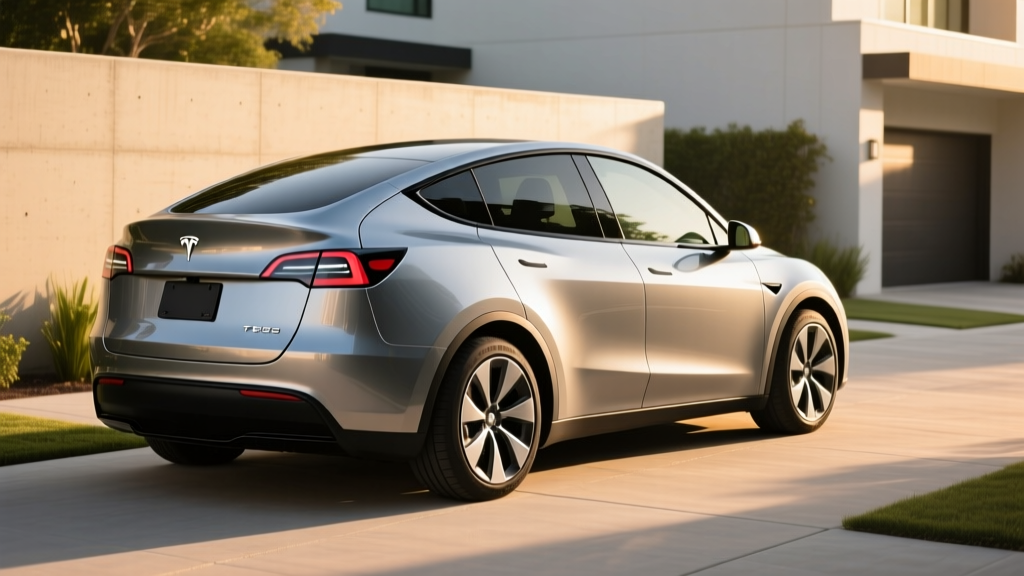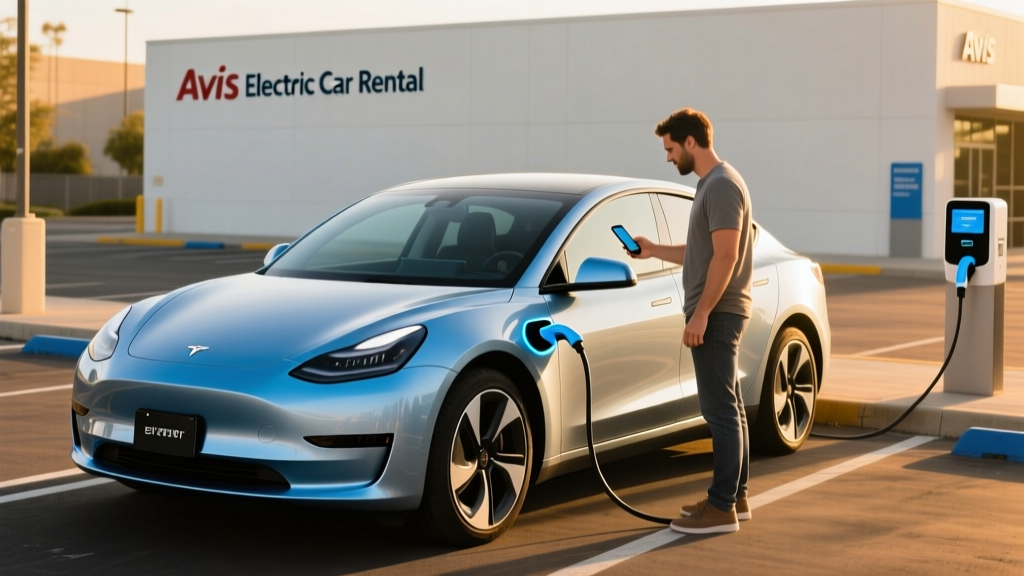
The Quick Answer: Should You Rent an EV from Avis?
Renting an electric vehicle from Avis is one of the smartest, lowest-risk ways to test EV ownership before committing $35,000+ on a purchase. Avis currently offers models like the Tesla Model Y, Ford Mustang Mach-E, and Chevrolet Equinox EV across major US airports and city locations. Expect to pay a 20–40% premium over an equivalent gas-car rental (roughly $75–$130/day vs. $50–$85/day for a midsize sedan), but you gain hands-on experience with real-world range, charging logistics, and daily EV living — data no spec sheet can give you. If you're on the fence about electrification, a 3–5 day Avis electric car rental can save you from a costly purchase mistake or confirm that an EV fits your life.
Why Test-Drive EV Ownership Through Avis Instead of a Dealer?
A 15-minute dealer test drive tells you almost nothing about what it's like to live with an electric vehicle. You won't experience charging, range depletion on the highway, regenerative braking adaptation, or how the car handles your actual commute and errands. An Avis electric car rental flips that equation entirely.
Here's what a multi-day rental reveals that a dealership cannot:
- Real-world range vs. EPA estimates: You'll see exactly how highway speeds, climate control, and terrain affect the battery. A Tesla Model Y Long Range carries an EPA-estimated 310 miles of range, but sustained 75 mph highway driving in cold weather can drop that to 230–250 miles.
- Charging logistics in your area: Do you have reliable Level 2 or DC fast charging near your home, workplace, or regular routes? Renting forces you to engage with the charging network honestly.
- Daily usability: Cargo space, frunk utility, one-pedal driving comfort, software UX, and ADAS features like Autopilot or BlueCruise become tangible over days, not minutes.
- Cost-per-mile reality: You can track exactly what you spend on electricity vs. what you would have spent on gasoline for the same trips.
What EVs Does Avis Actually Offer in 2026?
Avis's EV fleet has evolved significantly since their initial Tesla-heavy rollout. While availability varies by location and season, here's what you're most likely to encounter at major US rental counters:
| Model | Battery (kWh) | EPA Range | Peak DC Charge (kW) | 10–80% Time | 0–60 mph | Approx. Daily Rate |
|---|---|---|---|---|---|---|
| Tesla Model Y Long Range | 75 kWh (NMC) | 310 mi | 250 kW | ~22 min | 4.8 sec | $95–$130 |
| Ford Mustang Mach-E (ER AWD) | 91 kWh usable (NMC) | 290 mi | 150 kW | ~36 min | 5.1 sec | $85–$115 |
| Chevrolet Equinox EV 3RS | 85 kWh (NMC) | 319 mi | 150 kW | ~34 min | 7.1 sec | $75–$100 |
| Hyundai Ioniq 5 (Long Range) | 77.4 kWh (NMC) | 303 mi | 240 kW | ~18 min | 5.1 sec | $80–$110 |
| Kia EV6 (Wind RWD) | 77.4 kWh (NMC) | 310 mi | 235 kW | ~18 min | 7.2 sec | $80–$105 |
Important caveat: Avis fleet composition is location-dependent. Major airports (LAX, JFK, ORD, ATL, SFO) tend to have the broadest EV selection. Smaller regional locations may have zero EV availability or only a single model. Always call ahead or check the Avis app to confirm EV inventory at your specific pickup location before booking.
The Real Cost: EV Rental vs. Gas Car Rental vs. Ownership
Let's run concrete numbers. Below is a cost comparison for a 5-day rental scenario, plus a projection of what full EV ownership would cost on the same driving pattern.
| Cost Factor | Avis EV (e.g., Model Y) | Avis Gas Car (e.g., Toyota Camry) | Difference |
|---|---|---|---|
| Rental base (5 days) | $550 ($110/day avg) | $350 ($70/day avg) | +$200 EV |
| Fuel/Energy cost (1,000 mi) | $90–$135 (DC fast + L2 mix) | $130–$160 (gas at $3.30/gal, 30 MPG) | –$25 to –$70 EV |
| Total 5-day cost | $640–$685 | $480–$510 | +$130–$205 EV |
| Cost per mile | $0.64–$0.69 | $0.48–$0.51 | +$0.14–$0.21/mi EV |
The EV rental carries a premium — but that premium buys you education. Think of the extra $130–$205 as a hands-on EV research investment that could prevent a $5,000+ mistake on a purchase that doesn't fit your lifestyle, or confirm that you're ready to buy with confidence.
Projected Annual Ownership Cost: EV vs. Gas
If your rental test confirms EV viability, here's what annual ownership looks like for a vehicle like the Model Y versus a comparable gas crossover, assuming 12,000 miles/year and home Level 2 charging at $0.14/kWh national average:
| Category | Tesla Model Y LR ($44,990 MSRP) | Toyota RAV4 Gas ($32,350 MSRP) |
|---|---|---|
| Energy/Fuel | $560 (27 kWh/100mi × $0.14) | $1,320 (28 MPG × $3.30/gal) |
| Maintenance | $300–$400 (no oil, fewer fluids) | $700–$900 (oil, filters, brakes) |
| Insurance (avg) | $2,200–$2,800 | $1,600–$2,000 |
| Depreciation (yr 1–3 avg) | $5,500–$7,000 | $3,500–$4,500 |
| Federal Tax Credit (§30D) | Up to $7,500 (if eligible) | $0 |
| Net Year 1 Cost | ~$1,560–$3,700 (after credit) | ~$5,620–$7,220 |
The IRS §30D federal tax credit can provide up to $7,500 for eligible buyers purchasing eligible vehicles, subject to MSRP caps ($55,000 for SUVs, $25,000 for sedans), buyer income limits ($150K single / $300K joint), and battery critical-mineral and component sourcing requirements. Eligibility changes frequently — always verify current-year rules on IRS.gov or consult a tax professional. The credit can now be transferred to the dealer at point of sale as an upfront discount.
Charging During Your Avis EV Rental: What to Expect
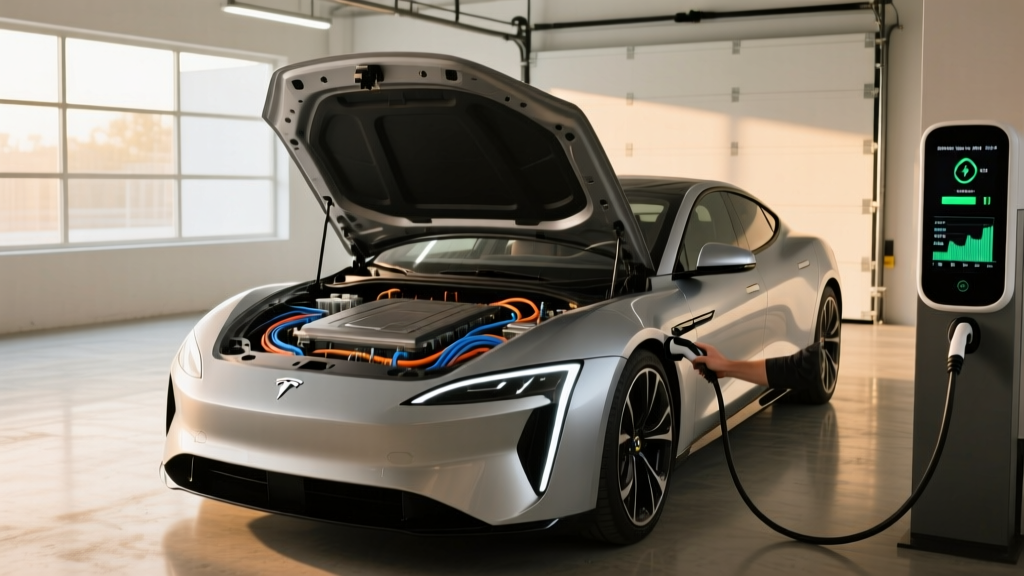
The single biggest adjustment for first-time EV renters is understanding that charging isn't like filling a gas tank. Here's the practical reality you'll face during an Avis electric car rental:
Charging Speeds You'll Encounter
| Level | Power (kW) | Miles Added per Hour | Where You'll Find It | Best For |
|---|---|---|---|---|
| Level 1 (120V outlet) | 1.4–1.9 kW | 3–5 mi/hr | Standard household outlet | Emergency/overnight top-up only |
| Level 2 (240V) | 7.2–19.2 kW | 20–55 mi/hr | Home chargers, hotels, malls, workplaces | Overnight and destination charging |
| DC Fast Charge | 50–350 kW | 150–1,000+ mi/hr | Tesla Superchargers, Electrify America, EVgo | Road trips and quick top-ups |
Real-world charging curve reality: When Avis or the manufacturer says a Model Y charges at "250 kW peak," that peak is sustained only between roughly 10–30% state of charge (SoC). Above 50%, the rate tapers significantly — often dropping below 80 kW past 70% SoC. This is why the industry standard measurement is 10–80% charge time, not peak kW. Plan your road-trip stops around the 10–80% window for maximum efficiency, and don't sit at a charger waiting to hit 100% — it's painfully slow and unnecessary for most trips.
NACS vs. CCS: Which Connector Will Your Rental Have?
As of 2026, the North American Charging Standard (NACS), developed by Tesla, has become the dominant connector across most new EVs. Ford, GM, Hyundai/Kia, and others now ship vehicles with NACS ports and provide access to Tesla's Supercharger network (over 25,000 stalls in North America). Some older fleet vehicles may still carry CCS1 connectors — confirm with Avis at pickup which connector your specific rental has, as this determines which public charging networks you can use natively without adapters.
5 Common Misconceptions About Renting (and Owning) an EV
| Myth | Fact |
|---|---|
| "EVs don't have enough range for road trips." | Most 2026 EVs in Avis fleets offer 290–320 miles EPA range. With DC fast chargers adding 150–200 miles in 15–20 minutes, a 600-mile trip requires just two 20-minute stops — comparable to gas-car rest stops. |
| "Charging an EV is always cheaper than gas." | Home Level 2 charging at $0.14/kWh is dramatically cheaper ($0.04–$0.05/mi). But DC fast charging at $0.40–$0.60/kWh on road trips can approach or exceed gas costs per mile. The savings advantage depends heavily on your charging mix. |
| "EV batteries need replacing every few years." | Modern NMC and LFP batteries are designed for 1,500–3,000+ charge cycles. Federal law mandates battery warranties of at least 8 years/100,000 miles. DOE data shows most EVs retain 85–90% battery capacity after 100,000 miles. Full replacement costs $8,000–$18,000 but is rarely needed within the warranty period. |
| "I can't rent an EV if I don't have home charging." | You absolutely can — and should. Renting an EV without home charging is the best way to test whether public charging infrastructure near you is sufficient before buying. If it's not, a PHEV or hybrid may be a better fit. |
| "Cold weather makes EVs useless." | Cold weather does reduce range — expect 15–30% loss at 20°F, primarily from cabin heating and battery chemistry limitations. However, EVs with heat pumps (standard on most 2026 models) mitigate this significantly. Preconditioning the battery while plugged in recovers much of the lost efficiency. |
Decision Framework: Is an Avis EV Rental Right for You?
Use this framework to decide whether to book an Avis electric car rental — and what to do with what you learn:
Rent an EV from Avis IF:
- You're considering an EV purchase but have never driven one for more than a dealer loop. A 3–5 day rental is the single best research investment you can make.
- You want to test charging logistics in your specific area. Map out Level 2 and DC fast chargers near your home, work, and regular destinations before you book. Use the rental to validate that map.
- You're comparing specific models. Rent a Model Y one weekend, a Mach-E the next. The differences in ride quality, software, charging speed, and ergonomics become obvious over days.
- You have an upcoming road trip and want to test EV feasibility. Plan the route with a charging app like A Better Routeplanner or PlugShare, then execute it with the rental.
Consider a Hybrid/PHEV Rental Instead IF:
- You live in a charging desert with limited public infrastructure and no realistic path to home Level 2 installation (e.g., apartment without EV-ready parking).
- Your daily commute exceeds 200 miles with no mid-route charging options.
- You regularly tow heavy loads — EVs lose 30–50% range when towing near max capacity, and a PHEV or diesel may be more practical.
After Your Rental, Buy an EV IF:
- Home Level 2 charging is available or installable (budget $800–$2,500 for a 240V/48A home charger installation, potentially more if your electrical panel needs a 200A upgrade).
- Your typical daily driving is under 200 miles (covering 95%+ of American drivers).
- You're eligible for the §30D tax credit or your state offers additional incentives.
- The rental confirmed that public fast charging along your common routes is adequate.
First-Time EV Buyer Checklist: What to Do During and After Your Rental
Treat your Avis electric car rental as a structured evaluation, not just a vacation car. Here's your checklist:
- Track your energy consumption. Note the car's displayed kWh/100mi over mixed driving (city, highway, hills). Compare it to the EPA-rated efficiency on fueleconomy.gov.
- Test cold-weather or hot-weather impact if applicable. Run the HVAC at your normal comfort level and observe range reduction.
- Charge at home (if possible) using a standard 120V outlet or a 240V outlet if available. Time how long it takes to replenish your daily driving miles.
- Use at least two different public DC fast chargers. Note peak kW achieved, time from 10–80%, and whether the station was functional and well-maintained.
- Try regenerative braking at different intensity settings. See if one-pedal driving feels natural or fatiguing over a full day.
- Test the ADAS features (lane-keeping, adaptive cruise, etc.) on a highway. Remember: these are SAE Level 2 driver-assist systems, not self-driving — you must remain attentive and ready to take over at all times.
- Calculate your personal cost-per-mile using actual energy costs from your rental and compare to your current gas vehicle.
Frequently Asked Questions
Does Avis charge extra for EV charging or require the battery to be returned at a certain level?
Avis policies vary by location, but most do not require a specific state of charge at return — unlike gas cars, where you're charged a premium for returning with an empty tank. However, some locations may charge a "battery service fee" (typically $25–$50) if the vehicle is returned below 20% SoC. Confirm the specific policy at your pickup counter.
Can I use Tesla Superchargers with a non-Tesla Avis rental?
If your Avis rental is a Tesla (Model Y or Model 3), yes — you'll have full Supercharger access via the car's built-in navigation. If it's a Ford, GM, Hyundai, or Kia EV with a NACS port (2025+ models), you can access Superchargers using the manufacturer's app integration. Older CCS-equipped rentals cannot use Superchargers natively without a manufacturer-approved adapter, which rental vehicles typically don't include.
How much does it cost to DC fast charge during a rental?
DC fast charging costs vary widely: $0.25–$0.35/kWh at some Electrify America or EVgo stations, $0.30–$0.50/kWh at Tesla Superchargers (pricing varies by location and time of day), and occasionally free at promotional or hotel-amenity chargers. A typical 60 kWh top-up (adding ~200 miles of range) costs $15–$30 at a public DC fast charger.
Is it cheaper to rent an EV or a gas car from Avis?
The daily rental rate for an EV is typically 20–40% higher than an equivalent gas car. However, fueling costs are often 40–60% lower when charging at home or at affordable public Level 2 stations. For a 5-day, 1,000-mile rental, expect to pay roughly $130–$205 more total for the EV — a worthwhile premium for the education it provides.
What if I run out of charge during my Avis EV rental?
Running an EV battery to 0% is rare if you plan minimally — the car's navigation will warn you and route you to chargers well in advance. If it does happen, Avis roadside assistance can arrange a flatbed tow to the nearest charger (EVs should not be towed with drive wheels on the ground). This is the same process as running out of gas, just with a different destination.