Quick Verdict: Are 2026 Rivian Leasing Deals Worth It?
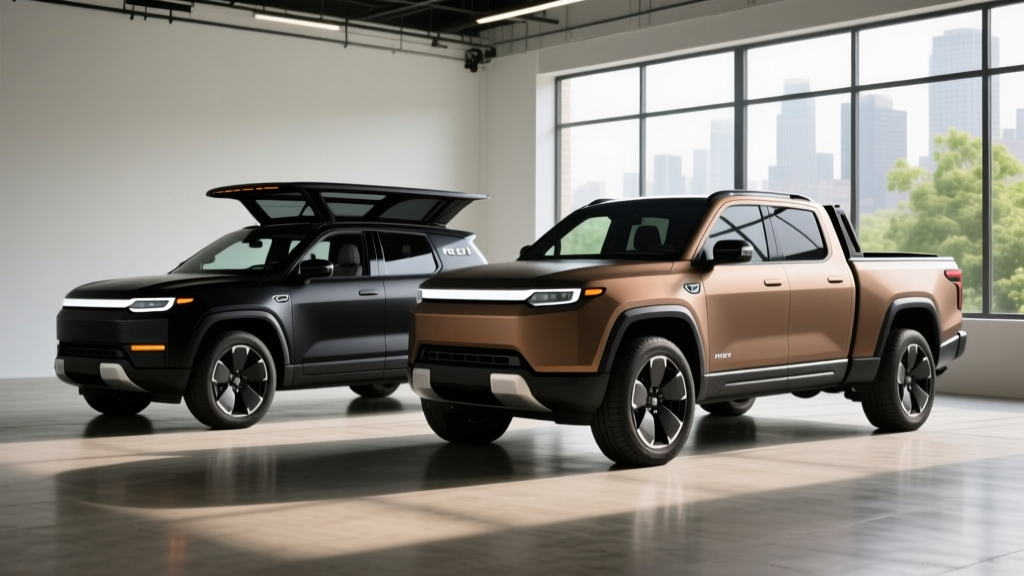
Rivian's 2026 lineup — the R1S three-row SUV and the R1T pickup — sits at the premium end of the electric adventure-vehicle segment. With the second-generation platform now fully rolled out, both models offer up to 420 miles of EPA-estimated range on the Max Pack, dual- and quad-motor powertrains producing up to 1,025 horsepower, and a growing NACS-native charging ecosystem that includes access to Tesla Superchargers via adapter.
But "deals" in the Rivian universe require context. Base MSRPs start at $74,900 (R1T) and $78,900 (R1S), and the federal §30D tax credit of up to $7,500 is far from guaranteed for every buyer. Leasing through Rivian Financial has emerged as a practical path for buyers who want to sidestep income and battery-sourcing restrictions — a leased EV qualifies for the commercial clean vehicle credit (§45W), which Rivian can pass through as a lease-capitalization-cost reduction. Let's break down exactly what you're getting, what you'll pay, and whether the numbers pencil out versus rivals like the Tesla Model X, BMW iX, and GMC Hummer EV.
Range, Battery, and Real-World Efficiency
Rivian offers three battery configurations across the R1S and R1T for 2026: the Standard Pack (lithium iron phosphate / LFP chemistry), the Large Pack (NMC), and the Max Pack (NMC). Here's how they stack up on paper — and on the road.
| Pack | Chemistry | Usable Capacity | EPA Range (R1T Dual-Motor) | EPA Range (R1S Dual-Motor) | MPGe (Combined) |
|---|---|---|---|---|---|
| Standard | LFP | ~95 kWh | 270 mi | 260 mi | ~79 MPGe |
| Large | NMC | ~115 kWh | 340 mi | 330 mi | ~80 MPGe |
| Max | NMC | ~141 kWh | 420 mi | 410 mi | ~78 MPGe |
Efficiency is the tradeoff for capability. At roughly 2.0–2.2 kWh per mile (combined), the R1S and R1T are less efficient than a Tesla Model X (~2.0 kWh/mi) and significantly thirstier than a BMW iX xDrive50 (~1.9 kWh/mi). Aerodynamics and weight (nearly 7,000 lbs for the R1S Max Pack) are the culprits. If efficiency is your top priority, these aren't the vehicles for you — but if you need ground clearance, towing, and genuine off-road chops, the Rivian platform earns its energy consumption.
Charging Speed: DC Fast, Home Level 2, and NACS Access
Rivian's second-generation architecture supports peak DC fast-charge rates up to 220 kW on the Large and Max Packs, with a 10–80% session taking approximately 28–30 minutes under optimal thermal conditions. The Standard LFP Pack peaks at around 180 kW. Rivian now ships vehicles with a native NACS (North American Charging Standard) port, granting direct access to Tesla's Supercharger network — over 25,000 stalls nationwide — without an adapter.
| Charging Level | Standard Pack (LFP) | Large Pack (NMC) | Max Pack (NMC) |
|---|---|---|---|
| Level 1 (120V / 12A) | ~3 mi/hr | ~3 mi/hr | ~3 mi/hr |
| Level 2 (240V / 48A) | ~25 mi/hr (11.5 kW) | ~25 mi/hr (11.5 kW) | ~25 mi/hr (11.5 kW) |
| DC Fast (Peak kW) | 180 kW | 220 kW | 220 kW |
| DC 10–80% Time | ~32 min | ~28 min | ~30 min |
Charging-curve reality: The 220 kW peak rate applies only between roughly 10–35% state of charge. From 35–60%, the rate tapers to ~150 kW; from 60–80%, it drops further to ~90–100 kW. This is normal lithium-ion behavior but matters for road-trip planning. Expect 30-minute stops for a 10–80% fill, not the 20 minutes some marketing materials imply.
At home, Rivian's onboard charger accepts up to 11.5 kW (48 amps) on a Level 2 circuit. A full Standard Pack charge from 0–100% takes roughly 8.5 hours; the Max Pack needs about 12.5 hours. Most owners will need a 60-amp dedicated circuit installed by a licensed electrician — budget $800–$2,500 for a professional home Level 2 installation depending on your panel capacity and conduit run. Always get a quote from a licensed electrician before committing.
Performance: Dual-Motor to Quad-Motor
Rivian's powertrain options scale from capable to absurd. Here's the 2026 lineup at a glance:
| Drivetrain | Horsepower | Torque (lb-ft) | 0–60 mph | Towing Capacity |
|---|---|---|---|---|
| Dual-Motor AWD | 533 hp | 610 | 4.5 sec | 7,700 lbs (R1T) |
| Performance Dual-Motor | 665 hp | 829 | 3.5 sec | 7,700 lbs (R1T) |
| Quad-Motor AWD | 1,025 hp | 1,198 | 2.6 sec | 11,000 lbs (R1T) |
The Quad-Motor variant — with an independent motor at each wheel — turns the R1T into a sub-3-second truck that can also tow 11,000 pounds and ford 3+ feet of water. It's engineering excess, but it's engineering excess that works. The Dual-Motor is the volume seller and the rational choice: 533 hp is more than enough for merging, passing, and trail driving, and it preserves maximum range.
Pricing, Trim Levels, and Federal Tax Credit Eligibility
2026 Rivian pricing starts in the mid-$70,000s and climbs steeply with battery and powertrain upgrades. Here's the current MSRP landscape:
| Model / Trim | Base MSRP | Typical As-Tested | §30D Credit Potential | Net Cost (Best Case) |
|---|---|---|---|---|
| R1T Dual-Motor Standard | $74,900 | $78,000–$82,000 | Up to $7,500 | ~$67,400 |
| R1T Perf. Dual-Motor Large | $84,900 | $89,000–$95,000 | Up to $7,500 | ~$77,400 |
| R1T Quad-Motor Max | $104,900 | $108,000+ | Up to $7,500 | ~$97,400 |
| R1S Dual-Motor Standard | $78,900 | $82,000–$88,000 | Up to $7,500 | ~$71,400 |
| R1S Perf. Dual-Motor Large | $88,900 | $93,000–$99,000 | Up to $7,500 | ~$81,400 |
| R1S Quad-Motor Max | $108,900 | $112,000+ | Up to $7,500 | ~$101,400 |
- MSRP cap: Vans, SUVs, and pickups must have an MSRP ≤ $80,000. The R1S (SUV) and R1T (pickup) qualify on base and mid-trims, but Quad-Motor / Max Pack configurations exceed the cap and are ineligible for the purchase credit.
- Buyer income cap: Modified AGI must not exceed $300,000 (joint), $225,000 (head of household), or $150,000 (single).
- Battery sourcing: Critical minerals and battery components must meet escalating domestic-content thresholds. Rivian has worked to shift sourcing, but eligibility can change — verify at the point of sale and consult a tax professional.
- Point-of-sale transfer: Eligible buyers can transfer the credit to the dealer at purchase, reducing the upfront cost immediately rather than waiting for a tax refund.
The leasing loophole: If you lease a Rivian through Rivian Financial, the vehicle qualifies under the separate §45W commercial clean vehicle credit — which has no MSRP cap, no buyer income cap, and no battery-sourcing requirement. Rivian has historically passed the full $7,500 as a cap-cost reduction, effectively lowering your monthly payment. This makes leasing the most reliable path to the credit for high-income buyers or those eyeing configurations above $80,000 MSRP. Monthly lease payments for a Dual-Motor Standard R1T have been advertised in the $899–$1,099/mo range (36-month term, varying down payment), though rates fluctuate with interest rates and residual values.
Cargo, Passenger Space, and Everyday Livability
The R1S offers seating for up to seven (with the optional third row) and a maximum cargo volume of approximately 104 cubic feet behind the front seats. Third-row legroom is tight at ~30 inches — fine for children, cramped for adults on long trips. Behind the third row, you get roughly 18 cu ft of cargo space, adequate for groceries but not much more.
The R1T's 4.5-foot bed is shorter than a full-size truck's, but the Gear Tunnel — a pass-through compartment behind the cab — adds 11.7 cu ft of lockable, weather-sealed storage that's uniquely Rivian. The front trunk (frunk) provides an additional 11.1 cu ft. Combined, the R1T offers creative cargo solutions that a conventional pickup can't match, though if you regularly haul 4×8 sheets of plywood, you'll need a different truck.
Interior materials have improved for 2026, with vegan leather standard and available Nappa leather. The 15.6-inch center touchscreen runs Rivian's proprietary infotainment — responsive and visually clean, though Apple CarPlay and Android Auto remain unavailable, a persistent complaint among buyers accustomed to phone projection.
Warranty, Safety, and Driver Assistance
Rivian provides an 8-year / 175,000-mile battery and drive-unit warranty — one of the most generous in the segment, exceeding the more common 8-year / 100,000-mile standard. The bumper-to-bumper limited warranty covers 5 years / 60,000 miles.
Rivian's Driver+ system is a SAE Level 2 driver-assistance suite combining adaptive cruise control, lane centering, and automatic lane changes on supported highways. It is not self-driving — the driver must remain engaged with hands on the wheel and eyes on the road at all times. In our experience, Driver+ is competent for long highway stretches but less polished than GM's Super Cruise or Ford's BlueCruise in hands-free zones. Rivian does not currently offer a hands-free driving mode.
The R1S has earned strong safety ratings, with top marks in IIHS crashworthiness evaluations. Standard safety equipment includes automatic emergency braking, blind-spot monitoring, rear cross-traffic alert, and a surround-view camera system invaluable for off-road and tight-parking situations.
Pros, Cons, and Who Should Lease a Rivian
Pros
- Up to 420 miles EPA range (Max Pack) — among the longest of any production EV
- Quad-Motor performance is staggering (1,025 hp, 2.6-sec 0–60)
- Genuine off-road capability with 14.9 inches of ground clearance and 3+ ft water fording
- 8-yr / 175,000-mi battery warranty — best in class
- NACS port with native Tesla Supercharger access
- Lease pathway reliably captures $7,500 credit regardless of income or MSRP cap
- Gear Tunnel (R1T) is a genuinely innovative storage solution
Cons
- Base pricing starts at $74,900+; well-equipped models exceed $100,000
- No Apple CarPlay or Android Auto — a dealbreaker for some
- Efficiency lags rivals (~2.0+ kWh/mi); higher electricity costs per mile
- Third-row space in R1S is child-only; adults won't last long
- Service center network still expanding — rural owners may face long tow distances
- Quad-Motor and Max Pack trims exceed the $80K MSRP cap for purchase credit
- Choose the R1T if: You want an electric truck that can tow, handle trails, and daily-drive with creative storage. The Dual-Motor Large Pack is the sweet spot — 340 miles of range, 7,700-lb towing, and eligible for the full credit under the $80K MSRP cap.
- Choose the R1S if: You need three-row electric family hauler capability with genuine off-road chops and don't need the cargo bed. Best for families of 4–5 (not 7 adults).
- Look elsewhere if: Efficiency and low per-mile electricity cost are your top priorities (consider the BMW iX or Tesla Model X), or if you need hands-free highway driving (GM Super Cruise or Ford BlueCruise).
Frequently Asked Questions
What is the real-world range of the Rivian R1T and R1S?
EPA estimates range from 260 to 420 miles depending on pack size. Real-world highway range typically runs 15–20% below EPA — expect 280–360 miles on the Max Pack at highway speeds. Cold weather (below freezing) can reduce range by an additional 20–30%. The LFP Standard Pack is best for daily commuting with access to home charging; the Max Pack is the road-trip choice.
How fast does a Rivian charge at home and on the road?
On a Level 2 home charger (240V / 48A), Rivian adds approximately 25 miles of range per hour — a full overnight charge is realistic for all but the Max Pack. On DC fast chargers, peak rates reach 220 kW (Large and Max Packs), with 10–80% in roughly 28–30 minutes. Note that sustained rates are lower than peak; plan 30-minute stops on road trips.
Does the Rivian R1T or R1S qualify for the $7,500 federal EV tax credit?
It depends. For purchases, the §30D credit requires the vehicle MSRP to be ≤ $80,000 (both R1T and R1S qualify at base/mid trims), buyer income below IRS thresholds, and compliant battery sourcing. Many Quad-Motor and Max Pack configurations exceed the MSRP cap. For leases, the §45W commercial credit applies — no MSRP cap, no income cap, no sourcing restriction — and Rivian has historically passed the $7,500 through as a cap-cost reduction. Always verify current eligibility at IRS.gov and consult a tax professional.
Is leasing a Rivian better than buying?
For many buyers in 2026, leasing offers the most reliable path to the $7,500 credit (via §45W), avoids the MSRP and income caps that disqualify higher-trim purchases, and protects against depreciation risk on a rapidly evolving EV platform. If you drive under 10,000–12,000 miles per year and prefer swapping vehicles every 3 years, leasing is compelling. If you drive high miles, want to modify the vehicle, or plan to keep it 8+ years, buying may make more sense — but run the numbers with your specific tax situation.
How does Rivian compare to the Tesla Model X and GMC Hummer EV?
The Model X offers more interior space, standard Supercharger access, and lower efficiency, but lacks off-road capability and the adventure ethos. The Hummer EV Pickup has more horsepower and a bigger bed but is heavier, less efficient, and far more expensive. The Rivian occupies a unique niche: genuine off-road and towing capability with a premium, tech-forward cabin and strong range. Per fueleconomy.gov, the Rivian's combined MPGe sits in the high 70s — competitive with the Hummer EV but below the Model X.
What are the biggest risks of owning a Rivian?
Service network density is the primary concern. Rivian's service center footprint is growing but still sparse in rural and mid-America regions — a warranty repair could require a long-distance tow. Insurance premiums tend to run higher than comparable ICE vehicles due to repair costs and parts availability. And the lack of Apple CarPlay / Android Auto frustrates buyers who rely on phone-based navigation and media.