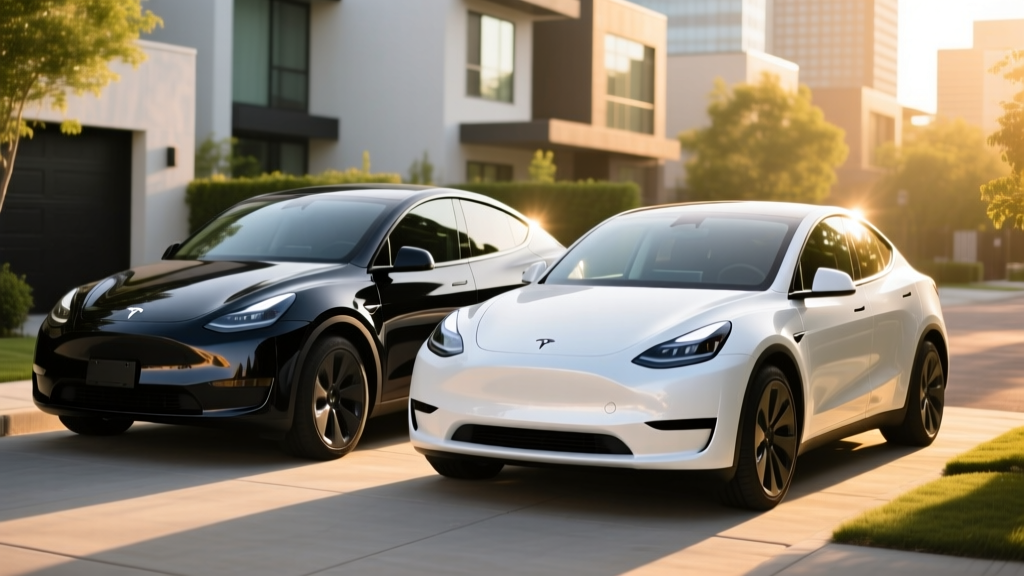
Tesla's lineup has expanded significantly, and with frequent price adjustments, figuring out what you'll actually pay requires more than a glance at the homepage. Whether you're eyeing the entry-level Model 3 or the range-topping Cybertruck, the gap between sticker price and out-of-pocket cost can swing by thousands of dollars depending on trim, federal incentives, and configuration choices.
This guide breaks down the current 2026 Tesla lineup with exact MSRP figures, real-world range expectations, charging performance, and the tax-credit math that determines your true cost. We'll also answer the question directly: what's the average price of a Tesla across the full portfolio?
Tesla's 2026 Lineup: Base MSRP at a Glance
Tesla sells five consumer vehicles in the US market for the 2026 model year. Here's how they stack up on price before any incentives, options, or destination fees:
| Model | Base Trim | Base MSRP | Top Trim | Top MSRP |
|---|---|---|---|---|
| Model 3 | RWD | $38,990 | Long Range AWD | $47,490 |
| Model Y | Long Range RWD | $44,990 | Performance AWD | $51,490 |
| Model S | Long Range | $74,990 | Plaid | $89,990 |
| Model X | Long Range | $79,990 | Plaid | $94,990 |
| Cybertruck | AWD | $79,990 | Cyberbeast | $99,990 |
Source: Tesla.com configurator, 2026 model year. Prices exclude destination fee ($1,390–$1,990 depending on model) and do not include FSD or paint upgrades.
Full Spec Comparison: Range, Battery, Charging, and Performance
Price tells only part of the story. Here's the technical breakdown across every current Tesla, including battery chemistry, real-world efficiency, and charging curves that determine your actual road-trip experience.
| Spec | Model 3 LR AWD | Model Y LR AWD | Model S LR | Model X LR | Cybertruck AWD |
|---|---|---|---|---|---|
| EPA Range | 341 mi | 320 mi | 402 mi | 335 mi | 340 mi |
| Battery (usable) | 75 kWh (NMC) | 75 kWh (NMC) | 95 kWh (NMC) | 95 kWh (NMC) | 123 kWh (NMC) |
| Efficiency | 132 MPGe / 25 kWh/100mi | 122 MPGe / 27 kWh/100mi | 124 MPGe / 27 kWh/100mi | 109 MPGe / 31 kWh/100mi | 87 MPGe / 39 kWh/100mi |
| Max DC Charge | 250 kW | 250 kW | 250 kW | 250 kW | 250 kW (350 kW capable) |
| 10–80% DC Time | ~25 min | ~27 min | ~30 min | ~32 min | ~35 min |
| Level 2 Rate | 11.5 kW (~44 mi/hr) | 11.5 kW (~44 mi/hr) | 11.5 kW (~41 mi/hr) | 11.5 kW (~37 mi/hr) | 11.5 kW (~32 mi/hr) |
| 0–60 mph | 4.2 sec | 4.8 sec | 3.1 sec | 3.8 sec | 4.1 sec |
| Horsepower | 346 hp | 384 hp | 670 hp | 670 hp | 600 hp |
| Drivetrain | Dual-Motor AWD | Dual-Motor AWD | Dual-Motor AWD | Dual-Motor AWD | Tri-Motor AWD |
Efficiency data via fueleconomy.gov (EPA). Charging times reflect preconditioned battery at a V3 Supercharger; real-world times vary with ambient temperature and state of charge.
Real-World Range: What the EPA Sticker Doesn't Tell You
- Highway driving (75 mph): Expect 85–90% of EPA range. A Model 3 LR rated at 341 miles delivers roughly 290–305 miles on an interstate run.
- Cold weather (below 32°F): Range drops 20–30%. That same Model 3 may deliver 240–270 miles in winter conditions, partly mitigated by Tesla's heat pump (standard on all 2026 models).
- City/regenerative driving: You can match or slightly exceed EPA figures in stop-and-go traffic thanks to aggressive regen recapture.
Tesla's range estimates tend to be more achievable than some competitors in mixed driving, but the physics of highway speeds and cold temperatures apply universally. The Model S Long Range remains the range king at 402 miles EPA — in practice, expect 340–360 miles on a warm-weather highway trip, which is enough to cover most US corridors with a single 20-minute Supercharger stop.
The Cybertruck's boxy aerodynamics hit hardest at highway speeds. Despite its 123 kWh battery (the largest in Tesla's lineup), its 39 kWh/100mi consumption means real highway range closer to 280–295 miles. For towing, cut that figure roughly in half.
Charging Speed and Infrastructure: The Tesla Advantage
All current Teslas use the North American Charging Standard (NACS) connector natively — no adapter needed at Tesla Superchargers. With over 20,000 V3/V4 Superchargers across North America, Tesla owners still enjoy the most reliable public DC fast-charging network available.
| Charging Level | Power | Miles Added per Hour | Use Case |
|---|---|---|---|
| Level 1 (120V household) | ~1.4 kW | 3–5 mi/hr | Emergency/overnight trickle |
| Level 2 (240V home Wall Connector) | 11.5 kW | 32–44 mi/hr | Daily home charging |
| DC Fast (V3 Supercharger) | Up to 250 kW | ~1,000+ mi/hr (peak) | Road trips, 10–80% in 25–35 min |
Charging curve reality: Tesla's 250 kW peak rate applies only between roughly 10–30% state of charge. Above 50%, the curve tapers significantly — by 80%, you're pulling closer to 60–80 kW. This is why Tesla's navigation system typically routes you through multiple shorter stops rather than one long charge to 100%.
For home charging, the Tesla Wall Connector ($420 hardware) on a 60-amp circuit delivers the full 11.5 kW (48 amps continuous). Most owners charging overnight from 20% to 80% will wake up fully replenished in 5–7 hours. Professional installation of a 240V/60A circuit typically runs $800–$2,500 depending on panel proximity and local permitting. Older homes may require a panel upgrade ($1,500–$3,000 additional) if service is below 200 amps.
Federal Tax Credit: What You'll Actually Pay After §30D
The IRS §30D clean vehicle credit can reduce your Tesla purchase by up to $7,500, but eligibility depends on three intersecting requirements that catch many buyers off guard:
- MSRP Cap: Vans, SUVs, and pickups ≤ $80,000; sedans ≤ $55,000
- Buyer Income Cap (MAGI): $150K single / $225K head of household / $300K joint
- Battery Sourcing: Critical minerals and battery components must meet phased-in domestic/free-trade-partner thresholds (increasing annually through 2030)
- Point-of-Sale Transfer: You can apply the credit at purchase (dealer reduces price) or claim on your tax return
- Assembly: Vehicle must undergo final assembly in North America (all US-market Teslas qualify)
| Model / Trim | Base MSRP | Under MSRP Cap? | Max Credit | Effective Price |
|---|---|---|---|---|
| Model 3 RWD | $38,990 | ✅ (Sedan ≤$55K) | $7,500 | $31,490 |
| Model 3 LR AWD | $47,490 | ✅ (Sedan ≤$55K) | $7,500 | $39,990 |
| Model Y LR AWD | $44,990 | ✅ (SUV ≤$80K) | $7,500 | $37,490 |
| Model Y Performance | $51,490 | ✅ (SUV ≤$80K) | $7,500 | $43,990 |
| Model S LR | $74,990 | ❌ (Sedan >$55K) | $0 | $74,990 |
| Model X LR | $79,990 | ✅ (SUV ≤$80K) | $7,500 | $72,490 |
| Cybertruck AWD | $79,990 | ✅ (Pickup ≤$80K) | $7,500* | $72,490* |
*Cybertruck credit eligibility depends on battery-component and critical-mineral sourcing meeting 2026 thresholds. Confirm current status at fueleconomy.gov before purchase. Battery sourcing rules tighten annually — a vehicle that qualifies in January may not qualify by December.
Key takeaway: The Model 3 RWD at ~$31,490 after credit is the most affordable new Tesla — and one of the most affordable new EVs in the US market. The Model S, despite its $75K starting price, is the only current Tesla that categorically misses the MSRP cap (classified as a sedan at the $55K threshold).
Interior, Cargo, and Tech: What You Get for the Money
Tesla's interior philosophy remains minimalist: a single central touchscreen (15.4" in Model 3/Y, 17" in Model S/X, 18.5" in Cybertruck) handles virtually all vehicle functions. There's no traditional instrument cluster — speed and navigation appear on the touchscreen or, in the Model 3 Highland refresh and newer models, a small secondary display.
| Model | Cargo (rear seats up) | Cargo (seats folded) | Rear Legroom | Frunk |
|---|---|---|---|---|
| Model 3 | 23 cu ft | N/A (sedan) | 35.3 in | 3.1 cu ft |
| Model Y | 30 cu ft | 72 cu ft | 38.4 in | 4.1 cu ft |
| Model S | 28 cu ft | N/A (liftback) | 35.4 in | 5.3 cu ft |
| Model X | 15 cu ft (5-seat) | 82 cu ft | 38.4 in | 6.6 cu ft |
| Cybertruck | 34 cu ft (bed, closed) | 67 cu ft (bed + vault) | 36.0 in | 7.1 cu ft |
Standout tech across the lineup:
- Autopilot (standard): Adaptive cruise, lane centering, auto emergency braking — SAE Level 2 driver assist, not self-driving
- FSD Supervised ($8,000 option or $99/month): City street navigation, traffic light/stop sign response, auto lane changes — still Level 2 with full driver supervision required
- Over-the-air updates: Tesla pushes feature additions and performance improvements wirelessly, sometimes adding range or acceleration post-purchase
- Sentry Mode / Dashcam: Integrated security recording using the vehicle's external cameras
- Supercharger integration: Navigation auto-routes through Superchargers, preconditions battery for optimal charge speed on arrival
Notable drawbacks: No Apple CarPlay or Android Auto (Tesla's proprietary system only). Panel gap quality, while improved on 2026 Highland/Juniper models, still trails legacy luxury brands. The touchscreen-centric controls (including climate and mirror adjustment) require a learning curve and can distract while driving.
Warranty Coverage and Long-Term Ownership
Tesla's warranty structure is straightforward but less generous than some competitors like Hyundai (10-year/100,000-mile battery):
| Coverage | Model 3 / Model Y | Model S / Model X / Cybertruck |
|---|---|---|
| Basic Vehicle | 4 yr / 50,000 mi | 4 yr / 50,000 mi |
| Battery & Drive Unit | 8 yr / 120,000 mi | 8 yr / 150,000 mi |
| Capacity Retention Threshold | 70% | 70% |
Tesla's battery warranty covers replacement if capacity drops below 70% during the warranty period. In practice, Tesla's NMC packs have shown strong longevity — fleet data suggests typical degradation of 10–12% over 150,000 miles, meaning most owners will retain 88–90% capacity well beyond the warranty window. The larger concern is out-of-warranty replacement cost: a Model 3/Y battery replacement currently runs $12,000–$16,000 at Tesla service centers, while Model S/X packs can exceed $20,000.
Maintenance costs remain low compared to ICE vehicles — no oil changes, no transmission fluid, brake pads last significantly longer due to regenerative braking. However, Tesla's insurance premiums run 15–30% higher than comparable vehicles due to repair costs and parts availability. Budget accordingly.
Who Should Buy Which Tesla?
Model 3 — The Commuter
Best for: Solo drivers, apartment dwellers with charging access, budget-conscious buyers who want premium EV performance. At ~$31,490 after credit, it undercuts most EVs while delivering 341 miles of range and Supercharger access.
Model Y — The Family Default
Best for: Families needing crossover space, road-trippers, buyers who want SUV utility without the luxury-SUV price. The 72 cu ft of cargo space and available 7-seat configuration make it Tesla's most versatile offering.
Model S / Model X — The Luxury Buyer
Best for: Buyers who need 400+ mile range (Model S), falcon-wing cargo access (Model X), or Plaid-level performance. Note: the Model S misses the tax credit entirely due to the sedan MSRP cap. Cross-shop against the Lucid Air, BMW i5, and Mercedes EQS.
Cybertruck — The Statement Pickup
Best for: Truck buyers who want electric, stainless-steel durability, and 11,000-lb towing capacity. Not ideal for efficiency-focused buyers — its 39 kWh/100mi consumption is the worst in Tesla's lineup. Cross-shop the Ford F-150 Lightning and Rivian R1T.
Pros, Cons, and the Competition
✅ Pros
- Supercharger network — still the gold standard for reliability
- Best-in-class efficiency (Model 3: 25 kWh/100mi)
- OTA updates add features post-purchase
- Strong resale value relative to most EVs
- §30D credit brings Model 3 under $32K
❌ Cons
- No Apple CarPlay / Android Auto
- Model S excluded from tax credit (sedan cap)
- Insurance costs 15–30% above segment average
- Touchscreen-only controls can distract
- Service center wait times in high-demand markets
Is a Tesla worth buying vs. key competitors? For the Model 3 and Model Y, the answer remains yes for most buyers — the Supercharger network, efficiency, and post-credit pricing are difficult to match. The Hyundai Ioniq 6 offers comparable range but relies on third-party DC networks. The Ford Mustang Mach-E and Chevrolet Equinox EV are credible Model Y alternatives with CarPlay support but less charging infrastructure. For the Model S and X, the value proposition weakens — the Lucid Air Pure offers 420 miles of range starting around $70K, and the BMW iX provides a more traditionally luxurious interior.
Frequently Asked Questions
What is the cheapest Tesla you can buy in 2026?
The Model 3 RWD at $38,990 base MSRP, dropping to approximately $31,490 after the full $7,500 federal tax credit (if you meet income and sourcing requirements). This makes it one of the least expensive new EVs in the US market after incentives.
Does the Tesla Model Y qualify for the $7,500 tax credit?
Yes — the Model Y is classified as an SUV under IRS rules, subject to the $80,000 MSRP cap. All current Model Y trims fall below that threshold. However, you must also meet the income cap ($300K joint / $150K single) and the vehicle's battery components must satisfy 2026 critical-mineral sourcing thresholds. Verify at fueleconomy.gov before purchase.
Why doesn't the Model S qualify for the EV tax credit?
The IRS classifies the Model S as a sedan (not an SUV), subjecting it to the lower $55,000 MSRP cap. Since the Model S starts at $74,990, it exceeds the cap regardless of buyer income or battery sourcing. The Model X, despite similar pricing, qualifies because it's classified as an SUV with the $80,000 cap.
How much does it cost to charge a Tesla at home vs. a Supercharger?
Home charging on a national average electricity rate of $0.16/kWh costs roughly $0.04–$0.05 per mile for a Model 3 (25 kWh/100mi). Supercharger pricing varies by location and time of day but averages $0.28–$0.36/kWh, translating to roughly $0.07–$0.09 per mile. For comparison, a 30 MPG gas car at $3.50/gallon costs about $0.12/mile.
Is Tesla's FSD actually self-driving?
No. Full Self-Driving (Supervised) is an SAE Level 2 driver-assistance system. The driver must remain fully engaged, hands on or near the wheel, and eyes on the road at all times. It does not make the vehicle autonomous. True self-driving (Level 4) is currently available only through robotaxi services like Waymo in limited metro areas.
What's the average price of a Tesla after incentives and options?
Across the lineup, the simple average base MSRP is approximately $62,000. However, since Model 3 and Model Y account for roughly 90%+ of Tesla's US sales volume, the effective average transaction price is closer to $42,000–$47,000 before credit and $37,000–$40,000 after the $7,500 §30D credit for qualifying buyers. Adding FSD ($8,000), premium paint ($1,000–$2,500), or wheels ($1,500–$2,000) pushes configured prices higher.