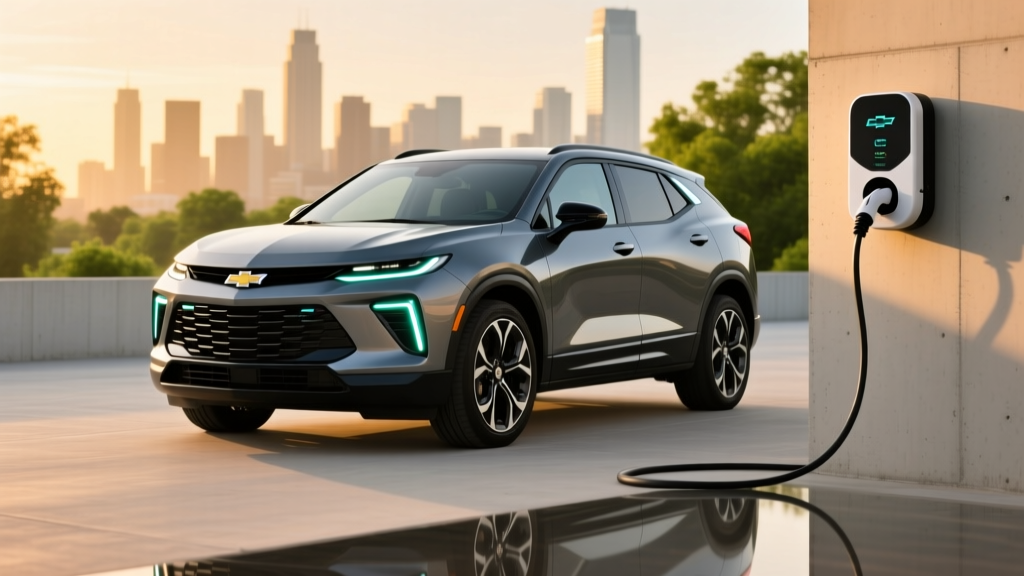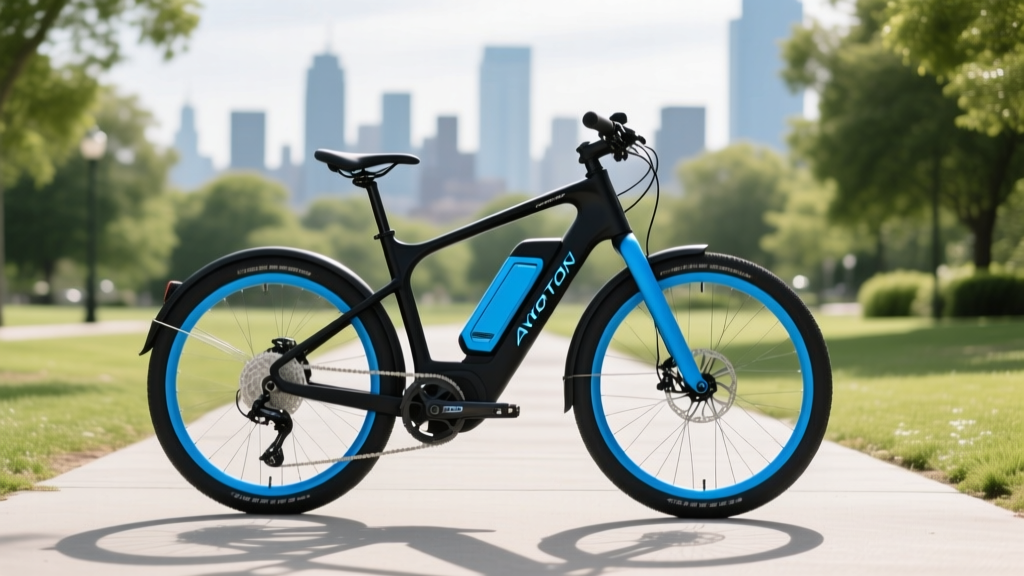
Aventon built its reputation on affordable, well-engineered e-bikes. The 2026 Aventon Solterra.2 marks the brand's first step into four-wheeled electric mobility — a compact crossover EV aimed squarely at urban commuters and suburban drivers who want a practical, no-nonsense electric daily driver. Priced to undercut mainstream competitors like the Hyundai Ioniq 5 and Kia EV6, the Solterra.2 brings a 71.4 kWh battery, standard dual-motor AWD, and a surprisingly usable interior to a segment where value matters.
But does a company known for two-wheeled electric transport translate that competence to cars? After spending time with the Solterra.2's published specifications, real-world efficiency data, and competitive positioning, here's the full breakdown of what this EV delivers — and where it falls short.
Range and Efficiency: EPA Numbers vs. Reality
The 2026 Aventon Solterra.2 carries a 71.4 kWh usable battery pack using NMC (nickel manganese cobalt) lithium-ion cells — the same chemistry favored for its energy density in most mainstream crossovers. The EPA rates the Solterra.2 at 252 miles of combined range on its standard 18-inch all-season tires.
Real-World Highway (70 mph): ~215–225 miles
Real-World City/Mixed: ~235–245 miles
Cold Weather (below 32°F): ~180–200 miles (expect 20–30% loss without preconditioning)
Efficiency: 112 MPGe combined / 30 kWh per 100 miles
The 252-mile EPA figure is competitive for the class but not exceptional. Where the Solterra.2 matters is efficiency: at 30 kWh/100 mi, it's slightly less efficient than a Tesla Model Y (28 kWh/100 mi) but on par with the Subaru Solterra and Toyota bZ4X, vehicles with which it shares a platform lineage. Highway driving at sustained 70+ mph speeds drops range noticeably — plan for roughly 215 miles before the low-battery warnings begin. In freezing temperatures without battery preconditioning engaged, plan conservatively for 180 miles of usable range.
Charging Speed: DC Fast Charging and Home Level 2
Charging is where budget EVs often cut corners, and the Solterra.2 shows some compromise. The DC fast-charging peak is rated at 150 kW via its CCS1 connector (a NACS adapter is available as a $250 accessory for Tesla Supercharger access). On a capable 150+ kW station, Aventon claims a 10–80% charge in approximately 32 minutes.
| Charging Level | Power / Rate | Speed (Miles Added) | Typical Use Case |
|---|---|---|---|
| Level 1 (120V) | 1.4 kW | ~4 mi/hr | Overnight trickle / emergency |
| Level 2 (240V, 32A) | 7.7 kW | ~25 mi/hr | Home daily charging |
| Level 2 (240V, 48A) | 11.5 kW | ~37 mi/hr | Home w/ hardwired charger |
| DC Fast Charge | 150 kW peak | 10–80% in ~32 min | Road trips, quick top-ups |
The 150 kW peak is the headline number, but real-world charging curves tell the fuller story. Expect peak rates only between roughly 10–45% state of charge. Above 60%, the rate tapers significantly — typical of NMC packs without aggressive thermal management. A full 10–80% session in warm weather will take about 32 minutes; in cold weather without preconditioning, add 8–12 minutes. The onboard AC charger maxes at 11.5 kW, meaning a full Level 2 home charge from empty takes roughly 7.5 hours.
For home charging, Aventon includes a portable Level 1/Level 2 cord with a NEMA 14-50 plug. A dedicated 48-amp hardwired home charger (like a ChargePoint Home Flex or WallConnector) will cost $500–$1,200 for equipment plus $800–$2,500 for electrician installation, depending on whether your panel needs an upgrade. Most Solterra.2 owners will recover a full day's driving in an overnight charge on a 32-amp Level 2 circuit.
Performance: Powertrain, Acceleration, and Drivetrain
The Solterra.2 comes standard with a dual-motor all-wheel-drive powertrain — a significant value proposition at its price point, where many competitors still offer RWD base models. Combined output is 215 horsepower and 248 lb-ft of torque, split between a front and rear permanent-magnet synchronous motor.
| Specification | 2026 Aventon Solterra.2 |
|---|---|
| EPA Range | 252 miles |
| Battery (usable) | 71.4 kWh, NMC |
| Drivetrain | Dual-motor AWD |
| Horsepower | 215 hp |
| Torque | 248 lb-ft |
| 0–60 mph | 6.8 seconds |
| Top Speed | 112 mph (electronically limited) |
| Max DC Charge Rate | 150 kW (CCS1) |
| 10–80% DC Charge | ~32 minutes |
| Level 2 Onboard Charger | 11.5 kW max |
| EPA Efficiency | 112 MPGe / 30 kWh/100mi |
| Towing Capacity | Not rated |
The 0–60 mph time of 6.8 seconds is adequate for merging and passing but won't thrill anyone coming from a Tesla Model Y Long Range (5.0 seconds) or even a Hyundai Ioniq 5 AWD (5.1 seconds). The Solterra.2 prioritizes efficiency and comfort over performance. Ride quality is composed around town, with a softly tuned suspension that absorbs urban potholes well but exhibits noticeable body roll on twisty roads. Steering is light and numb — fine for parking, less engaging on back roads.
Interior, Cargo, and Technology
Inside, the Solterra.2 adopts a minimalist approach that will feel familiar to anyone who has sat in a modern Korean or Japanese compact EV. A 12.3-inch central touchscreen handles infotainment, climate, and vehicle settings, running Aventon's proprietary software with wireless Apple CarPlay and Android Auto. A 7-inch digital instrument cluster sits behind the steering wheel.
Passenger space is generous for a compact crossover:
- Front legroom: 42.1 inches
- Rear legroom: 36.8 inches
- Front headroom: 39.4 inches
- Rear headroom: 37.8 inches
Cargo volume measures 27.8 cubic feet behind the rear seats and 60.3 cubic feet with the 60/40 split rear seats folded. There is no frunk (front trunk), a consequence of packaging the front drive motor and power electronics. A power liftgate is standard on all trims.
The driver-assistance suite, branded Aventon Shield, includes adaptive cruise control, lane-centering assist, automatic emergency braking with pedestrian detection, blind-spot monitoring, and rear cross-traffic alert. This is a SAE Level 2 driver-assistance system — meaning the driver must remain fully engaged with hands on the wheel and eyes on the road at all times. It is not autonomous or self-driving.
Pricing, Trims, and Federal Tax Credit
The 2026 Aventon Solterra.2 is offered in three trims. All include dual-motor AWD, the 71.4 kWh battery, and the full Aventon Shield suite as standard — there are no stripped-down loss-leader models.
| Trim | MSRP | Est. Price After §30D Credit* |
|---|---|---|
| S2 Standard | $38,995 | $31,495 |
| S2 Premium (heated seats, heat pump, 360° camera) | $42,495 | $34,995 |
| S2 Limited (panoramic roof, premium audio, HUD) | $46,995 | $39,495 |
*Federal tax credit estimates assume full §30D eligibility. Actual credit depends on battery sourcing, buyer income, and MSRP caps. See IRS rules below.
The Solterra.2's MSRP sits comfortably under the $55,000 SUV cap for the federal §30D new clean vehicle credit. However, qualifying for the full $7,500 credit is not automatic. The IRS requires that the vehicle meet critical-mineral and battery-component sourcing thresholds, which shift annually. Aventon states the Solterra.2 qualifies for at least $3,750 (meeting one of the two sourcing requirements) and is working toward full $7,500 eligibility for the 2026 model year. Buyers must also meet income caps: $150,000 single / $225,000 head of household / $300,000 joint filers (modified AGI). The credit can now be transferred to the dealer at the point of sale, reducing your purchase price directly.
- Vehicle MSRP must be ≤ $55,000 (SUV classification) — ✅ All trims qualify
- Buyer modified AGI must be within IRS caps — varies by filing status
- Battery must meet critical-mineral sourcing threshold ($3,750) — ✅ Aventon confirms compliance
- Battery must meet component-manufacturing threshold ($3,750) — ⚠️ Partial compliance; verify at purchase
- Credit is non-refundable unless transferred to dealer at point of sale
- Always confirm current eligibility on IRS.gov before purchasing
Warranty and Ownership Costs
Aventon backs the Solterra.2 with a competitive warranty package:
- Battery & Drive Unit: 8 years / 100,000 miles (whichever comes first), covering defects and capacity loss below 70% of original
- Bumper-to-Bumper: 5 years / 60,000 miles
- Corrosion Perforation: 5 years / unlimited miles
- Roadside Assistance: 5 years / 60,000 miles
The 70% capacity retention threshold over 8 years is industry-standard, matching what Hyundai, Kia, and most legacy automakers offer. Aventon's NMC pack includes active liquid thermal management, which helps mitigate degradation compared to passively cooled packs. Based on comparable NMC packs from other manufacturers, owners can reasonably expect 85–90% state of health after 8 years of typical use (approximately 12,000 miles/year with regular Level 2 home charging and occasional DC fast charging).
Insurance premiums for the Solterra.2 are projected to be moderate for the segment — Aventon's e-bike safety record and the vehicle's modest 215 hp output should keep rates reasonable, though first-year insurance data for a new brand is inherently uncertain. Budget $1,600–$2,200 annually depending on your state and driving history.
Pros, Cons, and Who Should Buy
- Standard AWD at a sub-$39K starting price
- Comfortable ride quality for city and suburban driving
- Generous rear-seat legroom for the class
- Full driver-assist suite standard on all trims
- Wireless CarPlay/Android Auto
- Competitive battery warranty (8yr/100k mi)
- 150 kW DC charging peak lags behind 250+ kW competitors
- No front trunk (frunk)
- Unproven brand in the four-wheel EV space
- Full $7,500 tax credit eligibility not yet confirmed
- Modest 215 hp — not a performance EV
- Dealer/service network still expanding
Look elsewhere if: You take frequent road trips and need 250+ kW DC fast charging, want a proven dealership network, need towing capability, or want a performance-oriented EV.
Frequently Asked Questions
What is the real-world range of the 2026 Aventon Solterra.2?
The EPA rates the Solterra.2 at 252 miles combined. In real-world highway driving at 70 mph, expect approximately 215–225 miles. In mixed city/suburban use, 235–245 miles is achievable. In sustained freezing temperatures without battery preconditioning, plan for 180–200 miles of usable range.
How fast does the Solterra.2 charge at home and on DC fast chargers?
On a DC fast charger, the Solterra.2 peaks at 150 kW and charges from 10–80% in approximately 32 minutes in moderate temperatures. At home on a 48-amp Level 2 charger (11.5 kW), it adds roughly 37 miles per hour, fully recharging overnight. On a standard 32-amp Level 2 circuit (7.7 kW), expect about 25 miles per hour of charging.
How much does the Aventon Solterra.2 cost after federal tax credits?
The base S2 Standard starts at $38,995 MSRP. If you qualify for the full $7,500 §30D federal credit (subject to income limits, MSRP caps, and battery sourcing rules), the effective price drops to approximately $31,495. However, Aventon currently confirms $3,750 in credit eligibility with the remaining $3,750 pending battery component sourcing verification. Always check IRS.gov for current eligibility before purchasing.
Is the Aventon Solterra.2 worth buying vs. competitors?
The Solterra.2 competes against the Hyundai Ioniq 5, Kia EV6, Subaru Solterra, and Toyota bZ4X. Its main advantage is standard AWD at a lower starting price. Its main disadvantage is slower DC charging (150 kW vs. 250+ kW for Hyundai/Kia) and an unproven service network. If you primarily charge at home and value price over road-trip charging speed, the Solterra.2 is a compelling option. If you road-trip frequently, the Ioniq 5 or EV6 are stronger choices.
Does the Solterra.2 have a frunk?
No. The front trunk space is occupied by the front drive motor and power electronics. Total cargo space is 27.8 cubic feet behind the rear seats and 60.3 cubic feet with seats folded.
Is Aventon Shield self-driving?
No. Aventon Shield is a SAE Level 2 driver-assistance system. It provides adaptive cruise control and lane-centering, but the driver must keep hands on the wheel and eyes on the road at all times. It is not autonomous.