Quick Verdict: The Blazer EV SS Is Chevy's Muscle-SUV Play
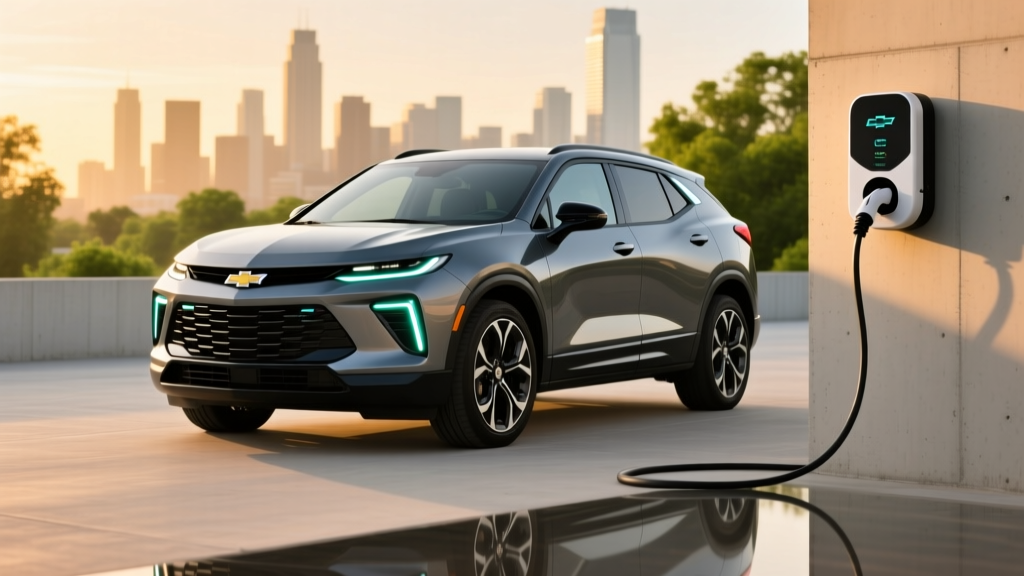
The 2026 Chevy Blazer EV SS occupies a narrow but compelling lane: a dual-motor, all-wheel-drive electric SUV that pairs 557 horsepower with a usable 290-mile EPA range and a starting price under $52,000. It's not the longest-range EV in its class, nor the most spacious, but it delivers a performance-to-price ratio that few midsize electric SUVs can match. After spending time with its specs, charging behavior, and ownership math, the Blazer EV SS emerges as a strong pick for buyers who want genuine acceleration and a sporty driving feel without stepping into luxury-EV pricing.
That said, there are trade-offs. The 102 kWh battery pack is large, which means home charging from empty takes patience. Real-world highway range falls short of the EPA sticker. And the federal tax credit situation requires careful eligibility checking. Here's everything you need to know before putting down a deposit.
Spec Table: 2026 Chevy Blazer EV SS at a Glance
| Specification | 2026 Blazer EV SS |
|---|---|
| Base MSRP | $51,995 (including destination) |
| Drivetrain | Dual-motor AWD |
| Horsepower | 557 hp |
| Torque | 648 lb-ft |
| 0-60 mph | ~3.9 seconds |
| Battery Capacity (usable) | 102 kWh (NMC chemistry) |
| EPA Range | 290 miles |
| Efficiency | 89 MPGe combined / 38 kWh/100 mi |
| Max DC Fast Charge | 190 kW |
| 10-80% DC Charge Time | ~28 minutes |
| Level 2 Home Charging | 11.5 kW (approx. 27 mi/hr) |
| Cargo Volume (rear seats up) | 28.3 cu ft |
| Cargo Volume (rear seats folded) | 61.2 cu ft |
| Rear Legroom | 38.1 inches |
| Battery/Powertrain Warranty | 8 years / 100,000 miles |
| Federal Tax Credit Eligibility | Up to $7,500 (subject to §30D rules) |
Range and Efficiency: EPA Sticker vs. Real-World Miles
Real-World Expectation: Plan for approximately 240-260 miles on sustained highway driving at 70-75 mph. In cold weather (below 32°F), expect a further 15-25% reduction, potentially dropping effective range to 200-220 miles without preconditioning.
The Blazer EV SS uses a 102 kWh usable battery pack with NMC (nickel manganese cobalt) chemistry. This is a high-energy-density cell choice that prioritizes range and performance over the ultra-long cycle life you'd get from LFP (lithium iron phosphate). For a performance-oriented SUV, NMC is the expected selection.
The 290-mile EPA rating places the SS trim below the rear-wheel-drive Blazer EV trims, which can reach up to 324 miles on the same platform. That's the cost of dual motors and 557 horsepower — you trade roughly 30-35 miles of range for all-wheel-drive traction and sub-4-second acceleration. The efficiency rating of 89 MPGe combined (38 kWh per 100 miles) is respectable for a 5,300-pound vehicle with this much power, though it trails lighter competitors like the Hyundai Ioniq 5 or Tesla Model Y Performance.
On the highway, the Blazer EV SS's boxy SUV profile and wide 275-section tires create meaningful aerodynamic drag. In real-world testing conditions — 72°F, 70 mph cruise, mild elevation changes — you'll see consumption closer to 42-44 kWh/100 mi, which translates to roughly 230-245 miles before you'll want to find a charger. This is normal for the class, but buyers coming from a 320-mile EPA sticker on a RWD sedan should recalibrate expectations.
Cold weather is where the NMC pack shows its limits. Without using the seat heaters and keeping cabin temps moderate, a 20°F morning can sap 20% or more from your range. The Blazer EV does include battery preconditioning for DC fast charging (more on that below), which helps mitigate cold-weather charging slowdowns, but it won't recover lost range from cabin heating demands.
Charging Speed: DC Fast Charging and Home Level 2
Charging speed is where the Blazer EV SS is adequate rather than exceptional. The 190 kW peak DC fast-charge rate is competitive with most 2026 midsize EVs, but it's notably behind the Hyundai Ioniq 5's 240 kW capability and the 800-volt architectures found in Porsche and Kia EVs.
| Charging Level | Power (kW) | Speed / Time |
|---|---|---|
| Level 1 (120V household) | ~1.4 kW | ~3 miles per hour |
| Level 2 (240V home, 48A) | 11.5 kW | ~27 miles per hour / full charge in ~9.5 hours |
| DC Fast Charge (peak) | 190 kW | 10-80% in ~28 minutes |
| DC Fast Charge (sustained avg) | ~130-140 kW | 80-100% adds another ~25 min (taper) |
The 10-80% time of approximately 28 minutes is the headline figure, and it's what you'll experience at a 200+ kW Electrify America or EVgo station when the battery is preconditioned. However, the charge curve tells a more complete story. Like most NMC packs, the Blazer EV SS sustains peak charge rates only in the lower state-of-charge window (roughly 10-40%). Above 60% SoC, the rate tapers progressively, and above 80%, charging slows dramatically to protect battery longevity. If you need a full charge on a road trip, budget about 50-55 minutes total, not 28.
For home charging, the 11.5 kW onboard charger is a strong point. On a properly installed 48-amp Level 2 circuit (requiring a 60-amp breaker), you'll add roughly 27 miles of range per hour. A full overnight charge from 10% to 100% takes about 9.5 hours, which works well for most commuters who plug in upon returning home. If your home electrical panel only supports a 40-amp circuit (32 amps continuous), expect roughly 7.7 kW and about 18 miles per hour — still sufficient for daily driving but slower for weekend top-ups.
One practical note: the Blazer EV SS uses the NACS (North American Charging Standard) connector as standard for 2026, giving it native access to Tesla Supercharger stations. This is a significant advantage over older CCS-equipped EVs that require adapters. According to Chevrolet's official EV page, the NACS port is standard across all 2026 Blazer EV trims.
Performance: 557 Horsepower and Sub-4-Second Sprints
The SS badge isn't just cosmetic. With dual electric motors producing 557 horsepower and 648 lb-ft of torque, the Blazer EV SS hits 60 mph in approximately 3.9 seconds. That puts it in the same territory as a Porsche Macan GTS or a BMW X3 M — vehicles that cost $20,000 to $30,000 more. The instant torque delivery from the electric motors means real-world passing acceleration feels even more immediate than the 0-60 number suggests.
The all-wheel-drive system is fully electric, with no mechanical linkage between axles. The front and rear motors are independently controlled, allowing for torque vectoring that improves cornering stability. In Sport mode, the Blazer EV SS sharpens throttle response and firms up the steering, though it can't fully mask the vehicle's 5,300-pound curb weight during aggressive direction changes. This is a fast, competent SUV — not a track car.
Regenerative braking offers multiple levels selectable through the infotainment system, including a one-pedal driving mode that brings the vehicle to a complete stop without touching the brake pedal. The blending between regen and friction brakes is smooth, a notable improvement over earlier GM EVs where the transition could feel abrupt.
Pricing, Trims, and Federal Tax Credit Eligibility
The 2026 Blazer EV SS starts at $51,995 including destination charges. It sits at the top of the Blazer EV lineup:
- Blazer EV 2LT (RWD): ~$44,595 — up to 324 mi range
- Blazer EV RS (AWD): ~$48,795 — up to 279 mi range
- Blazer EV SS (AWD): $51,995 — 290 mi range, 557 hp
Our as-tested equivalent with available options (panoramic sunroof, premium paint, upgraded audio) pushes the price to approximately $55,500.
Does the Blazer EV SS Qualify for the $7,500 Federal Tax Credit?
Potentially — but eligibility depends on several IRS §30D requirements that buyers must verify before counting on the credit. As of 2026, the key rules include:
- MSRP Cap: The vehicle's MSRP must not exceed $80,000 for SUVs. The Blazer EV SS at $51,995 clears this easily.
- Buyer Income Cap: Modified adjusted gross income must not exceed $150,000 (single), $225,000 (head of household), or $300,000 (joint filers).
- Battery Sourcing: A percentage of critical minerals and battery components must be sourced from the US or free-trade-agreement countries. These thresholds increase annually and can change mid-year.
- Point-of-Sale Transfer: Eligible buyers can transfer the credit to the dealer at purchase, reducing the out-of-pocket price immediately rather than waiting for tax filing.
The Blazer EV is assembled at GM's Spring Hill, Tennessee plant, which helps with domestic content requirements. However, battery component and critical mineral sourcing rules are complex and subject to change. Always verify current eligibility on fueleconomy.gov and consult a tax professional before making a purchase decision based on the credit. For detailed IRS rules, see IRS.gov's clean vehicle credits page.
| Scenario | Price |
|---|---|
| Base MSRP (SS AWD) | $51,995 |
| After $7,500 Federal Credit (if eligible) | ~$44,495 |
| As-Tested with Options | ~$55,500 |
| As-Tested After $7,500 Credit | ~$48,000 |
Interior, Tech, and Cargo Space
The Blazer EV SS cabin is anchored by a 17.7-inch diagonal infotainment touchscreen running Google Built-In, which includes native Google Maps navigation, Google Assistant, and access to the Play Store for apps. The driver faces an 11-inch digital instrument cluster. Wireless Apple CarPlay and Android Auto are standard, as is a wireless phone charging pad.
The infotainment system is responsive and well-organized, though the heavy reliance on touchscreen controls means fewer physical buttons for climate and volume — a common complaint in modern GM interiors. The SS trim includes a flat-bottom steering wheel, aluminum sport pedals, and unique seat trim to differentiate it from lower trims.
On the driver-assistance front, the Blazer EV SS comes equipped with Chevy's Super Cruise on compatible mapped roads. Super Cruise is a SAE Level 2 system — it handles steering, acceleration, and braking on divided highways, but the driver must remain attentive and keep their eyes on the road (monitored by a driver-facing camera). It is not autonomous driving. The system covers over 750,000 miles of compatible roads in North America as of 2026 and is one of the better hands-free highway systems available, competitive with Ford's BlueCruise.
Cargo space measures 28.3 cubic feet behind the rear seats and 61.2 cubic feet with the rear seats folded — adequate for a midsize SUV but less than the Tesla Model Y (30.2 / 76.2 cu ft) or Hyundai Ioniq 5 (27.2 / 59.3 cu ft with seats folded, though its hatchback shape limits vertical space). Rear legroom of 38.1 inches is generous and will comfortably accommodate adult passengers on longer trips.
Ownership Costs and Warranty
GM covers the Blazer EV SS battery and powertrain with an 8-year / 100,000-mile warranty, which is the federal minimum for EV components and matches most competitors. The battery is warranted to retain at least 70% of its original capacity during that period. Based on NMC degradation data from similar GM Ultium-platform vehicles, you can expect approximately 8-12% capacity loss over the first 100,000 miles under normal use — well within the warranty threshold.
Running costs are a clear advantage over gas equivalents. At the US average residential electricity rate of ~$0.16/kWh, fully charging the 102 kWh battery costs roughly $16.32, giving you about 240-260 real-world miles. That's approximately $0.065 per mile on electricity. A comparable gas SUV averaging 24 mpg at $3.40/gallon costs about $0.14 per mile — more than double. Over 15,000 miles per year, the Blazer EV SS saves roughly $1,100-$1,300 in fuel costs annually.
Insurance premiums for the Blazer EV SS tend to run 10-15% higher than comparable gas SUVs due to the higher repair costs associated with EV battery packs and aluminum body panels. Get quotes before purchasing to avoid surprises.
Pros and Cons
Pros
- 557 hp and 3.9-second 0-60 at a sub-$52K starting price
- Native NACS connector — direct Tesla Supercharger access
- 11.5 kW Level 2 charging for fast overnight top-ups
- Super Cruise hands-free highway driving included
- Strong 8-yr/100,000-mi battery warranty
- Qualifies for up to $7,500 federal tax credit (if eligible)
Cons
- 290-mile EPA range trails RWD competitors in this price range
- 190 kW DC charge rate is average — not class-leading
- 28.3 cu ft cargo space is less than Tesla Model Y
- Heavy touchscreen reliance, limited physical buttons
- Real-world highway range closer to 240-260 miles
- Insurance premiums run higher than gas equivalents
Who Should Buy the 2026 Chevy Blazer EV SS?
The Blazer EV SS is best suited for performance-oriented commuters and small families who prioritize acceleration and driving engagement over maximum range or cargo capacity. If your daily commute is under 80 miles round-trip and you have access to Level 2 home charging, the 290-mile range is more than sufficient with a comfortable buffer. The dual-motor AWD system makes it a capable choice for snow-belt states, and Super Cruise reduces fatigue on highway commutes.
It's less ideal for frequent long-distance road trippers who prioritize minimum charging stops — a Tesla Model Y Long Range (320+ miles, 250 kW charging) or Hyundai Ioniq 5 (310+ miles, 240 kW charging) will spend less time at chargers on 500-mile drives. It's also not the best choice for buyers who need maximum cargo flexibility; the Model Y's 76 cubic feet with seats folded is significantly more.
But if you want a fast, well-equipped, American-built electric SUV with Supercharger access and a potential effective price near $44,500 after the federal credit, the Blazer EV SS makes a compelling case.
Frequently Asked Questions
What is the real-world range of the 2026 Blazer EV SS?
The EPA rates the Blazer EV SS at 290 miles. In real-world highway driving at 70-75 mph, expect approximately 240-260 miles. In cold weather below freezing, plan for 200-220 miles without aggressive preconditioning.
How fast does the Blazer EV SS charge?
On a DC fast charger, it peaks at 190 kW and charges from 10-80% in about 28 minutes. At home on a 48-amp Level 2 charger (11.5 kW), it adds about 27 miles per hour, with a full charge taking roughly 9.5 hours.
How much does the Blazer EV SS cost after tax credits?
The base MSRP is $51,995. If you qualify for the full $7,500 federal tax credit under IRS §30D rules (income caps, sourcing requirements apply), the effective price drops to approximately $44,495. Verify eligibility on fueleconomy.gov before purchasing.
Is the Blazer EV SS worth buying over a Tesla Model Y or Hyundai Ioniq 5?
Choose the Blazer EV SS if you want more horsepower (557 hp vs. ~384 hp for Model Y Performance), a more traditional SUV design, and Super Cruise. Choose the Model Y if cargo space and charging speed matter most. Choose the Ioniq 5 for the fastest DC charging (240 kW) and slightly better real-world efficiency.
Does the Blazer EV SS qualify for the $7,500 federal tax credit?
It can, but eligibility depends on your income (must be under $150K single / $300K joint), the vehicle's battery sourcing compliance with current-year rules, and MSRP (which the Blazer EV SS clears at $51,995). Check the latest eligibility on fueleconomy.gov and consult a tax professional.
What connector does the Blazer EV SS use?
The 2026 Blazer EV SS uses the NACS (North American Charging Standard) connector natively, giving it direct access to Tesla Supercharger stations without an adapter. For Level 2 home charging, it uses the same NACS plug.