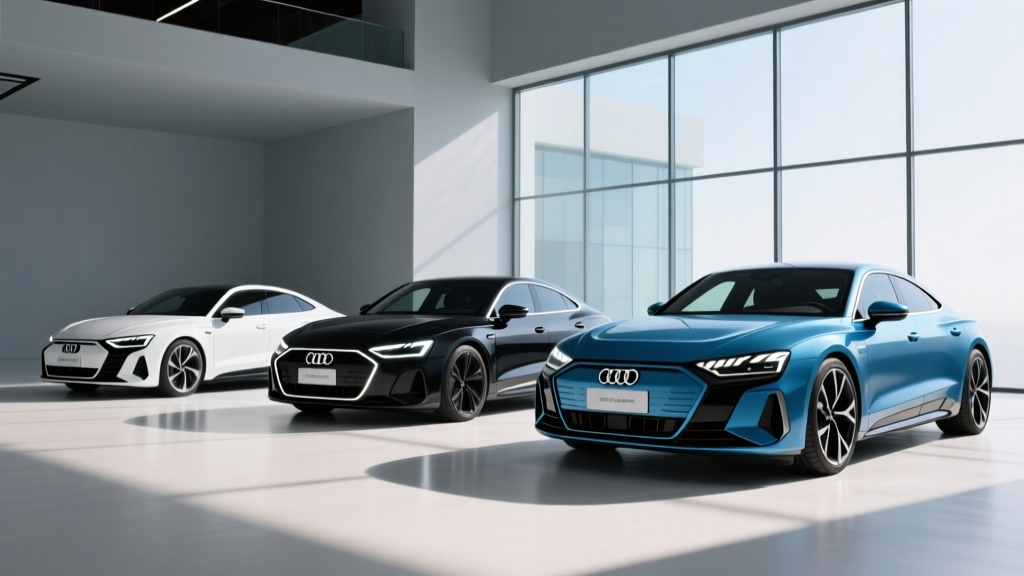
Which electric Audi sedan should you buy in 2026? The Audi A6 e-tron is the best all-around pick for most buyers, offering an EPA-estimated 403 miles of range, 270 kW DC fast charging (10–80% in ~21 minutes), and a starting MSRP of $65,900. The A3 e-tron ($42,400) is the entry point but delivers only ~250 miles of range. The e-tron GT ($108,900) prioritizes 637 HP performance over efficiency. All three use 800-volt architectures for fast charging, but only the A6 e-tron balances range, price, and practicality for daily ownership.
The 2026 Electric Audi Sedan Lineup at a Glance
Audi's electric sedan strategy in 2026 runs on the PPE (Premium Platform Electric) architecture co-developed with Porsche. This 800-volt platform underpins the A6 e-tron and e-tron GT, enabling sustained fast-charging speeds that older 400-volt EVs can't match. The A3 e-tron rides on a modified MEB platform shared with Volkswagen, which caps its charging speed but keeps the price accessible.
| Spec | A3 e-tron | A6 e-tron | e-tron GT (quattro) |
|---|---|---|---|
| EPA Range | 250 mi | 403 mi | 270 mi |
| Battery (usable) | 63 kWh (NMC) | 100 kWh (NMC) | 93.4 kWh (NMC) |
| Peak DC Fast Charge | 130 kW | 270 kW | 270 kW |
| 10–80% DC Charge | ~28 min | ~21 min | ~23 min |
| Level 2 (AC) Rate | 11 kW | 11 kW (22 kW optional) | 11 kW (22 kW optional) |
| Horsepower | 201 HP | 362 HP (RWD) / 456 HP (quattro) | 637 HP (RS variant) |
| 0–60 mph | 7.2 sec | 5.4 sec (RWD) | 3.1 sec (RS) |
| Base MSRP | $42,400 | $65,900 | $108,900 |
| Battery Warranty | 8 yr / 100,000 mi | 8 yr / 100,000 mi | 8 yr / 100,000 mi |
All range figures are EPA estimates. Real-world highway driving at 75 mph typically reduces range by 10–15%, and cold-weather operation (below 32°F) can cut range by 20–30% depending on cabin heating demand and whether the vehicle's heat pump is active. The A6 e-tron and e-tron GT both include a standard heat pump; the A3 e-tron offers it as a $350 option worth adding in northern climates.
Real-World Range: What the EPA Sticker Doesn't Tell You
A6 e-tron reality check: The 403-mile EPA figure assumes mixed driving at moderate temperatures. On a flat interstate at 70 mph and 65°F, expect roughly 350–365 miles. In 20°F winter conditions with cabin heat, plan for 280–310 miles. If you drive aggressively or tow (the A6 e-tron is rated for 2,200 lbs), subtract another 15–20%.
The e-tron GT's 270-mile EPA range is the trade-off for its performance tuning. The RS variant's stickier tires, lower ride height, and higher sustained power draw all erode efficiency. Expect 220–240 miles in mixed real-world driving and as low as 180 miles on a cold-weather road trip at highway speeds. This isn't a cross-country cruiser — it's a grand tourer that charges quickly when you do stop.
The A3 e-tron's 250-mile range is adequate for commuting but will feel tight on longer trips. A 300-mile highway run requires at least one charging stop, and at 130 kW peak, the A3 e-tron charges noticeably slower than its PPE-platform siblings. For buyers with a sub-60-mile daily commute and home charging, this is a non-issue. For road-trippers, it's a dealbreaker.
Charging Speeds and the 800-Volt Advantage
Understanding kW (power, or how fast energy flows into the battery) versus kWh (energy capacity, or how much the battery holds) is essential when evaluating charging performance. A 270 kW peak charge rate means the A6 e-tron can accept energy at roughly twice the speed of a 130 kW vehicle — but only under ideal conditions.
Here's how the charging curve actually works: peak kW is sustained only between roughly 10% and 40% state of charge. As the battery fills, the charging management system tapers power to protect cell health. A "10–80% in 21 minutes" claim reflects this tapered curve, not a sustained 270 kW across the entire session. Above 80%, charging slows dramatically — a 80–100% top-off can add another 25–30 minutes.
| Charging Level | Power | Miles Added/Hour (A6 e-tron) |
|---|---|---|
| Level 1 (120V household) | ~1.4 kW | ~3–4 mi/hr |
| Level 2 (240V home/public) | 11 kW | ~30–35 mi/hr |
| Level 2 (240V, 22 kW optional) | 22 kW | ~60–70 mi/hr |
| DC Fast Charge (A6 e-tron peak) | 270 kW | ~200+ mi in 10 min |
| DC Fast Charge (A3 e-tron peak) | 130 kW | ~100 mi in 10 min |
Home Level 2 charging is the backbone of practical EV ownership. A full overnight charge on an 11 kW Level 2 unit takes roughly 9–10 hours for the A6 e-tron's 100 kWh battery. If your electrical panel supports it, the optional 22 kW onboard charger halves that time — useful if you need a quick turnaround between an evening arrival and a morning departure.
Cost of Ownership: Electric Audi Sedan vs. Gas Equivalent
Let's compare the A6 e-tron against a reasonable gas alternative — the 2026 Audi A6 45 TFSI (MSRP ~$59,900, EPA 27 MPG combined). The A6 e-tron starts higher at $65,900, but the gap narrows with incentives and fuel savings.
| Cost Factor | A6 e-tron (quattro) | A6 45 TFSI (gas) |
|---|---|---|
| Base MSRP | $65,900 | $59,900 |
| Federal Tax Credit (§30D) | Up to $7,500* | $0 |
| Effective Purchase Price | ~$58,400 | $59,900 |
| Fuel/Energy (15,000 mi/yr) | ~$620/yr (home charging @ $0.14/kWh) | ~$2,080/yr ($3.75/gal, 27 MPG) |
| Annual Maintenance | ~$300 (cabin filter, fluid top-offs) | ~$800 (oil, filters, brakes) |
| Insurance (avg annual) | ~$2,400 | ~$1,900 |
| 5-Year Total Operating Cost | ~$16,600 | ~$24,400 |
*Federal §30D tax credit eligibility depends on your modified adjusted gross income (≤$150K single / ≤$300K joint), vehicle MSRP caps (sedans ≤$55,000 — note: the A6 e-tron quattro exceeds this, but the RWD variant at $65,900 may qualify depending on IRS classification and trim), and battery mineral/component sourcing requirements. The credit can now be transferred to the dealer at point of sale as an upfront discount. Always verify current eligibility at IRS.gov and consult a tax professional.
The A6 e-tron's higher insurance premium (typically 15–25% above the gas A6) reflects EV repair costs and higher collision-frequency data in some actuarial pools. Get quotes from your insurer before committing — the delta varies significantly by state and driving record.
Common EV Ownership Misconceptions
| Myth | Fact |
|---|---|
| "The battery will need replacing in 5 years." | Audi warranties the battery for 8 years/100,000 miles with a 70% capacity retention threshold. PPE-platform NMC cells typically degrade 8–12% over 100K miles based on industry data — well within warranty. |
| "Charging takes too long for road trips." | At 270 kW, the A6 e-tron adds ~200 miles in 10 minutes at a compatible DC fast charger. A typical highway stop (restroom, food) takes 15–20 minutes — aligning with the charge window. |
| "EVs don't work in cold climates." | Cold reduces range 20–30%, but preconditioning (warming the battery while plugged in) mitigates charging-speed loss. The A6 e-tron's heat pump recovers waste heat from the drivetrain to warm the cabin efficiently. |
| "I can't charge at home." | ~80% of EV owners charge at home. Level 2 installation costs $500–$2,500 depending on panel capacity and run length. Renters can use portable Level 1 units or rely on workplace/public charging. |
Home Charging Setup: What It Actually Costs
Buying an electric Audi sedan without a home charging plan is like buying a gas car without a gas station nearby — technically possible, but impractical. Here's what a Level 2 installation involves:
| Component | Cost Range | Notes |
|---|---|---|
| Level 2 Charger (hardware) | $400–$800 | Audi-recommended units or ChargePoint Home Flex |
| 240V / 50-amp circuit install | $500–$1,500 | Depends on panel proximity and conduit run |
| Electrical panel upgrade (if needed) | $1,500–$3,500 | Required if your panel is at or near capacity (common in older homes) |
| Permit & inspection | $100–$300 | Varies by municipality |
| Total (typical) | $1,000–$2,600 | Without panel upgrade: $1,000–$2,600. With panel upgrade: $2,500–$6,100. |
Have a licensed electrician evaluate your panel before purchasing. A 200-amp service panel with available breaker slots handles a 50-amp EV circuit easily. A 100-amp panel in an older home likely needs an upgrade to support Level 2 charging alongside existing loads like electric ranges and dryers.
If you live in an apartment or condo without dedicated parking, your realistic options are workplace charging, public DC fast chargers (Electrify America has 350 kW stations compatible with the A6 e-tron's peak rate), or negotiating with your building to install shared charging infrastructure. Relying solely on public charging raises your per-mile energy cost from ~$0.04/mile (home) to ~$0.12–$0.18/mile (public DC fast), narrowing the savings gap versus gas.
Tax Credits, Incentives, and the Fine Print
Federal §30D tax credit rules for 2026 remain complex. Here's a practical eligibility checklist:
- Income cap: Modified AGI ≤$150,000 (single) or ≤$300,000 (married filing jointly) in the year of delivery or the prior year (whichever is lower).
- MSRP cap: Sedans must have an MSRP ≤$55,000. This disqualifies the A6 e-tron quattro and e-tron GT. The A3 e-tron (starting $42,400) qualifies on price.
- Battery sourcing: A percentage of critical minerals and battery components must be sourced from the U.S. or free-trade-agreement countries. These thresholds increase annually — verify the specific vehicle's compliance at fueleconomy.gov.
- Point-of-sale transfer: You can transfer the credit to the dealer for an immediate price reduction rather than waiting to claim it on your tax return.
- State incentives: Many states offer additional rebates (e.g., California's CVRP, Colorado's innovative motor vehicle credit). Check your state's energy office for current programs.
The A3 e-tron is the only electric Audi sedan likely to qualify for the full federal credit, making its effective starting price potentially as low as ~$34,900. The A6 e-tron's MSRP exceeds the sedan cap, though some buyers may qualify for state-level incentives that partially offset the difference.
Decision Framework: Which Electric Audi Sedan Fits You?
Choose the A3 e-tron if:
- Your daily commute is under 60 miles round-trip
- You want the lowest entry price and maximum tax-credit eligibility
- You have reliable home Level 2 charging
- Road trips are infrequent (2–3 per year)
Choose the A6 e-tron if:
- You need 350+ real-world miles for regular highway driving
- You want the fastest DC charging in the lineup for road-trip practicality
- You value rear-seat space and trunk volume for family use
- Your budget accommodates $65K+ and you accept the federal credit may not apply
Choose the e-tron GT if:
- Performance (0–60 in 3.1 sec, 637 HP) is the priority
- You accept a ~220-mile real-world range as the performance trade-off
- You have a second vehicle for long trips or are comfortable with frequent charging stops
- Budget is $110K+ and tax credits are irrelevant to your purchase decision
First-Time EV Buyer Checklist
If the electric Audi sedan is your first EV, here's what to prepare before delivery day:
- Get an electrical assessment. A licensed electrician can tell you in 30 minutes whether your panel supports Level 2 charging or needs an upgrade. Do this before ordering the car.
- Install your Level 2 charger early. Lead times for electricians can be 4–8 weeks. Schedule installation to coincide with vehicle delivery.
- Download charging apps. Electrify America, ChargePoint, EVgo, and PlugShare cover the major public networks. Create accounts and add payment methods before your first road trip.
- Understand preconditioning. Set your departure time in the MMI system while plugged in — the car warms the battery and cabin using grid power, preserving range and enabling peak charging speeds at your first DC stop.
- Plan your first road trip. Use the A6 e-tron's built-in route planner or A Better Routeplanner (ABRP) to identify charging stops. At 270 kW, you'll stop for 15–20 minutes every 2.5–3 hours — plan around meal and rest breaks.
- Check insurance quotes. EV premiums are typically 15–25% higher than gas equivalents. Shop multiple insurers; some offer EV-specific discounts.
Frequently Asked Questions
Does the Audi A6 e-tron qualify for the $7,500 federal tax credit?
The A6 e-tron's MSRP ($65,900) exceeds the §30D sedan cap of $55,000, making it ineligible for the federal credit based on price alone. The A3 e-tron ($42,400) falls under the cap and may qualify, pending battery-sourcing compliance and buyer income limits. Always check IRS.gov for the latest rules.
How long does it take to charge an electric Audi sedan at home?
On a standard 11 kW Level 2 home charger, the A6 e-tron (100 kWh battery) charges from empty to full in roughly 9–10 hours. Overnight charging from 20% to 80% takes about 5.5 hours — well within a typical sleep cycle. The optional 22 kW onboard charger halves these times if your home electrical system supports it.
Is the e-tron GT practical as a daily driver?
For a 40-mile round-trip commute with home charging, yes — the 270-mile EPA range provides ample buffer. For families needing rear-seat space, cargo room, or regular 300+ mile trips, the A6 e-tron is more practical. The e-tron GT's low roofline limits rear headroom, and trunk volume is significantly smaller than the A6 e-tron's.
What happens if the battery degrades significantly?
Audi's battery warranty guarantees 70% capacity retention for 8 years or 100,000 miles. Industry data on NMC cells in thermally managed packs (like Audi's liquid-cooled system) shows typical degradation of 8–12% at 100,000 miles. If degradation exceeds 30% within the warranty period, Audi will repair or replace the battery at no cost. Out-of-warranty replacement costs are estimated at $12,000–$18,000 depending on the model — a figure expected to decline as battery manufacturing scales.
Can I use Tesla Superchargers with an electric Audi sedan?
Audi has announced NACS (North American Charging Standard) adoption for future models. As of the 2026 model year, Audi electric sedans use the CCS1 connector for DC fast charging. Adapters for Tesla Supercharger access are expected but not yet widely available. The Electrify America, EVgo, and ChargePoint networks provide comparable DC fast-charging coverage with native CCS1 connectors.