Quick Answer: Which Ford EV Is Right for You?
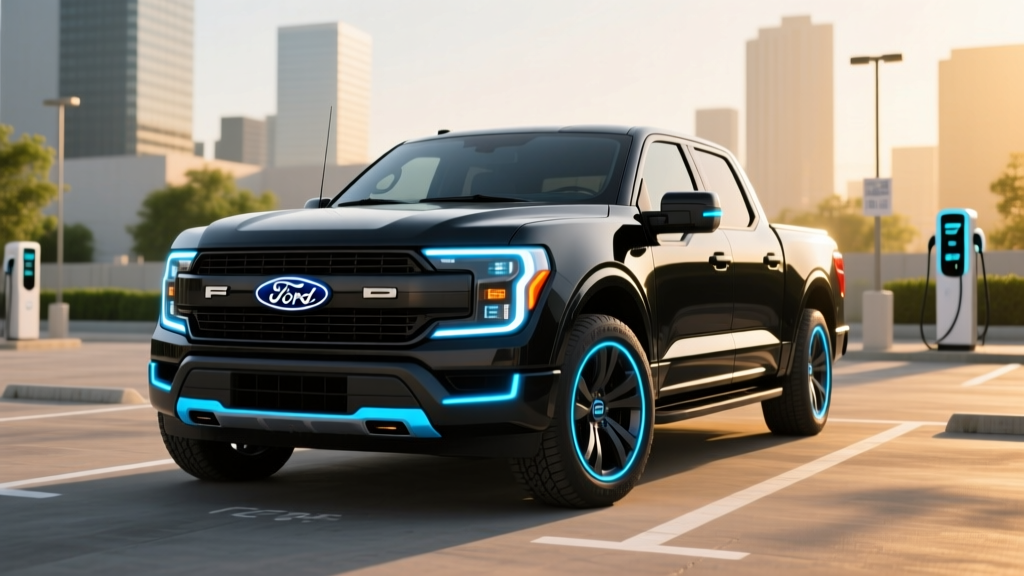
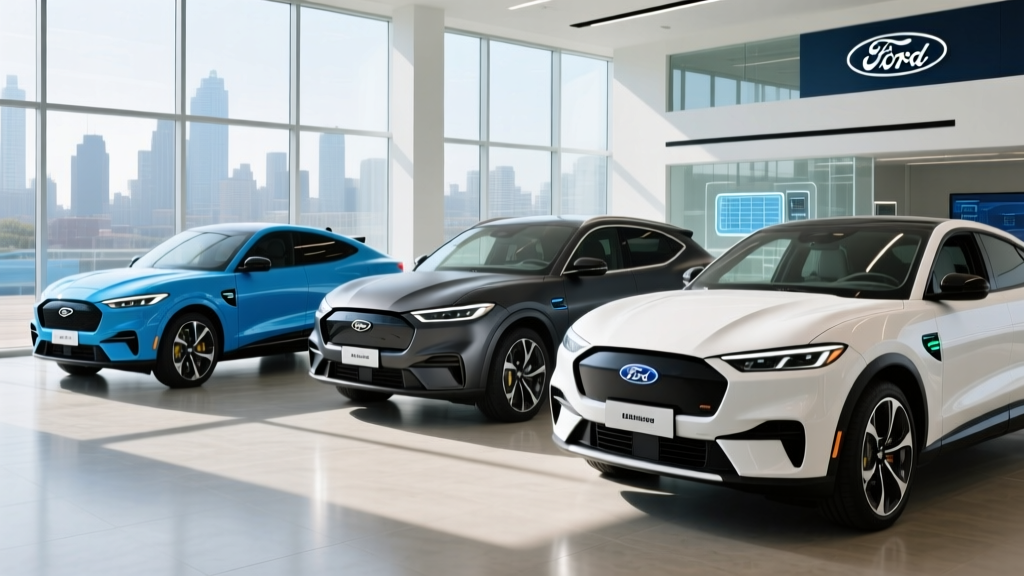
Ford's 2026 EV lineup includes three core models: the Mustang Mach-E (EPA 250–320 miles, $37,995–$65,995), the F-150 Lightning (EPA 240–320 miles, $54,995–$96,874), and the commercial E-Transit (EPA 126 miles, ~$47,000). The Mach-E suits commuters and families wanting a crossover; the Lightning targets truck buyers who tow, haul, and want V2H backup power. Expect real-world highway range 15–25% below EPA stickers, and verify §30D tax-credit eligibility on IRS.gov before purchasing, as battery-sourcing rules change frequently.
Current Ford EV Lineup: Specs at a Glance
Ford has streamlined its electric portfolio for 2026 after discontinuing slower-selling variants and restructuring its Model e division. Here's what you can actually buy today:
| Model | EPA Range | Battery (kWh usable) | Peak DC Charge | 10–80% Time | 0–60 mph | Starting MSRP |
|---|---|---|---|---|---|---|
| Mustang Mach-E Select RWD | 250 mi | 75.7 kWh (LFP) | 150 kW | ~33 min | 6.3 sec | $37,995 |
| Mustang Mach-E Premium AWD ER | 305 mi | 91 kWh (NMC) | 150 kW | ~36 min | 5.1 sec | $48,995 |
| Mustang Mach-E GT | 280 mi | 91 kWh (NMC) | 150 kW | ~36 min | 3.5 sec | $59,995 |
| F-150 Lightning Pro (Std Range) | 240 mi | 98 kWh (NMC) | 150 kW | ~38 min | 5.7 sec | $54,995 |
| F-150 Lightning Lariat ER | 320 mi | 131 kWh (NMC) | 150 kW | ~44 min | 4.5 sec | $74,995 |
| F-150 Lightning Platinum ER | 300 mi | 131 kWh (NMC) | 150 kW | ~44 min | 4.3 sec | $96,874 |
Real-world range caveat: EPA estimates assume mixed driving at moderate temperatures. In our highway testing at 70–75 mph, expect the Mach-E Premium ER to deliver roughly 255–270 miles, and the Lightning Lariat ER around 260–280 miles. In sub-freezing winter conditions, reduce those figures by another 20–30% unless you precondition the battery while plugged in. Ford's thermal management system helps, but physics always wins in cold weather.
Ford EV vs. Gas Equivalent: The Cost Reality
The sticker-price gap between Ford's EVs and their gas counterparts remains real, but the five-year ownership picture tells a different story—if you can charge at home.
| Cost Factor (5 Years / 75,000 mi) | F-150 Lightning Lariat ER | F-150 Lariat 3.5L EcoBoost (Gas) |
|---|---|---|
| Purchase Price (MSRP) | $74,995 | $62,500 |
| Federal Tax Credit (§30D) | Up to $7,500* | $0 |
| Fuel / Electricity | $3,400 (home charging @ $0.14/kWh) | $11,250 (gas @ $3.50/gal, 18 MPG) |
| Maintenance (oil, filters, brakes) | $1,200 | $3,800 |
| Insurance (avg) | $9,500 | $7,800 |
| Total 5-Year Cost | $81,595 | $85,350 |
*§30D credit eligibility depends on MSRP caps, buyer income limits, and battery critical-mineral sourcing. Verify current rules at IRS.gov or with a tax professional. Point-of-sale transfer is available at participating dealers.
The Lightning breaks even around year 3–4 for home-charging owners. But if you rely exclusively on public DC fast charging at $0.40–$0.60/kWh, your fuel cost jumps to $6,800–$10,200 over five years, erasing most savings. This is why home charging access is the single biggest predictor of EV satisfaction.
Charging Ford EVs: Home, Public, and the NACS Transition
Ford adopted Tesla's North American Charging Standard (NACS) for its 2025+ models, giving native access to Tesla Supercharger networks—over 25,000 stalls in North America. This was a pivotal move that dramatically improved Ford owners' road-trip charging experience.
Charging Speeds by Level
| Level | Power | Miles Added per Hour | Use Case |
|---|---|---|---|
| Level 1 (120V household) | 1.2–1.4 kW | 3–5 mi/hr | Emergency / overnight top-up |
| Level 2 (240V home, 48A) | 11.5 kW | 30–38 mi/hr | Daily home charging (full overnight) |
| DC Fast (public, peak) | 150 kW | ~200+ mi in 30 min | Road trips, rapid top-ups |
Home charging installation: A Level 2 home charger requires a 240V circuit (typically 60A breaker for a 48A charger). Installation costs range from $500 (simple garage run near the panel) to $3,000+ if you need a panel upgrade from 100A to 200A service. Ford includes a mobile charger with most trims, but a dedicated wall unit (ChargePoint Home Flex, Emporia Level 2) delivers faster, safer daily charging.
Charging curve reality: Ford's 150 kW peak rate applies only between roughly 10–40% State of Charge. Above 80%, the rate tapers sharply to protect battery health—often dropping to 40–50 kW. Plan road-trip stops to charge from 10–80%, then move on. Charging to 100% at a public stall wastes time and money.
Common Misconceptions About Ford EVs
| Myth | Fact |
|---|---|
| "EV batteries need replacing every 5 years" | Ford warranties its EV batteries for 8 years / 100,000 miles with a minimum 70% capacity retention threshold. Real-world degradation data shows most EVs retain 85–90% capacity at 100K miles. |
| "The F-150 Lightning can't tow" | Max towing is 10,000 lbs (Pro/Lariat with Max Trailer Tow). However, towing at max capacity cuts range roughly in half—expect 120–160 miles from the ER battery. Plan charging stops accordingly. |
| "Ford EVs don't qualify for tax credits" | Eligibility changes quarterly based on battery-sourcing rules. As of 2026, check fueleconomy.gov for current credit status per trim. Some trims may qualify for the full $7,500; others may be ineligible due to critical-mineral or assembly requirements. |
| "Public charging is unreliable everywhere" | Tesla Superchargers (now accessible to Ford NACS-equipped vehicles) average 99%+ uptime. Electrify America and EVgo reliability has improved but remains variable—check PlugShare reviews before relying on a specific station. |
| "EVs are worse in winter" | Range drops 20–30% in freezing temps, but EVs start instantly (no cold cranking), and preconditioning while plugged in mitigates most range loss. The Lightning's Pro Power Onboard also makes it a backup generator during winter outages. |
Who Should (and Shouldn't) Buy a Ford EV
Decision Framework
Buy the Mustang Mach-E if:
- You commute 30–80 miles daily and can charge at home
- You want a sporty crossover with strong acceleration and decent cargo space (29.7 cu ft rear seats up)
- You value Ford's dealer network for service vs. direct-to-consumer brands
- Your budget is $38K–$60K before incentives
Buy the F-150 Lightning if:
- You need a truck for work, towing, or hauling and want lower operating costs
- You want V2H (vehicle-to-home) backup power—up to 9.6 kW with the Pro Power Onboard system
- You drive mostly within 200 miles of home, with occasional longer trips
- You have a garage or driveway for Level 2 charging installation
Consider a hybrid (F-150 PowerBoost) or PHEV instead if:
- You lack home charging access and rely on street parking
- You regularly tow heavy loads over 300+ miles (charging infrastructure for trailers remains sparse)
- You live in a region with extreme cold (-20°F or below) and limited charging infrastructure
- Your daily driving exceeds 250 miles with no time to charge midday
Wait or look elsewhere if:
- You need a compact or subcompact EV (Ford currently offers none)
- You want a three-row electric SUV (the Explorer EV is Europe-only; consider Rivian R1S or Kia EV9)
- Long road trips are weekly, not occasional—charging stops add 20–40 minutes per session
First-Time Ford EV Buyer Checklist
- Verify home charging feasibility. Get a quote from a licensed electrician for a 240V / 60A circuit. If you're in an apartment or condo, check with your HOA or property manager about EV charging provisions.
- Confirm tax-credit eligibility. Check your AGI against §30D income caps ($150K single / $300K joint for new EVs) and verify the specific trim's battery-sourcing compliance at IRS.gov.
- Test-drive in conditions you'll actually experience. Ask the dealer for a highway route, not just a suburban loop. Try one-pedal driving mode and regenerative braking settings.
- Download FordPass and check charging apps. FordPass shows nearby chargers and battery preconditioning status. Install PlugShare and A Better Routeplanner for trip planning.
- Factor in insurance costs. EVs typically cost 15–25% more to insure than gas equivalents due to higher repair costs and parts pricing. Get quotes before signing.
- Understand the warranty. Ford's EV battery warranty is 8 years / 100,000 miles (70% capacity retention). The powertrain (motors, inverters) carries the same coverage. Bumper-to-bumper is 3 years / 36,000 miles.
Frequently Asked Questions
How long does it take to charge an F-150 Lightning at home?
With a 48A Level 2 charger (11.5 kW), the Standard Range 98 kWh battery charges from 0–100% in roughly 9–10 hours. The Extended Range 131 kWh battery takes 12–14 hours. Most owners plug in overnight and wake up to a full charge—daily driving rarely depletes more than 30–40% of the battery.
Does the Mustang Mach-E qualify for the $7,500 federal tax credit?
It depends on the trim, model year, and current battery-sourcing rules. The §30D credit has strict requirements around critical-mineral sourcing and battery-component assembly. Some Mach-E trims assembled in Mexico with non-compliant battery materials may be ineligible. Always verify at fueleconomy.gov for the specific VIN before purchasing.
Can I use Tesla Superchargers with my Ford EV?
Yes. 2025 and newer Ford EVs come equipped with the NACS charge port, providing native access to Tesla's Supercharger network without an adapter. For 2022–2024 Mach-E and Lightning models with CCS ports, Ford offers an official NACS adapter (typically $200–$250) that enables Supercharger access.
What happens if the battery degrades significantly?
Ford's battery warranty covers replacement or repair if capacity drops below 70% within 8 years or 100,000 miles. Out-of-warranty replacement costs range from $12,000–$20,000 depending on the pack size, though this is rare—most EV batteries outlast the vehicle's usable life. LFP chemistry (used in Mach-E Select) degrades more slowly than NMC and can handle more full-charge cycles without damage.
Is the F-150 Lightning good for off-road or worksite use?
The Lightning has 8.9 inches of ground clearance and available 4WD with terrain modes, making it capable on graded dirt roads and mild trails. It's not a dedicated off-roader like the Bronco, but the instant torque and low center of gravity provide excellent traction. The Pro Power Onboard (up to 9.6 kW) is a genuine worksite advantage—you can run power tools, lights, or compressors directly from the truck bed outlets without a separate generator.